Kazakh visa latest news

Today my sister has finally managed to hand in my application forms to the Kazakh consulate in Madrid. After having been told that it was closed because it was a Kazakh national holiday, then a holiday in the city of Madrid (one of the maaaany they seem to have), then that they are not open on Wednesdays, she finally found it open today.

She said that the guy there was surprised someone would want to go to his country as a tourist, and even more surprised that I was then moving on to Russia.

It seems that the visa will be ready next Thursday, let’s hope it all works out in time for a friend of mine who is coming to Barcelona this Friday to bring it to me.

How to carry two tires all the way to Volgograd and other stories

Tires are an important piece of kit for trips like this, and in my case the subject of much thought – not so much about which tires to use, but whether I should take a set with me or not.

I had decided that I would ride Europe in the tires I already have – a set of Michelin Anakee 2, they have plenty of thread left and lots of people have got very hard mileages out of them – and then swap them for a set of Heidenau K60s in Volgograd before starting the roughest part of the trip.

Most people say that it is hard to find the sizes I need for my bike in Russia, let alone Kazakhstan or Mongolia, so I could find a workshop when the moment came to change them and wait for them to order and have a set delivered, I could buy a set myself and send them ahead of me for them to be ready when I got to Volgograd or I could carry them with me from the start.

Waiting for tires to be delivered was not an option, since I do not want to spend any longer than necessary unless there is a problem, and forwarding them required having a contact in Volgograd to pick them up and store them, and they might be made to pay import taxes upon delivery. I imagine I could have arranged that through the HUBB, but it was too much hassle and I liked the idea of having a couple of spares with me if a puncture can not be easily fixed with a repair kit. I could always limp to or arrange to have the bike transported to the nearest workshop and have the tire changed.

So having made the decision to take the tires with me, I spent the weekend studying different ways to secure them to the bike.

I carry my camping/cooking equipment on one pannier;  the tools, repair kit, spares, maintenance kit on the other;  the paperwork, important items,  laptop, camera, etc. on the tank bag and the clothes, first aid kit and sewing kit on a waterproof rack bag.

I quickly discarded the option of hanging the tires on the back of the bike – it pushed the CoG too far back and there are already a jerrycan and oil and grease bottles back there, not to mention that they would partially cover the rear light or the exhaust or the license plate depending on the position.

I have not fitted any tank saddlebags and I had seen pictures of a guy who had slung his tires over the tank and had them hanging on both sides of the bike. I tried that, but they are too big and when strapped tight they interfered with either my legs or the front wheel.

So they would have to share the rack and passenger seat space with my rack bag.

I tried different positions – the bag first and the two tires vertically behind it, the other way round, one tire standing behind me and another at the back, with the bag in between, one tire standing, the other flat and the bag on it, even have the tires standing on the panniers and the bag fitted through them… All positions looked awkward and had several disadvantages – water would accumulate on the inside of the tires, they stood too tall, I would have to remove them every time I wanted to take something from the bag or the bag itself (and that’s every single day)…

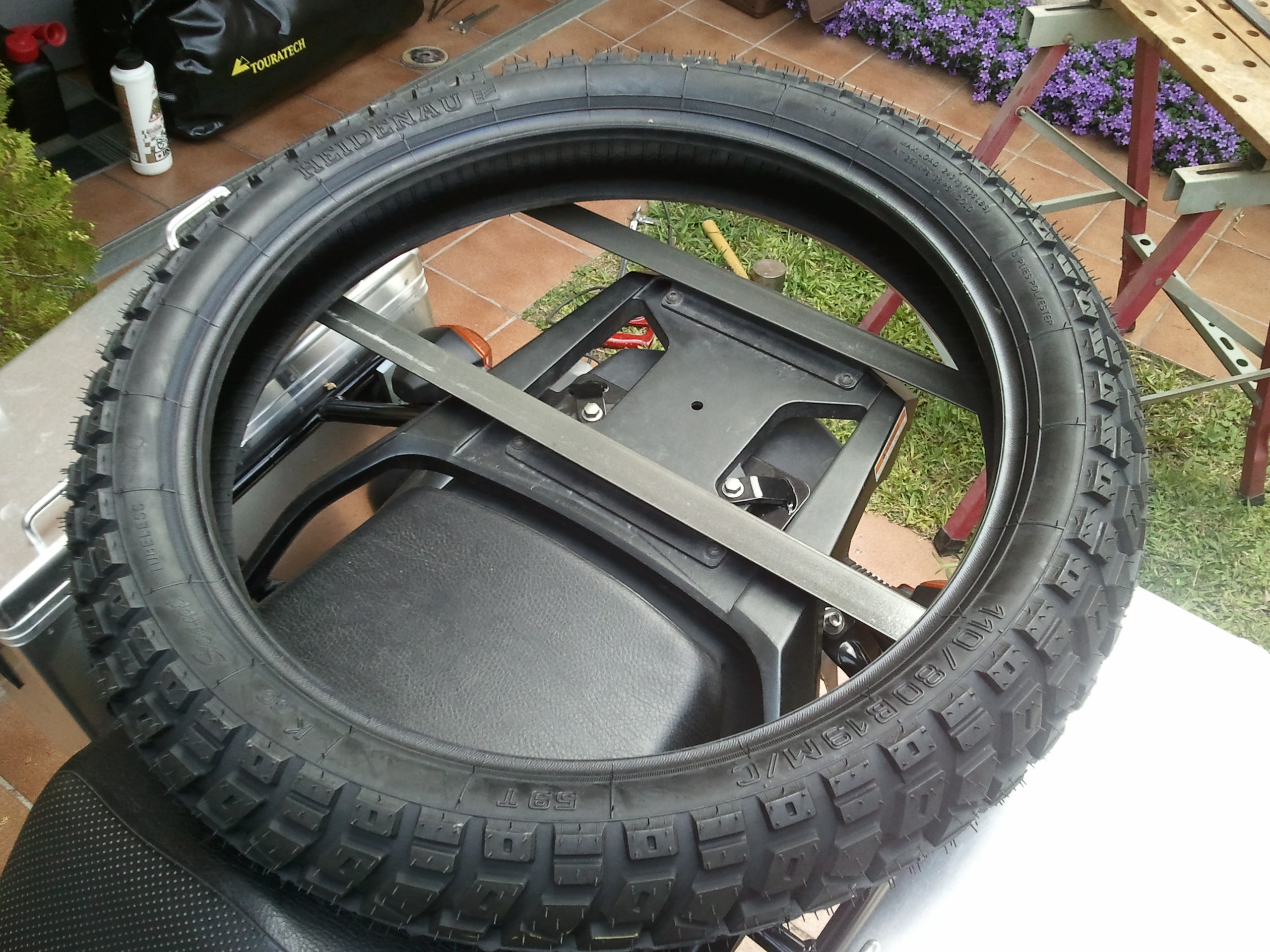
I did not want to have to remove them until the moment came to use them, the idea was to strap them securely and then lock them to the rack with a cable and a padlock the make them harder to steal. In the end then, the best position was to lay them flat and put the bag on top of them.

There were two thing I did not like about this option – the whole thing was rather tall (it almost reaches to my shoulders) and there was a big unused space inside the tires. However, after some thinking I found a good compromise.

I was going to carry my provisions inside the rack bag (I got it big because I did not want to carry too many smaller ones), but if I used the space in the tires to carry them the bag would be emptier. Not only that, but the stuff inside would be easily compressible (mostly clothes) so it would flatten more against the tires and enable me to roll the top of the bag more times, thus making it more waterproof. It was decided.

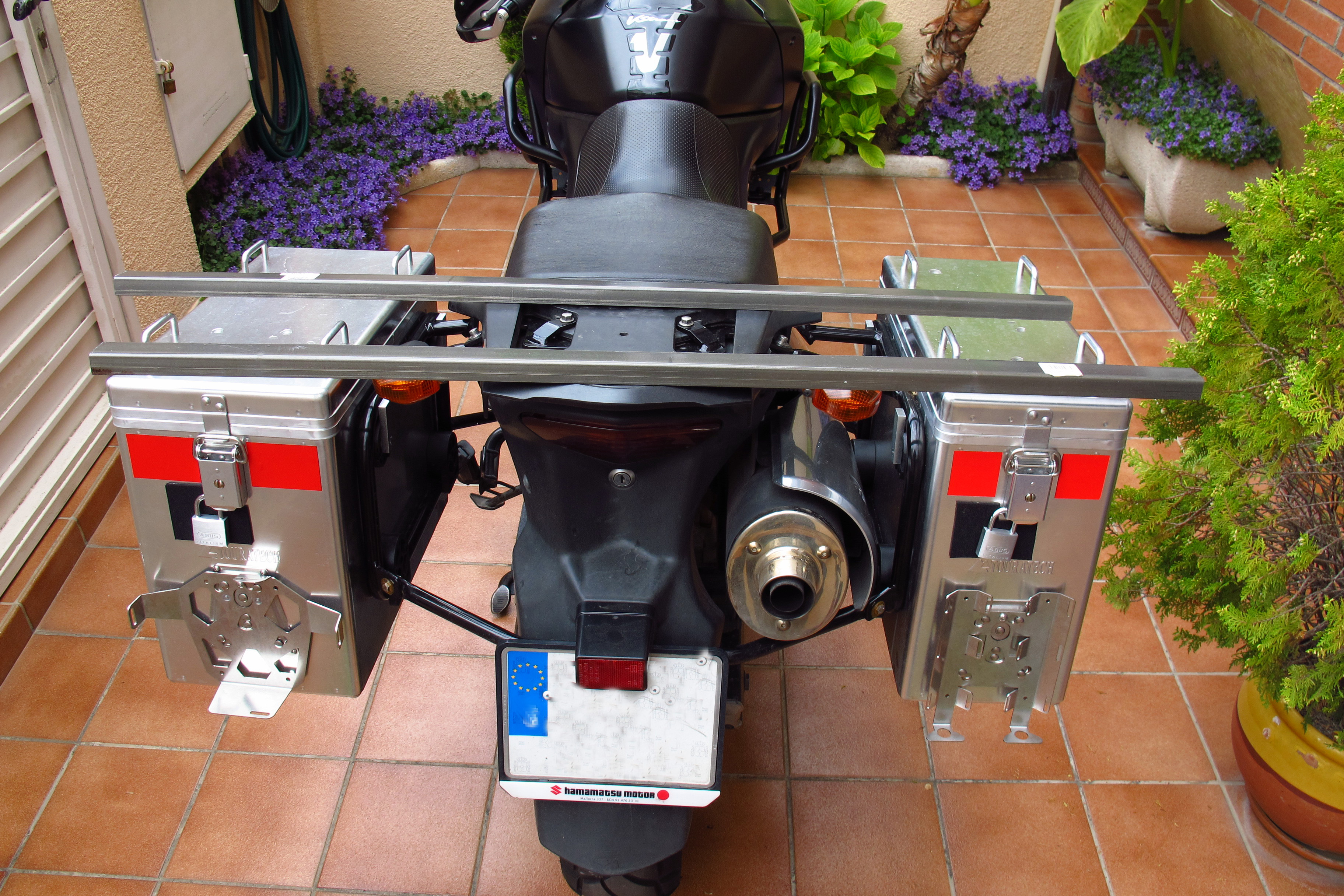
Lying flat on the seat and the rack, the tires took quite a lot of space, and if I sat comfortably without them touching my back, the were a couple of cm too far back, so they did not rest on the rack, which meant I had to do something to support them there. I had removed the top case but I had not fitted a base to the rack, there was only the original one, and I did not want to pay through the nose for a rack extension just to have one end of the tires rest on it, so I decided to make my own tire rack.

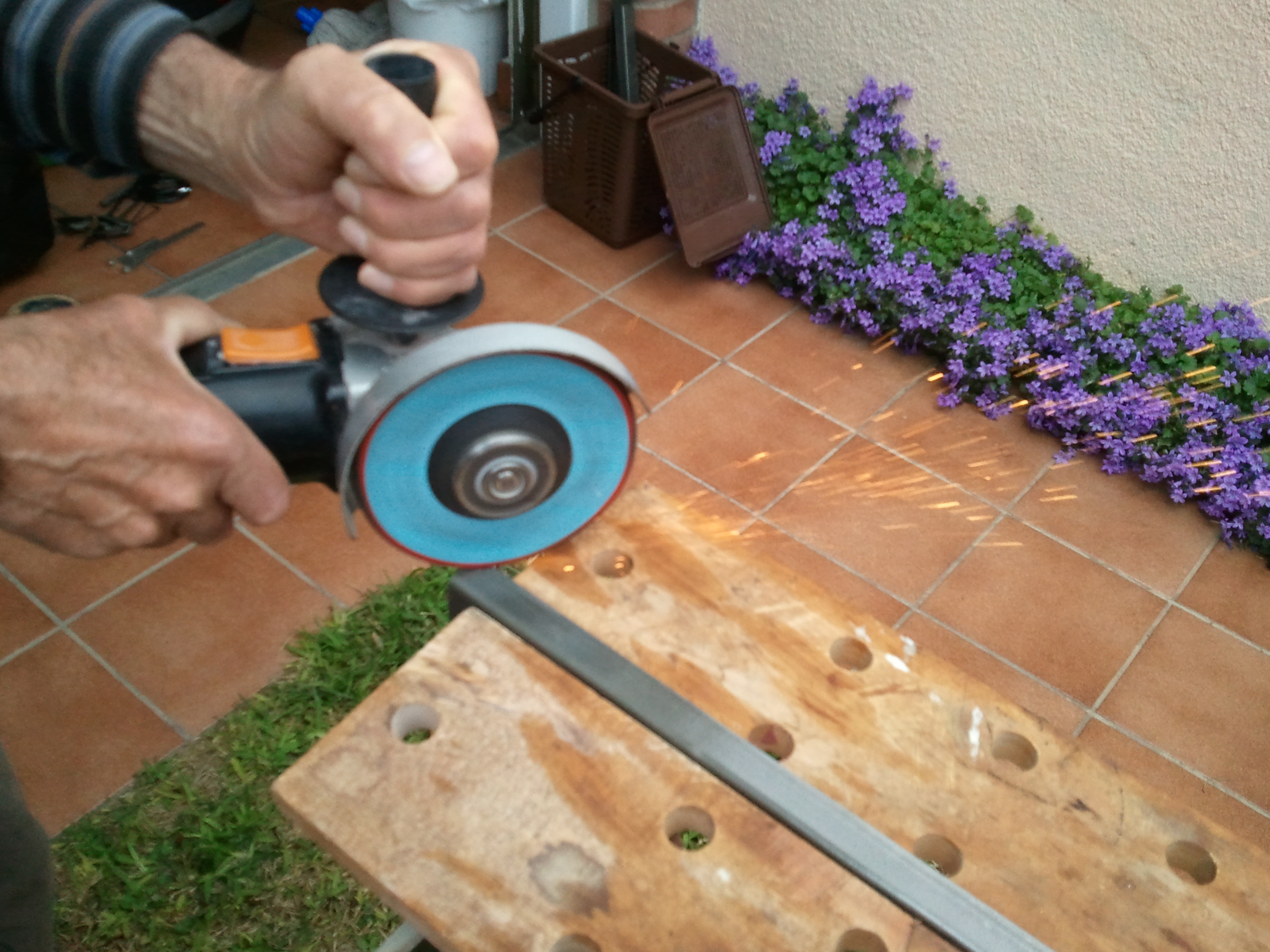
I got a couple of L section steel rails – aluminum was lighter, but it was too flexible, and the steel rails are very strong for what they weigh – and started to work on them to make them fit the mounting points on the bike rack.

IMG_59012013-05-12 12.19.42


I have to say that I had the privilege of having my father’s assistance and advice on this, a natural-born engineer (and one of the best I know, at that) so for the price of a couple of bits of metal and a few hours of work in great company I got a perfect custom-made tire rack. Suck that up, Touratech.

2013-05-12 11.55.47


2013-05-12 12.05.07

We cut them to the appropriate length, filed off the edges, shaped the lower side to make it fit flush with the bike rack without losing any structural rigidity and drilled the mounting points and while we were at it, a whole at each end that makes a handy attachment point.
2013-05-12 12.19.59


2013-05-12 12.50.10

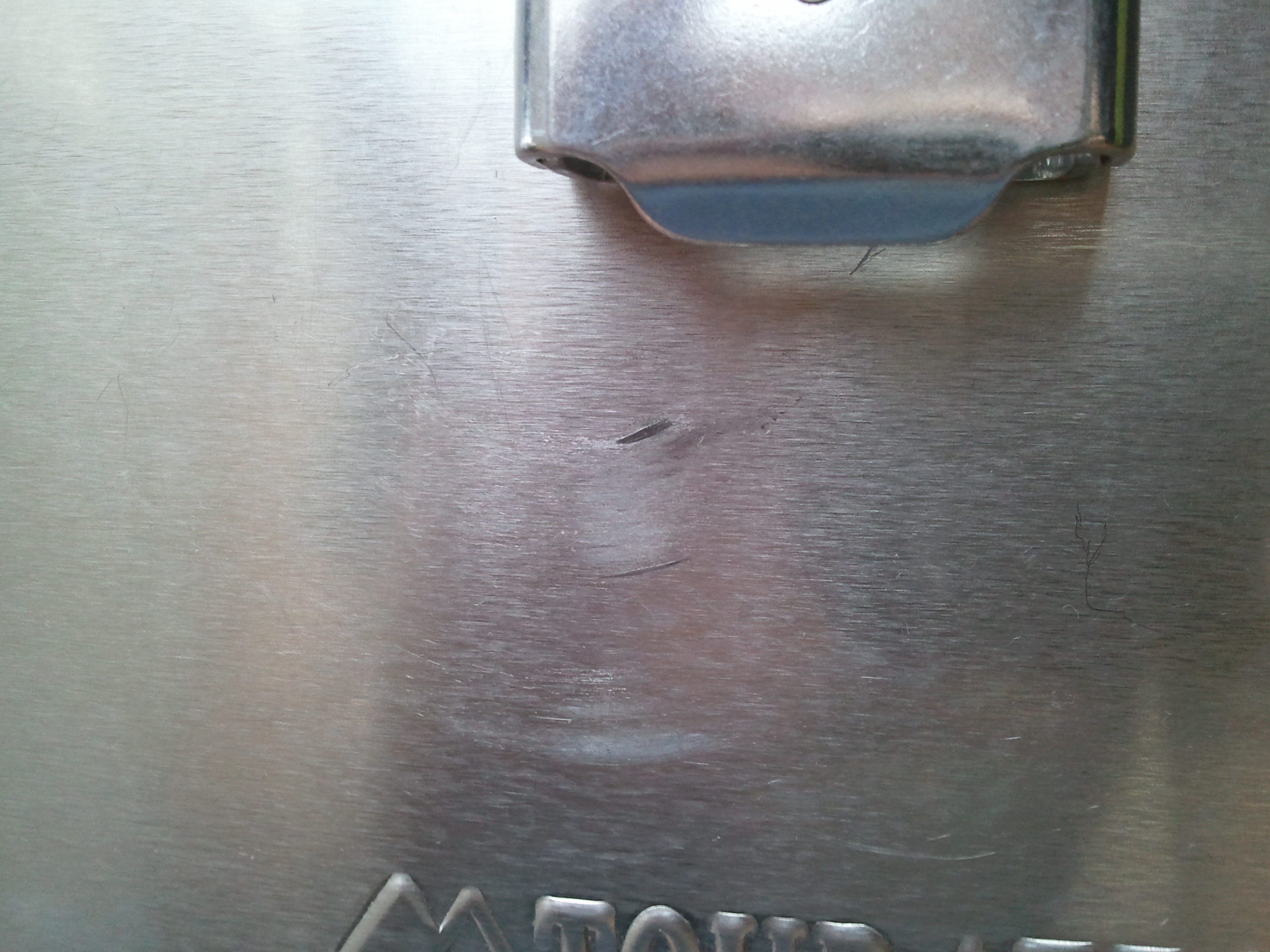
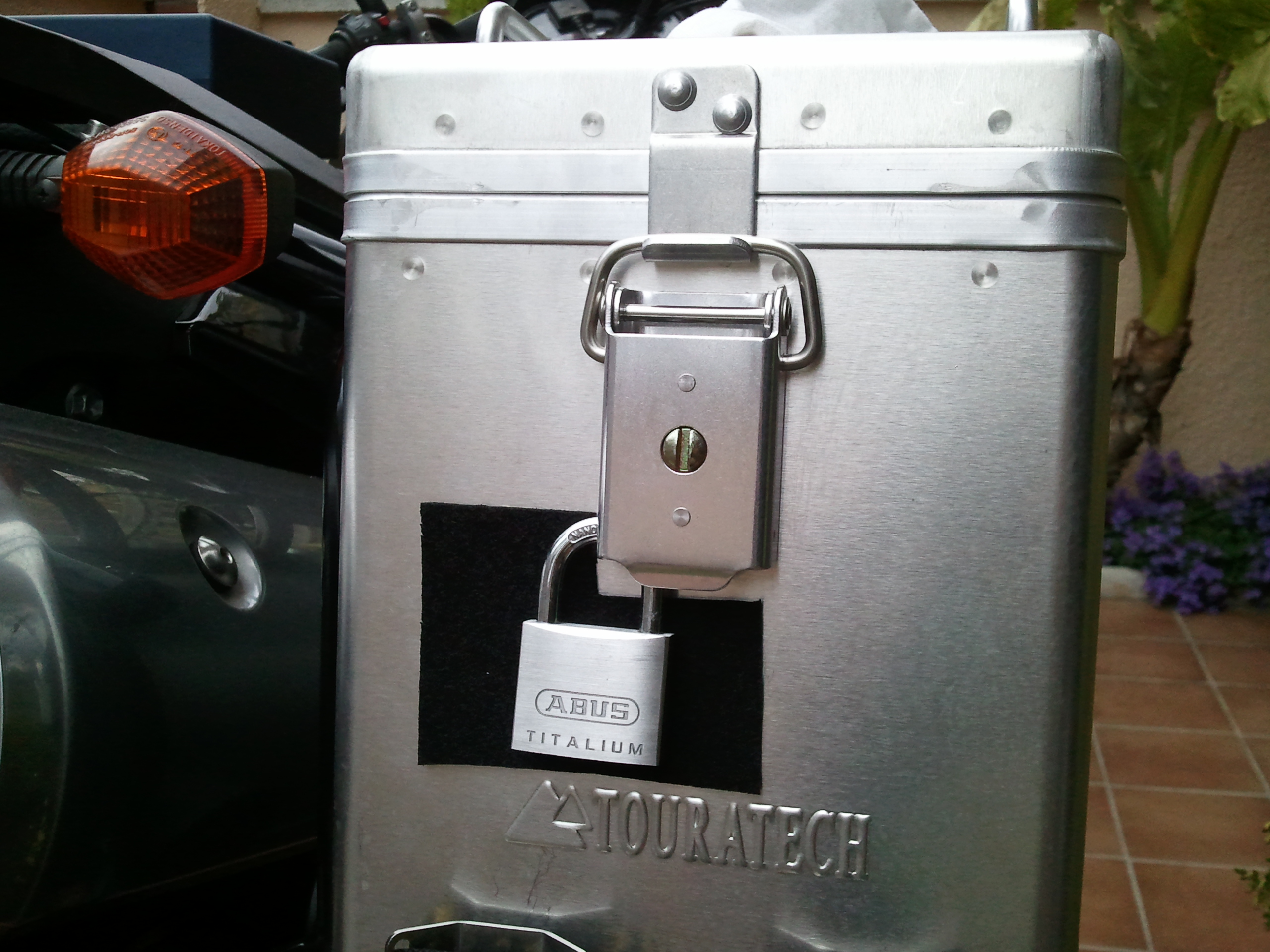
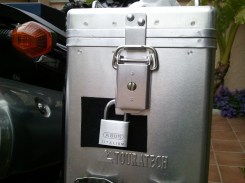
Apart from that, I also spent some time improving/customizing the Touratech panniers. I had got four padlocks to lock them and they are great – light and they are all opened with the same key, but in only two days riding around they had started to scratch the aluminum, and they rattle as hell between 5 and 6k rpm, which is the usual working range of the bike…

2013-05-11 20.05.562013-05-11 20.06.35

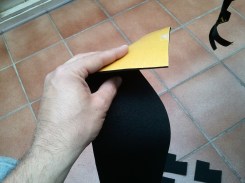
So I got some adhesive foam and cut four protectors to stick under them. I also got some reflective tape to put at the back of the panniers, I want to make myself well visible, especially in those parts of the world where drivers are not as used to the presence of motorbikes as in Barcelona.
2013-05-11 20.07.392013-05-11 20.16.51

Finally, I got some cheap bicycle bottles and bottle holders and fitted them to the front of the panniers. I hope the air stream will keep them cool and they will make a nice extra supply of water for the harder parts of the trip.

IMG_5912IMG_5913

Installing the crash bars, headlight guard and skid plate

Well, it has been a very productive week and weekend! Unfortunately that means that I am now behind in keeping the blog up to date, there’s a lot to write about; I will do it on separate posts. First one:

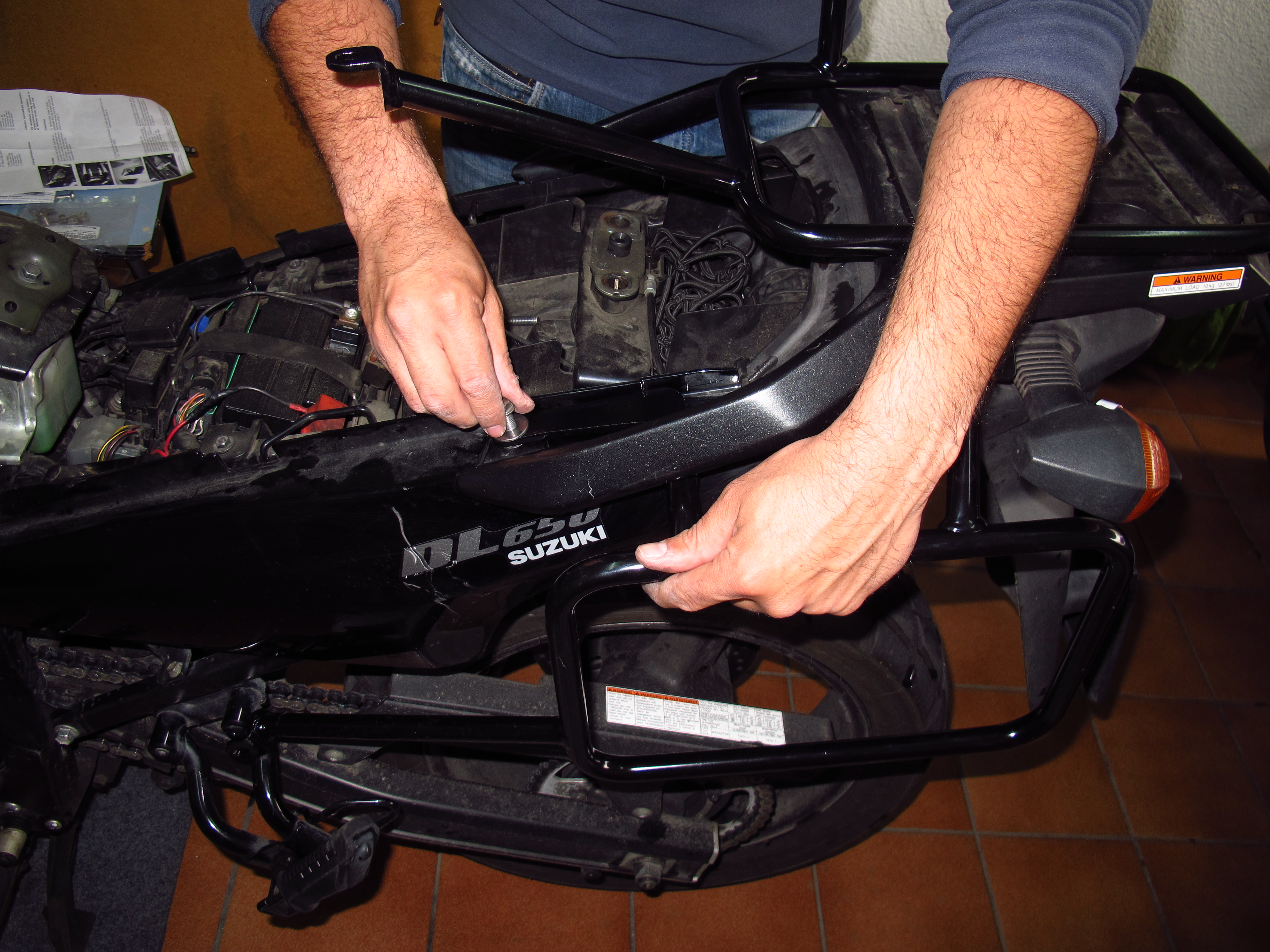
A couple of weekends ago I got down to installing the crash bars, headlight guard and skid plate, which I had not had time to install when I did the panniers and GPS mount. I had seen some people have trouble aligning the mounting points with the chassis on YouTube tutorials, but I am happy to say I had absolutely no problem. The only setback came from the long screw that goes from one side of the chassis to the other and supports the engine block. The crash bars that were installed on the bike when I bought it second hand were the original Suzuki ones, and they are attached to that screw. I imagine that when you buy them the mounting kit includes a longer screw that enables you to attach them. I removed the crash bars and saw that with separator washers the screw had enough thread in it to stay in place effectively, so I thought I would have no problems installing the Hepco & Becker bars, which attach to different mounting points. However, they partially cover the recess on the chassis where this screw is located, and because the longer screw I had in my bike protruded out of the chassis, it was impossible to fit them.

So, a week later and having purchased the original screw from a Suzuki dealer I was able to fit the bars without any problems. They offer far greater protection than the original ones, are thicker and look cooler.

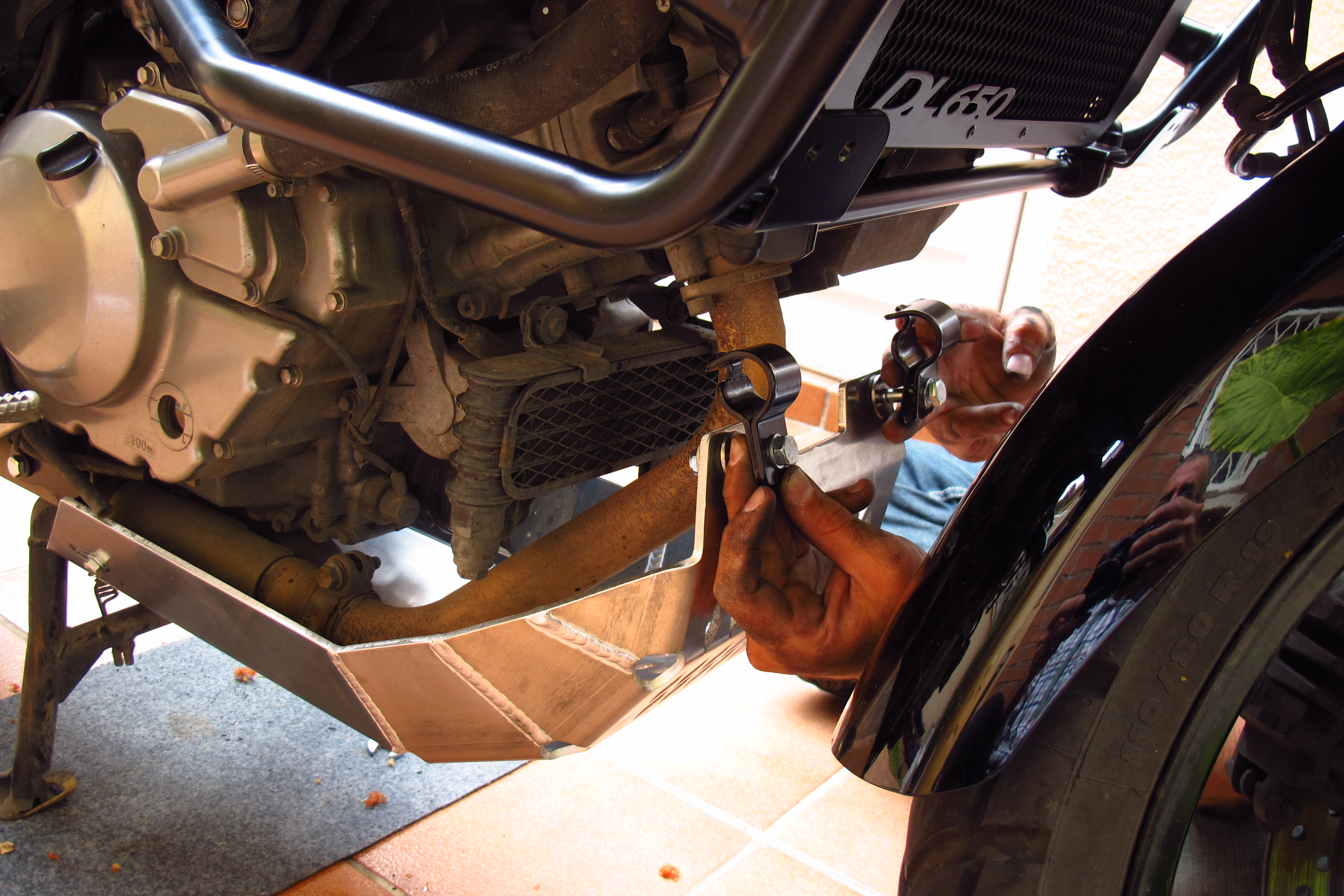
The problem came, however, when I had to install the skid plate. Adventure MotoStuff had supplied it with a mounting kit for the Hepco & Becker crash bars, but from what I could gather from the pictures, Hepco & Becker had discontinued the bars for the pre-2012 V-Strom and developed new ones for the new model. Since both bikes have the same chassis  the bars will also fit the older ones, and these are the bars that I had bought. However, AdventureMotoStuff had sent me the kit for the older model, which has a lower crossbar, so the mounting brackets were about 100 mm too low.

IMG_5868

Now, on a previous post I made positive comments about this company’s customer service, when I was trying to decided which combination of crash bars and skid plate to use I wrote to them and they replied promptly with clear and useful information. I am afraid that I will have to withdraw those comments now… I sent them an email explaining the problem I had and including some pictures for reference, inquiring whether they manufactured mounting brackets for the new bars or not. That was two weeks ago. I am still awaiting their reply.

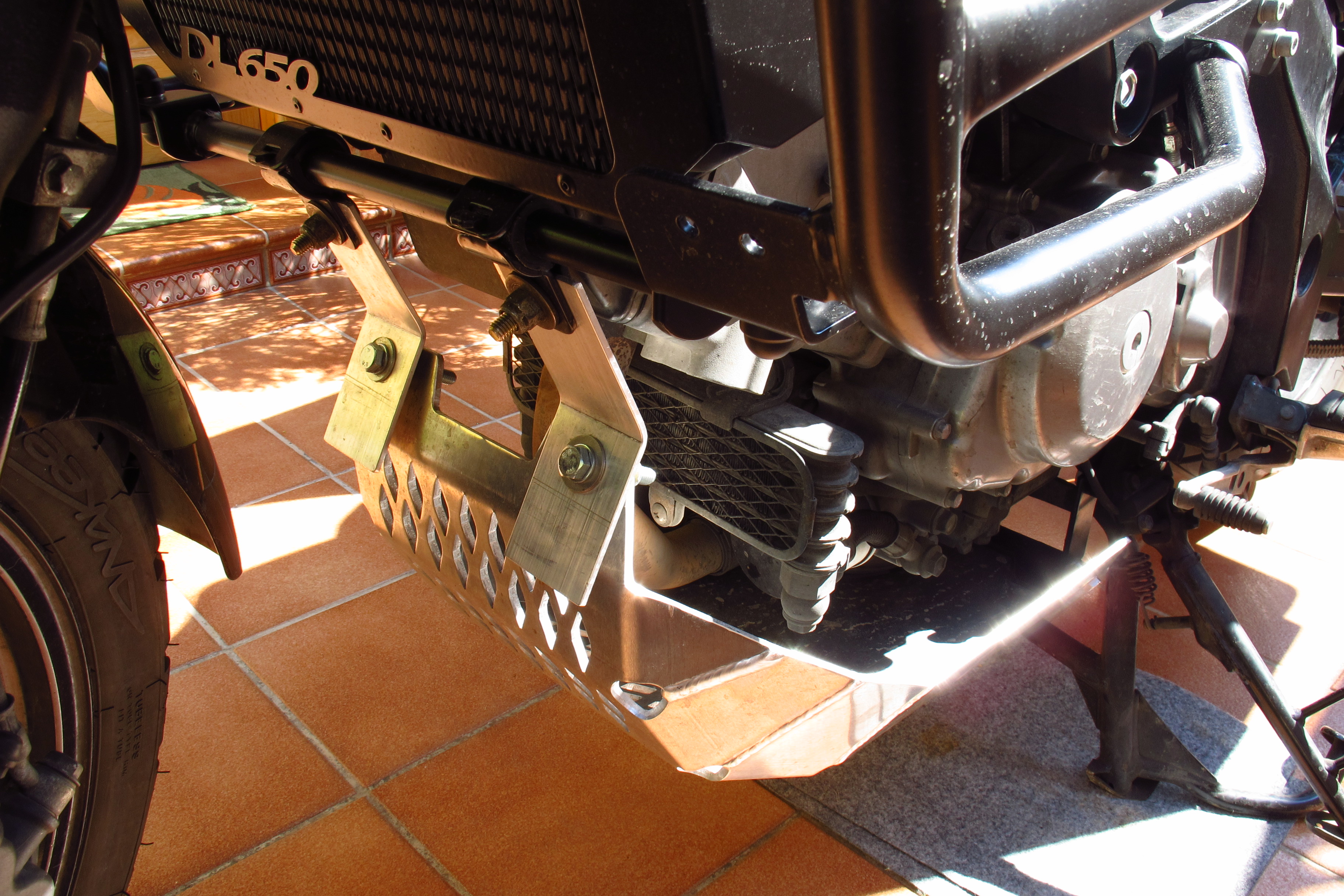
Seeing I was not going to get any help from them, I bought an aluminium bar and built my own extension to fit the skid plate. Here’s the result:

IMG_5890

It is a lot more solid than it looks or than I expected it to be, so I am quite optimistic that it will work without problems during the trip.
Finally, I fit the headlight guard. The V-Strom has enormous headlights and they are very exposed to small stones flying from the road or even small falls, so I decided this was a must. However, with such big headlights the mesh I had to fit was enormous, unlike the more discreet protectors for, say, a GS. Even so, once fitted it looks better than I expected.

IMG_5876

Heidenau K60 Scout and Kazakh visa

Just a short post to tell you that the tires I ordered are here. It’s a set of Heidenau K60 Scouts, and I am now going to spend the weekend figuring out how to carry them on the bike all the way to Volgograd, where I will have them fit while the bike is being serviced in preparation for Kazakhstan.

I decided to take this ones because I have had good references from other riders, they seem to be a good compromise – not to radical on the road, grippy enough off road, and they seem to last much longer than other knobbly tires, important since I expect them to last all the way back to Europe.

I will also be taking a puncture repair kit and a compressor but I have my doubts about taking tire irons. I have never tried to replace a tubeless tire, and it seems to be very hard to do on the roadside, especially breaking the bead. Can anyone advise me on that?

IMG_5883

I was hoping to carry them lying flat on the passenger seat and the back rack, but I also have to carry a rather big Ortlieb Rack Bag (I did not want to have too many little bags attached to the bike, they might easily get stolen in short stops to get supplies), so I am not very sure how to position them. I will experiment this weekend.

On a side note, this week I gave my sister (who lives in Madrid) the application forms and paperwork to get a Kazak visa. I do not have a hotel reservation or an invitation letter, but it seems that there is a simplified application process for Spanish citizens. Let’s see if we get lucky.

Installing the panniers and GPS mount

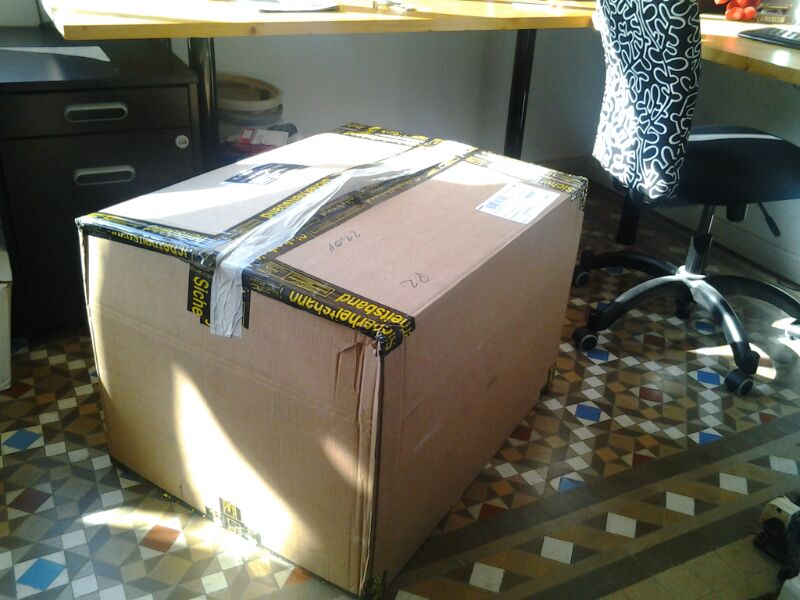
A couple of weeks ago a huge parcel was delivered to my apartment; I was not there, so the doorwoman picked it up as she usually does in these cases. But this time, when I say “pick up” what I mean is “took delivery”, because it was such a big box that the poor woman could not move it on her own. My flatmate got home before I did and he managed to get it on the elevator and drag it into the flat.

IMG-20130422-WA0004

It was the last big purchase in preparation for the trip: a pair of Touratech Zega panniers, mounting frames for my bike, some accessories for the panniers, a headlight guard, a Garmin GPS and a mount for the GPS.

Now I only needed the time to install everything on the bike, and the perfect moment came last weekend. A rainy weekend meant that my plans to go cycling on Saturday had to be scrapped, so I went to my parent’s and got down to it.

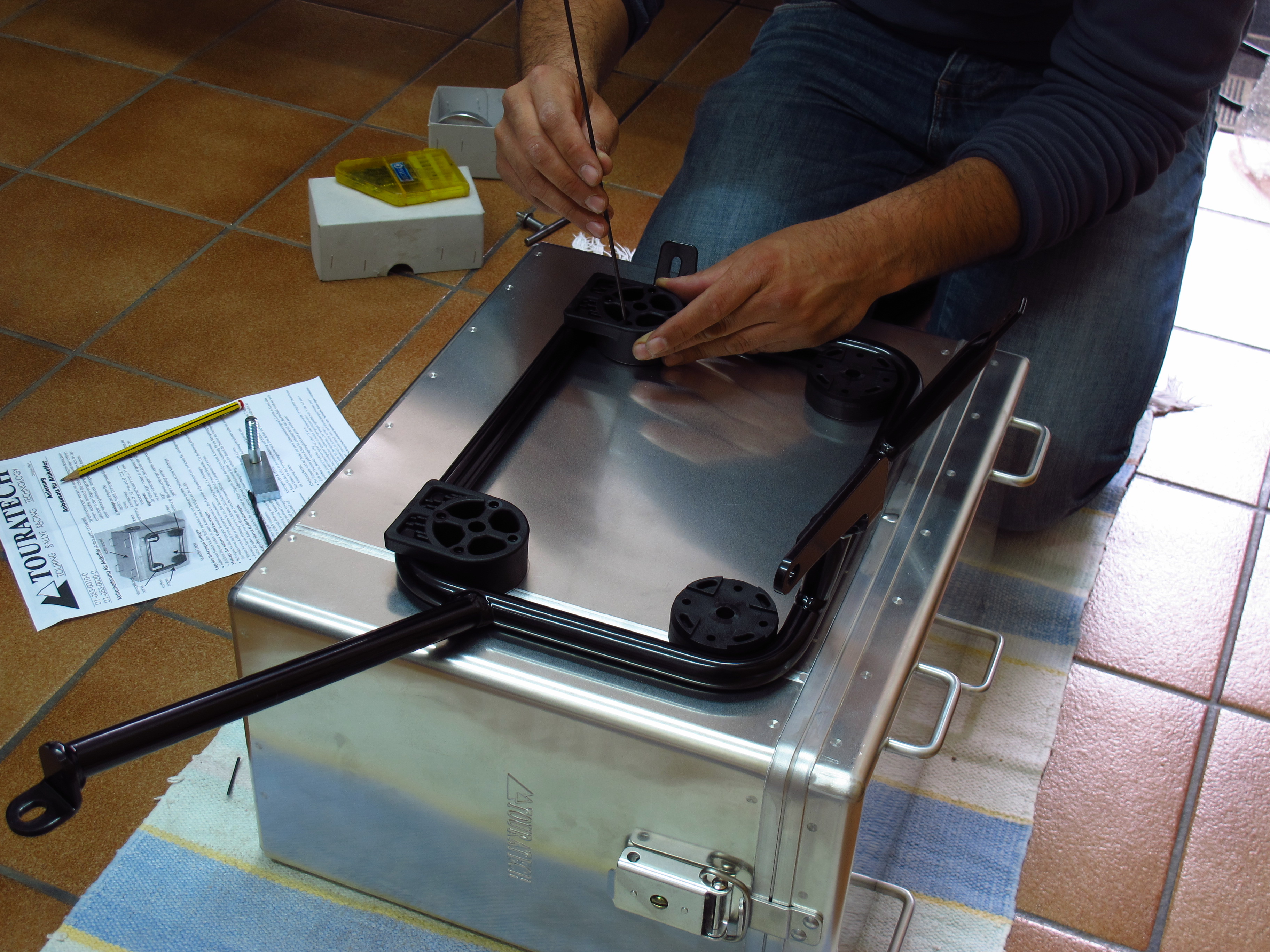
I knew I would need at least a whole day for the panniers and the GPS base, as the latter meant taking appart all the fairings and maybe remove the fuel tank to get the wiring from the battery to the front of the bike, and the former came without the mounting parts installed. I got the panniers without them for two reasons: Firstly, if I did it myself, I could position the panniers exactly where I wanted on the bike, and secondly and most important, it saved quite a lot money. The only drawback? It takes time, because it means that 18 holes have to be drilled on each pannier, and that’s after having taken all the right measurements.

Having learnt from Steve Stallebrass’ blog that it is quite hard to mark the drilling points while holding the panniers against the frames on the bike, I first installed the frames on the bike, had a passenger sit on it to make sure the panniers left room for her legs to rest comfortably on the footpegs and then marked the general position of the pannier in relation to the frame.

IMG_5766

I then removed one side of the frame (no need to remove the other, since the rectangular frame the panniers attach to is identical on both sides) and marked the exact drilling points comfortably with the pannier lying on the floor.

IMG_5786

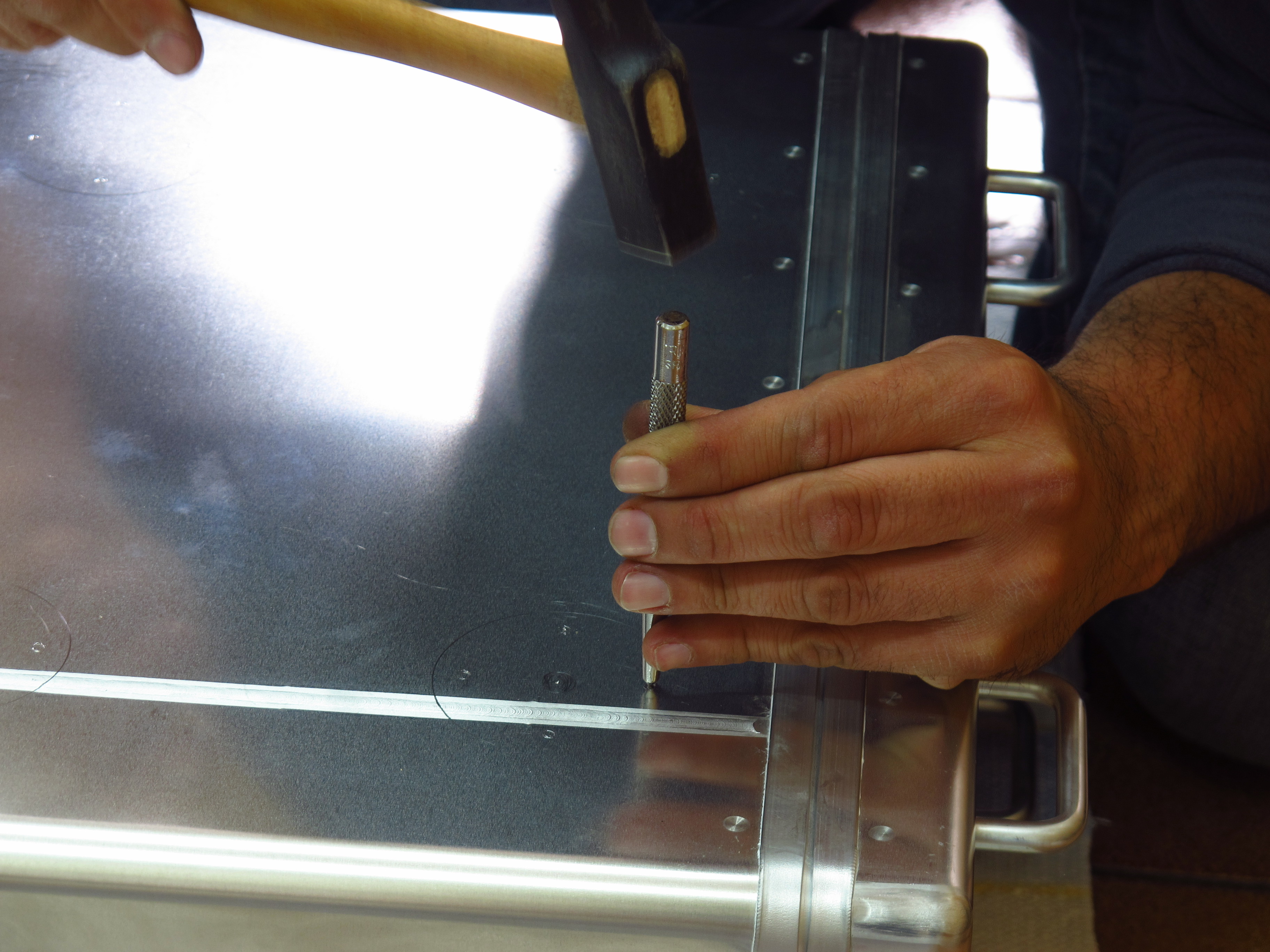
Once the points had been marked, I punched a small dent to make sure the drill would not slip and scratch the panniers and started drilling the holes, first with a 3mm drill and then with a 5 mm one. The two bigger holes for the rotating brackets were made with a 10mm one. All that was left then was to file any shavings and smooth the holes and screw the mounts in. It sounds quite straightforward, and truth be told, the process is not complicated, but it did take quite a long time to do it on both panniers.

IMG_5791IMG_5792IMG_5794IMG_5797

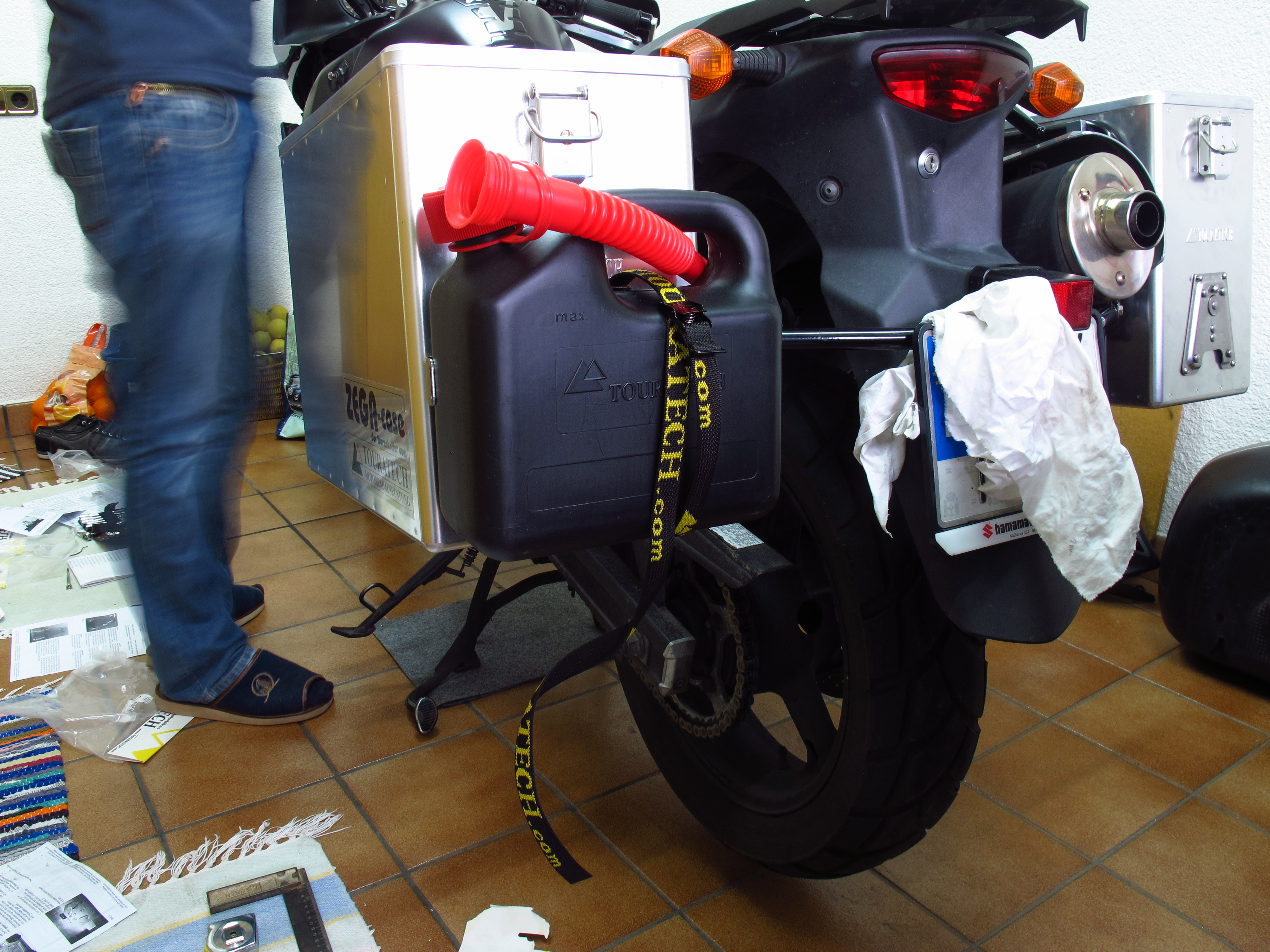
Now the panniers could be mounted on the bike, it was time to mark and drill the holes for the mounting plates that support the accessories I had bought for them: a holder for a 3-litre jerrycan and another one for a couple of bottles.

IMG_5807

IMG_5808

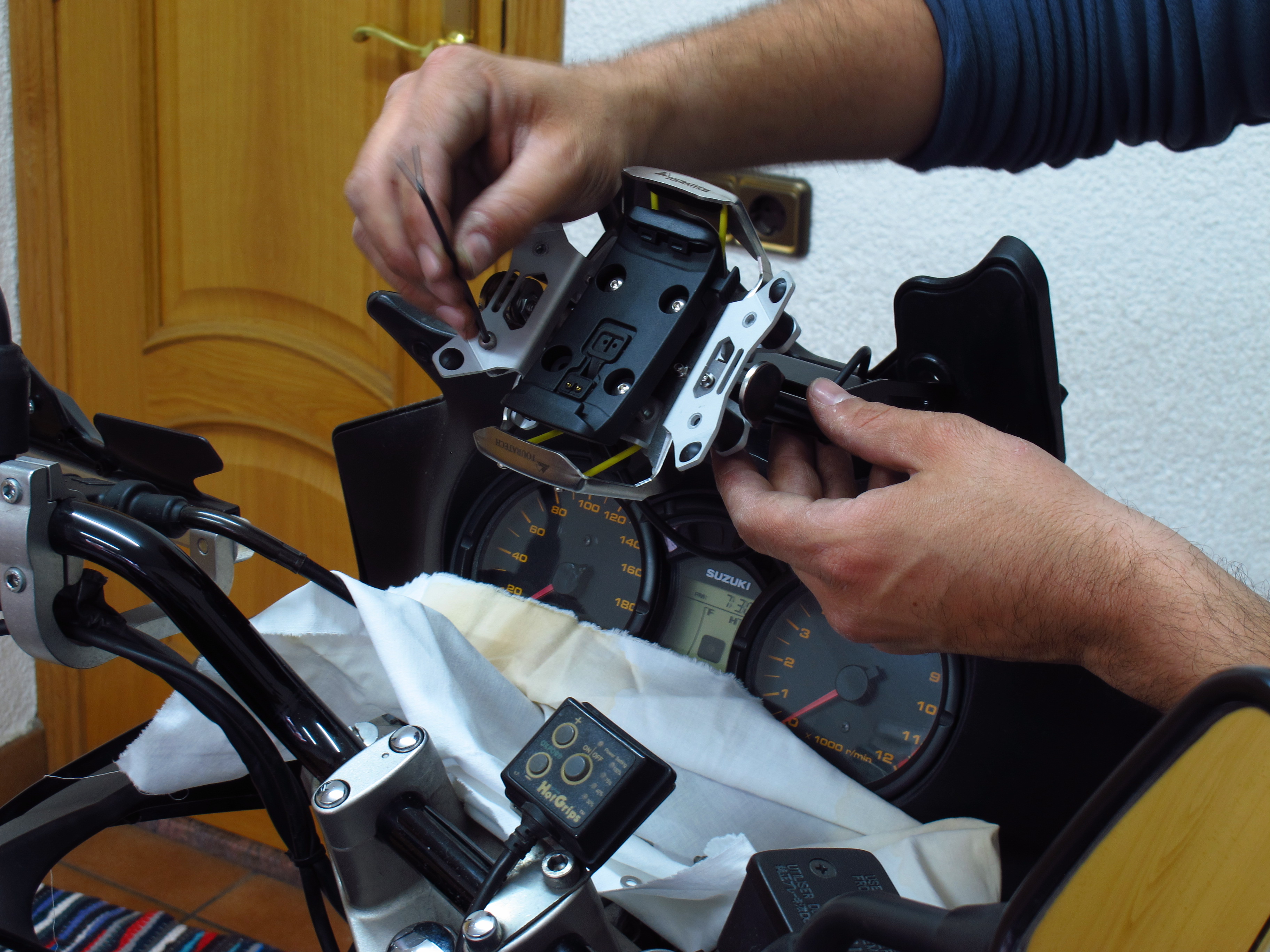
It was now time to install the GPS mount and the wiring that will keep it charged while it is attached to it. I did have to remove all the plastic fairings from both sides of the bike, but luckily I managed to get the wire through the front fairing and under the fuel tank without having to remove these.

IMG_5806

The Garmin Zumo I bought came with a RAM mount kit, but I prefer to use this one, as it is lockable, so I do not need to remove the unit every time I stop. I will recycle the RAM mount  for the SPOT tracker.
Finally, I put everything back together and tested the GPS. It works!

This is how the bike looks now:

IMG_5810

IMG_5809

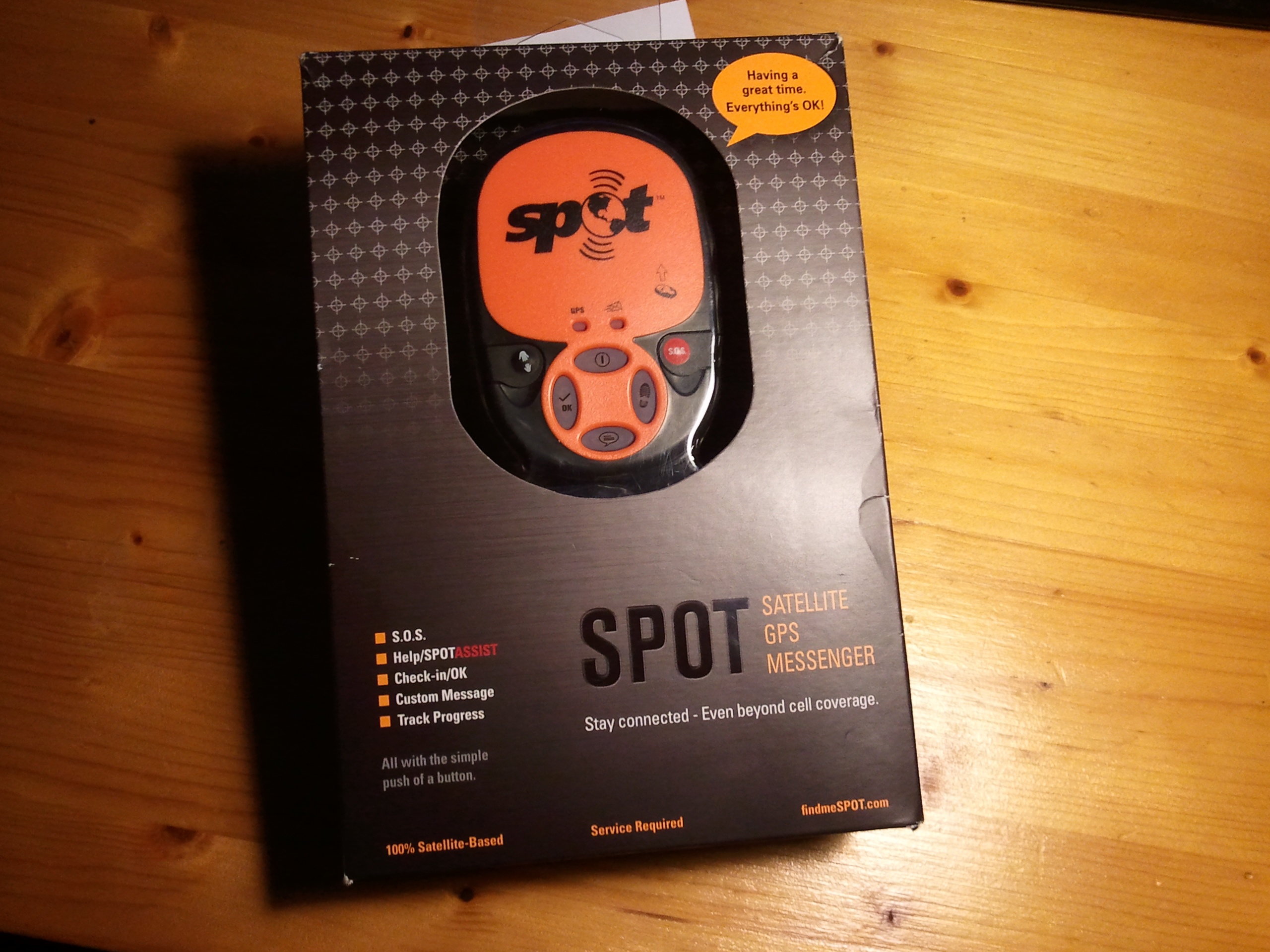
Spot Satellite GPS Messenger

This is one I have been having doubts over for a long time. To buy or not to buy. As with many other things involved in the preparation of a trip like this, there are scores of very well argued opinions for and against the SPOT tracker all over the Internet. Some say that it can save your life; some say if something really bad happens, it will not guarantee that help gets there on time and for anything less serious, there are other ways of getting help, so it is an unnecessary expense, not to mention one more item to carry and worry about.

After weighing pros and cons for my particular case, this was the conclusion I came to:

FOR:

– There might not be phone signal in most of Kazakhstan and Mongolia, so no way of getting help on the road.

– I can let people back at home know that I am OK and they can track my progress almost in real time on a map.

– My mum would be more than happy that I carry the thing.

AGAINST:

– I have been told that phone signal is surprisingly good around towns and anyway, I will not be far from populated areas for that long.

– Being rescued might incur in hidden expenses that can amount to a lot of money (but then again, it is much better than not being rescued at all…)

– It is expensive, at 159€ plus 99€ for one year’s subscription to the service (yes, you do have to subscribe).

I was not going to get one, but a week ago I thought I would check on eBay to see whether I could get a used one and I found a new one on the States for 90€ plus shipping, which was still considerably less than buying one here, so I decided to order it (and make my mum happy).

I went to pick it up from the post office this morning and when the guy behind the counter gave me the box, I though ‘well, it had to happen, a new one for so little money could not have been real… I’ve been conned’. And I had good reason to think so – the box I had been given was labelled ‘Phillips Headphone Set’. Panic.

I walked out onto the street and towards my bike thinking about how unlikely I was to get my money back and trying to convince myself that 90€ was not that bad. I put the box on the bike’s seat and ripped the tape sealing it to find… The real box containing my SPOT!

2013-05-02 23.07.54

I went to work, very relieved and much happier! When I got home this evening I was eager to open it and see how it worked.

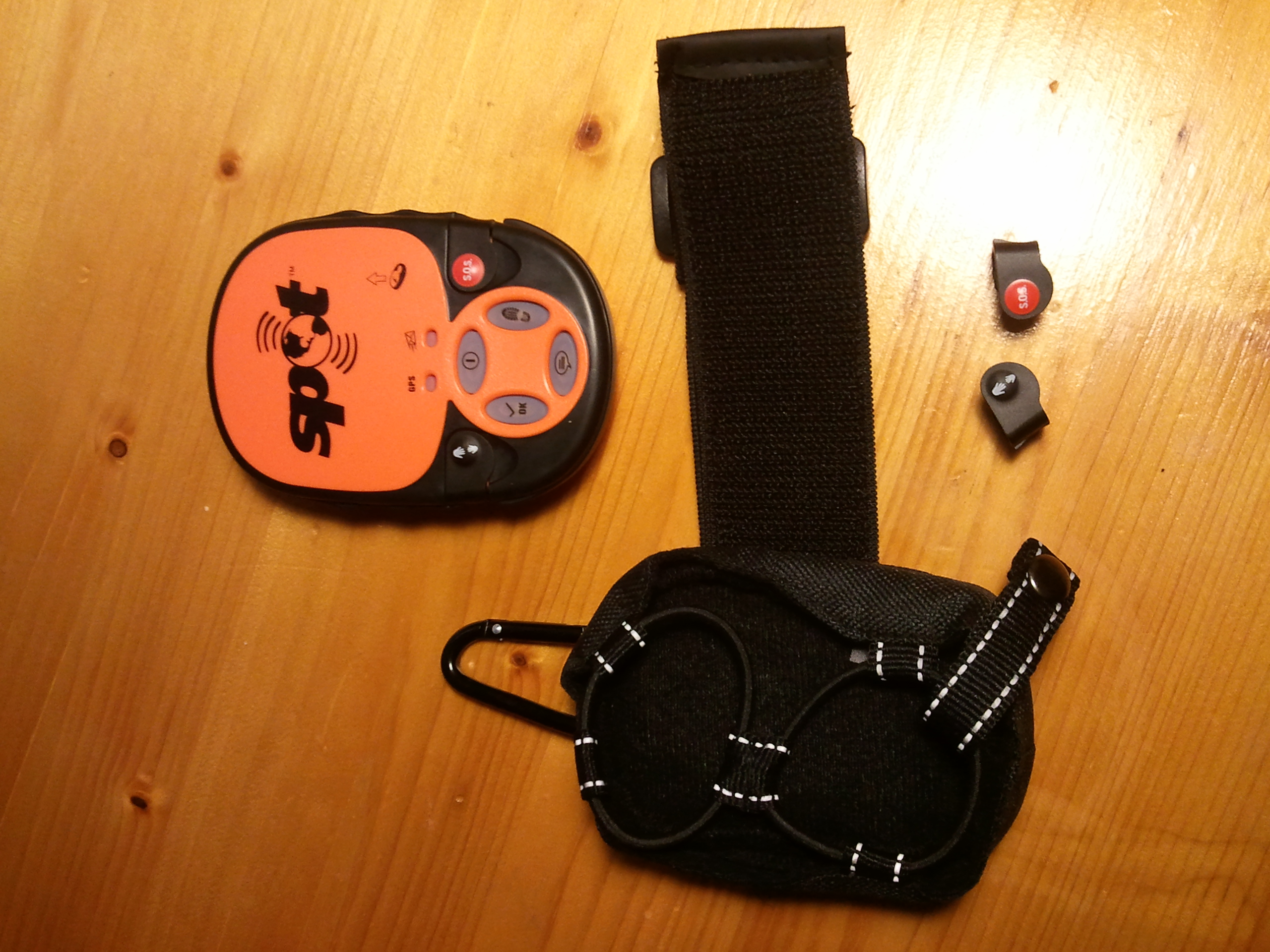
The box contains the unit itself (a lot smaller than I thought); a kind of pouch to carry it around your arm, velcro it to a surface (the patch is too small, though, – I think I would lose it quick if I stuck it like that on the bike) or just hang it on to your belt or trousers; two replacement covers for the emergency buttons; the instructions and three batteries (Energiser Ultimate Lithium, the instructions are adamant that only this particular brand and model should be used). It does not include a cradle to mount it on the bike, but I can probably get one cheap and adapt it to the RAM mount that came with my Garmin and that I’m not going to use (more about that in another post).

2013-05-02 23.10.45

2013-05-02 23.14.51Now that I have almost everything I need for the bike I am planning to go on a test trip in a couple of weeks. I will get it activated this week and see how it works then.

Got the Russian visa!

The most difficult one is done! In fact, it has been much easier than expected – money obviously helps… This one was supposed to be complicated, as I needed a multi-entry business visa, which meant I had to be invited by a Russian company, but I just paid for an invitation letter and to have all my paperwork done through Central de Visados Rusos, in Barcelona, and they sorted out everything with no fuss at all. In ten days I had my visa! Now I can enter and leave Russia as many times as I want from July to December.

Since I had got my passport back and still had an hour before going to work, I decided to start the process of getting my Mongol visa. The Mongol Consulate in Barcelona is not far from the offices where I got the Russian visa, so I took the bike and went down there.

They are located at the end of Rocafort street, near Paral·lel, and their premises could not be more different from the mansion in Pearson Avenue.

2013-04-23 10.25.20

2013-04-23 10.24.49You walk through a dark and damp entrance hall on the ground floor of a typical Eixample building to an inner court where there are a few small houses, among which is the consulate.

2013-04-23 10.24.05

The girl there was much, much nicer than the staff at the Russian consulate and after going through the paperwork she told me that there would be no problem to issue a tourist visa, but that it was still too early, as I will not be reaching the border until late July or early August, so she advised me to get any other visas I needed and then go back.

So, on the the Kazakh visa, then!

Adventure MotoStuff engine guard

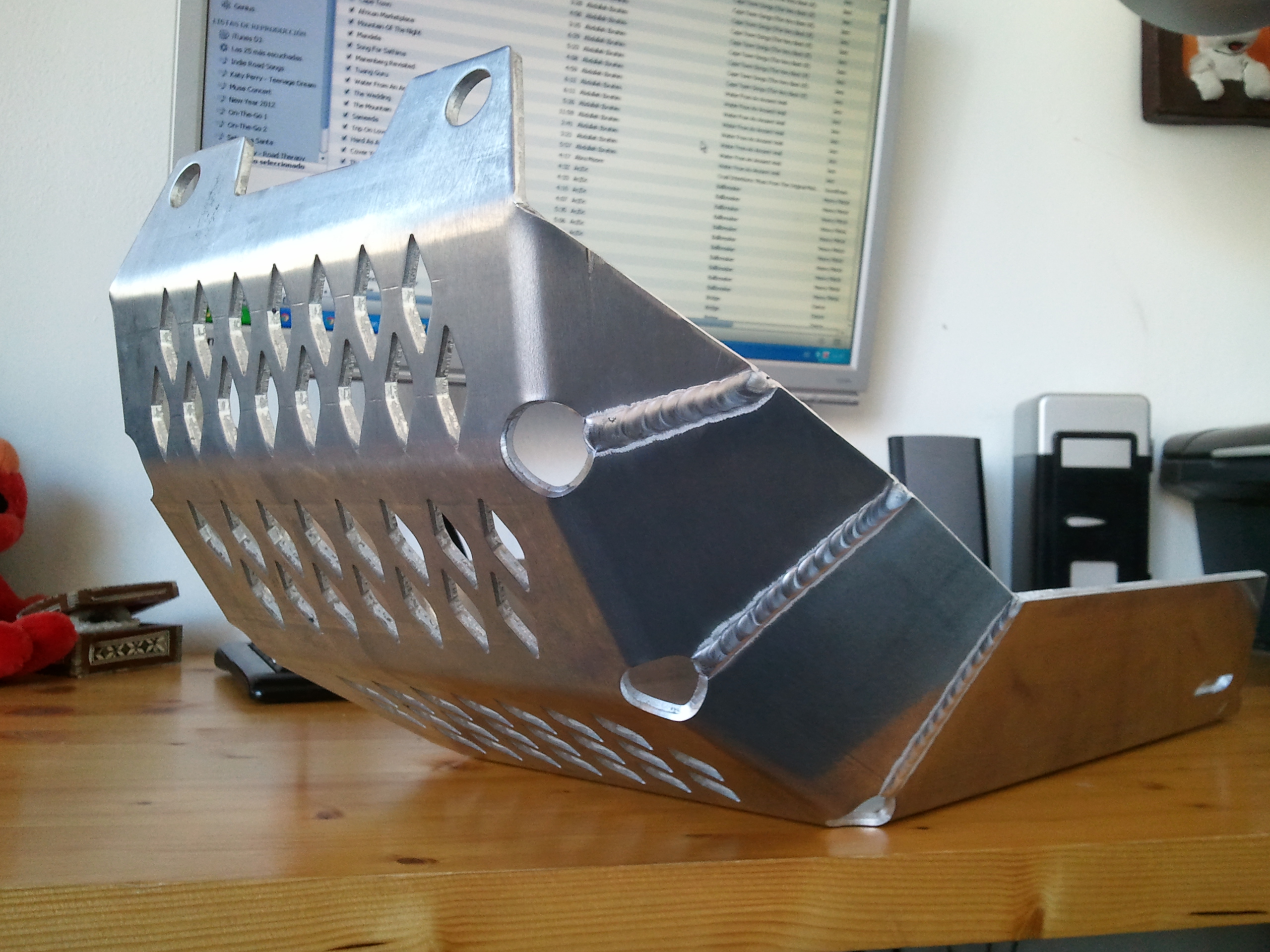
I received my engine guard today! I had checked out a lot of different models (see this list – in Spanish) but in the end the only one that I found convincing was the one manufactured in the USA by Adventure MotoStuff.

2013-04-18 11.38.04

All the other options had some shortcomings – they were too narrow at the top and exposed part of the oil radiator; they requiered the oil radiator to be moved to a higher position; they had exposed screws at the bottom; they had access holes at the bottom (handy for servicing the bike, but leaves some parts more exposed); they were build of different parts screwed or welded together, some of them being too thin; etc.

The Adventure MotoStuff one is made of one thick, solid piece of metal, it covers the oil radiator, can be attached to the Hepco & Becker crash bars I already have and has a perfectly clean underside, withouth protruding bolts or screws. The mounting bracket also looks very sturdy.

2013-04-18 11.38.262013-04-18 11.39.21

It took about a week and a half to arrive, and my only complaint is that I had to pay import VAT, which had never happened before with anything else I had ordered online. I guess this time I was unlucky and the parcel was inspected at the border.

Customer service at Adventure MotoStuff was great, I emailed them some questions and they replied promptly with clear and useful answers.

Russian Visa and the Russian consulate

I have read a lot about Russian bureocracy in all the adventure travel discussion forums I have visited, so when I started looking for information on the kind of visa I would need to enter Russia multiple times on a motorbike, without exact dates of entry or exit, hotel reservations or letters of invitation, I already expected a certain degree of difficulty.

After reading about different types of visas, requierments and companies that do all the paperwork for you, I decided to try and do it myself in order to save a few euros, so I went to the Russian consulate on Barcelona.

As you would expect from such a country, the consulate is not an office on the second floor of a building in the center, but an impressive mansion in the high part of the city. Their web site clearly states that it is impossible to visit it without an appointment, so I logged in and filled in the necessary information to get one. The system turned out to be rigidly Russian: the only option available on the list of reasons to visit the consulate is ‘visas’. I guess you need to be somebody and know the right people to visit the consulate for any other business. I got an appointment for a Thursday morning, and when the day came, I went there hoping to get first hand information on exactly what kind of visa I needed for such a trip, and if whoever was there was nice enough, maybe some information on border crossings, state of the roads, etc. How wrong I was!

The entrance to the front court of the building consisted of a two-door cage system, with security cameras, an intercom and a burly security guard who was letting somebody out and quickly closed the door behind her as he saw me approaching. When I reached the first door he blurted out something in Russian and I told him I had an appointment (in Spanish, of course, my Russian is non-existent and if the guy is stationed in the Consulate in Barcelona, I expected him to understand the local language…) and he said ‘name?’ I gave him my name and ID number and he proceeded to check a printout he had on a folder. He nodded and pressed a button that let me through the first door and into the cage. I had to wait for the first door to close and then somebody opened the second one from somewhere else. He pointed at the main entrance to the mansion and said ‘left’.

The arched door opened into a roomy entarnce hall, where some people were sitting, apparently waiting to be called. The door leading from the hall into the building was open, and I caught a glimpse of some people on desks and guys in suits walking around. I was wondering whether they also had had to make an appointment through the web site and how they had managed to get some other option than ‘visas’ on the menu when the voice of the security guy saying ‘left’ again brought me back to real life. He was behind me, pointing at a smaller door to the left of the hall. I walked in and found a small room with a couple of tables to fill in forms on and a tiny window to the right. It was obvious that the rest of the mansion was not accessible to mere mortals.

There was nobody queuing at the window, so I walked to it. Behind bullet-proof glass was a bored looking soviet civil servant stamping visas. He raised his sight, saw me and said ‘papers?’ I started explaining my story – travelling on a bike, entering several times into the country, no invitation, blah, blah, and I think he was overwhelmed by the sheer number of words I was wasting; everyone I had met so far in the building seemed to use only one word at a time. He said ‘they’ll inform you’ and pointed behind me. I turned around hoping to find a smiling young Russian girl sitting behind an information desk, but there was no one else in the room. I looked at him and he pointed again. This time I realised he was pointing at a notice board on the wall where there was a poster advertising a company called Central de Visados Rusos which arranged visas. I had seen other companies online, and several people had recommended using Real Russia, but I wanted to avoid paying a company to do the paperwork if I could do it myself. However, it was clear that was all the information I was going to get in the consulate, and the offices of the company were near my home, so I decided to go and see if they could shed some light on how to get the visa I needed.

There was no security guard on my way out, so I approached the first door and pressed the button on the intercom. Someone barked a few words in Russian and I replied ‘I want to get out.’ The first door buzzed opened and I walk into the cage. Once the first door had closed, the second one buzzed. I pushed it, but it would not open. I waited for them to unlock it again, but it refused to move. There was nobody in the front court and I was stuck in between doors. Great. I pressed the intercom button and asked to be let out again. The same voice yelled something in Russian and the door buzzed again, but it refused to open, no matter how hard I pushed. I was starting to feel a bit stupid trapped between doors when a woman walked up to the door from the street, said something in Russian to the intercom and the door buzzed one more time. She pulled it effortlessly from the outside and walked in, as I took the chance to leave that charming building.

I did find the smiling young Russian girl I was hoping for in the visa company. She listened to what I wanted to do and explained that the only multy entry visa for Russia is a business one, the tourist visa only allows people to enter the country twice in a period of one month, a business one allows multiple trips over a period of three months. She said that it did not matter that I was not going to go there on business, I only needed a letter of invitation from a Russian company in order to obtain a visa. When I asked her how I would get one without contacts, she smiled, handed me a form and said ‘we provide them for 50€’.

It was becoming clear that I was not going to be able to do the whole application process myself, and on top of that, they were the only company that the Russian consulate in Barcelona had officially approved to handle visa applications, and I still had to apply for the visas for Kazakhstan and Mongolia, so I decided to save time and use their services.

2013-04-11 12.07.28

After having my picture taken, taking out travel insurance in one of their approved companies, filling in a request for an invitation letter and the form downloaded from their website and making sure my passport didn’t expire in the next six months and had at least two consecutive blank pages, I finally handed in all the paperwork needed this week, and by Tuesday next week I should have a multy entry business visa for Russia.

Travel insurance

It’s now only three months to departure and this week I wanted to start sorting out the visas, since each application will take around 10 days and I want to make sure everything is ready on time.

I decided to start with the Russian one, the most difficult, as I need to get a business visa. Apparently, tourist visas only allow two entries to the country, and I need three over a period of three months, because I’ll be entering the country from Ukraine, Kazakhstan and Mongolia.

However, before I apply for any visa, I need to get travel insurance, since all consulates ask for a certificate to prove that I have travel insurance for the duration of the stay in their country. I checked out prices and coverage with different companies, and in the end settled for Europ Assistance because the price was fair, the coverage reasonable, it is on the list of insurance companies approved by the Russian consulate in Barcelona and last but not least, their offices are around the corner from my flat.

2013-04-09 11.51.51

So now that I have my insurance and three separate certificates (one for each visa), I can start the process. I have already completet and downloaded the application form fo the Russian one, so if I have time tomorrow morning, I’ll get started on it.