Omiš

Days 6 to 8 – Wednesday 3rd to Friday 5th August (0km)

After a hard year of work, one of the things we wanted to do this summer was relax a bit. Adventure holidays are fine, and we would have plenty of that in the coming days, but first a few days to unwind on the beach would be more than welcome, and Omiš was the perfect place for that.

Omiš lies at the mouth of the Cetina river, and its unique location, hidden from the open sea by the island of Brac and with the deep canyon of the river behind, made it a perfect hiding place for pirate.

Most people who visit Croatia go to Dubrovnik or the many islands that the country has, so the stunning pebble beaches in Omiš are rather quiet, with mostly Croatian holidaymakers and a few Hungarians, Austrians and Poles. You can enjoy an excellent fish or seafood dinner in the center at a very reasonable price and accommodation is also cheap.

We got an apartment across the road from the beach and then found a small secluded beach on the other side of the river mouth, just outside the city, with crystal clear water and shade from the trees right on the shore. Because there was barely any sand there, the place was also mostly blessedly kid-free, so it was really quiet. Perfect for a bit of swimming, reading and relaxing.

With our beach half an hour on foot from the apartment and the city center even closer than that, the bike spent all our time here safely chained under a tree in the garden, all the best taking into account how bad traffic is. If you decide to visit Omiš, come here by bike or of you do it by car, get an apartment that is within walking distance from the beaches and the center, or you’ll go crazy. The coast road cuts through the center, and there is only one narrow bridge to cross the Cetina river with jwo junctions on either side of it leading to two roads going into the canyon along the river, and with high hills right behind the town, there is no room to build a bypass. This means that traffic crawls so slowly through the city that it is actually faster to cross it on foot.

DCIM123GOPRO

On the last night we had dinner with some good friends who live in London and who were also on holiday in Croatia, Josep and Mona. He had seen on the blog that we were around here, and they were on their way to Split to take a plane back home on Saturday, so they made their last stop in Omiš and we shared a great evening together.

IMG-20160806-WA0007

Objekat 505

Day 5 – Tuesday 2nd August – From Korenica to Omiš (325km)

When travelling, talk to the locals, always talk to the locals. They are a source of information a thousand times more valuable than any published guide or regular travel website if you want to discover interesting things.

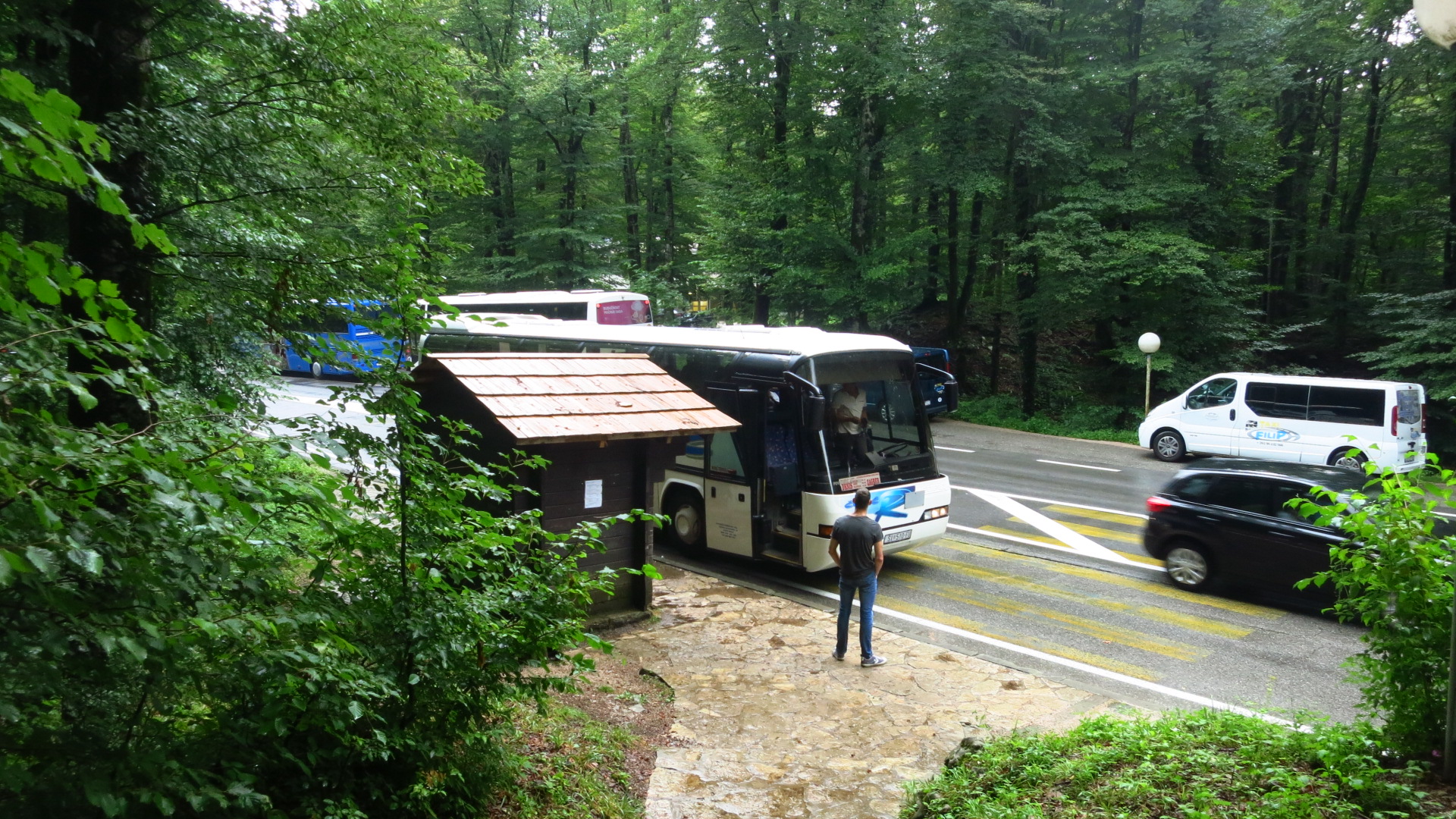
There are is no local bus connecting Korenica to Plitvice natural park, so to get back home at the end of the previous day visit we had wait at the bus stop outside the park for one of the regular line coaches that go from Zagreb to Zadar or Split and hope that there were free seats, which did not seem very likely in view of how many Japanese tourists and backpackers were also waiting with a booked seat. When the coach arrived it was full, but fortunately, even though Croatia had been a EU member for about three years, the health and safety obsession that seems prevalent in most member countries had not yet made it into people’s lives here, so we were just told that we would have to stand on the aisle. A Japanese tourist got off at the first stop, freeing up a seat for Nat, and then a local guy who was seating at the front, in the guide’s jumpseat, chatting to the bus driver, invited me to seat with them.

We quickly got talking about motorbikes and places to visit in the region, and then he pointed out the left side windows at a mountain with some antennas on top and told me that it was Plješevica Mountain, the tallest in the region. Then, in a more hushed tone, he said that hidden behind the mountain there was a ‘secret airport’. On the map of the natural park and its surrounding that we had been given earlier I had seen a couple of long straight lines that looked like runways and that the border line between Croatia and Bosnia, which generally followed the watershed line along the mountins, turned into the Bosnian side to encompass them in Croatian territory, but there were no labels indicating that it was an airport or that it was in use. Needless to say, my curiosity was piqued, but before I could ask for more information his mobile phone rang and he got engaged in a conversation that was still going on when we reached our stop.

Back at the apartment I checked Google Maps, but there was nothing there other than a couple of small villages off the road crossing into Bosnia. Switching to satellite view, however, revealed a sort of access road from one of the villages and what seemed to be at least five runways.

Screenshot_2016-08-03-15-50-44Screenshot_2016-08-03-15-50-25The OSM map on my Garmin confirmed this, and by now I was determined to go and find out what it was. Googling the name of the mountain, I finally found some more information.

It was not an abandoned airport, but a military base, called Željava Air Base and codenamend ‘Objekat 505’, built between 1948 and 1968 as an early warning radar system for the former Yugoslavia, with a radar station at the top of Plješevica Mountain and an airbase buried deep at the base of the mountain that housed Mig fighter jets inside nuclear bomb-proof facilities. The base saw heavy use during the Balkan War, and when the Yugoslav People’s Army fled the area, they destroyed the runway and the tunnel complex with tonnes of explosives. Today the base is completely abandoned and easily accessible from the nearby village of Željava.

‘Easily accessible’ does not imply that it is safe nor advisable to do so. Being a military facility, the area was heavily mined, and those mines have still not been cleared today. Inside, the structure was heavily damaged by the detonation of more than 56 tonnes of explosives, and there are large amounts of cancirogenig PCB dust and radioactive americum from the destroyed fire detection system. Right, so the only thing left to do was explain to Nat that we were going to be a few hours late to the beach in Omiš. And not mention the landmines.

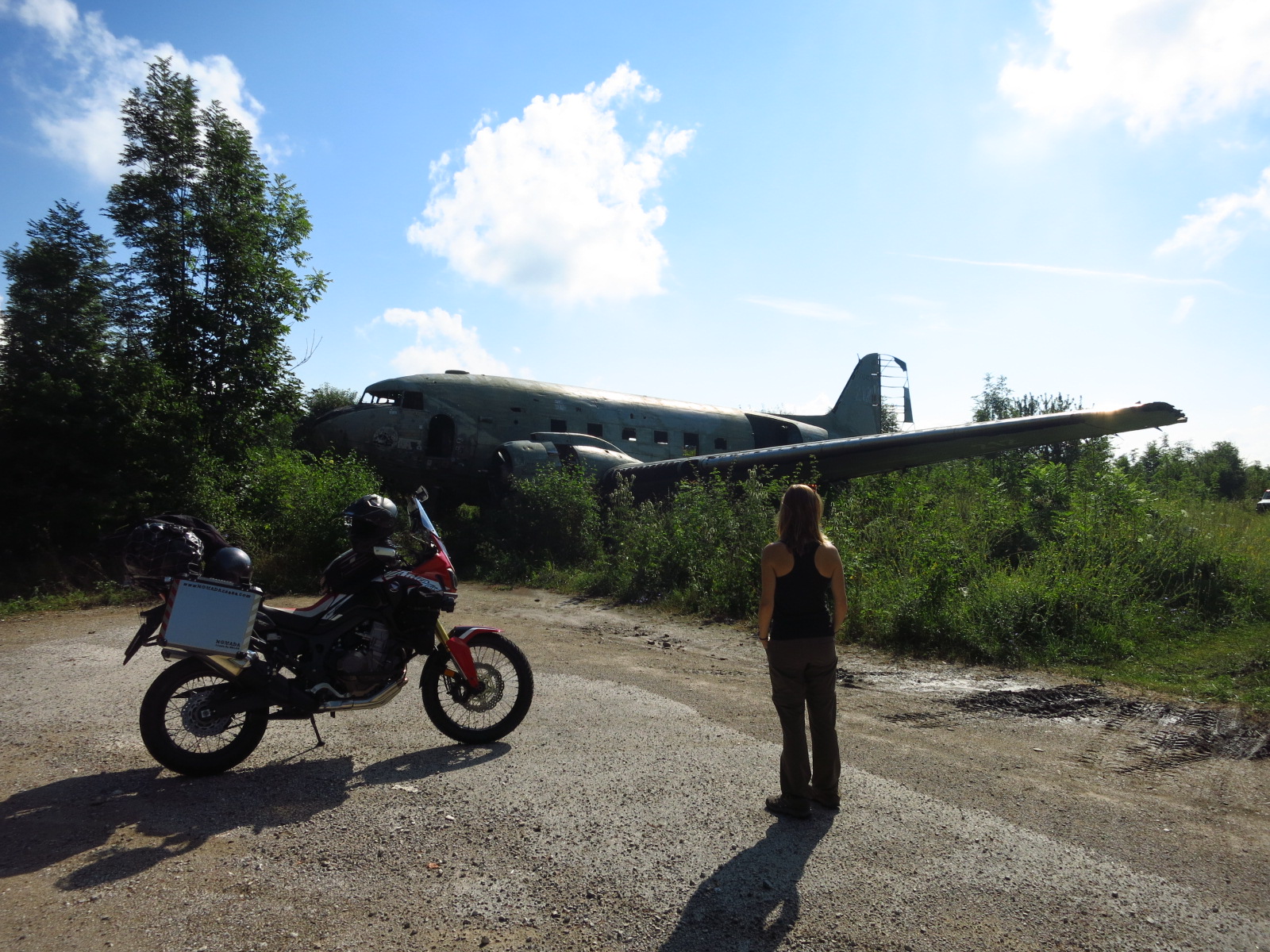
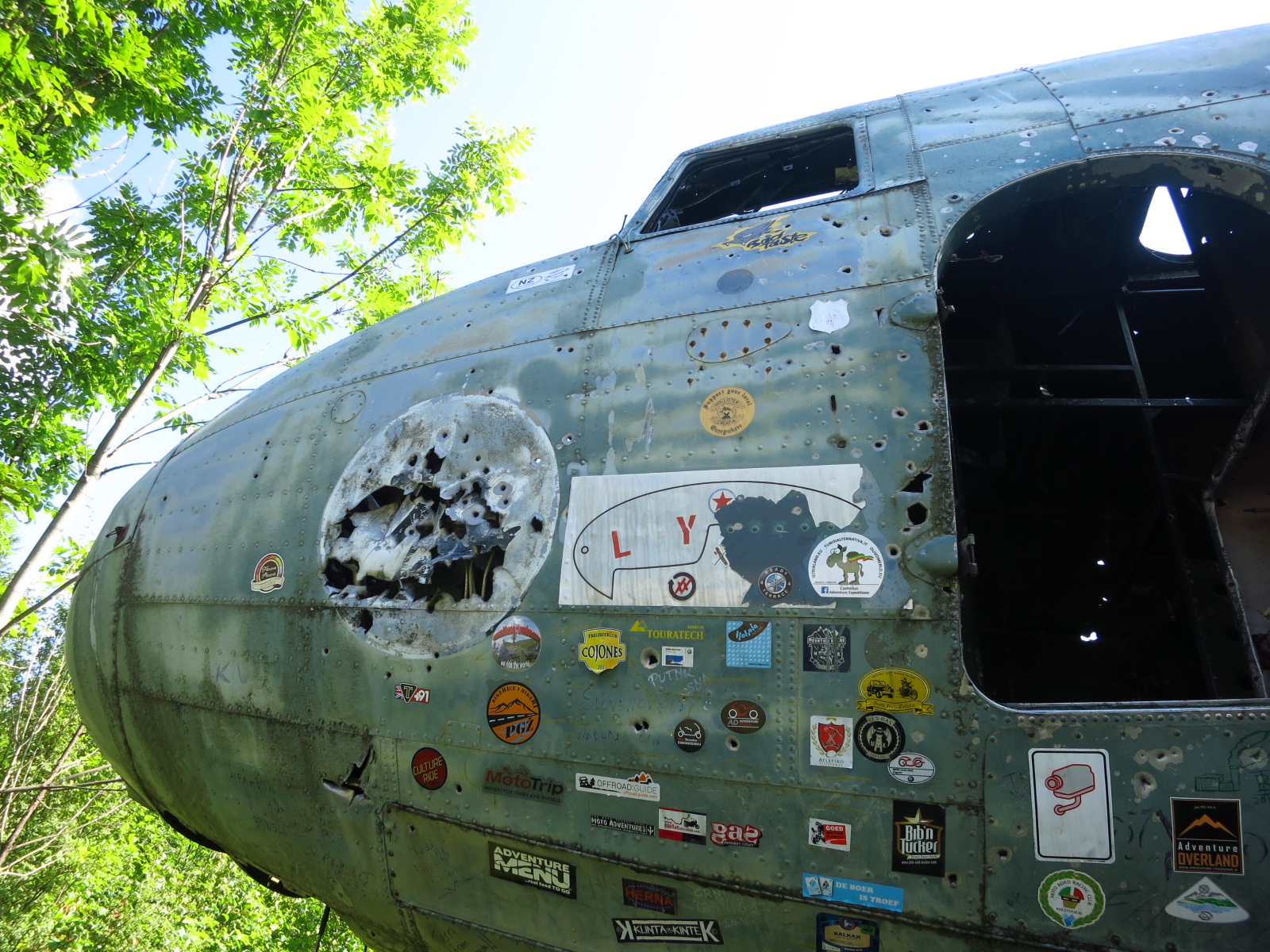
20160802034714Thanks to the OSM maps we found our way to the town of Željava very easily after a nice ride to the other side of the mountaing range, and from there a narrow road that the vegetation on both sides was eating up led to a rusting gate that marked the entrance to the complex. Next to it, the first surprise of the visit, standing in the overgrown bushes – a DC3.

20160802033913We got off the bike and I told Nat not to walk outside the paved areas or paths that had been clearly trodden before because there were mines everywhere. She gave me her worst ‘divorce’ look.

20160802033726Riding on past the gate and with more bushes and trees closing on the road, we reached the intersection of the three main runways, and to our right, the entrances to the underground complex.

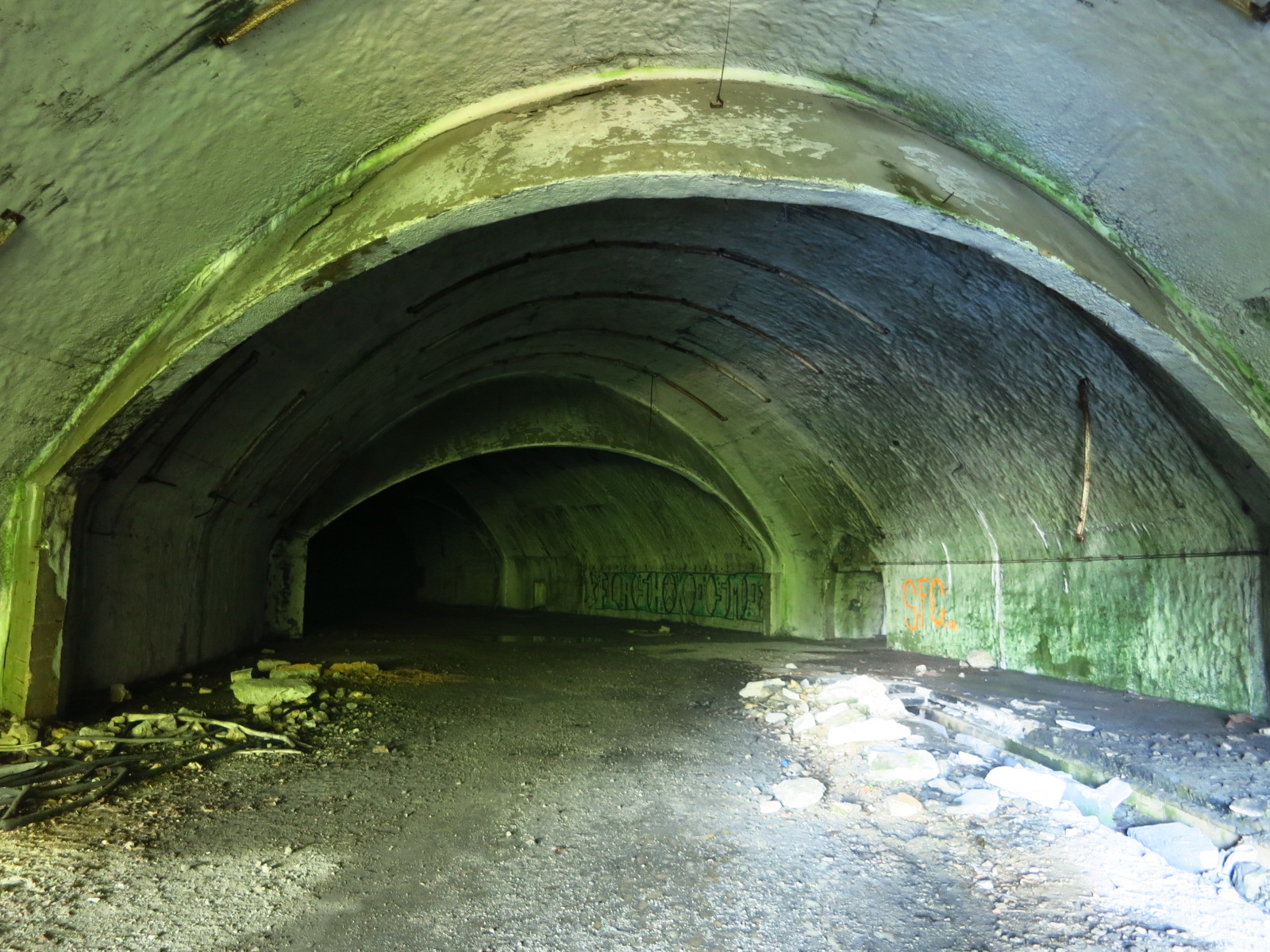
20160802041640 20160802035253 20160802035408 20160802035520The central one was specifically designed for fighter jets, and on the other two the damage from the explosions was clearly visible, with huge chunks of thick reinforced concrete hanging from the arched ceiling and part of the enormous concrete and steel pressure doors lying on the ground.

20160802035701 20160802034859I had a powerful torch with me and started to wander down the tunnel, but the air was rarified, and a picture with flash revealed the amount of dust in suspension in there, so I did not want to venture any further in without wearing a mask. We’ll have to come back someday before the EU hears about the place and orders it shut.

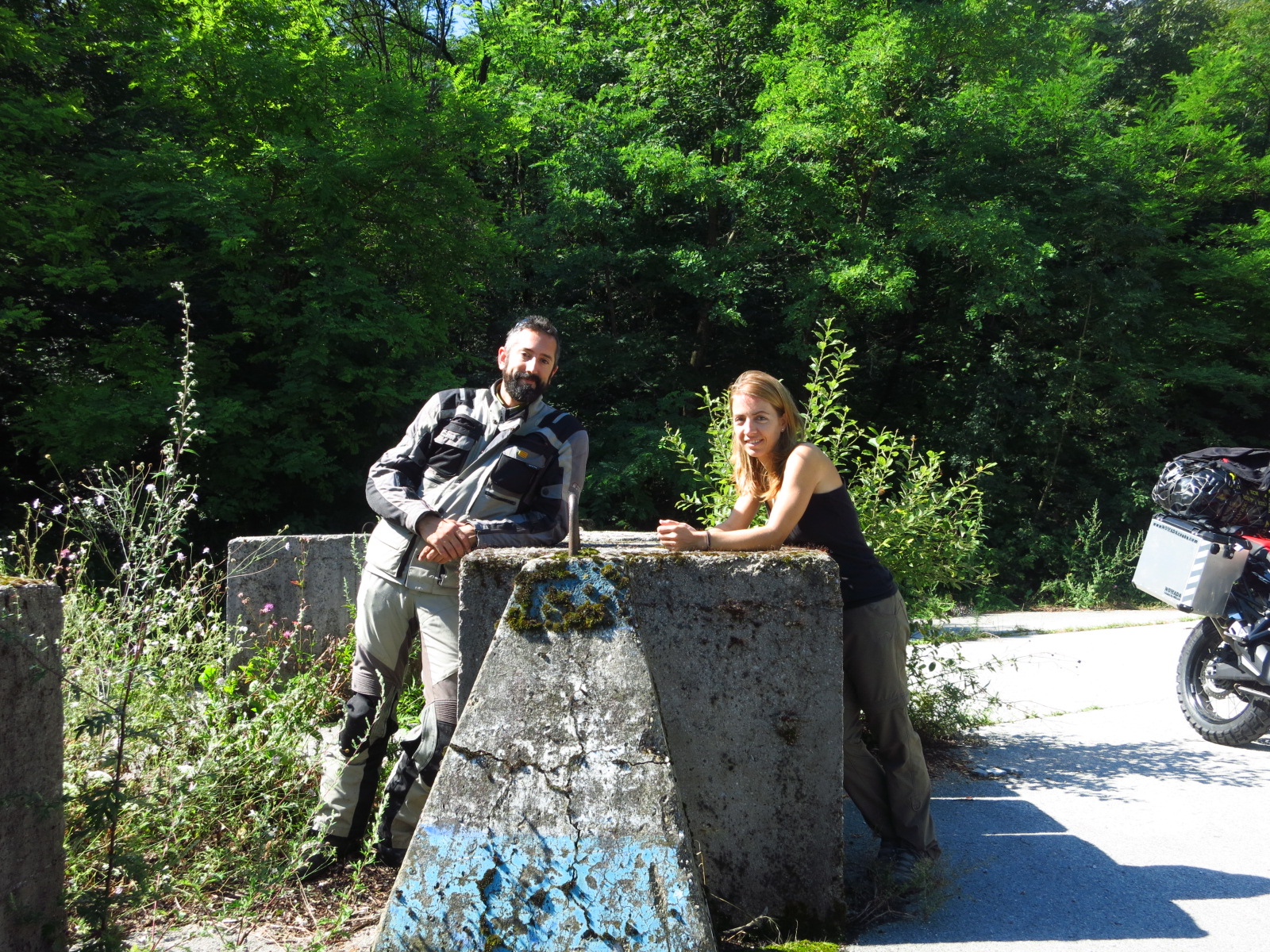
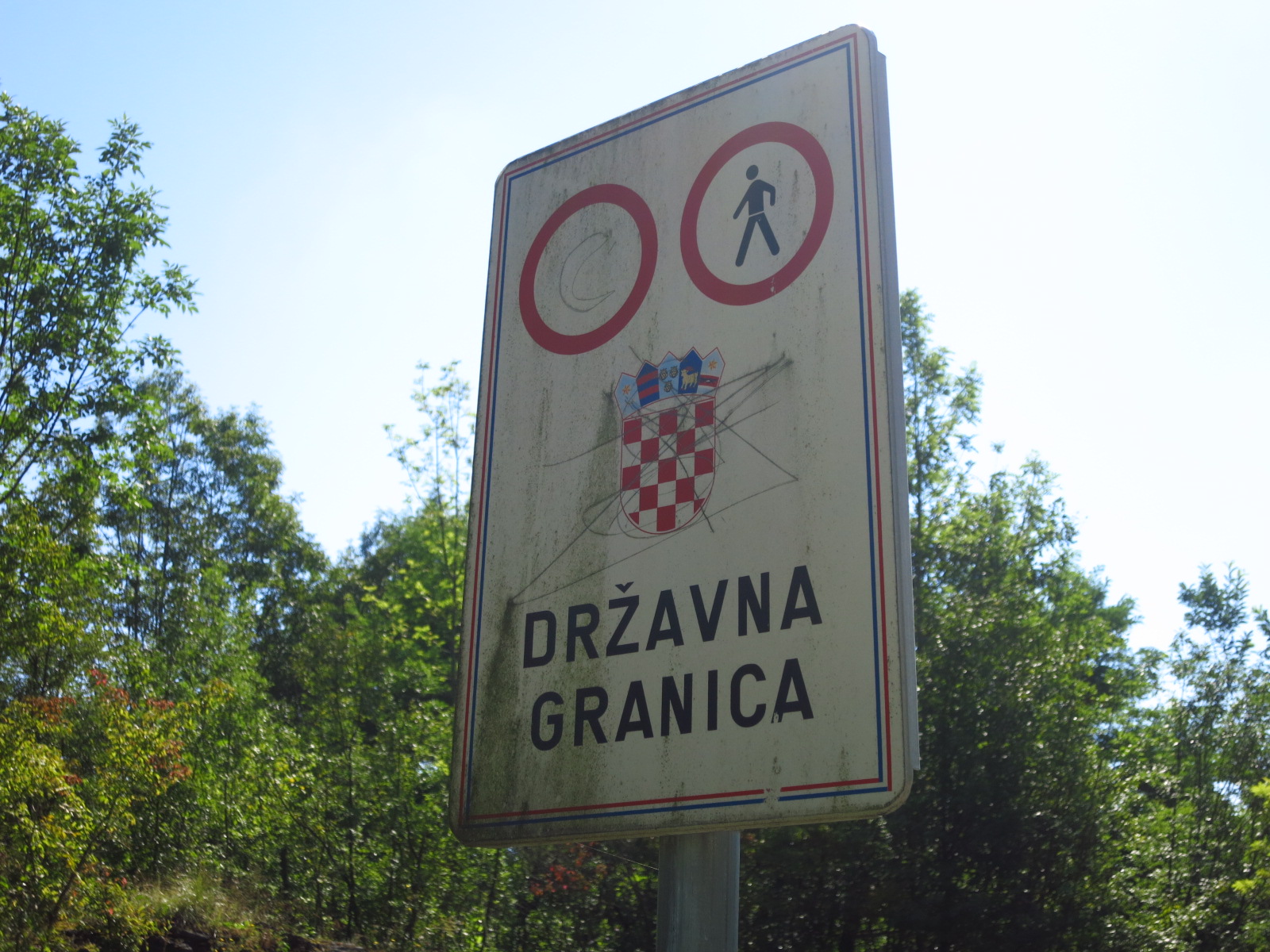
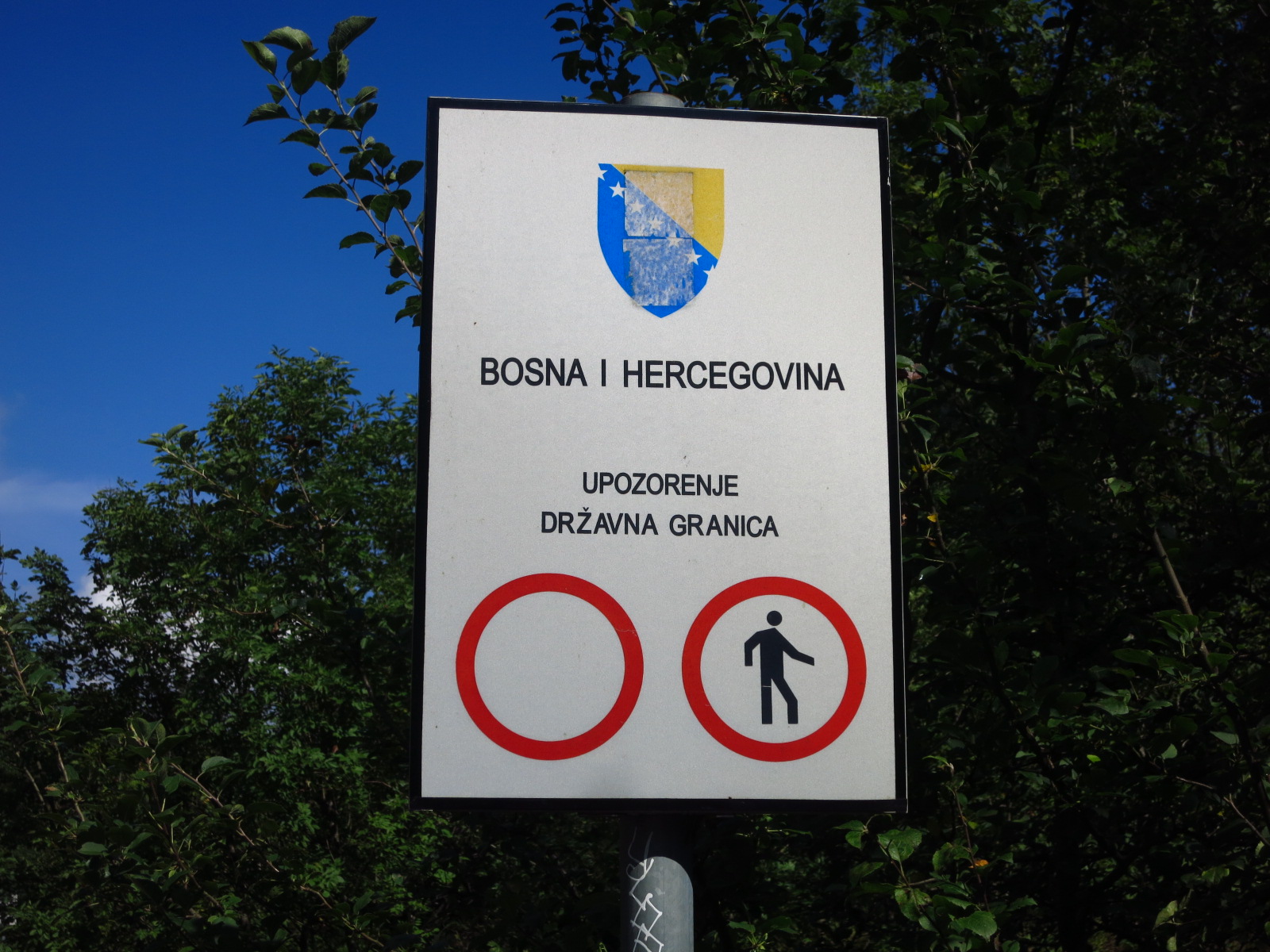
20160802035823We then rode on a fourth runway that cut across the border between Croatia and Bosnia. Halfway through it there were some concrete blocks that prevented us from riding any further and signs on both sides forbidding the crossing, but there was no surveillance. Here we are one on each side of the border, Nat in the EU and me outside of it.

201608020414202016080204124420160802041152After that we made a full power run of the main runway on the motorbike (who wouldn’t!) and happy not to have been blown to oblivion by some forgotten landmine, we headed back to Korenica and the road south to Omiš.

20160802042249Since my first visit to Croatia, the motorway that crosses the country roughly following the coast has practically been completed, taking most traffic away from the B roads that used to be the only way of getting around the country. This meant that roads that were previously hell to travel in (hours stuck behind lorries and slow moving traffic) were now gloriously empty. If you come to Croatia by bike, stay away from the motorway, the roads and the landscape in the interior are a gem.

20160802060217We got to Omiš by mid afternoon in 35-degree heat and were delighted to find that the woman we were renting the apartment form greeted us with a couple of chilled beers. I love this Croatian custom!

After unloading the bike and a cold shower, we changed clothes and took a walk to the centre to start our four-day beach break with a huge fish platter.

20160802142939

Plitvice lakes

Day 4 – Monday 1st August – Bus to Korenica to Plitvice to Korenica (0km)

Through my earplugs, I heard the distant ring of the alarm clock going off in both of our mobile phones at 7:00, then Nat switched them off (yes, both of them) and there was silence again. She did not try to wake me up and I, tired as I was from two days of travel, was not particularly interested in finding out why. An hour later I woke up, pulled one of the plugs out of my ear and immediately hear rumbling thunder. I turned to Nat and asked ‘seriously?’ Two days travelling at well over 30ºC and today, the day we were going to go hiking to one of the most famous tourist attractions in Croatia, it was raining? No doubt, that was God getting back at me for having mocked his Italian Evangelists…

20160801022012We waited for a while, but the sky did not give us any hope of the weather improving soon. It was covered in menacing looking clouds, and there were bursts of hard rain every few minutes. There was not much to do, so we decided to go to the supermarket to do the shopping and kill some time. On the way there we saw a tourist information stall and asked about the natural park to see whether we would have enough time to see it the following morning before heading to Omiš in the afternoon.

The girl told us that there were trains and boats if we did not want to walk, and the map also showed some cafés and restaurants were we could take shelter from the rain. Not wanting to pass the oportunity to visit the park and seeing that there was a bus leaving in about 5 minutes, we decided to risk it and go right there right then, without going back to the apartment. Fortunately we had taken jackets, the camera, the passports and some money with us.

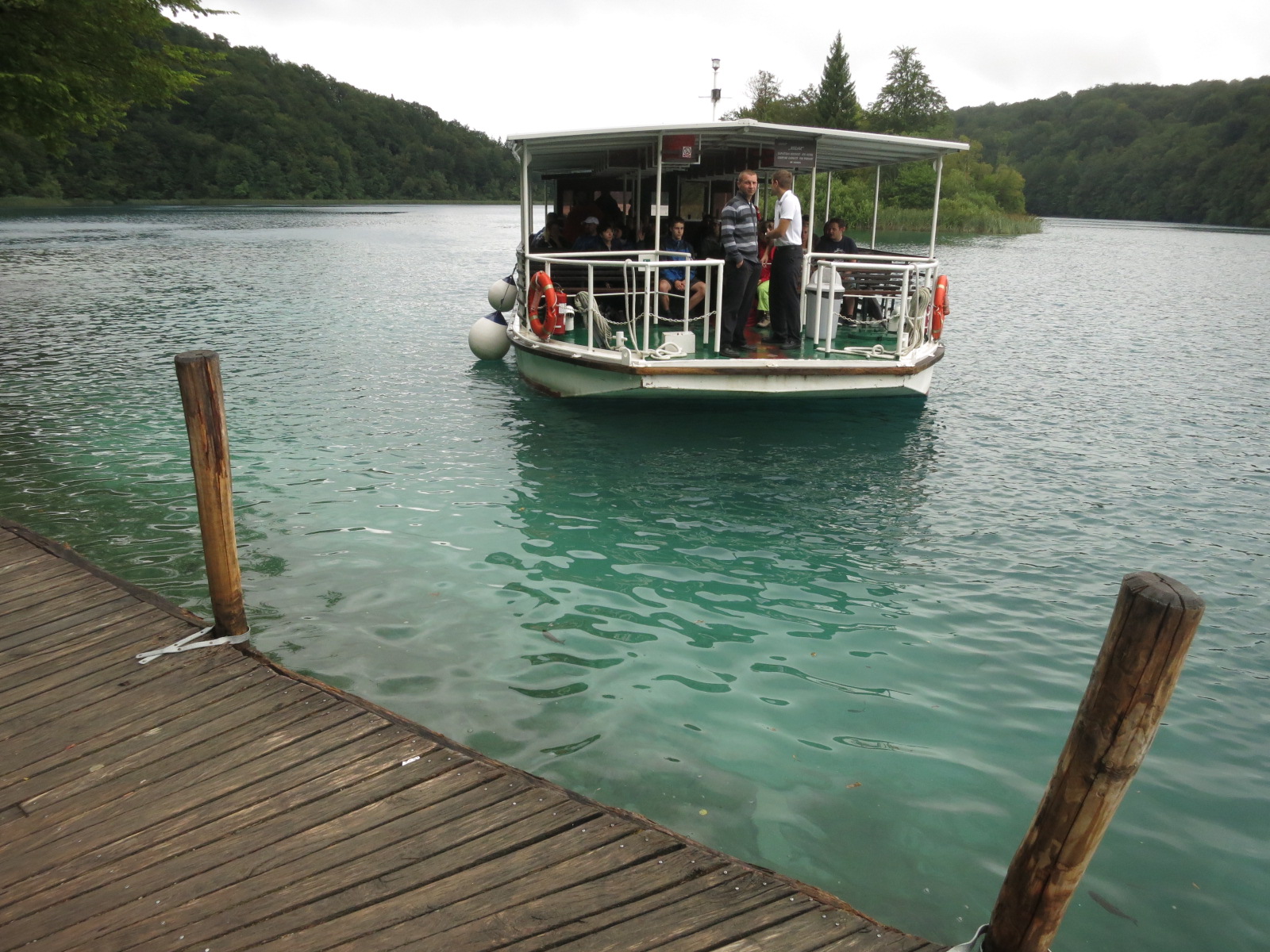
20160801051218It was still cloudy, but the rain had stopped when the bus dropped us at the park’s entrance. We studied the map and decided to take a boat across the central lake and hike to the main tourist attraction – the big waterfall. It started raining again when we got off the boat, but as luck would have it, there was a small souvenir shop where I could get a raincoat to prevent the rain from stopping us now that it had become clear that the park was defintely fighting the elements for.

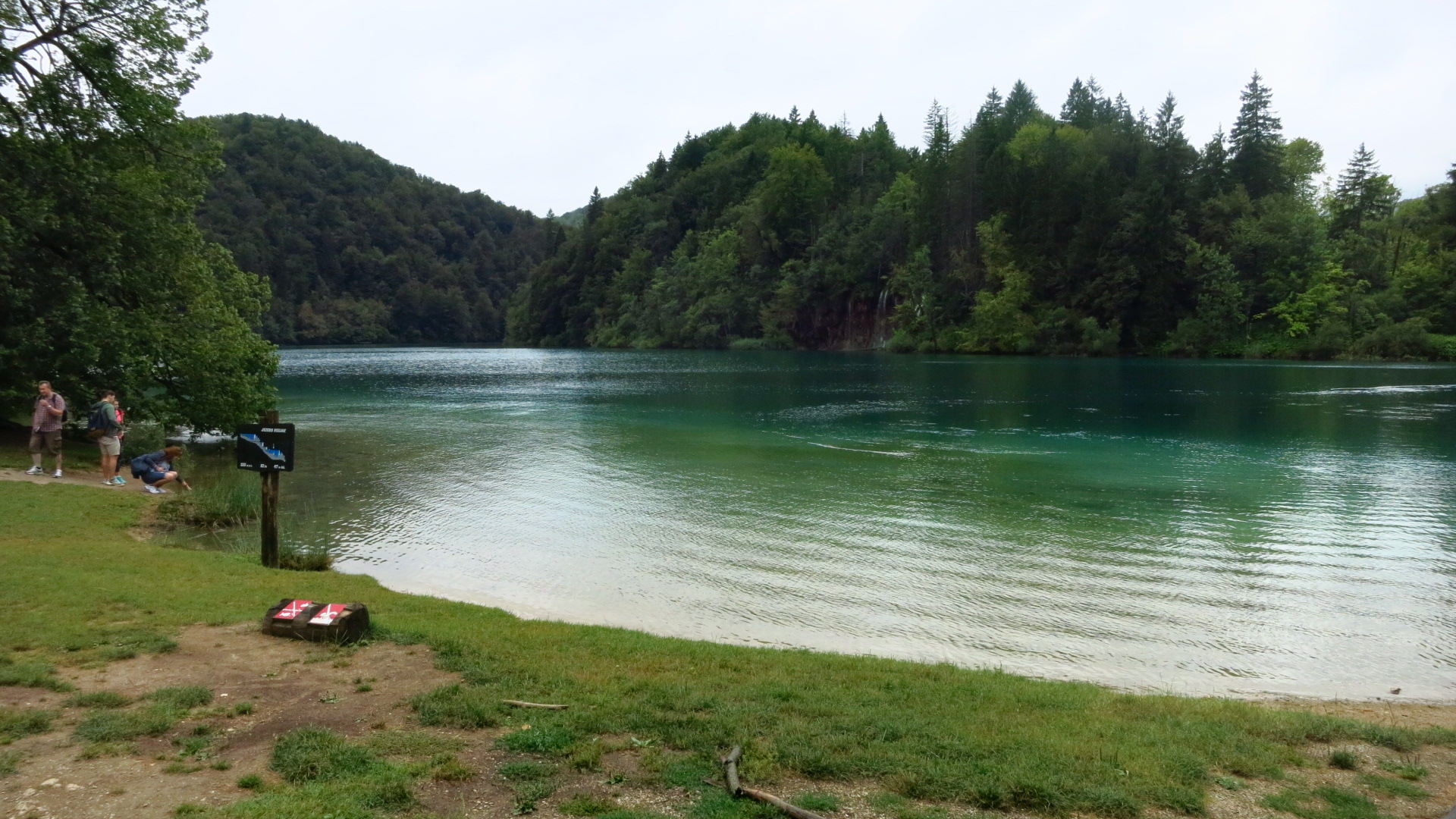
20160801053903One of the oldest natural parks in Europe, Plitvice consists of 16 lakes and countless waterfalls that connect them. It may take up to 8 hours to visit it all on foot, more than that if you want to explore the whole network of footpaths and hiking routes in and around the park. While most people come to Croatia for its beaches, this area of outstanding natural beauty, one of UNESCO’s World Heritage sites is an absolute must.

20160801070956After seeing the big waterfall we hiked back to the entrance in the pouring rain and took shelter at a café, where we had some lunch. Not wanting to finish our visit just yet, we took the train to the other end of the park to see the upper lakes and hike back .

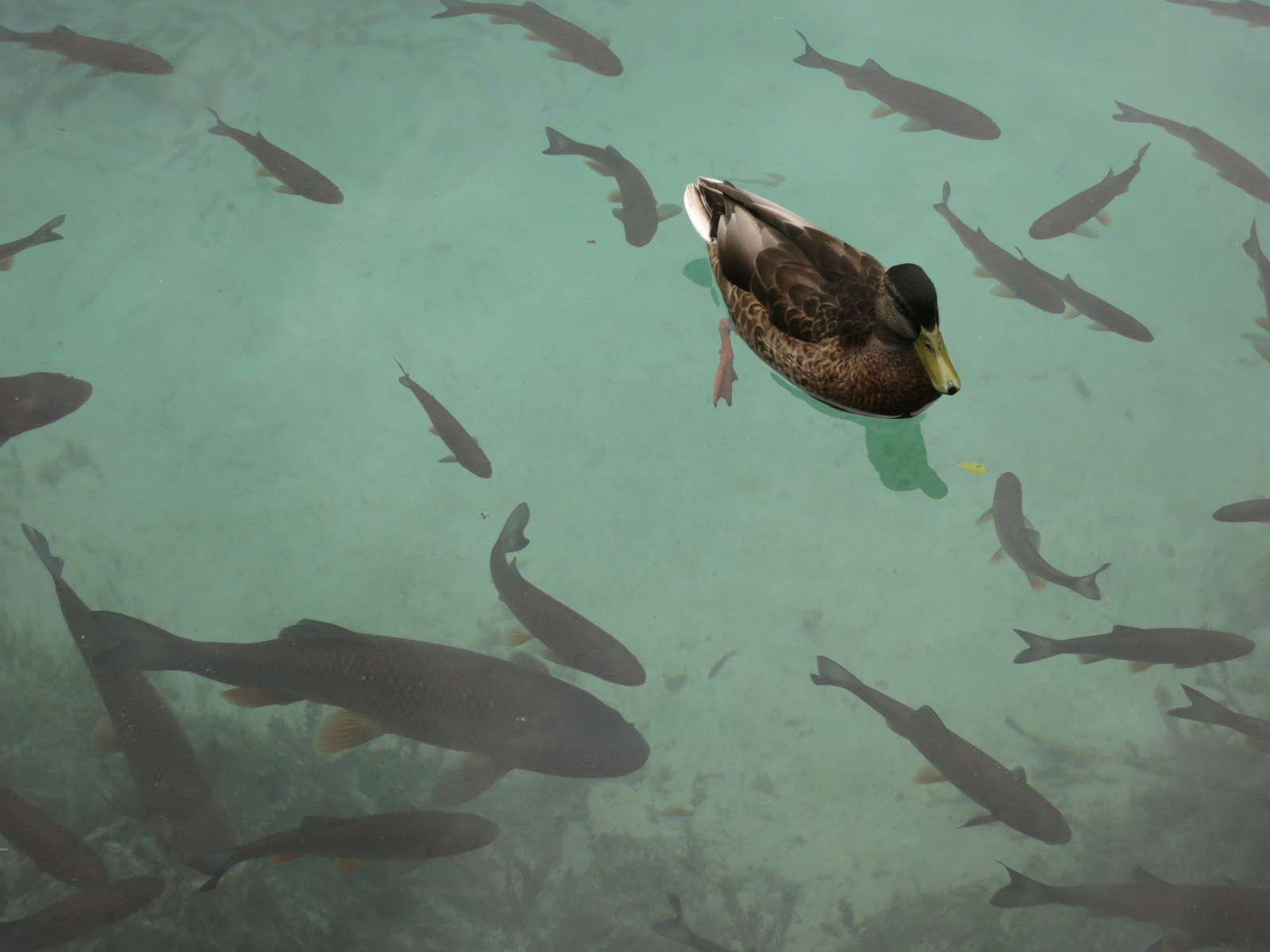
20160801052628It was definitely worth it, and we were rewarded with a break in the weather and fewer tourists than on the big waterfall. My very limited talent at writing would not do it justice, so here are a few pictures. You can find a lot more on Facebook.

2016080105140720160801053157201608010537302016080106320720160801085310

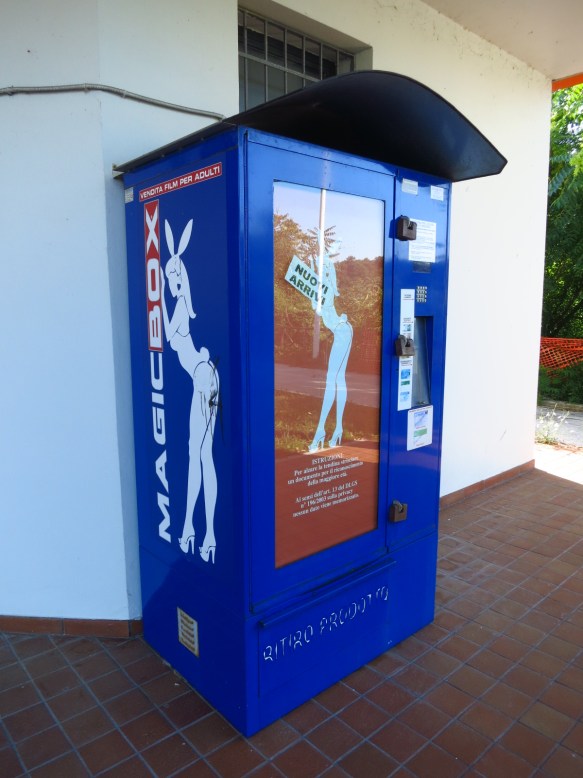
Porn vending machines

Day 3 – Sunday 31st July – From Terni to Ancona; ferry to Zadar; from Zadar to Korenica (311km)

Not so long ago I read an article entitled My 25,000 Wonders Of The World. The title mocked the Rough Guide 25 Wonders Of The World, and its writer started it describing a trip she had made to see the sunset in Ayers rock, Australia. After a very long journey, the 10-minute experience left her distinctly unimpressed and with a feeling that they had gone there just to tick an item of the must-see list that all tourist seem to carry with us. Some time later she decided to forego a visit to the Great Reef Barrier because she preferred to spend some time chilling and enjoying a beer at a beach bar, and after an initial feeling of guilt for having travelled so far and not seen the natural wonder that soon passed, she came to the conclussion that if she were to write a book about her own wonders of the World, it would contain 25,000 ones, rather than 25. The reason was, she explained, that what makes a trip special, what she really remembers afterwards, are the small details and experiences that catch our imagination and give each country its own distinct personality, like the fact that Australian bills are made of plastic, so one can spend all day surfing and then pull a few out your pocket and buy a cool beer at the beach bar.

We set off early, at 7:00, because according to our tickets we had to be at the ferry terminal at 9:30, a full three hours before departure time. I had filled up the bike’s tank in Barcelona hoping to make it from coast to coast in Italy and refuel in Croatia, where petrol is not as expensive as on this side of the Adriatic, but I did not foresee the long departure queues nor the fast ride the previous night to make it on time to the hotel, so we had to make a fuel stop before we reached Ancona. It was here where I found one of the ‘wonders’ I would include in a book: a vending machine that sold porn DVDs. Like tobacco vending machines, you had to show a piece of ID in the shop to have it activated, and standing there against the wall of a desert petrol station early in the morning it sang a sad ode to the loneliness of long distance truck drivers.

20160731024313The landscape on most of the journey from Terni to Ancona was surprisingly hilly, and with few traffic the ride was enjoyable and relatively quiet, we only saw three or four Italian drivers overtaking slow cars on double solid lines. We did too, you know – ‘when in Rome do as Romans do’ seemed a particularly well suited saying.

20160731042211Getting to Ancona early paid off, and we got our tickets and changed some money with no queueing at all, a blessing considering how hot it was. There was no queue to get the bike on the ferry either, and we boarded with a bunch of people who were, ahem, curiously equipped for the crossing.

20160731051403_120160731060010We found a nice table by a window, in a deck with air conditioning, and got ready for what seemed to be a quiet crossing, with the ship far from full. No sooner had I had had thought than my peace and quiet were shattered. By whom, this time? You might ask. Wailing babies? Drunken truck drivers? Hordes of overexcited teens? Nope. A group Italian Evangelists.

20160731082950They started pouring into the dining area where we were sitting and soon we were surrendered and with no possible way out, as we were in the oposite corner to the exit. We had just started having lunch, and to our dismay a guitar and a pair of bongos were summoned out of thin air and they started singing, raising their hands, shaking their heads and generally praising the Lord rather loudly. As soon as we had finished eating we waded our way through them mumbling a few ‘scusi’ and went for a coffee somewhere quieter. As they say: ‘Religion is like a penis. It is perfectly OK to have one and be proud of it, but please don’t flaunt it about in public.’

20160731125710We got to Zadar right on time, and at about 19:00 I hit Croatian roads for the third time in my life. The road network seemed to improve with each visit, and it did not take us long to reach our destination in Korenica, but one thing that had not changed was the heat – it was well over 30ºC even this late in the evening. Fortunately, Korenica is in the mountains, at about 700m above sea level, and the temperature was a lot more bearable.

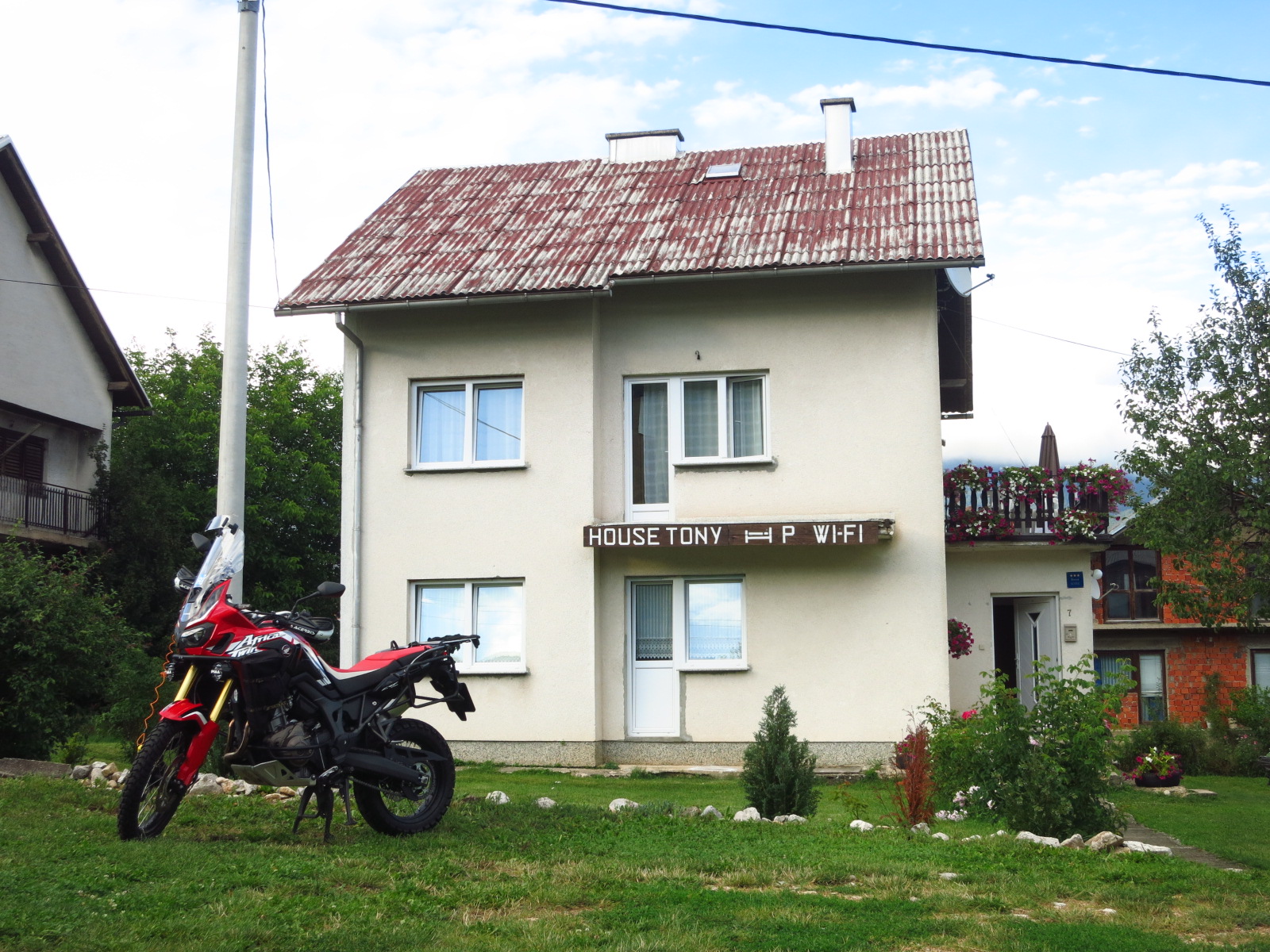
20160731133706Our accommodation for the next couple of days was a small three-room guesthouse, House Tony, where Marine, hour host, welcomed us with a couple of beers and a plate of chocolate cookies.

20160801131610p.s. I hope that using the word ‘porn’ in the title gets this post more traffic. Porn.

Across the Mediterranean

Day 2 – Saturday 30th July – More ferry and Civitavecchia to Terni (113km)

Grimaldi Ferries could be considered the Ryanair of the Mediterranean – the cheapest way to get yourself and your vehicle to your holiday destination from Barcelona, and it shows. You get what you pay for, and the advantage of this is that if what you want to pay for are your holidays on the Balkans and not a cabin on a cruise across the Med, you can board with a deck ticket and just find a quiet spot to lay down your camping matress to spend the night and no one will look at you twice. Everybody does it. So we found ourselves a “luxury” corner (one with a power outlet) and settled down for the night.

20160730113443The following day was a lot quieter than first impressions had led me to expect, and time was mostly spent writing this blog, playing cards and reading between the top deck and a small deserted shaded side deck two levels down with a nice sea breeze. The journey felt a lot shorter than it really was, and despite the initial two-hour delay, we were in Civitavecchia at about 19:30.

20160730132754We had a bit over 100km to get to Terni, a town more or less halfway across Italy where we were going to spend the night, and Italy welcomed us with a great country road gently sweeping across fields and low hills with the sun glowing red as it set in the background.

Balkan Adventure 2016

Day 1 – Friday 29th July – Ferry from Barcelona to Civitavecchia (0km)

I had had the new bike for more than three months; it had dutifully fulfilled its role as my daily transport to and from work and had had its occasional outing at the weekend, but day after day I had been feeling that it needed, longed for a proper trip, the beast wanted to be unleashed away from the city. So when the holiday have finally came, it was time to take it on its first long trip. Where? The Balkans.

The plan was to take a ferry to Italy, cross the country, take another ferry and start from Croatia, then ride south to Montenegro, Albania, Kosovo, Macedonia, Bulgaria, Greece and back to Italy via another ferry.

20160730132925I started my holidays at the very end of July. This had an instant impact on the beginning of my holidays in two notable ways.

One, I got a reminder of how hot and damp the city is this time of year as I dragged about 40kg of luggage from my flat to the garage where the bike sleeps, one piece at a time. After a lot of sweating, pulling straps and tying knots, the game of Tetris was complete and the bike loaded.

Second, I got a taste of the joys of starting my holiday at the same time as millions of other people in the shape of a neverending queue at the ferry terminal.

IMG-20160729-WA0019Once on board, the ferry was choke full of loud people, screaming kids and dodgy-looking Eastern European truck driveres, one of whom tried to start a fight at the top deck bar. At least the two-hour delay before we set sail was made much more enjoyable by the company of an Argentinian couple who have been travelling around the world on their motorbike for over two years, and who had a lot of stories to share. You can find out more about them here and here.

Final touches to the AT

As I explained when I fitted the fuse box to the AT, I still had to install a few last things, most of which requiered routing wires from the handlebars and front part of the bike, under the fuel tank, and to the box under the seat. Space is tight, the fuel tank had to come out and I did not want to have to do it every time I was going to fit something, so I waited patiently until all parts had been delivered and got down to it with only a week to spare before the AT’s first big trip. I was going to fit:

  • Front fog lamps
  • Heated grips
  • 12V socket
  • Chain oiler system
  • Pre-wiring for rear fog lamp (I still have not received the Holan top case)

I needed the bike to go work, so I only had one afternoon to get everything done. In the days before I did all my homework, drawing the electrical schemes, cutting the wires, fitting the connector plugs, protecting them with heat shrink tubing, and generally pre fitting everything I could before the wiriing.

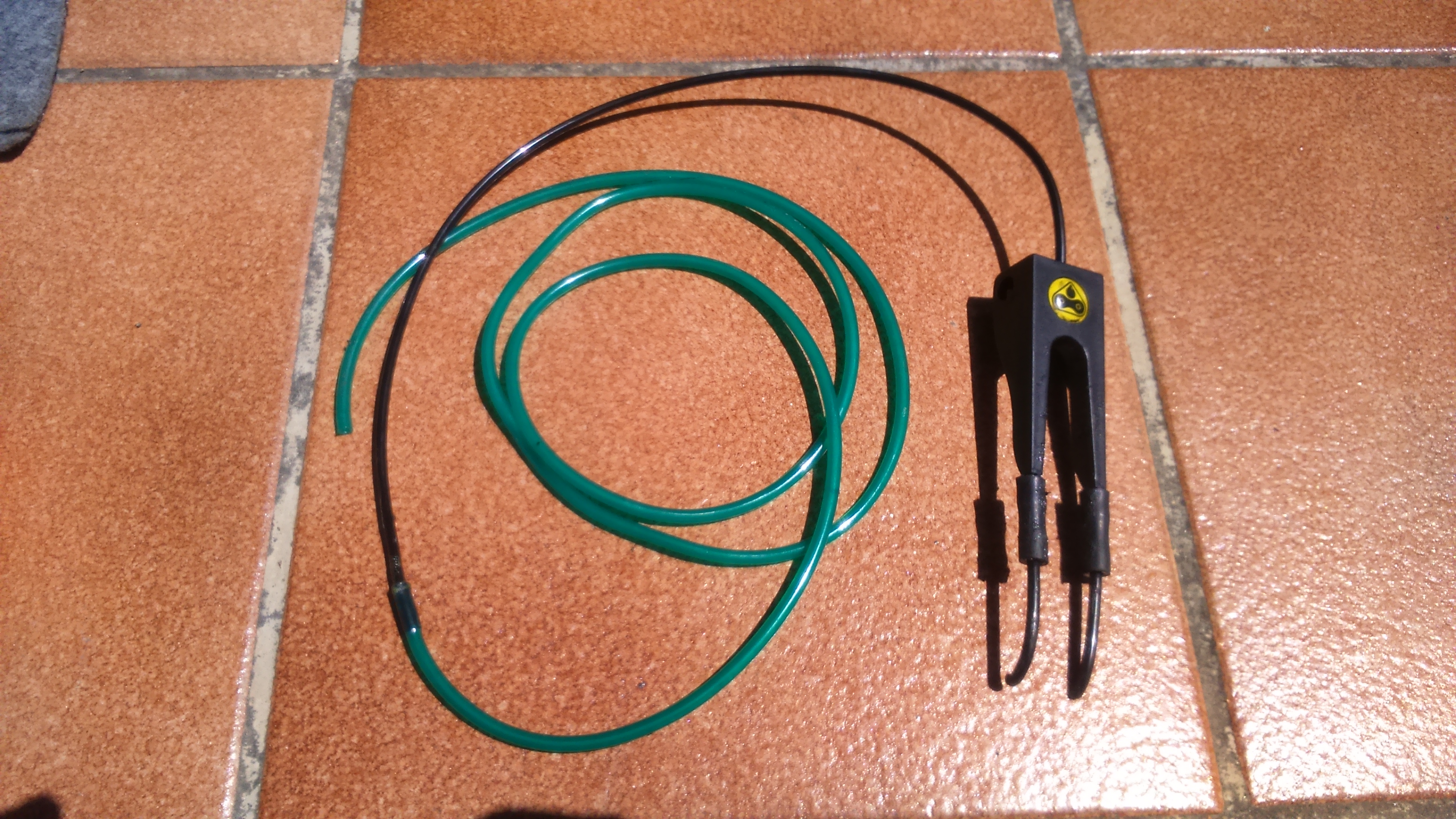
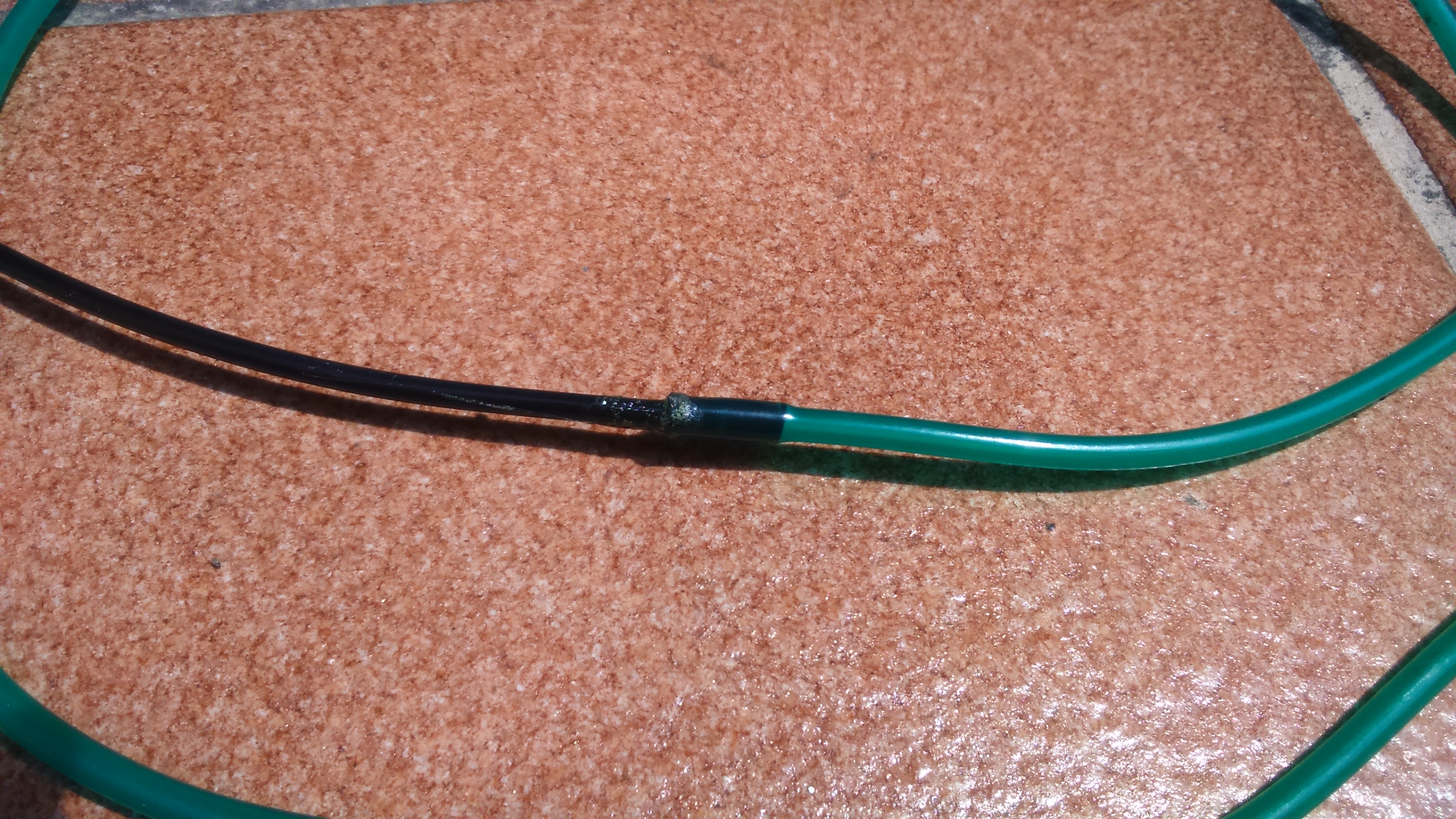
The chosen chain oiler was a PDoiler system, which is cheaper than a Scottoiler electronic system but still provides instant control of the amount of oil delivered to the chain. I was not convinced by the wicker system, though, so I replaced that with a Scottoiler dual injector.

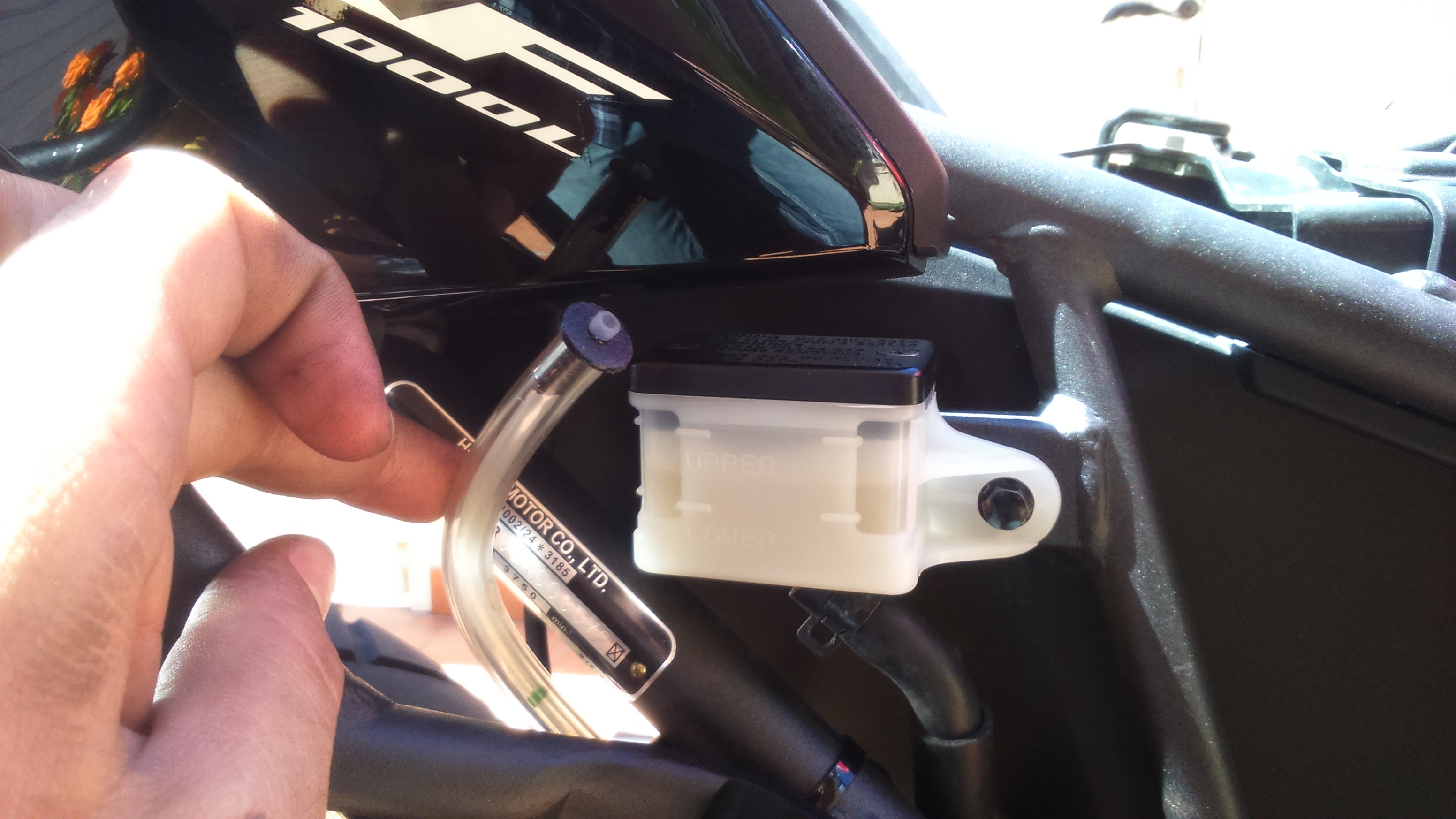
DSC_0006I put the oil reservoir/pump combo on the right side of the subframe, behind the passenger footpeg. It does not stand out and it is the optimal position to route the wire to the fuse box and the oil tube to the swingarm and to the chain.

DSC_0017DSC_0075The dual injector is suposed to be mounted on the swingarm with zip ties or with special adhesive tape, but I went for a more elegant solution and bolted it to the chain guide under the swingarm, which is in the perfect position in the AT.

DSC_0008The injector is covered, so it is virtually invisible, and it is more securely mounted. This only requieres measuring the position, removing the chain guide and drilling a hole in it of the same diametre of the bolt included with the injector.

DSC_0011To fit the injector in the correct position you can then use the plastic spacers provided with it or a few washers for more precise adjustment.

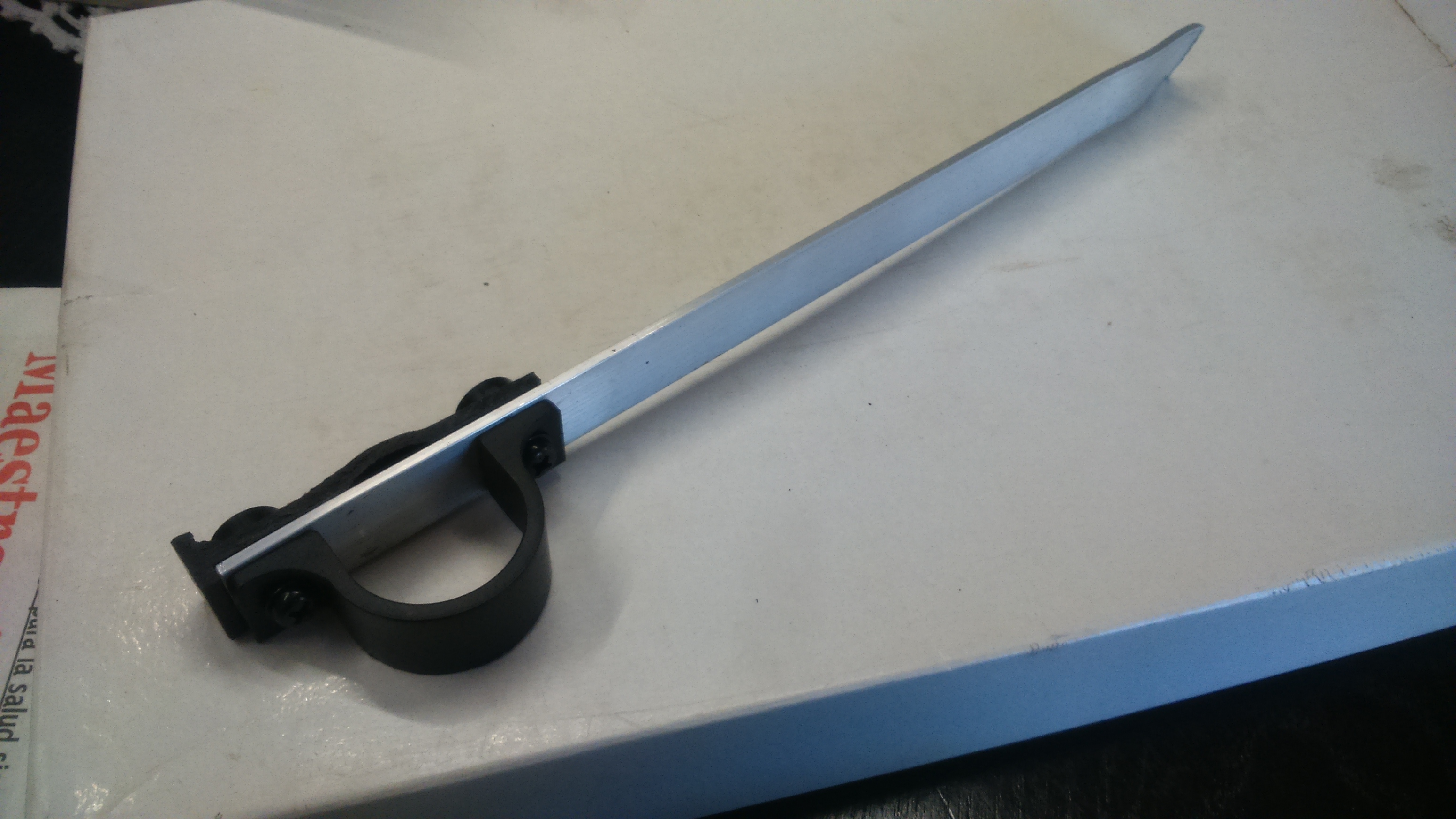
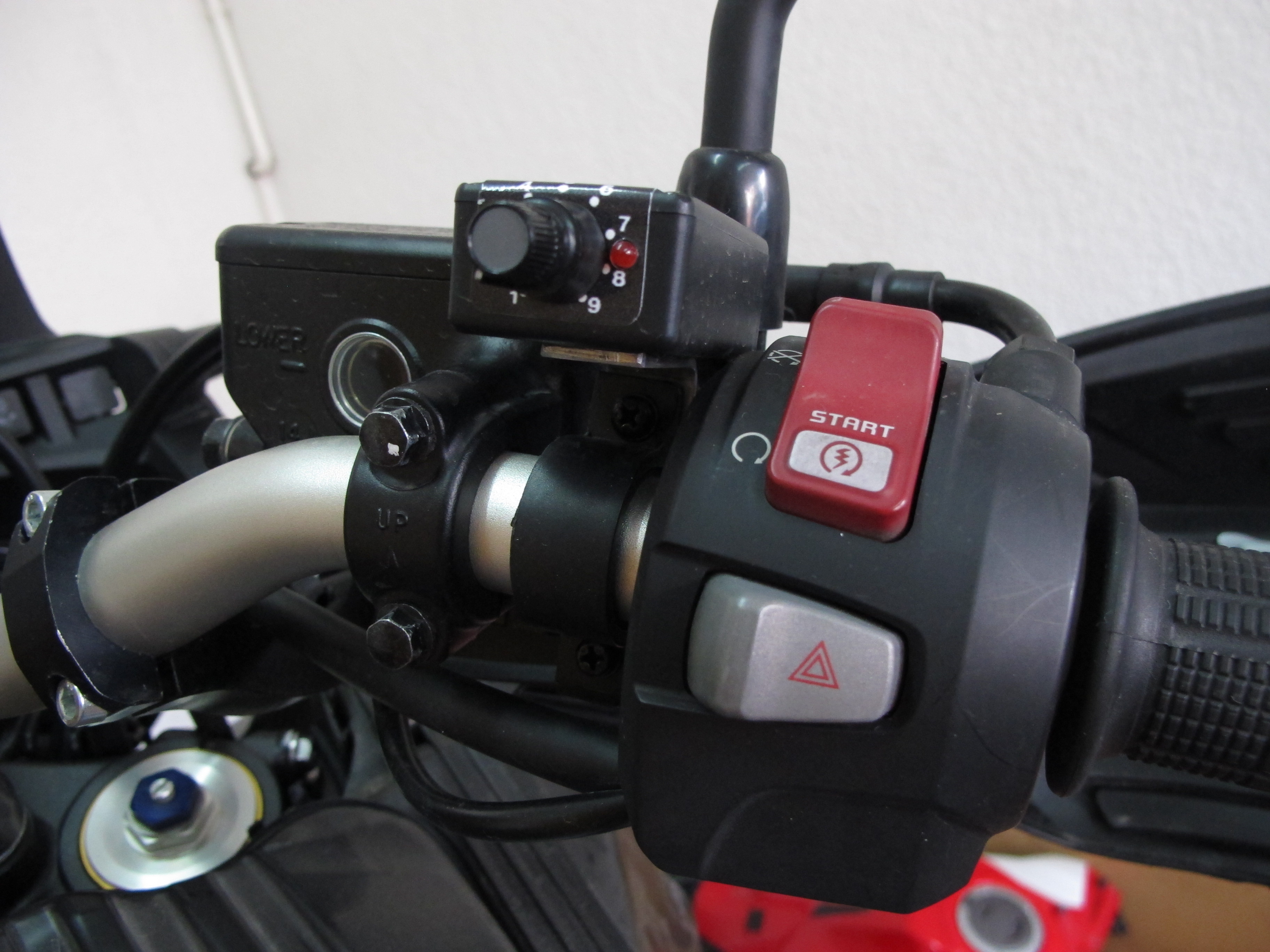
DSC_0014I used the provided adhesive plastic clips to route the oil tube  and I fabricated a support to fit the the oiler control knob on the handlebars using the mounting that came with the 12V socket.

DSC_0019IMG_0290Then the day came. Right after lunch I started removing the fairings on the bike. The first time I did that I complained that it took too long, but as I learnt this second time, if you have the right tools and know what you are doing, you can remove everything reasonably fast. One thing I was worried about were the crash bars. I did not know whether it would be possible to remove the fairings with them on, as it was on the V-Strom.

It is not. At least with the Holan crash bars. The good news is that you don’t really need to remove them – if you loosen the bottom mounting point and remove the two bolts under the headlight, the whole assembly pivots forward and out of the way. I assume that with the PRO model four more bolts need to be removed from the radiatiors mounting points.

IMG_0285Removing the tank is also a fairly straightforward process – there is only one bolt to be undone (under the seat), even though you need to remove the seat lock assembly to access it, and you pull it up and back to detach it from the front mounting points, which are two rubber pegs. With the help of a friend who lifts the tank a bit, unplug the fuel line, two electrical connectors and the rubber tubes for the breathing and the overflow and you are done. It is much easier if the tank is empty or close to it, as it is much lighter.

I installed an aftermarket waterproof 12V socket which fit perfectly into the hole on the dashboard.

DSC_0076

The heated grips proved to be a bit trickier. It took some swearing and sweating to pull the OEM grips off the handlebars, and while the heated left one slid in without problems (I had to put a couple of drops of glue to stop it form rotating afterwards), the right one refused to slid more than halfway in. In the end we used a big screw clamp to push it in. They do not have a separate control unit, it is integrated in the left grip, like the Honda OEM ones. This looks great, but I found that I kept turning them on accidentally every time I used the indicators, so I had to rotate it down a bit to make sure the button is out of the way.

The oiler control unit went on the right handlebar and the fog lamp switches on the left one, in a position I can easily reach with my thumb. I mounted them on a PMR bar switch that replaces the clutch clamp. It looks great, but the bolts did not align exactly with the holes in the clamps, we had to file them off a bit.

IMG_0289After fitting the fog lamps to the crash bars – very easy on the Holan ones, as they include two mounting points – all that was left was route all the wires along existing ones, secure them with zip ties and plug all the connectors. I strongly recommend fitting a fuse box on this bike, as the battery is difficult to access and it simplifies electrical work considerably.

We checked that everything worked and we put the bike back together.

Other last minute additions before the big trip have been a pair of Heidenau K60 tires and two custom made bags for the Holan crash bars to carry a pair of spare tubes and the tools to change them.

How to fit Holan crash bars

After a long wait (almost two months), I finally got the Holan crash bars for the AT. I have already fitted handguards, so all that remains now before I can offroad with peace of mind is a pair of knobbly tires.

I picked up the bars from the shipping company and as I was taking the tools out to the front yard I was readying my mind for whatever challenges Holan was going to throw at me this time – missing bolts, nuts or washers? misaligned mountings? – both from personal experience with the panniers and from what I usually read on forums, I was sure something was not going to go as planned. And I wasn’t wrong.

The surprise came as soon as I unpacked the upper crash bars. Holan makes two models, the ‘standard’ one and the ‘Pro’ one. The main difference, other than a slight difference in shape and the position of the bar that crosses under the headlight, is that the ‘Pro’ one has two additional mounting points that fit in the radiator mounts of the motorbike. Whether you want them or not, if you are buying them through the Spanish distributor, these are the only available option, but surprise motherf***er! Mine did not have the extra mounting points. They sure were shaped like the ‘Pro’ ones, but that bit was missing.

I had chosen Holan because I liked the fact that they covered as much of the fairing as the products from Honda, Touratech and Hepco & Becker for considerably less money, but also because they already included mounting points for the fog lamps. As for how sturdy they are, only time and crashes will tell. None of the alternatives (except for the Motortek ones) have the mounting points to the radiators, and having waited two months, I was not very keen on sending them back and face another two months wait, particularly when my holidays are coming up and I need the bike equipped for the trip, so I decided to keep them and ask for the difference to be reimbursed (the ‘Pro’ ones are 25€ more expensive). Time to fit them and see if there were other ‘surprises’ in store (other than the known fact that Holan does not include instructions).

crash-bars-for-honda-crf1000l-africa-twin (1) crash-bars-for-honda-crf1000l-africa-twin

Instructions

The good news about both the upper and lower Holan crash bars is that they do not require the exhaust manifold to be removed, as they do not attach to the upper bolt in the engine mount, making things a lot easier.

IMG_9564

I decided to start with the engine crash bars, as they only have two mounting points each and the process is very straightforward. At the back both use the mounting point for the piece of plastic that keeps your boots from scratching against the frame. Remove the Allen bolt and pull the plastic out on both sides of the bike.

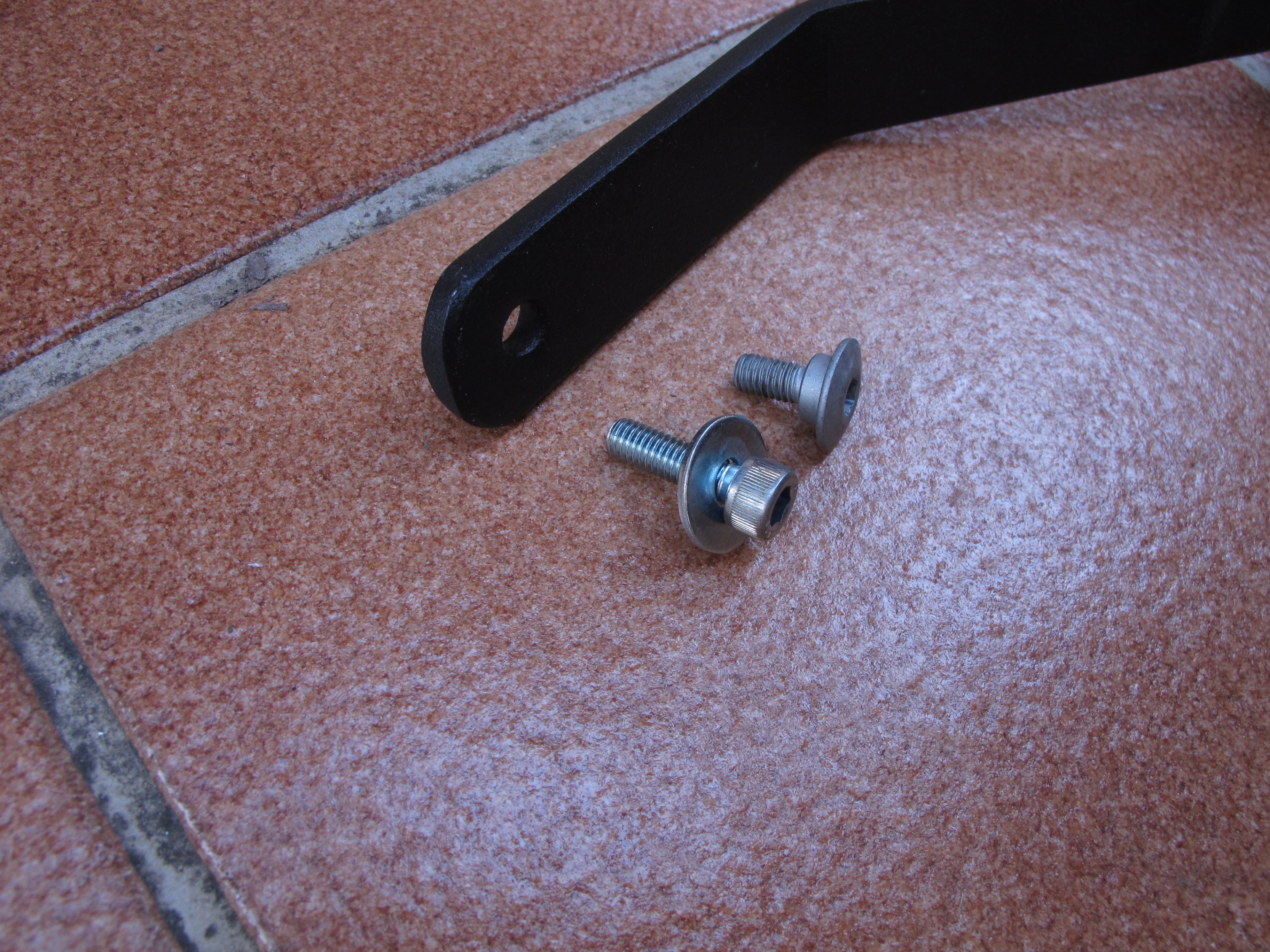
IMG_9548Holan provides two longer Allen bolts with a washer to replace the OEM ones. (I like the fact that they seem to be of considerably better quality). Nothing missing so far.

IMG_9550

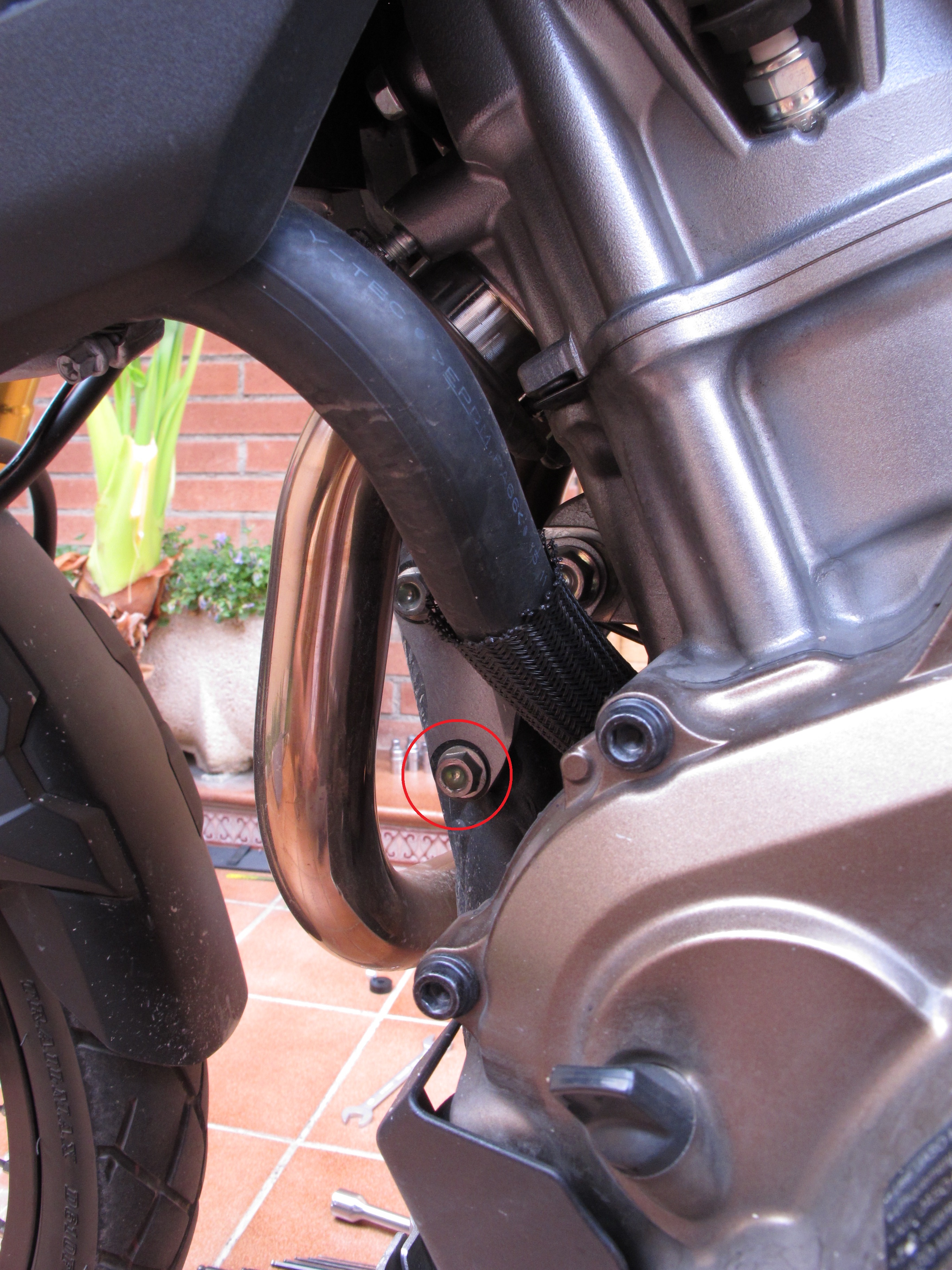
At the front, the right one uses one of the bolts that connect the cradle frame coming from the bottom of the engine to the vertical beam between the radiators.

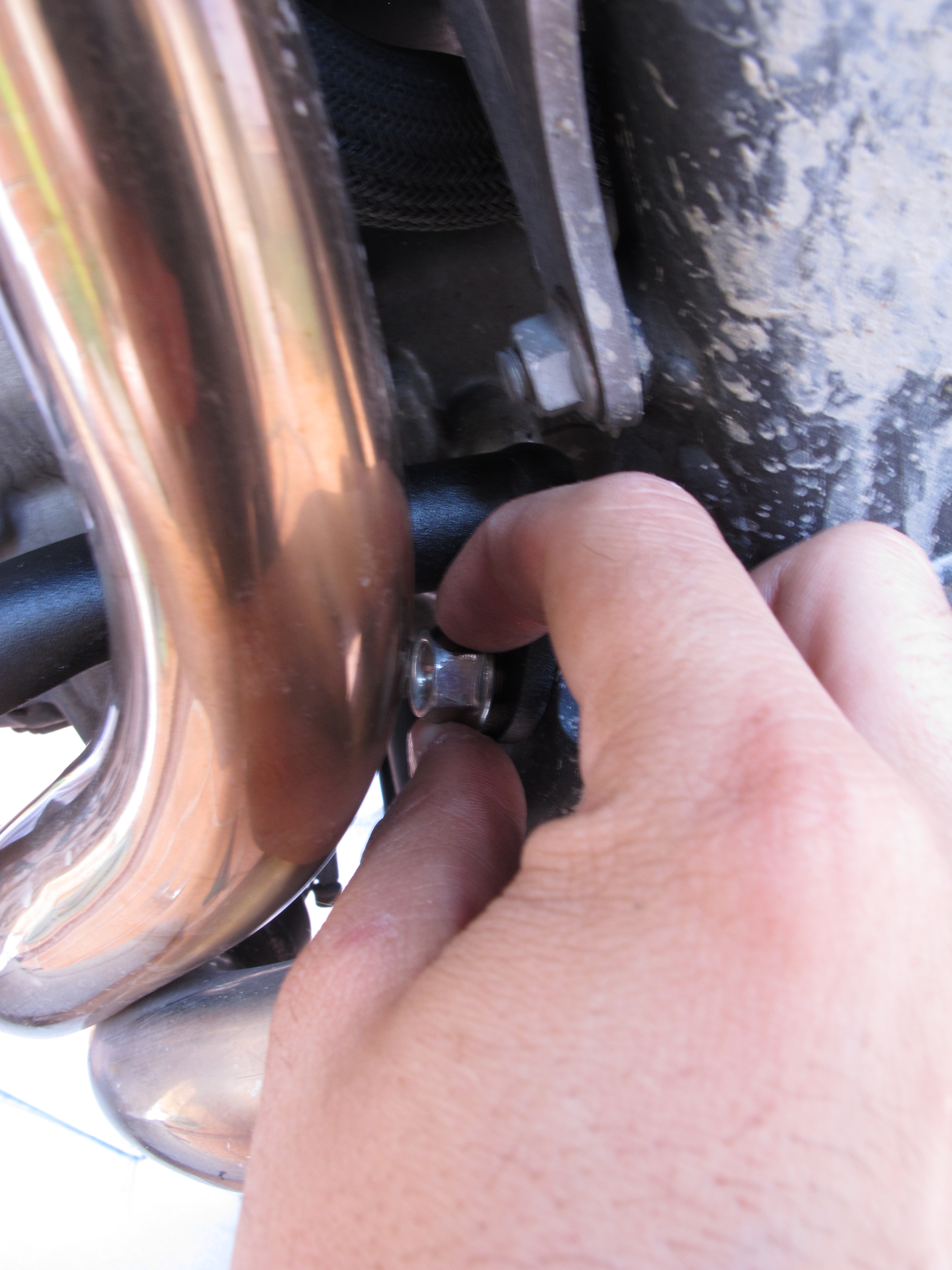
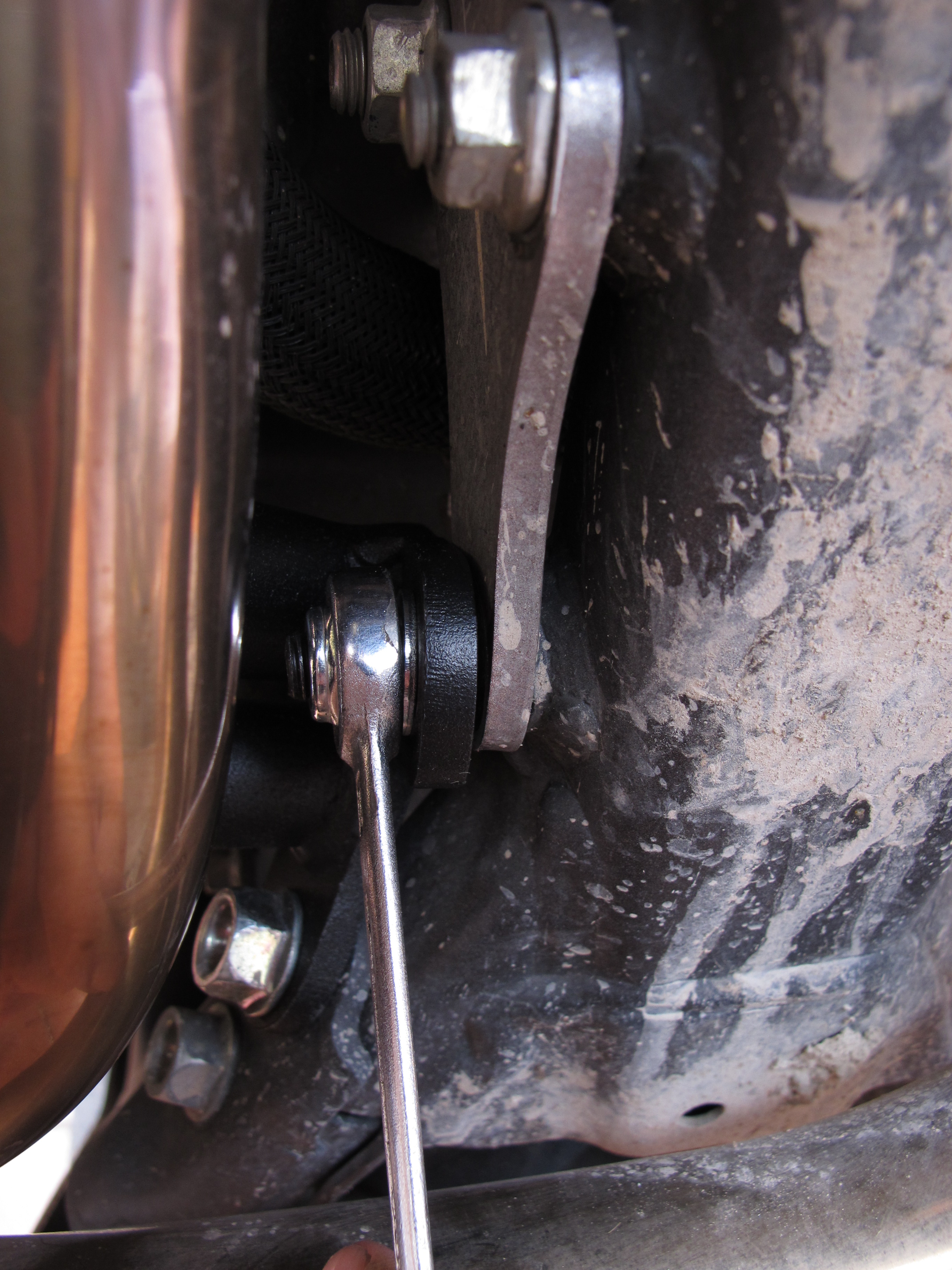
IMG_9551The OEM bolt is long enough, so no replacement bolt is provided. It is a bit tricky to remove with your fingers and to put back in place with the crash bar, but both to loosen it first and then to tighten it again there is enough space to work with a spanner without any problems.

IMG_9554

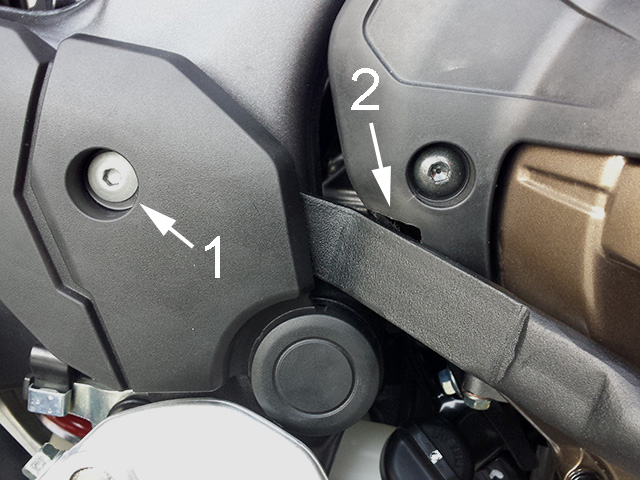
There have been reports of problems with the plate at the back end of the right engine crash bar touching and bending a bit the plastic that protects the clutch housing. Some people have just left it that way, others have filed off a bit of plastic (number 2 on this picture, which is from a DCT model). I had no such problems.

246s3d2

dsc_00031

dsc_00021

The left crash bar mounts on the lower bolt of the front engine mount, and this is shared with the upper left crash bar, so you need to fit both at the same time.

IMG_9563

At this point, the easiest way to proceed is to line up both upper crash bars, insert all bolts, nuts, spacers, and washers without tightening them and then tighten them one by one. It is much, much easier if you have a friend to help you hold the bars while putting everything in place.

Here was where I had the second and only other problem. The upper and lower crash bars are sold as separate products; you can buy and fit one or the other independently or both at the same time. The thing is, Holan does not make any special provisions for those who are going to fit both, which means that when it comes to the lower bolt on the front engine mount, they provide a longer bolt with the lower crash bars to accommodate the flange at the front of the bar, and another bolt of the exact same length with the upper crash bars to accommodate the flange at the bottom of those bars. See where this is going? When you put both flanges together in the same point, neither of the bolts provided separately is long enough.

IMG_9572

I had to leave things half mounted and go try to find the right bolt. More than an hour and three specialised shops later, I got one.

IMG_9577

At the top, the two halves of the upper crash bars are held together with two Allen bolts which are colour silver and stand out quite a lot against the black bar. It might be a good idea to either paint them or replace them with black ones.

IMG_9574

The other mounting point for the upper crash bars (unless they are the ‘Pro’ ones) is under the headlight. Two plastic spacers and two bolts and nuts are provided. In my case, everything lined up without any problems and did not have to modify or bend anything.

IMG_9575

Now we only have to wait and see how they fare when I start dropping the bike.

IMG_9579

How to fit a Holan Nomada Pro II pannier system to the AT

If you are only looking for instructions on how to install the pannier system on your bike, scroll down until you find the INSTRUCTIONS section. If you are bored at the office and fancy reading the whole story, read on.

This Polish pannier system costs about 200€ less than the equivalent offering from Touratech and includes a right pannier with an exhaust cut, something that the German manufacturer seems to refuse to make for any bike other than BMWs. They are mostly (more on that later) a match for the German quality, so taking into account the added benefit of the exhaust cut, where does the difference in price come from?

IMG_8036

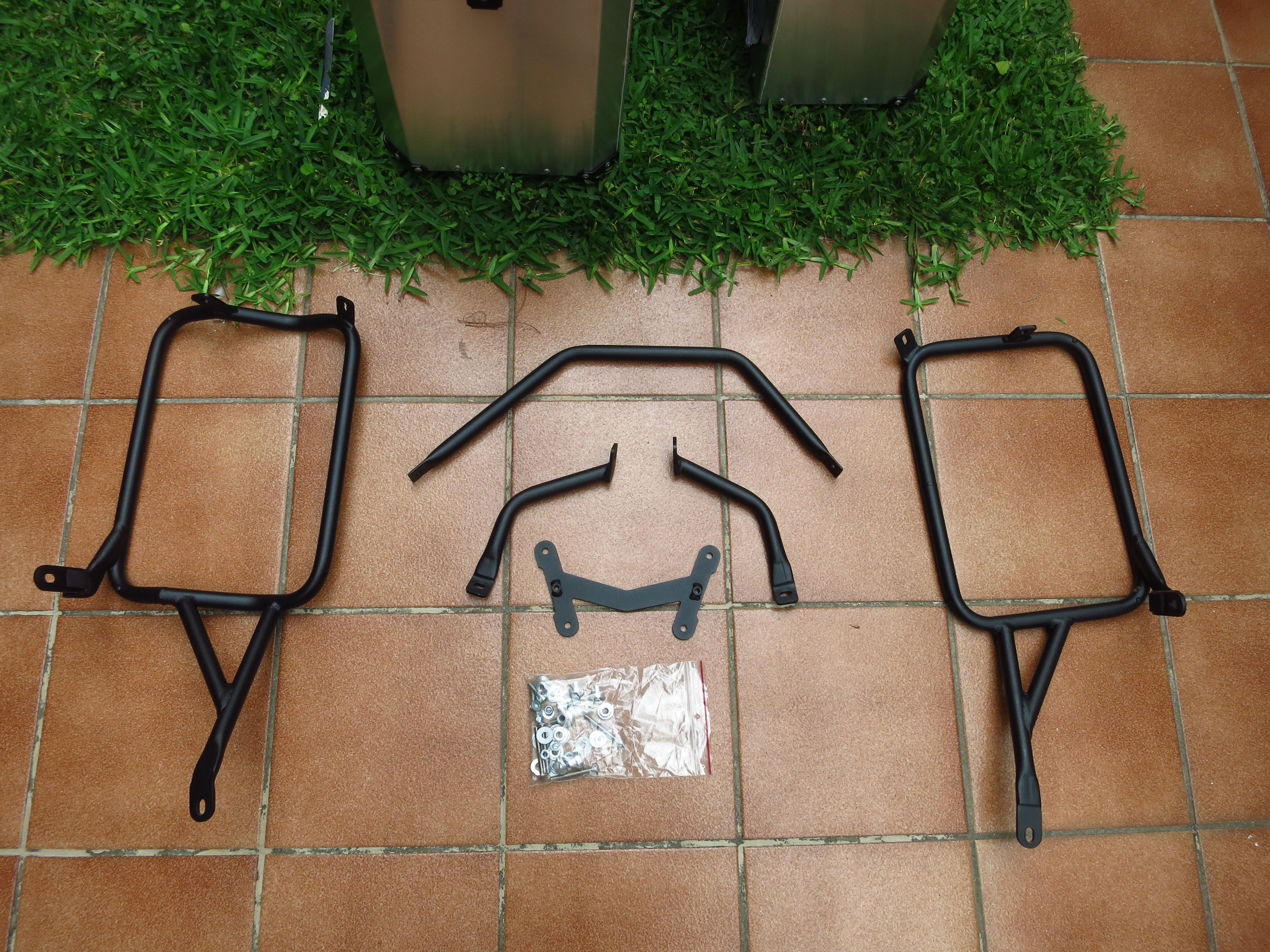
Instructions, apparently. The Poles do not include a single piece of instructions for their products. You get the panniers, the support hoops, a few metal tubes bent in different shapes and a bag of bolts, nuts, washers and spacers and are left to do your best to guess how it all fits together onto your bike. Not that Holan is trying to save the Amazon by eliminating the need for printed instructions, mind you, there is not even a PDF on their website. Really Holan? Really? Is it that hard?

IMG_8035

Better be a Meccano fan, then.

Holan panniers usually come with the mounting points already fitted at no extra cost, which is another advantage over Touratech, but in my case I got a pair that the Spanish dealer had in stock to avoid the long wait for the panniers to be shipped from Poland, and I was aware that I would have to fit the mountings myself. That was not a problem, though, as I had experience on my old Touratech panniers, the only drawback was that it is a time consuming process.

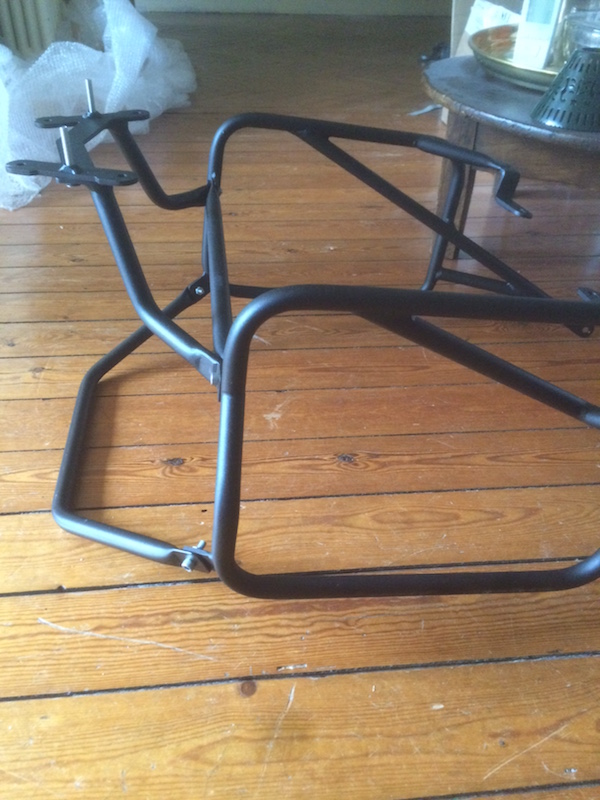
The first racks that Holan made did not have any mounting points to the back of the subframe to avoid the need to drill through the fender, but they flexed too much and the design was modified to include an extra mounting point. This single picture of the new rack had made its way to the web, but that was all the information I had:

IMG_4001-1

I assumed that it would require the same process as the Touratech, GIVI and Globescout systems, drilling a couple of holes through the rear fender to attach it to the end of the subframe. Two things did not look quite right, though.

First, looking at the picture above, those two bolts seemed to be too far back to fit through the fender at the end of the subframe, they were more like under the rear light or license plate.

Second, with the bits and pieces already scattered in front of me, the H-shaped plate where those bolts mount was too wide and too flat to fit under the fender, which has a pronounced inverted U shape. Maybe it fit on the other side of it, under the seat?

I decided to loosely mount the hoops on the attachment points on the passenger footpegs and the front of the subframe to try to figure out how the new parts fit together, and after a few minutes of fiddling it dawned on me. They attach under the rear luggage rack, not the subframe! So the good news is, the Holan system still requires no drilling.

IMG_8106

From that moment on, it was only a matter of figuring out where all the bolts, nuts, washers and spacers went. Here is how to fit it:

INSTRUCTIONS

Remove the seat. It is not necessary to remove the pillion seat, although it is advisable to avoid getting it dirty by accident, particularly if you have the red one.

Remove the two bolts that hold the luggage rack and passenger handles to the subframe that are closer to the front of the bike. The Holan rack attaches directly to these points, a solution which I prefer to them hanging from the existing points for the OEM luggage.

IMG_8053

Remove the passenger footpegs. You will need to completely remove them, as one bolt will hold the rack mounting point and the other requires a spacer.

If you have a top case or luggage rack, you will also need to remove it (not my case yet).

Important! If your panniers come with the mounting system already fitted, you can start installing the rack on the bike now. If you need to drill the holes to mount them, do not mount it on the bike yet, you need the hoops to take measurements to mark the drilling points on the panniers. I explain this process further below, so read that now if you need to, then come back here once your mounting system is fitted to the panniers and you are ready to fit the rack on the bike.

The easiest way to make sure that everything lines up as it should before you start tightening bolts is to mount all the parts onto the bike and fit all the bolts and nuts loosely, then start progressively tightening them. More often than not, something will not line up and it will require pulling, pushing or bending.

In my case, and at least one other member of the Spanish forum, the mounting point to the subframe for the exhaust side hoop required extreme force to line up with the hole. Not wanting the bolt’s thread to get damaged later, I put it on a bench vise and bent the mounting point slightly backwards with a precision correction tool (also known as ‘hammer’). After that everthing fit without any problems.

The lower mounting point attaches to the upper bolt of the passenger footpeg. Because this will cause the footpeg to be slightly further outwards than before, you need to use the provided spacers in the lower bolt. Don’t remove the washers that come with the footpegs.
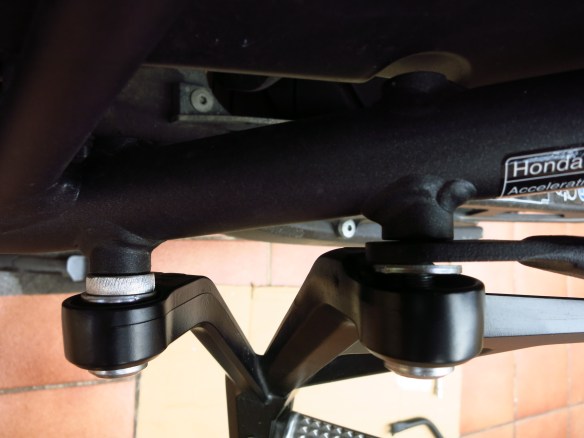
IMG_8062

At the back, mount the lower bracing bar that connects the bottom of the hoops together with a washer on both sides of the bolt. The side with the more open angle is the exhaust side.

IMG_8071

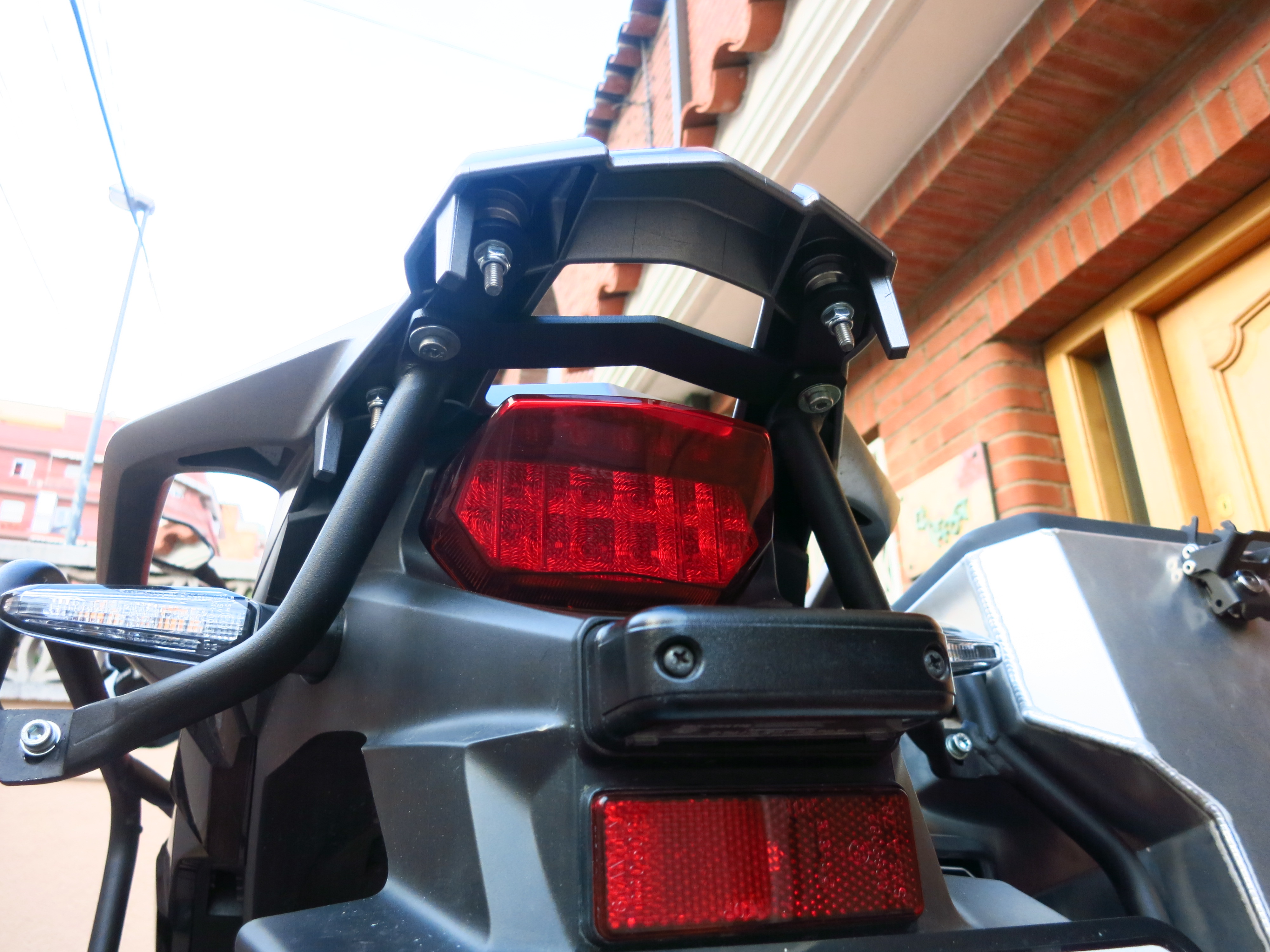
To fit the extra mounting point under the luggage rack you need to use the eight special spacers. Put four on the holes on the luggage rack from the top (narrow side down) and drop the long Allen bolts with the rounded head into them.
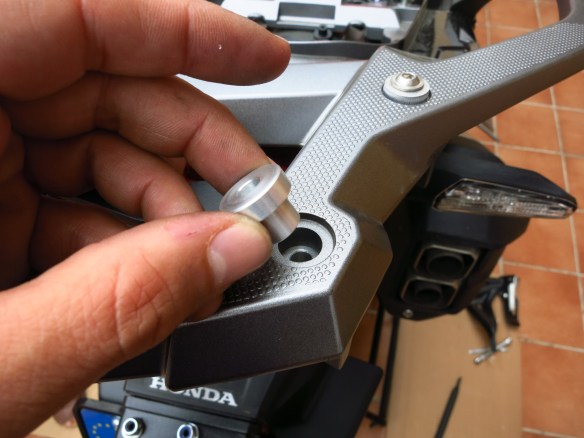
IMG_8058

Now comes the tricky part – you need to fit the other four washers (wide side up) up the bolts, fit the H plate without them falling (and with the welded threads facing up) and start screwing the self locking nuts. Do not tighten them completely.
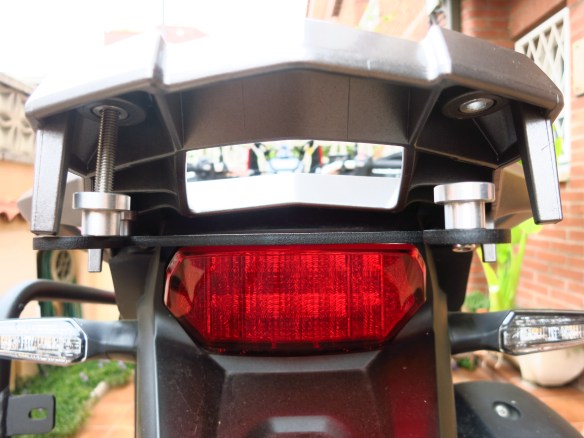
IMG_8059

IMG_8055

To finish, attach the L shaped mountings from the top of the hops to the H plate under the luggage rack.

IMG_8068

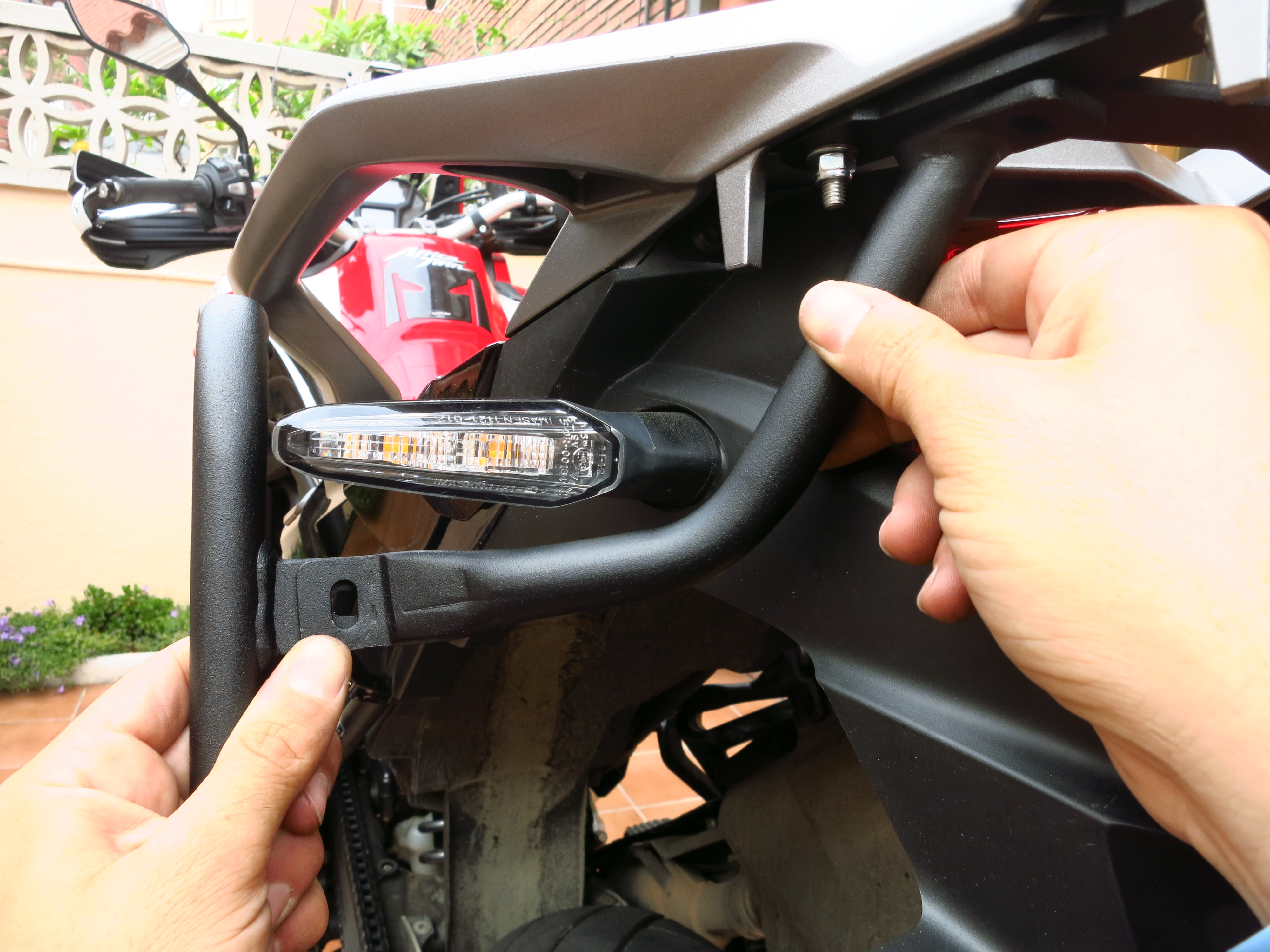
They fit with the angle facing to the ground so that they clear the indicators. In my case, Holan had not included the two bolts needed to fit them to the H plate, so I had to find a pair from my personal stock.

IMG_8064

The only thing left to do now is to go around the rack and progressively tighten all the bolts and nuts. All the nuts provided are self locking, but it is always advisable to check everything has settled in properly after a few days riding and to put a drop of thread locking glue in them to make sure that nothing comes loose.

FITTING THE PANNIER MOUNTS

For those of you unlucky enough to get the panniers without their mounts already fitted, here is how to do it.

With the old Touratech Zega panniers, or any others that do not have rounded or cut corners, nor an exhaust cut, it was possible to play a bit with the mounting points to find the best position – a bit further back, or closer to the front, higher or lower… in order to do this properly the best method was to mount the racks on the bike, check exactly where you wanted them (usually with a passenger) and then remove the panniers to use the hoops to mark the exact drilling points with the panniers lying on their side on the floor. In this case there is not much room for lateral movement, and you can’t choose the height as that is determined by the exhaust cut, so you can take all the measurements to drill the holes without the need to mount the rack on the bike before.

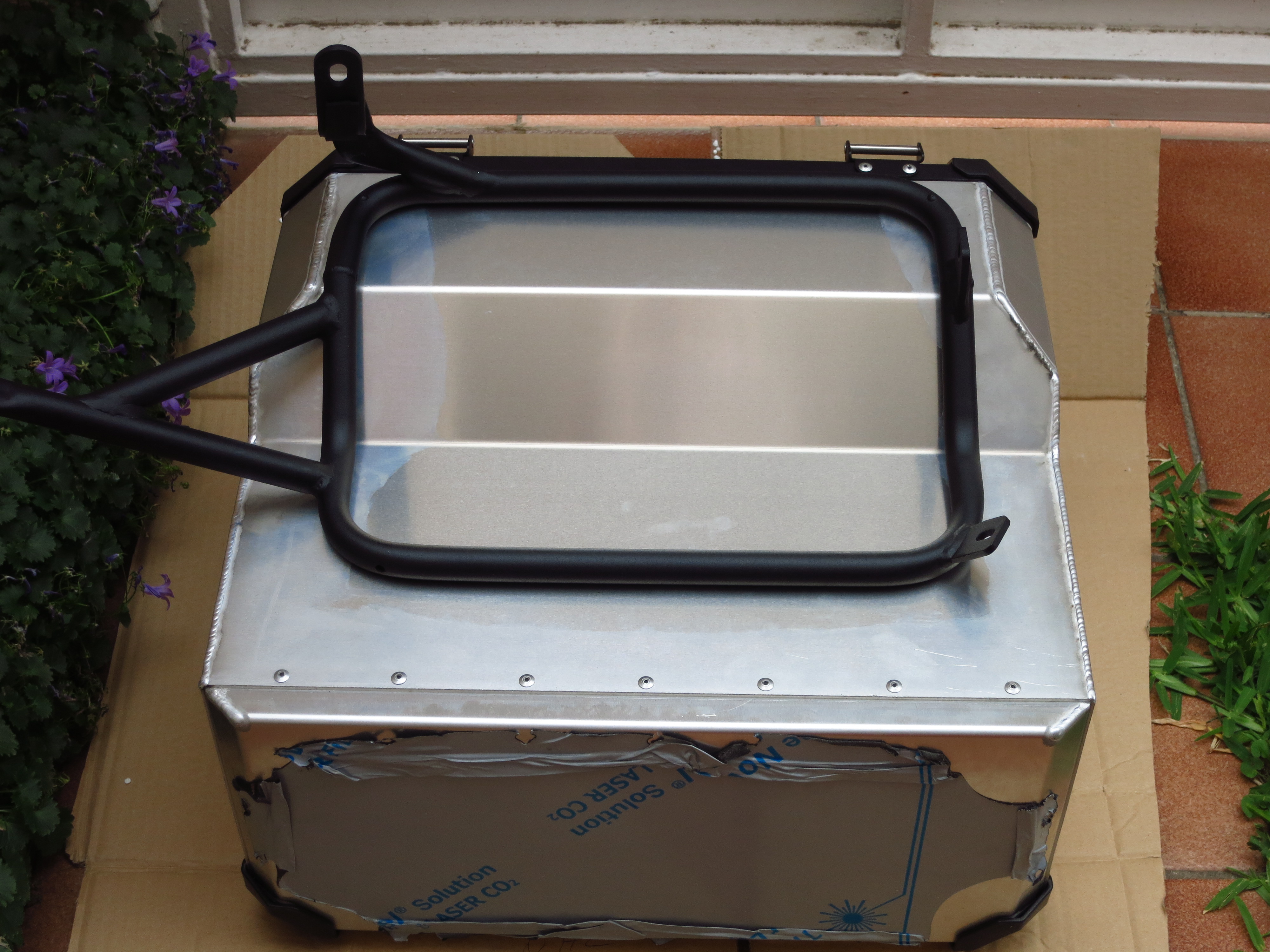
Take the pannier with the exhaust cut, lay it on its side, place the hoop on it and measure the distance across to both edges.

IMG_8073

There is a bit of room to mount it slightly forward or backward, but not much, and mounting it in the middle means that you minimize the risk of making a mistake then transferring these measurements to the other pannier (see my previous post about that) and that you will be able to swap left and right if in the future you buy a bike with the exhaust on the other side (providing Holan makes a rack for that one, that is).

Then measure the distance from the top of the hoop to the lid. And write all these numbers down.

IMG_8074

With the hoop in the exact position you want, place the plastic pucks on their correct position on the inside of the hoop (you will need a friend to hold it down in position for you to make sure it does not move a millimeter, or alternatively, put some weight on it). Take a long thin pencil or even better, a metal punch, and mark the position of holes of the plastic pucks on the pannier.

IMG_8072

Remove everything and drill the holes (5mm for the small bolts, 8mm for the big ones).

IMG_8079

Clean the metal shavings with a bigger diameter drill and mount everything in the following order: from the inside – the reinforcement plates (small) and the bolts; from the outside – the reinforcement plates (long) the plastic pucks, the metal plates (at the bottom) and the rotating locking plates (at the top). Make sure the 8mm holes at the top are wide enough for the rotating locking plates to turn freely.
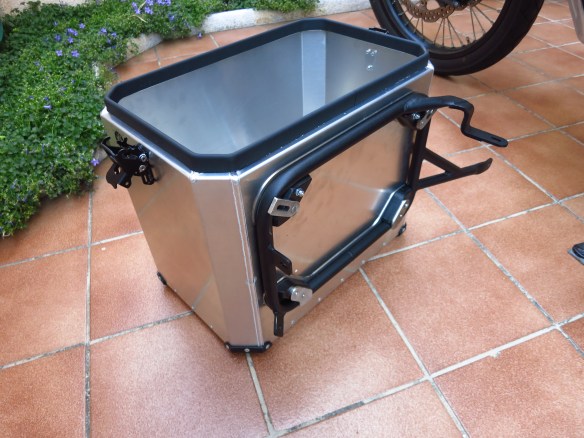
IMG_8080

In my case, I had to add a spacer for the locking knobs inside the pannier, as they are too close to the head of the small bolt, and no spacers were included in the kit.
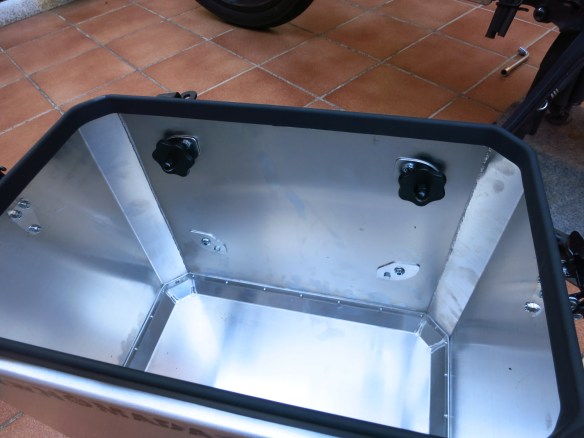
IMG_8082

The hoops have a small metal bump onto which the rotating locking plate fits to make sure they do not turn as you are tightening them. One of them did not fit (the cut on the plate seemed to be too short) so I had to lengthen the cut a bit.

IMG_8090

All in all, two bolts and four spacers missing, a mounting point on the rack that required some “aligning”, a cut on a locking plate that needed lengthening and no instructions. If you like DIY, have access to tools and want panniers with an exhaust cut, these are a very good choice. For 200€ more, and if you forego the exhaust cut, the Touratech ones come with instructions. I don’t know about the latest models, but my old Zega ones (first generation) still required drilling (more holes, actually) and the rack also needed bending. No missing bolts or spacers, though. If you want the full GSA look, try Globescout. Instructions, anodized ,no drilling and supposedly excellent quality. They are 300€ more. Oh, and Holan prices include shipping.

Time to load up the beast – which luggage system to choose?

Soft luggage or hard luggage? The debate has been going on and on forever, and I am not going to further it here. To cut to the chase – both.

The AT is supposed to be a decent offroad machine, so the choice should have been clear – soft luggage, but I will also use mine as a long distance, 2 up, touring machine with the occasional excursion into unpaved roads, which requires the extra capacity and added security of hard cases. So the decision was made to buy a set of aluminum panniers for the upcoming trip this summer and use my Ortlieb bag for solo excursions into the dirt. If I do another long solo trip I might buy a pair of saddlebags and strap them to the racks of the aluminum panniers.

With that settled, the question was – which ones?

I had a Touratech system on the V-Strom and was very happy with it – those boxes had withstood countless falls and drops and I had always been able to bang them into shape. The V-Strom and the AT have the exhaust on the same side, which means that I could simply buy the rack and keep using the old boxes, but a few things stopped me from doing so.

IMG_6520Firstly, when drilling the holes for the mounting points on the panniers for the old bike I made a measuring mistake that meant that one of them was mounted further back than the other. Not by a big margin, mind you, but it is noticeable and something that still annoys me to this day.

Secondly, having the exhaust on one side only meant that one of the boxes had to be smaller than the other, and the rather fat ass of the V-Strom meant that I had to go for the smallest combo that Touratech sold to keep things as narrow as possible. For the AT I wanted a system with a cut on the exhaust side, GS-style, to maximize luggage space and keep the boxes close to the bike.

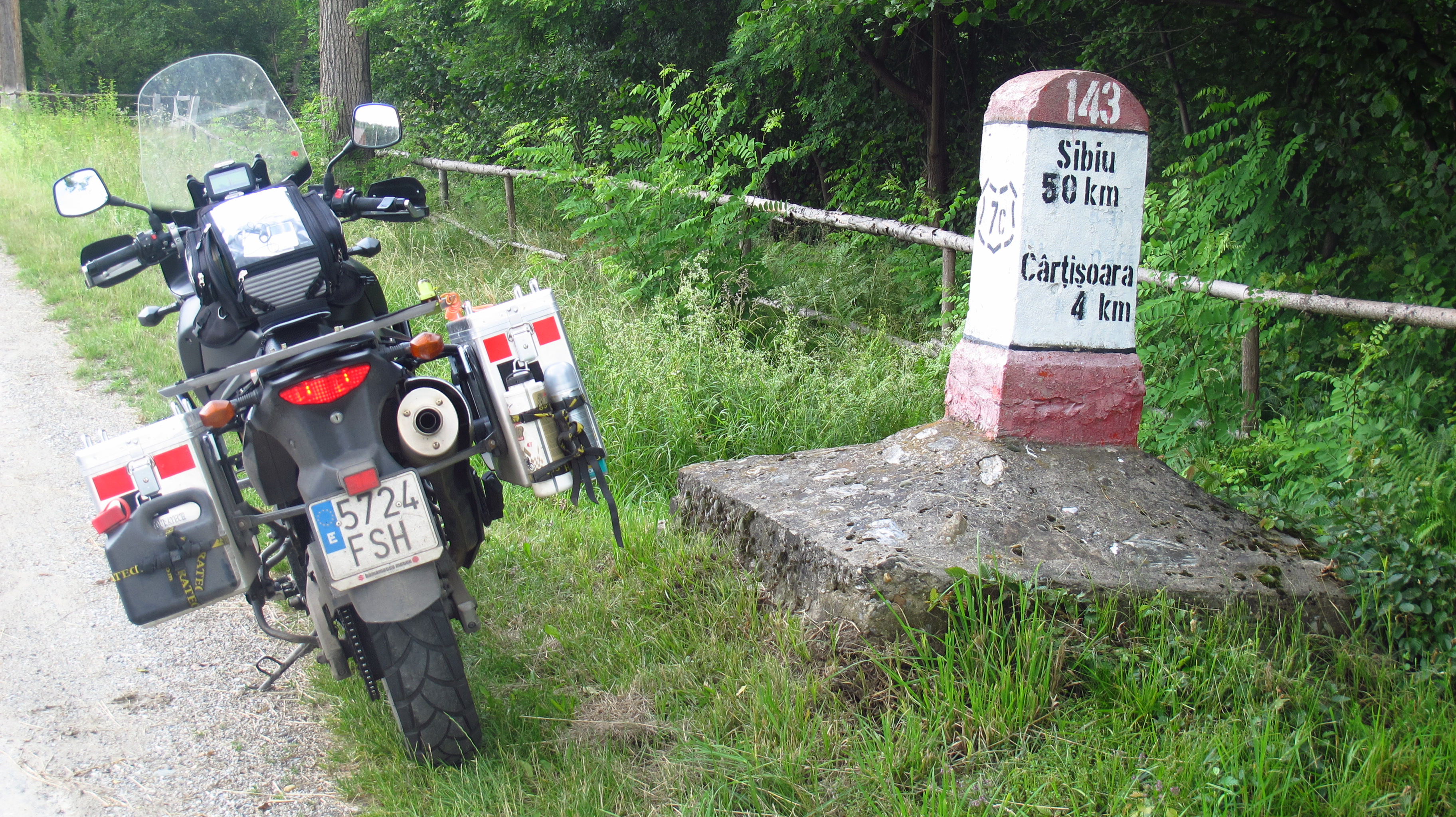
IMG_6700Last but not least, the old boxes had all the ‘medals’ (i.e. country stickers) that the other bike had rightfully earned, and it seemed plain wrong to have them on the new, yet unproven bike. I know this sounds stupid to a lot of people, but I believe that the AT has to earn its wings.

2013-09-02 20.40.19It was time to do some market research, then.

The only two companies I found that manufactured a system with an exhaust side cut were Holan, based in Poland, and Globescout, from Turkey.

Both offer excellent products of the best quality, but I went for Holan because they are a bit cheaper and have a dealer near Barcelona. Unfortunately, things were not going to be so easy.

The moment I got my new bike I ordered a top case from them because I need a minimum of luggage capacity to go to work every day, and I thought I would save the money for the panniers and buy them a month or so before the summer trip. However, it seems that Holan, having been one of the very first companies to put luggage systems for the new AT in the market, have been flooded with orders and have a huge backlog. At the time of writing these lines I still have not received the top case or the crash bars I ordered. This made me fear that the panniers would not make it in time for the summer.
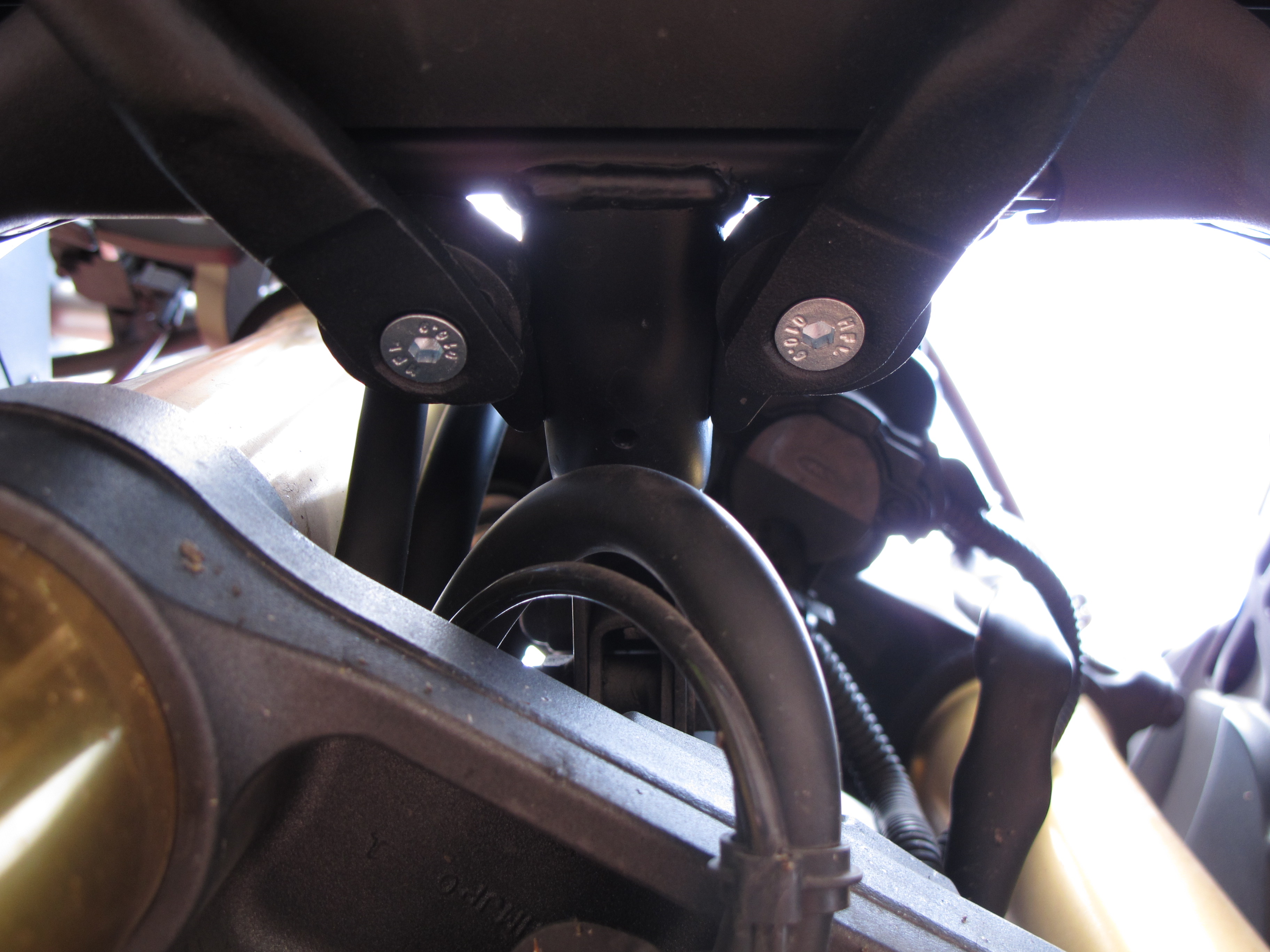
To make things worse, another AT owner and member of the Spanish forum who had placed an order earlier than me received his luggage system and his impressions were not good at all.

The AT is a tricky bike to mount luggage racks on. It is designed for the OEM plastic cases and that’s it, no easily accessible mounting points have been designed for anything else, meaning that luggage manufacturers have had to get creative. It is easy to attach a rack to classic points on the passenger footpegs and the front of the subframe, but not to the back of it. The solution that Touratech and GIVI have found is to drill through the plastic fender to access two mounting points at the end of the subframe and attach the back of the rack there from below.

GIVI instructions

Touratech instructions

Holan decided to add a reinforcement bar from the top of the loops to the passenger footpeg and forego the rear mounting points. According to them they had tested the system with the technical department of a Polish university and it worked fine. However, with the system on his bike, the forum member I mentioned above was far from happy. He reported that the setup had a lot of flex, even unloaded, and that he would not dare take his bike offroad for fear of the whole thing coming off the bike.

That was not looking good, so I started looking into the Globescout option. I got on the phone with them and they confirmed that their system also required drilling to access the subframe, which was reassuring, but it was noticeably more expensive than Holan, and if I wanted to have a matching top box I would have to cancel my order and get one from them, which was twice the price of a Holan one.

I was starting to consider forgetting about the exhaust cut and get a GIVI system when I saw a link posted on the forum to a French blog that said that Holan had admitted the design flaw and modified the system with an additional mounting point at the back and posted a picture of the supposedly new system. The people on the forum said that they had got in touch with Holan’s dealer in Spain, but they could not confirm whether or when that modification would be available.

IMG_4001-1After a lot of unanswered phone calls to Twin Trails, the Spanish dealer, I finally managed to get someone on the phone who told me that the racks were already shipping with the additional mounting point. Not only that, he already had some in stock, and if I wanted the 45L panniers with black lids, he also had a pair. It was the size I wanted and I did not mind the black lids instead of aluminum ones, so I jumped at the chance. A week later, they were delivered to my doorstep.

More on fitting the system to the bike soon.