Day 4 – Monday 1st August – Bus to Korenica to Plitvice to Korenica (0km)
Through my earplugs, I heard the distant ring of the alarm clock going off in both of our mobile phones at 7:00, then Nat switched them off (yes, both of them) and there was silence again. She did not try to wake me up and I, tired as I was from two days of travel, was not particularly interested in finding out why. An hour later I woke up, pulled one of the plugs out of my ear and immediately hear rumbling thunder. I turned to Nat and asked ‘seriously?’ Two days travelling at well over 30ºC and today, the day we were going to go hiking to one of the most famous tourist attractions in Croatia, it was raining? No doubt, that was God getting back at me for having mocked his Italian Evangelists…
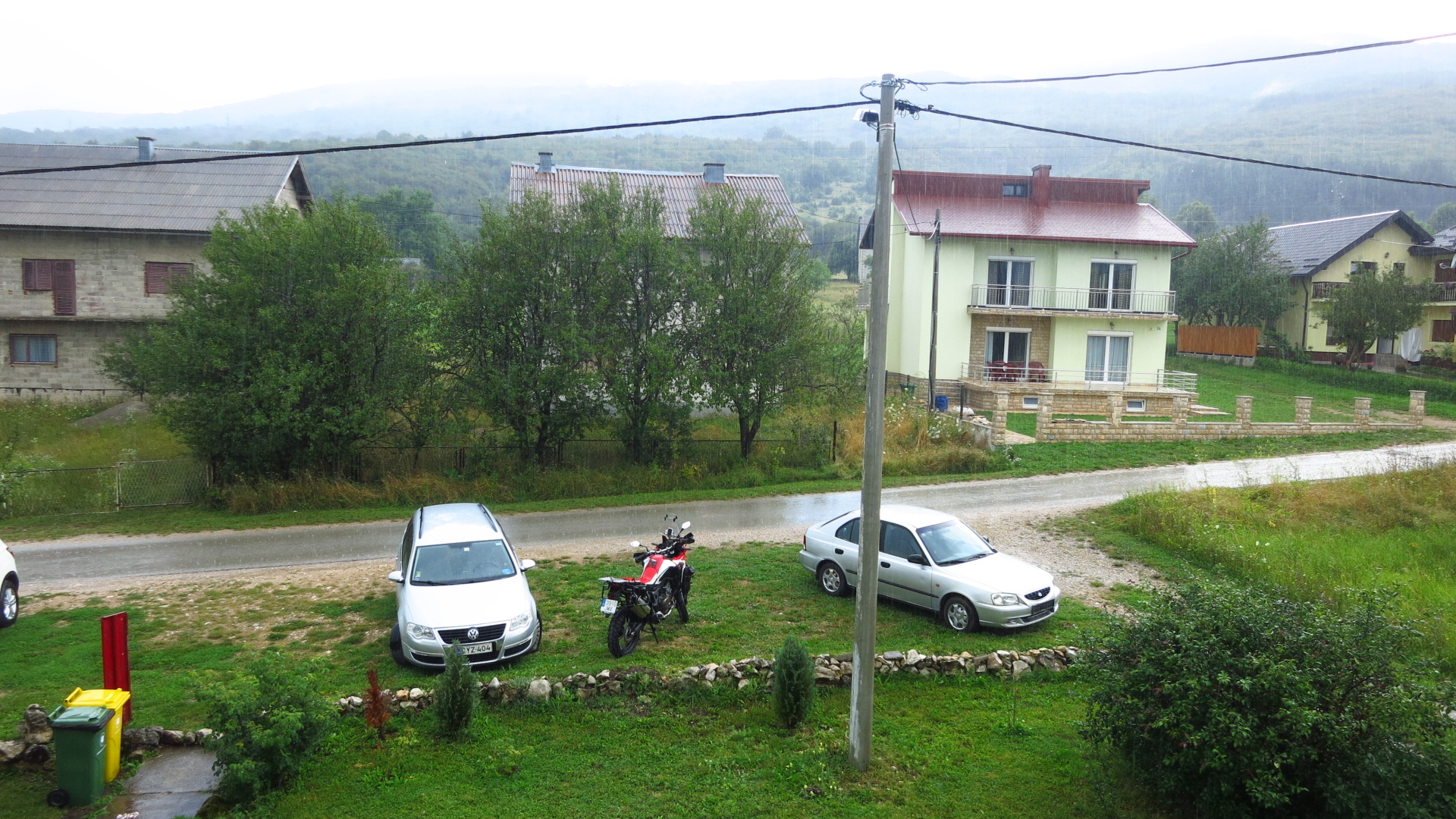
We waited for a while, but the sky did not give us any hope of the weather improving soon. It was covered in menacing looking clouds, and there were bursts of hard rain every few minutes. There was not much to do, so we decided to go to the supermarket to do the shopping and kill some time. On the way there we saw a tourist information stall and asked about the natural park to see whether we would have enough time to see it the following morning before heading to Omiš in the afternoon.
The girl told us that there were trains and boats if we did not want to walk, and the map also showed some cafés and restaurants were we could take shelter from the rain. Not wanting to pass the oportunity to visit the park and seeing that there was a bus leaving in about 5 minutes, we decided to risk it and go right there right then, without going back to the apartment. Fortunately we had taken jackets, the camera, the passports and some money with us.
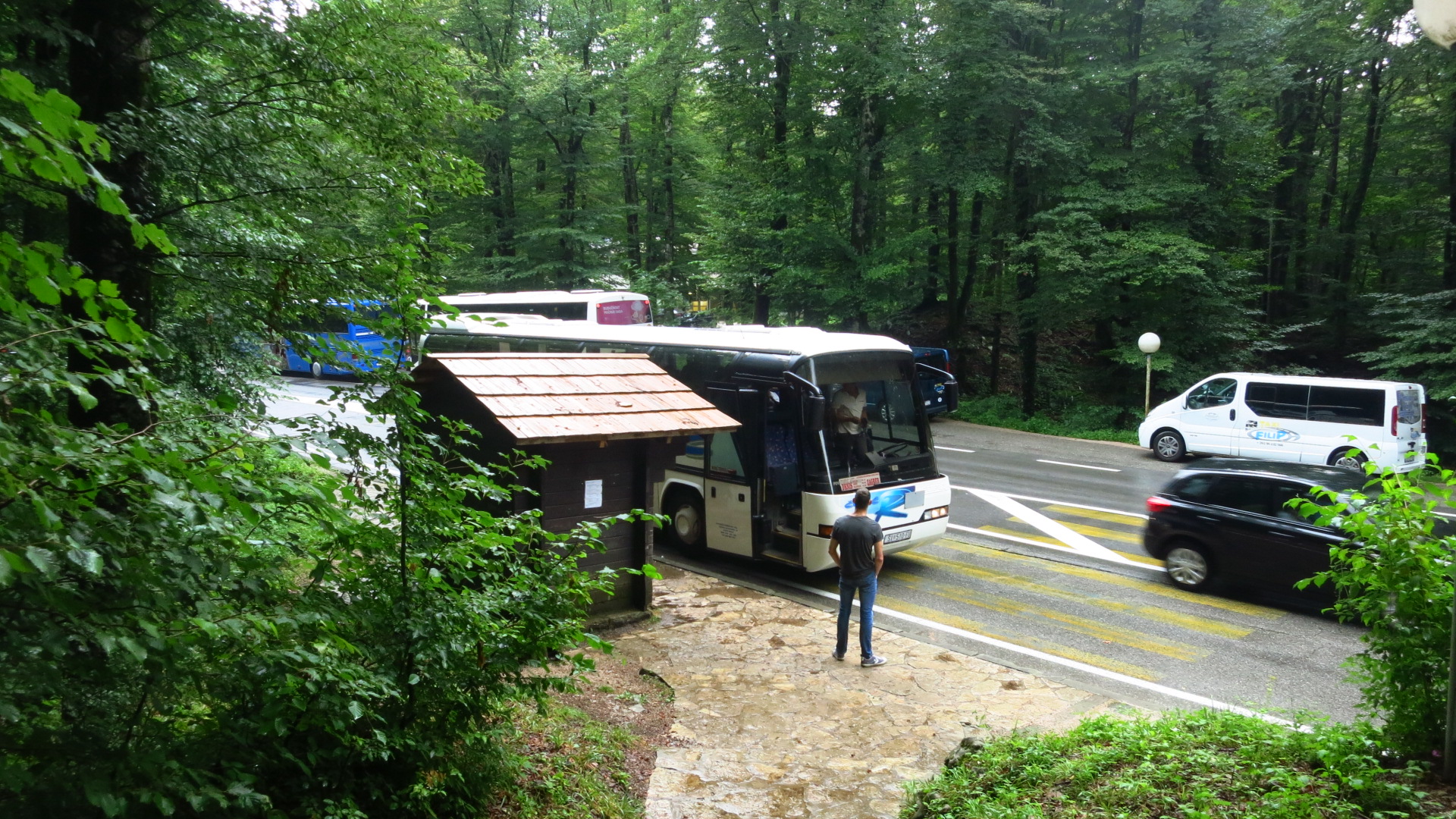
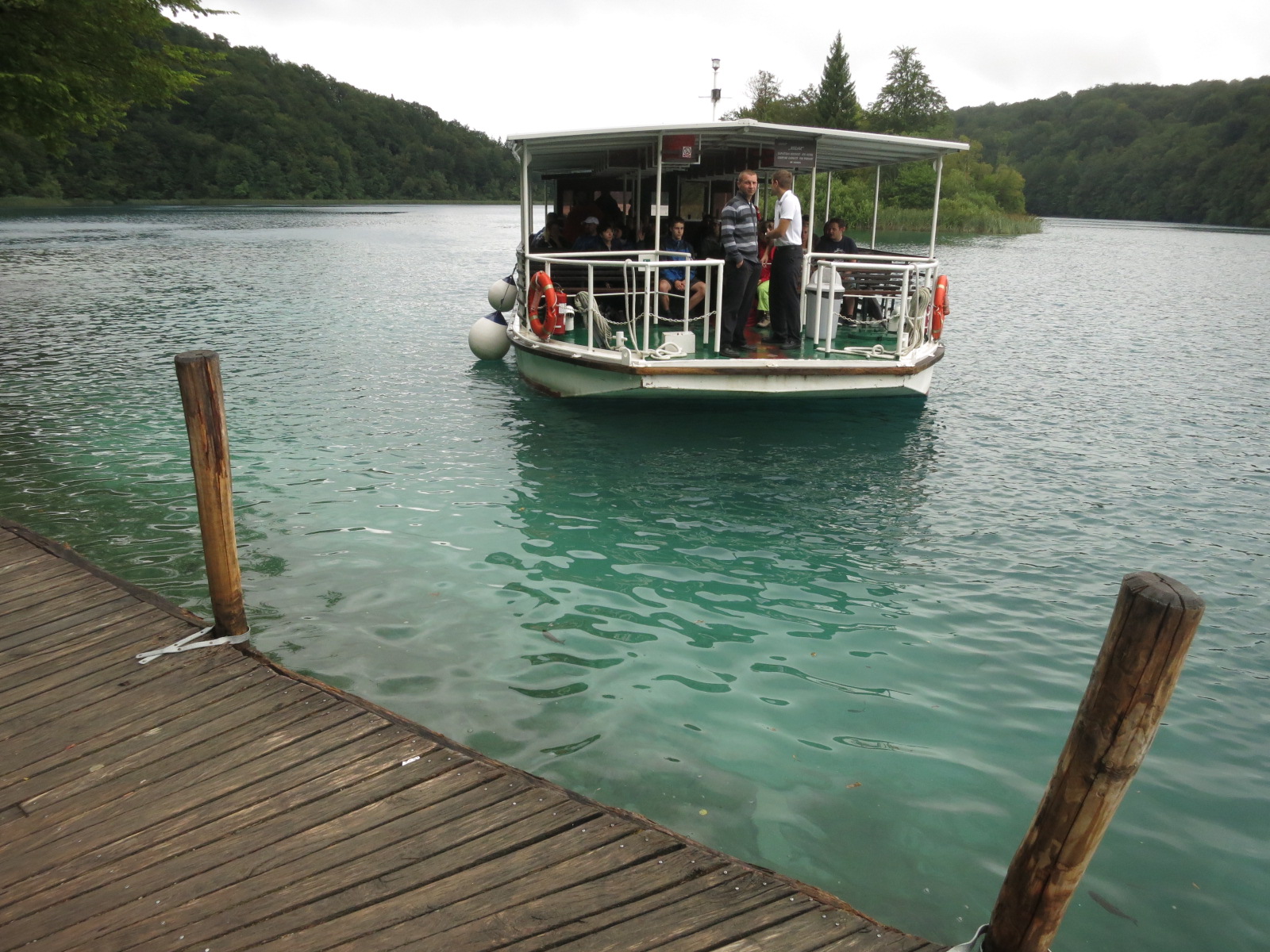
It was still cloudy, but the rain had stopped when the bus dropped us at the park’s entrance. We studied the map and decided to take a boat across the central lake and hike to the main tourist attraction – the big waterfall. It started raining again when we got off the boat, but as luck would have it, there was a small souvenir shop where I could get a raincoat to prevent the rain from stopping us now that it had become clear that the park was defintely fighting the elements for.
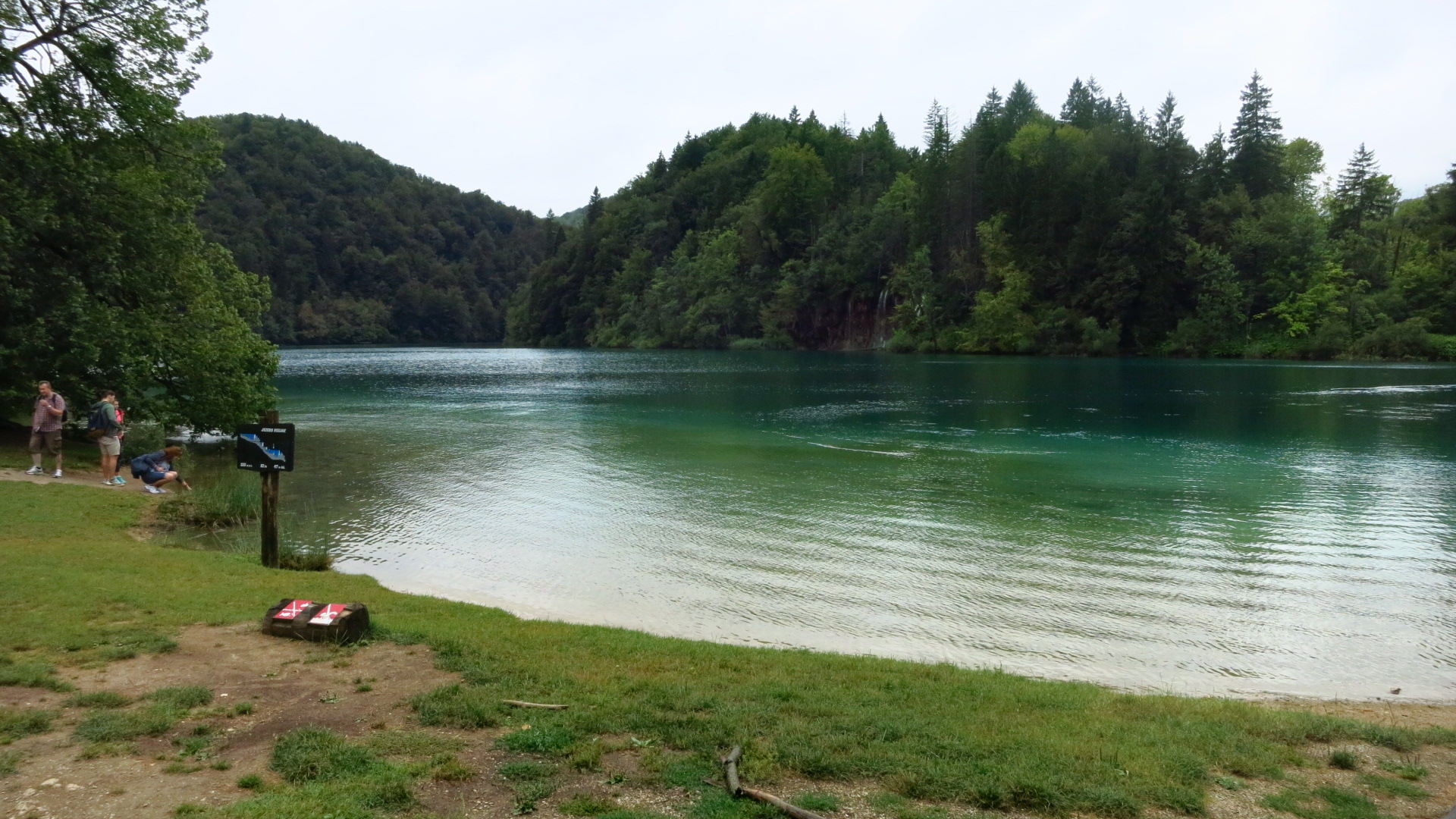
One of the oldest natural parks in Europe, Plitvice consists of 16 lakes and countless waterfalls that connect them. It may take up to 8 hours to visit it all on foot, more than that if you want to explore the whole network of footpaths and hiking routes in and around the park. While most people come to Croatia for its beaches, this area of outstanding natural beauty, one of UNESCO’s World Heritage sites is an absolute must.
After seeing the big waterfall we hiked back to the entrance in the pouring rain and took shelter at a café, where we had some lunch. Not wanting to finish our visit just yet, we took the train to the other end of the park to see the upper lakes and hike back .
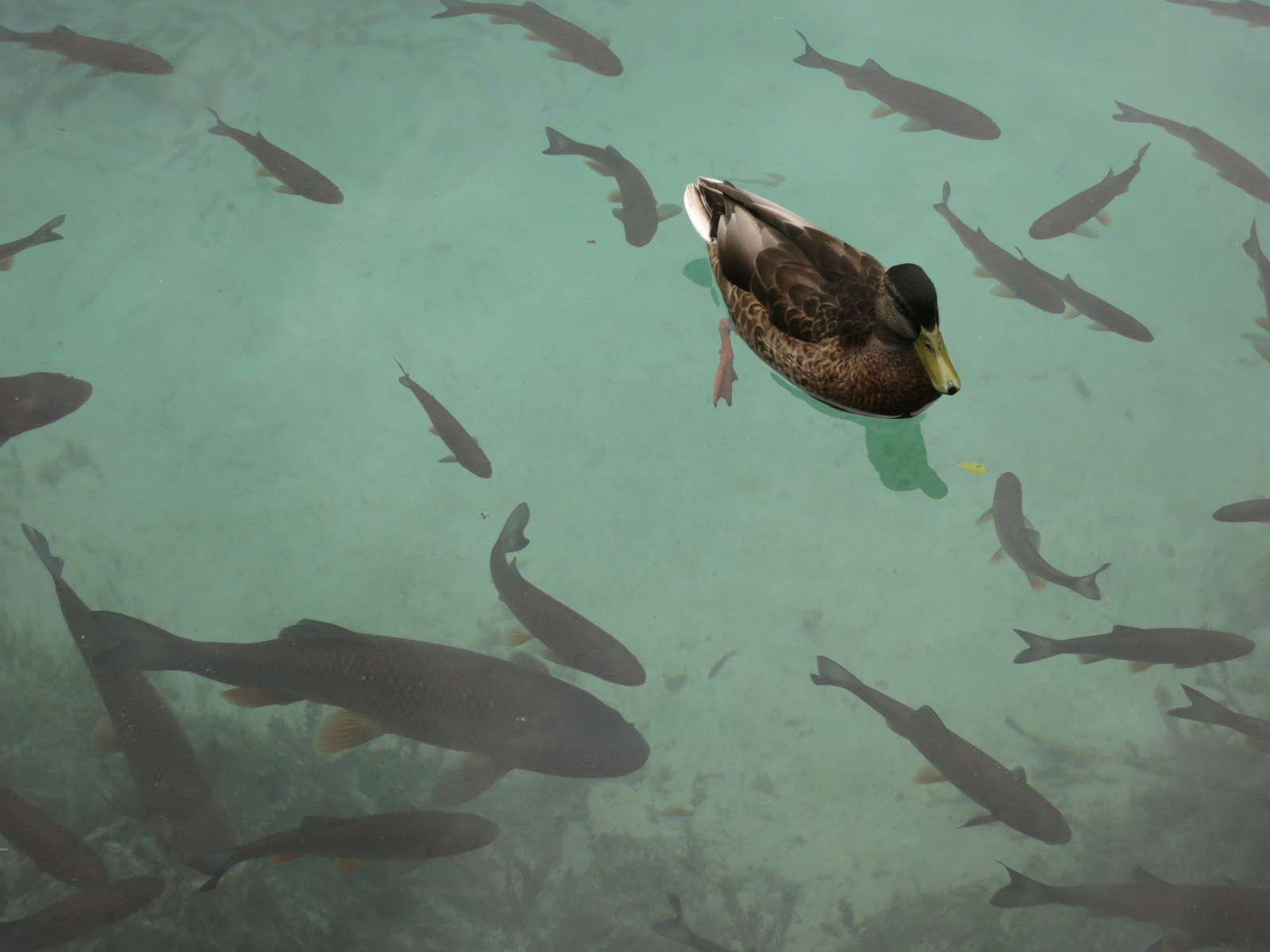
It was definitely worth it, and we were rewarded with a break in the weather and fewer tourists than on the big waterfall. My very limited talent at writing would not do it justice, so here are a few pictures. You can find a lot more on Facebook.
Day 3 – Sunday 31st July – From Terni to Ancona; ferry to Zadar; from Zadar to Korenica (311km)
Not so long ago I read an article entitled My 25,000 Wonders Of The World. The title mocked the Rough Guide 25 Wonders Of The World, and its writer started it describing a trip she had made to see the sunset in Ayers rock, Australia. After a very long journey, the 10-minute experience left her distinctly unimpressed and with a feeling that they had gone there just to tick an item of the must-see list that all tourist seem to carry with us. Some time later she decided to forego a visit to the Great Reef Barrier because she preferred to spend some time chilling and enjoying a beer at a beach bar, and after an initial feeling of guilt for having travelled so far and not seen the natural wonder that soon passed, she came to the conclussion that if she were to write a book about her own wonders of the World, it would contain 25,000 ones, rather than 25. The reason was, she explained, that what makes a trip special, what she really remembers afterwards, are the small details and experiences that catch our imagination and give each country its own distinct personality, like the fact that Australian bills are made of plastic, so one can spend all day surfing and then pull a few out your pocket and buy a cool beer at the beach bar.
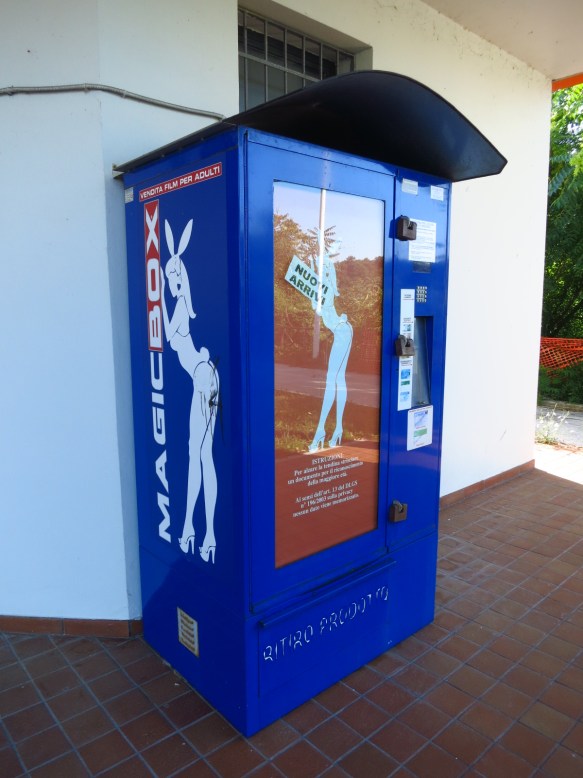
We set off early, at 7:00, because according to our tickets we had to be at the ferry terminal at 9:30, a full three hours before departure time. I had filled up the bike’s tank in Barcelona hoping to make it from coast to coast in Italy and refuel in Croatia, where petrol is not as expensive as on this side of the Adriatic, but I did not foresee the long departure queues nor the fast ride the previous night to make it on time to the hotel, so we had to make a fuel stop before we reached Ancona. It was here where I found one of the ‘wonders’ I would include in a book: a vending machine that sold porn DVDs. Like tobacco vending machines, you had to show a piece of ID in the shop to have it activated, and standing there against the wall of a desert petrol station early in the morning it sang a sad ode to the loneliness of long distance truck drivers.
The landscape on most of the journey from Terni to Ancona was surprisingly hilly, and with few traffic the ride was enjoyable and relatively quiet, we only saw three or four Italian drivers overtaking slow cars on double solid lines. We did too, you know – ‘when in Rome do as Romans do’ seemed a particularly well suited saying.
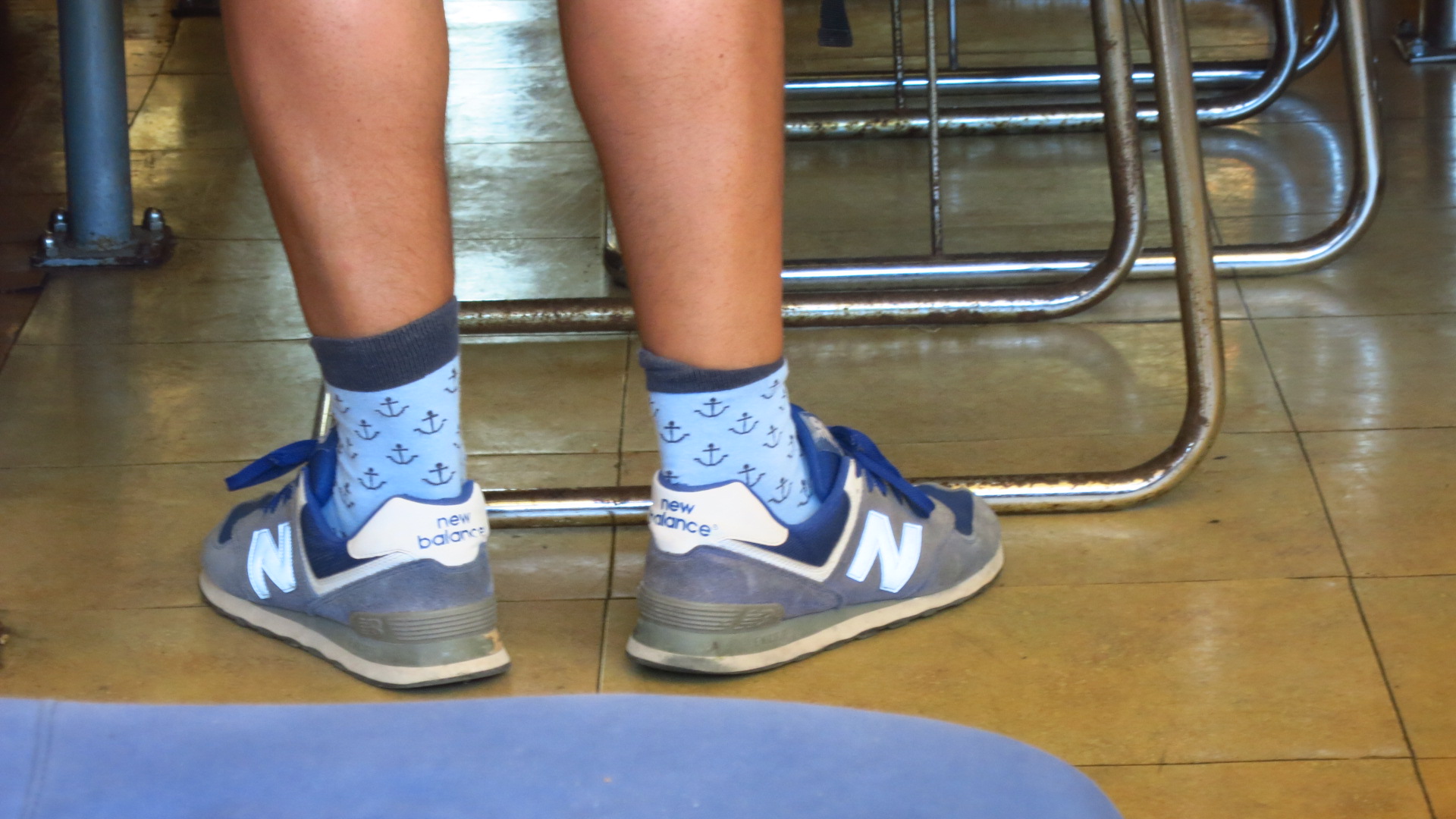
Getting to Ancona early paid off, and we got our tickets and changed some money with no queueing at all, a blessing considering how hot it was. There was no queue to get the bike on the ferry either, and we boarded with a bunch of people who were, ahem, curiously equipped for the crossing.
We found a nice table by a window, in a deck with air conditioning, and got ready for what seemed to be a quiet crossing, with the ship far from full. No sooner had I had had thought than my peace and quiet were shattered. By whom, this time? You might ask. Wailing babies? Drunken truck drivers? Hordes of overexcited teens? Nope. A group Italian Evangelists.
They started pouring into the dining area where we were sitting and soon we were surrendered and with no possible way out, as we were in the oposite corner to the exit. We had just started having lunch, and to our dismay a guitar and a pair of bongos were summoned out of thin air and they started singing, raising their hands, shaking their heads and generally praising the Lord rather loudly. As soon as we had finished eating we waded our way through them mumbling a few ‘scusi’ and went for a coffee somewhere quieter. As they say: ‘Religion is like a penis. It is perfectly OK to have one and be proud of it, but please don’t flaunt it about in public.’
We got to Zadar right on time, and at about 19:00 I hit Croatian roads for the third time in my life. The road network seemed to improve with each visit, and it did not take us long to reach our destination in Korenica, but one thing that had not changed was the heat – it was well over 30ºC even this late in the evening. Fortunately, Korenica is in the mountains, at about 700m above sea level, and the temperature was a lot more bearable.
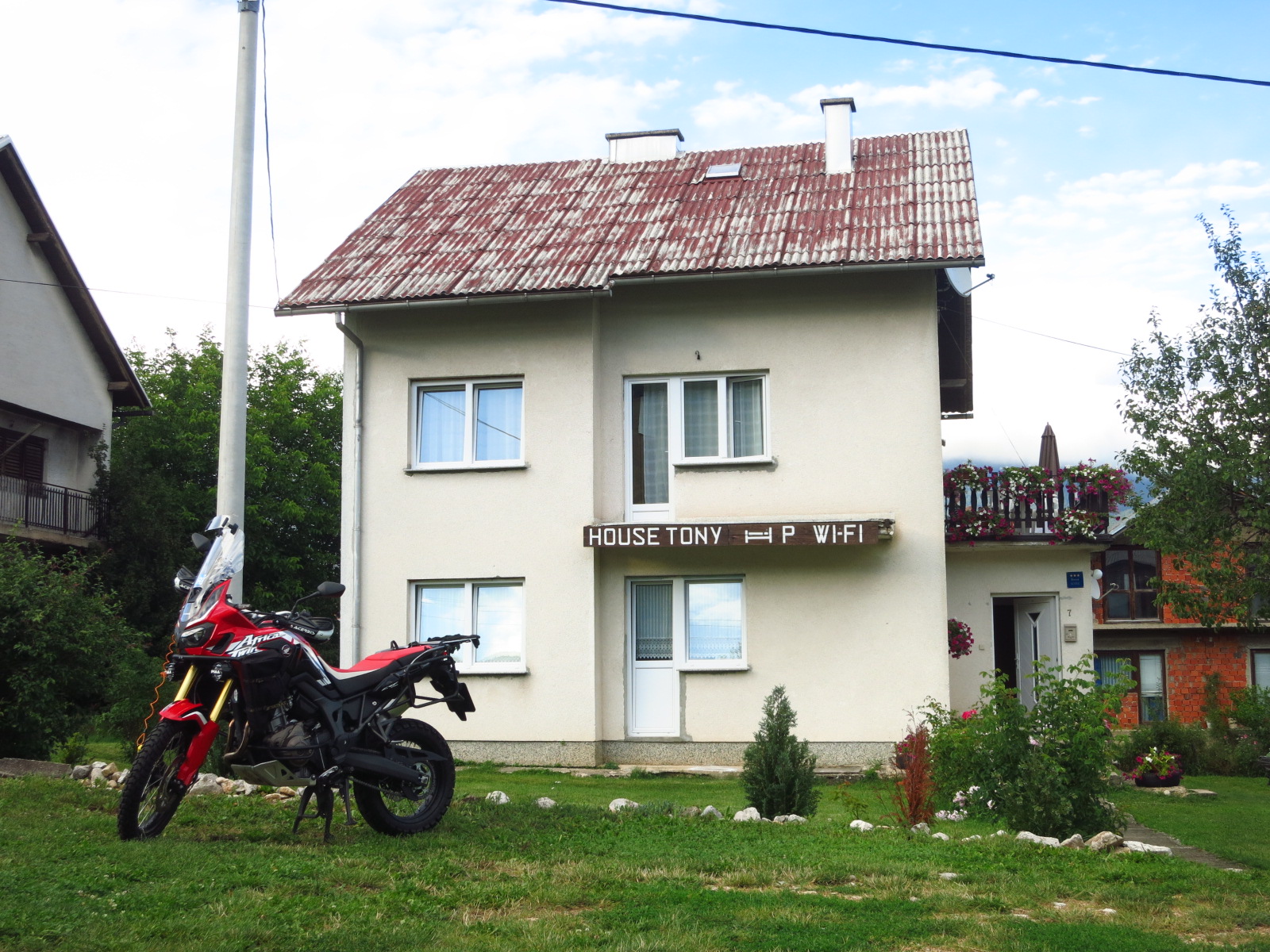
Our accommodation for the next couple of days was a small three-room guesthouse, House Tony, where Marine, hour host, welcomed us with a couple of beers and a plate of chocolate cookies.
p.s. I hope that using the word ‘porn’ in the title gets this post more traffic. Porn.
Day 2 – Saturday 30th July – More ferry and Civitavecchia to Terni (113km)
Grimaldi Ferries could be considered the Ryanair of the Mediterranean – the cheapest way to get yourself and your vehicle to your holiday destination from Barcelona, and it shows. You get what you pay for, and the advantage of this is that if what you want to pay for are your holidays on the Balkans and not a cabin on a cruise across the Med, you can board with a deck ticket and just find a quiet spot to lay down your camping matress to spend the night and no one will look at you twice. Everybody does it. So we found ourselves a “luxury” corner (one with a power outlet) and settled down for the night.
The following day was a lot quieter than first impressions had led me to expect, and time was mostly spent writing this blog, playing cards and reading between the top deck and a small deserted shaded side deck two levels down with a nice sea breeze. The journey felt a lot shorter than it really was, and despite the initial two-hour delay, we were in Civitavecchia at about 19:30.
We had a bit over 100km to get to Terni, a town more or less halfway across Italy where we were going to spend the night, and Italy welcomed us with a great country road gently sweeping across fields and low hills with the sun glowing red as it set in the background.
Day 1 – Friday 29th July – Ferry from Barcelona to Civitavecchia (0km)
I had had the new bike for more than three months; it had dutifully fulfilled its role as my daily transport to and from work and had had its occasional outing at the weekend, but day after day I had been feeling that it needed, longed for a proper trip, the beast wanted to be unleashed away from the city. So when the holiday have finally came, it was time to take it on its first long trip. Where? The Balkans.
The plan was to take a ferry to Italy, cross the country, take another ferry and start from Croatia, then ride south to Montenegro, Albania, Kosovo, Macedonia, Bulgaria, Greece and back to Italy via another ferry.
I started my holidays at the very end of July. This had an instant impact on the beginning of my holidays in two notable ways.
One, I got a reminder of how hot and damp the city is this time of year as I dragged about 40kg of luggage from my flat to the garage where the bike sleeps, one piece at a time. After a lot of sweating, pulling straps and tying knots, the game of Tetris was complete and the bike loaded.
Second, I got a taste of the joys of starting my holiday at the same time as millions of other people in the shape of a neverending queue at the ferry terminal.
Once on board, the ferry was choke full of loud people, screaming kids and dodgy-looking Eastern European truck driveres, one of whom tried to start a fight at the top deck bar. At least the two-hour delay before we set sail was made much more enjoyable by the company of an Argentinian couple who have been travelling around the world on their motorbike for over two years, and who had a lot of stories to share. You can find out more about them here and here.
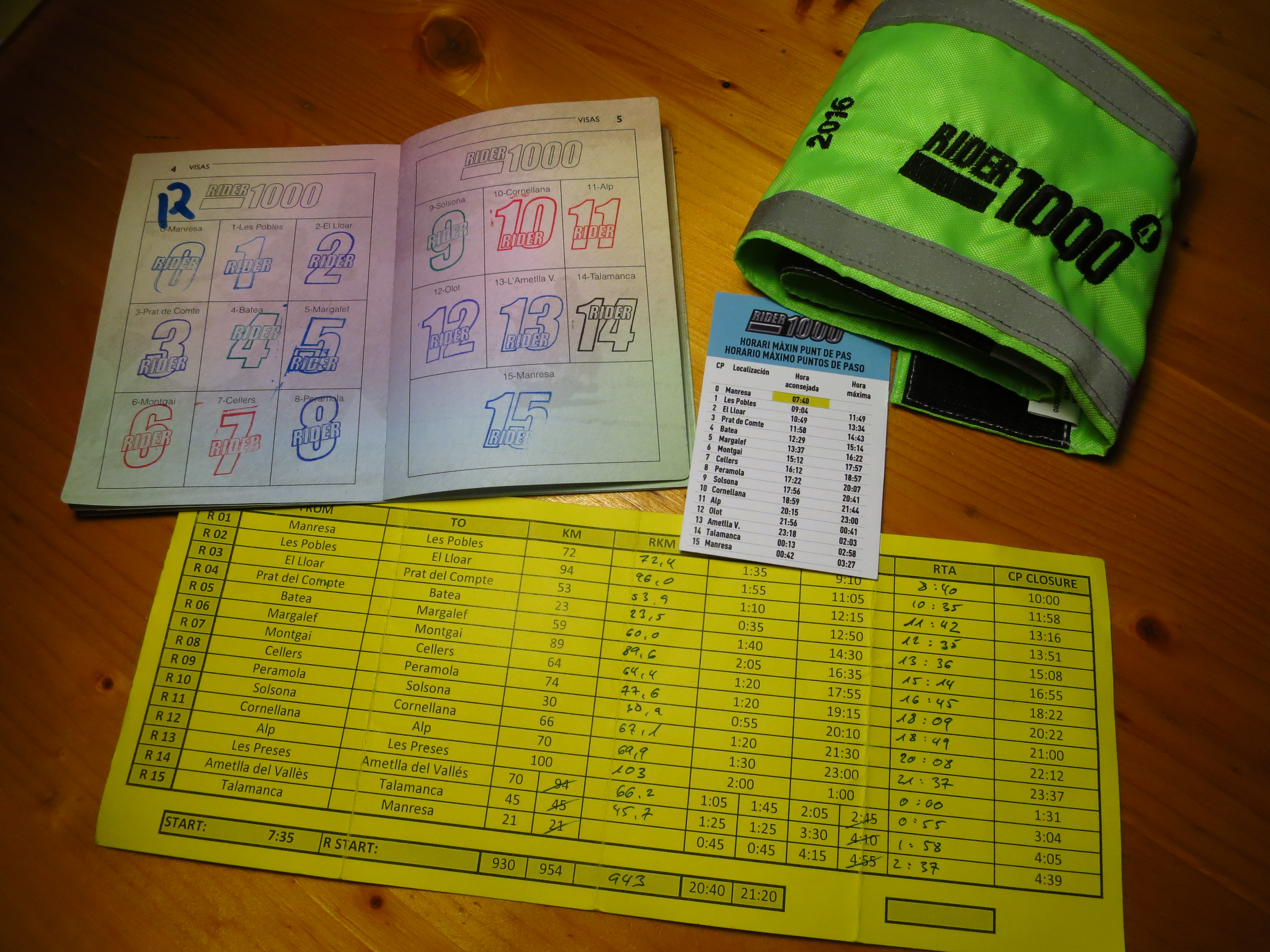
The Rider1000 is a non-competitive endurance riding event that consists in riding 1000 kilometers around Catalonia starting and finishing in the city of Manresa. The 4th edition was held over the past weekend, and I took part for the second time.
I heard about for the first time only a day before the inscriptions for the previous edition closed and I did not have time to convince anyone to take part with me. This year, however, I managed to convince two friends that it would be a great idea to get up before 6am and spend 20 hours riding almost non-stop in winding roads. Not only that, three more friends who are relatively new to riding decided to take part in the 500km version.
With more time to plan things we decided to try not to repeat some mistakes I made last year. First of all – enter the event early. Departures start at 6:00 in order of inscription, meaning that last year I was second to last to take mine, at 7:15. By the time the sun set I was just reaching the checkpoint in Horta de Sant Joan, the furthest point from the finishing line in Manresa and I had to ride for four and a half hours in the dark. I finished at 1:17. The second mistake was not booking accommodation for that night – I thought I would just go back home at the end, but riding an extra 50km on top of the 1000 already done was too much.
With that in mind, we tried to get an early start slot, but the Rider seems to be growing in popularity, and even though we entered it only two hours after inscriptions opened, we were given numbers 578 and 579 and scheduled to start at 7:35. Well, at least we addressed the second mistake and booked an apartment in Manresa for the night before and after.
There was rain forecast in the whole of Catalonia for Saturday. We woke up at 5:45 and when rode to the organization tent to get our breakfast the sky was overcast, but it was not raining. We had a sandwich and a coffee and then moved our bikes to the assigned departure lane.
A few minutes later, our turn came – the passports were stamped, our inscription numbers checked and noted, we had our picture taken in front of a sponsor board so fast that we did not even have time to strike a decent pose (I’m not going to post the result) and we lined up behind the starting line, ready for our turn. At precisely 7:35, we got on the starting ramp, waited a minute to allow a gap with the 6 previous riders, and were given the go!
It was 72km to the first checkpoint, the first bit on a fast national road, and like on the previous edition, the prospect of 850 eager riders let loose on the road was an opportunity that the police could not let escape – they set up a speed trap and at least one undercover patrol car on that bit of road. We got lucky and some riders coming in the opposite direction warned us to slow down, but we saw a few other riders who were not so fortunate and started the day 300€ lighter. The police must have made enough to buy a few new patrol cars.
Things got interesting quickly after that when we left the main road for a much narrower one in Queralt, with a 18% gradient that put our bikes to the test.
A lot of riders were in a hurry to get as many kilometers as possible done early in the day and some of them took too many risks overtaking. It was not long before we saw a bike in a ditch, its rider unharmed, fortunately.
We got the first stamp on our passports in Les Pobles and headed off to the second longest stint of the day, 96km to El Lloar.
After a cold and cloudy start of the day, the sun came out and we enjoyed one of those rides where everything is just perfect – road, weather, scenery… we were in the heart of the Montsant mountains. We only stopped for a moment in the second checkpoint before pressing on another 53km to Prat del Compte, which we reached at 11:42, almost half an hour earlier than my original calculations, so we took the chance to rest for a moment.
While we were having breakfast we heard some guys on GSs talk about an accident that had just happened outside the village – it seems that shortly after leaving Prat del Compte the police had set another speed trap behind some bushes on a long straight. The first bike of a group had seen in time and he braked to avoid a fine, and some guy in a crotch rocket had rammed into one of the GSs. Fortunately he had managed to avoid rearending it full on, and the result was only a bent gear lever and side stand on the GS and two unharmed riders. The guy on the R got the worst part, though, he ended up on the ground with a lot of broken plastic on his bike. You could say that by setting up that speed trap on a perfectly safe straight bit of road with no junctions and long distance visibility the police had managed to cause an accident instead of preventing one. As we were leaving Prat del Compte – riding slowly, for sure – we saw the police car with the speed gun and next to it an unhappy looking rider and his now naked bike waiting for the recovery truck.
We turned right shortly after for the road that connects with Bot across the Pàndols mountains. Next checkpoint was a mere 23km away, but this was the most winding, narrowest bit of road we’d encounter all day.
So narrow in fact, that there were mirrors in some of the corners to check for incoming traffic! Luckily, the road was empty bar from the participants in the Rider, and we were all going in the same direction.
It was still sunny when we reached Batea, the most southwestern part of our journey, but when we hit the road again heading back northeast black clouds were looming ahead of us.
Most people think that the hardest part of the Rider1000 are the last 3 or 4 hundred kilometers, when it gets dark and you are still a long way from the finishing line, but I have found on both my times in the event that once you have passed the 500km mark your body just finds a groove and settles into a calm routine of riding no matter the conditions. No, the hardest part for me on this occasion was the moment between the 250-300km. It was not a particularly long stint to the next checkpoint (59km), we were on time, it wasn’t raining, it was not too cold, and the road was quite good, but my back started to ache – I had made the mistake of wearing a backpack with some food and a CamelBak instead of strapping it to the seat – my contact lenses were starting to get dry and I realized that we had barely covered a quarter of the whole distance. For the last 20km or so I rode behind a guy on a Kawasaki with an IXIL exhaust that made a horrendous noise, and he was riding at annoying speed that is too fast to overtake on a road with not a single straight stretch but too slow to get some distance between me and him. By the time we reached Margalef I had a slight headache, and to make matters worse I saw that I had forgotten the Ibuprofen I had packed for cases like this in the apartment. Damn.
The organization were providing lunch at the next checkpoint, so after putting on some eyedrops to hydrate my contacts we decided to press on to be able to eat at a decent time and to hit the road ahead of the Kawa.
It is funny how fatigue works – for the next stint I was feeling just fine. Maybe it had been the noise from that guy’s exhaust, maybe I was looking forward to lunch, maybe an intermediate fuel stop helped, or maybe the roads were faster, with more flowing corners now, but even though it was 89km to Montgai, they felt very short and I was feeling fresh again.
The main street in Montgai was packed with all kinds of bikes, which was surprising because we had mostly been riding alone all morning, finding other participants only at the checkpoints. Either we had been getting very lucky with traffic or we were two of the few following the recommended route and not cutting between checkpoints using motorways and main roads. Anyway, we sat down for lunch with a rather big helping of fideuà – yes, a light meal before hitting the road – and enjoyed a rest in the sun, which had come out again.
There were menacing clouds in all directions, but we seemed to be following the very few sunny gaps in the clouds all across the country.
It was time to head north now, towards the Pyrenees. If there was going to be rain after all, this was where we were most likely to find it – a high mountain range in the afternoon-evening.
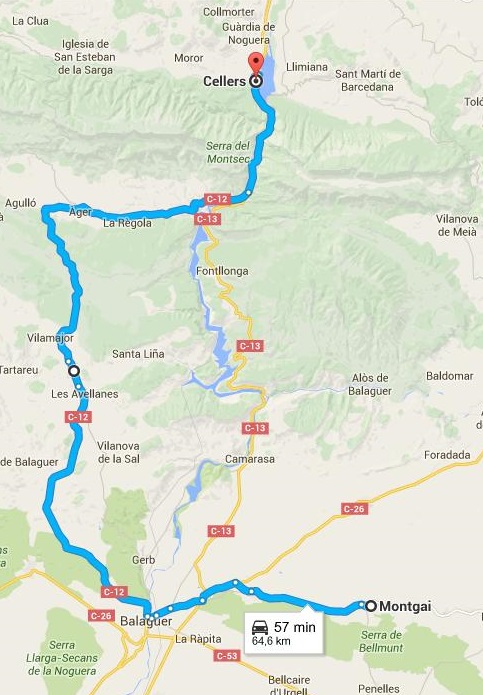
The next 64km to Cellers, on the banks of the Terradets reservoir, were a fast road, and everybody took the chance to make up some time in this stint. It felt so short that we had the after lunch coffee there, less than an hour from the previous checkpoint. And still no rain.
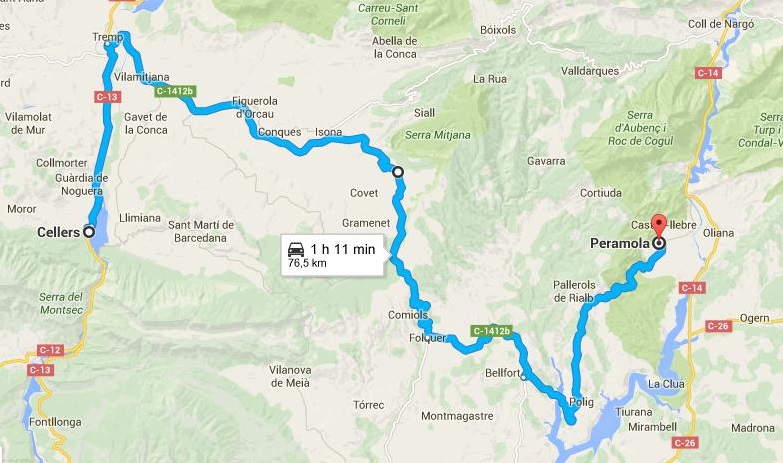
We were not going to reach the Pyrenees just yet, oh no, they were going to make us work for it. After Cellers the route headed straight east in Tremp, then south in Isona and east again until we reached the checkpoint in Peramola, opposite Oliana across the river Segre.
It was just past 6pm and we were still shy of the halfway mark. It was here that my phone ran out of battery – my mistake, I should have kept it in airplane mode and use it only to update the Facebook page at the checkpoints, but I did not think of it. As it turns out, most of the route took us across vast areas with no phone signal and it kept searching, thus drying the battery much sooner than expected. To make matters worse, I still had not had time to fit a 12V socket to the AT, so that was the end of my live report on Facebook. Sorry about that, I promise better logistics next year.
It was on the 30km between Peramola and Solsona when the rain finally caught up with us. Fortunately, it was just a light drizzle, and it had died down by the time we reached the 10th checkpoint and the equator of the ride. It was here that we learned that well over half the participants had already gone through the checkpoint, confirming our suspicions that some people were taking faster routes. Oh well, to hell with the clock, we were having a blast on the winding roads and were not going to stop now.
Next bit was going to be interesting – it was not raining, but the temperature was dropping and we were heading straight north to La Seu d’Urgell on tiny roads across Port del Compte. It was here that I made my only planning mistake – we should have cut across the skiing slopes instead of going around them, as we had to ride down the mountain around the southeast and then back up on the northwest side and we must have lost some valuable time there. Nevermind, the scenery was stunning, so it more than made up for the mistake.
It was 66km to the checkpoint in Cornellana, in the middle of nowhere in the mountains, and then another 30km down to the main road in La Seu.
Our bikes were quite low on fuel for this last bit, and there was not a single petrol station in any of the small villages and hamlets we rode across.
The sun set as we were making our way down to the main road, but the clouds robbed us of what could have been a spectacular sunset over the snow-capped mountains. Once on the main road, we hurried to a petrol station between La Seu and Alp, the 12th checkpoint of the day. On the way there emerged from a tunnel into a very thick cloud of smoke. At first I thought it was a burning car, maybe an accident, but then we saw it was a diesel Volvo whose engine had started burning oil and was self-destroying at full throttle. A family were standing as far from the car as possible, looking terrified and possibly without a clue as to what was happening to their car. My friend later told me that the only way to stop such thing is to block the admission of the engine to choke it, but unless you know exactly where it is and can do it quickly, I would not put my hand in that engine bay.
It was already dark when we stopped at Alp, and we had a sandwich for dinner near one of the paraffin stoves they had lit up to keep warm. We only saw about five or six other bikes at this checkpoint, and wondered how many were there left behind us.
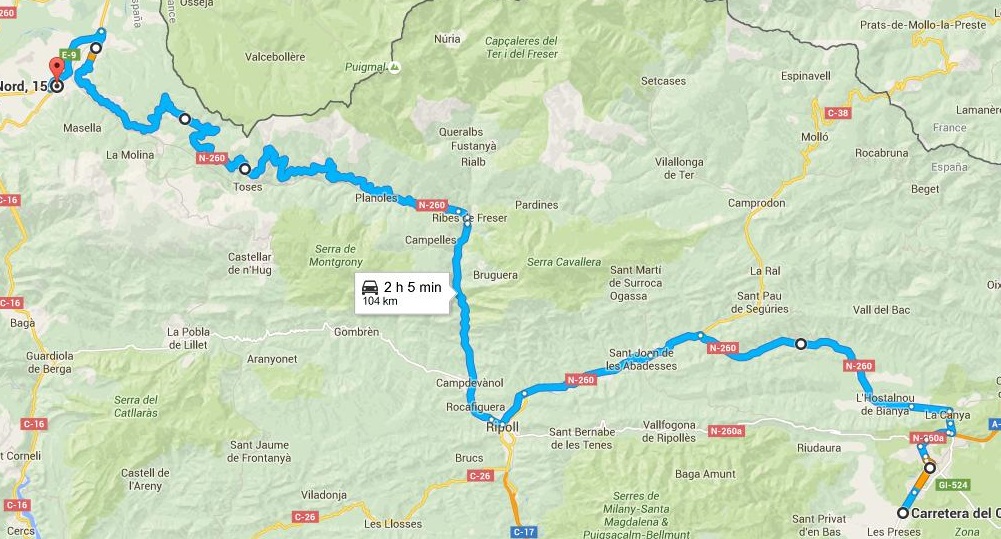
The night time ride was about to begin. We still had a very long ride with four more checkpoints to go and it started with crossing La Collada de Toses, one of the country’s most famous mountain passes. In complete darkness. At this point we could have taken a shortcut through La Molina skiing resort, but we were feeling brave. Time for the energy drink I had been carrying all day.
It went much better than expected, temperature only dropped to 5ºC at the top of the pass, and the LED headlights on the AT are rather excellent. On roads like this, however, I still missed having a pair of fog lamps to light up the sides of the roads, as in really tight corners I was basically turning into complete darkness. Not very confidence-inspiring… at least we could see the headlights of incoming traffic. Not that there was much, mind you, we only saw three cars, and that was on the way down, almost at the end.
This was the longest stint of the day, 100km between Alp and the next checkpoint in Les Preses, just past Olot. Fortunately, after coming down from La Collada the road became much faster and we were able to keep up a good pace for the last 50km. We found the RODI workshop where the checkpoint was almost deserted, it was midnight and they told us that there were about 300 riders left to go through. Well, we were not doing that bad, we were numbers 578 and 579 out of 850, remember. After filling up for the last time (just in case, the bikes only took five litres) we hit the road.
We had now 70km of main national road, and we made good time to the next checkpoint. I was surprised to see many bikes coming from the opposite direction and heading to the checkpoint we had just left. I guess thay had taken the tunnel to avoid La Collada pass, but that meant a huge detour, even if it was on main roads.
We turned off the C-17 road and into L’Ametlla at 0:55. Only one more checkpoint to get to Manresa and the finishing line. Here most people kept heading south on the main road and the motorway and took a route that was 80km long and took about less than an hour. We thought we would do it properly and cut straight across the Sant Llorenç mountains, only 45km, but ‘to cut straight’ might be an optimistic way of putting it, as that road was everything but straight.
We found no other riders coming the same way. We reached the last checkpoint at 1:58, the girls that stamped our passport so bored by now that they had been putting stamps on each other’s faces.
Only 21km to the finish line now. We made our way down the mountain with Manresa city lights already visible below, and many bikers coming in the opposite direction from the motorway to get their last stamp before heading back down the same way.
At 2:37 we turned into the car park we had left that morning, 19 hours earlier down to the minute, and crossed the finishing line.
The Rider1000 is a long, grueling challenge, most of those 1000km are done on mountain roads with 2nd and 3rd gear corners, they are not relaxed motorway kilometers. Our average speed on the move was only 63km/h, and we did not spend long on the stops. Despite all this, it is totally worth it, an amazing ride through some of the best roads and landscapes (at least until it gets dark!) in Catalonia. We will be back next year!
Almost three years ago, I rode across Ukraine on my motorbike. A lot has changed since. I travelled through the Donbass region, spent two nights in Luhansk and crossed the border into Russia. This would be unthinkable today, the region has been ravaged by war and the border with Russia is sealed. I do not know when I will be able to visit the area again – soon, I hope, but might still be some time. Far from this conflict zone, to the north of the country, lurks another enemy that will take much, much longer to defeat.
This week marks the 30th anniversary of the Chernobyl nuclear disaster. The night of 26th April, 1986, a fatal combination of human error and design faults led to the worst nuclear catastrophe in history. The story of the exact events that caused the explosion, despite being rather technical, has been told many times. The disintegration of the USSR and the difficulties in doing accurate research meant that less is known about the long term effects that the radioactive fallout had – whole areas rendered uninhabitable, displaced population, contaminated crops and water sources, an increase in several types of cancer, particularly thyroid, genetic disorders… in one way or another, the disaster directly affected the lives of at least 300,000 people.
Unfortunately, as is often the case with disasters that seem to be far from us, the world has long turned its regard away from Chernobyl. The area was put under military control, the remains of the reactor were sealed and we forgot about it.
But the danger is far from over. There are still 16 tonnes of uranium and plutonium inside the reactor, among many other radioactive materials. One milligram is enough to be lethal to a person. You do the math.
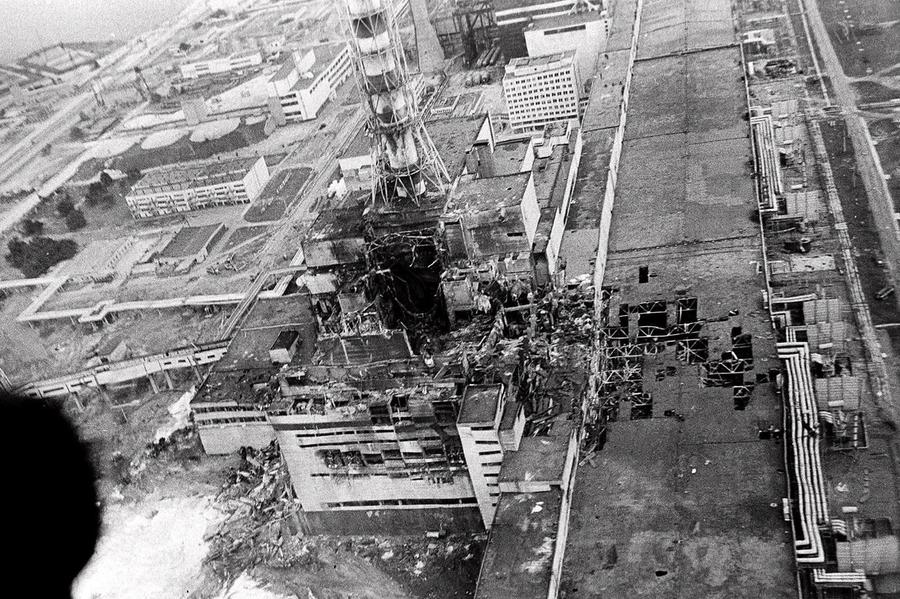
In the immediate aftermath of the accident, once the fire in the core had been put under control the main priority was to seal off the remains of the reactor to prevent the spread of radioactive dust and smoke into the atmosphere – remember that the extent of the catastrophe only became clear when the radioactive cloud reached Sweden and set off the alarms of a nuclear power plant there – but it was impossible to work near the building as radiation levels were high enough to kill a person in a matter of minutes and leave lethal long-term effects in a matter of seconds.
Building a structure to seal a building that was not only enormous, but partially destroyed and surrounded by debris without approaching it more than it was strictly necessary was not an easy task. The area around it needed to be cleared to lay off the foundations to the structure, ways of putting the structure into place without endangering the lives or workers needed to be found, and everything needed to happen as soon as possible.
Remote controlled bulldozers were used to clear the surrounding area. The debris and the first layer of soil were dug up and buried in deep trenches that were immediately covered in concrete. Most of the structure for the sarcophagus was built on remote sites and then transported and moved into position using enormous remote controlled cranes. The display of ingenuity and technology was staggering.
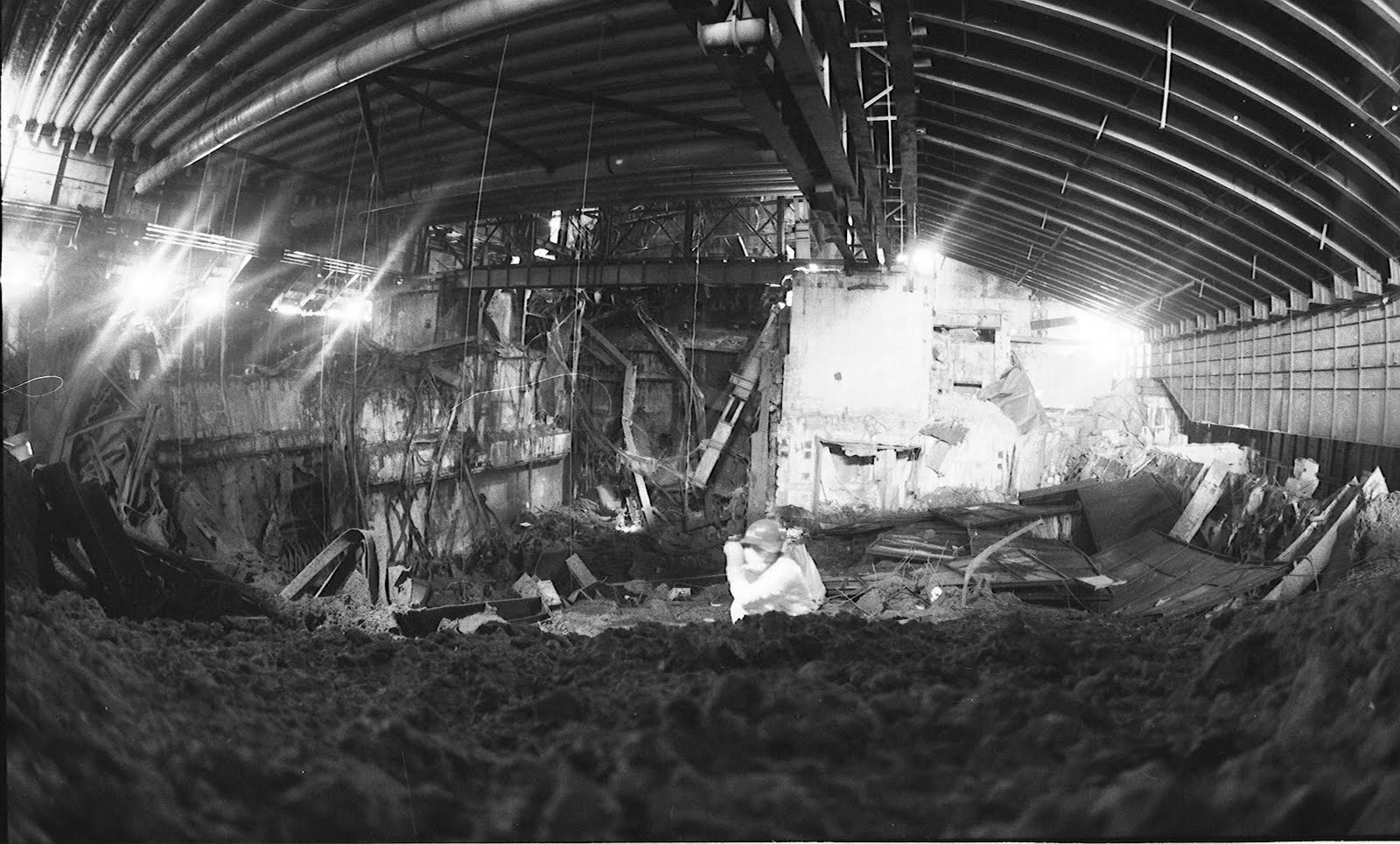
Even so, building such structure remotely still posed high challenges. The roof structure rests not on newly built pillars or walls, but on remains of the ventilation shafts of the reactor, which were damaged in the explosion. The 2000-tonne slab of concrete that covered the reactor fell into an unstable, almost vertical position; if it moved, it would stir up highly contaminated dust or damage the structure around it. The welding and riveting of the sarcophagus had to be done remotely, so they were not as accurate as it would be desirable, and on top of it all the whole structure has been suffering the effects of the harsh climate ever since.
It was designed to last for thirty years and it was supposed to keep radiation levels low enough to allow work in the construction of a better, more permanent structure. However, the disintegration of the USSR meant that the problem was now in Ukraine territory, and neither Ukraine nor Russia had the money to undertake such operation.
10 years after construction ended, the structure showed cracks and gaping holes, and water was pouring in and leaking to subsoil. Radiation levels inside the sarcophagus were still very high and it was concluded that it would not be possible to repair it from the inside.
As soon as 1992, the Ukranian government held an international competition for a design proposal of a structure to replace the existing one, but it was not until 2004 that the design was completed. The start of actual construction work on the site would have to wait another six years, until 2010. In 2006, the Designed Stabilisation Steel Structure, which had been built next to the western wall to relieve some of the roof’s weight off the damaged concrete wall on which it rests, was extended to support up to 50% of the load. This was said to make the structure stable for another 15 years, but other parts of the sarcophagus were still unstable – in February 2013 part of the roof of the turbine hall collapsed, and workers had to be evacuated. The collapse was later attributed to poor quality repair work and deterioration of the structure.
I visited the site in July that same year, and progress in the construction of the new sarcophagus, called New Safe Confinement, was well underway, even though the project had been originally announced to be completed by 2005. The NSC is designed as an enormous arch that will cover the old sarcophagus completely. It is more than 100 metres tall, 150 meters long and has an inner span of 245 meters. It contains two cranes and all the necessary equipment not only to seal the old reactor, but to start dismantling it and removing the remaining fuel inside. Once complete, it will slide on two rails into its position over the old sarcophagus
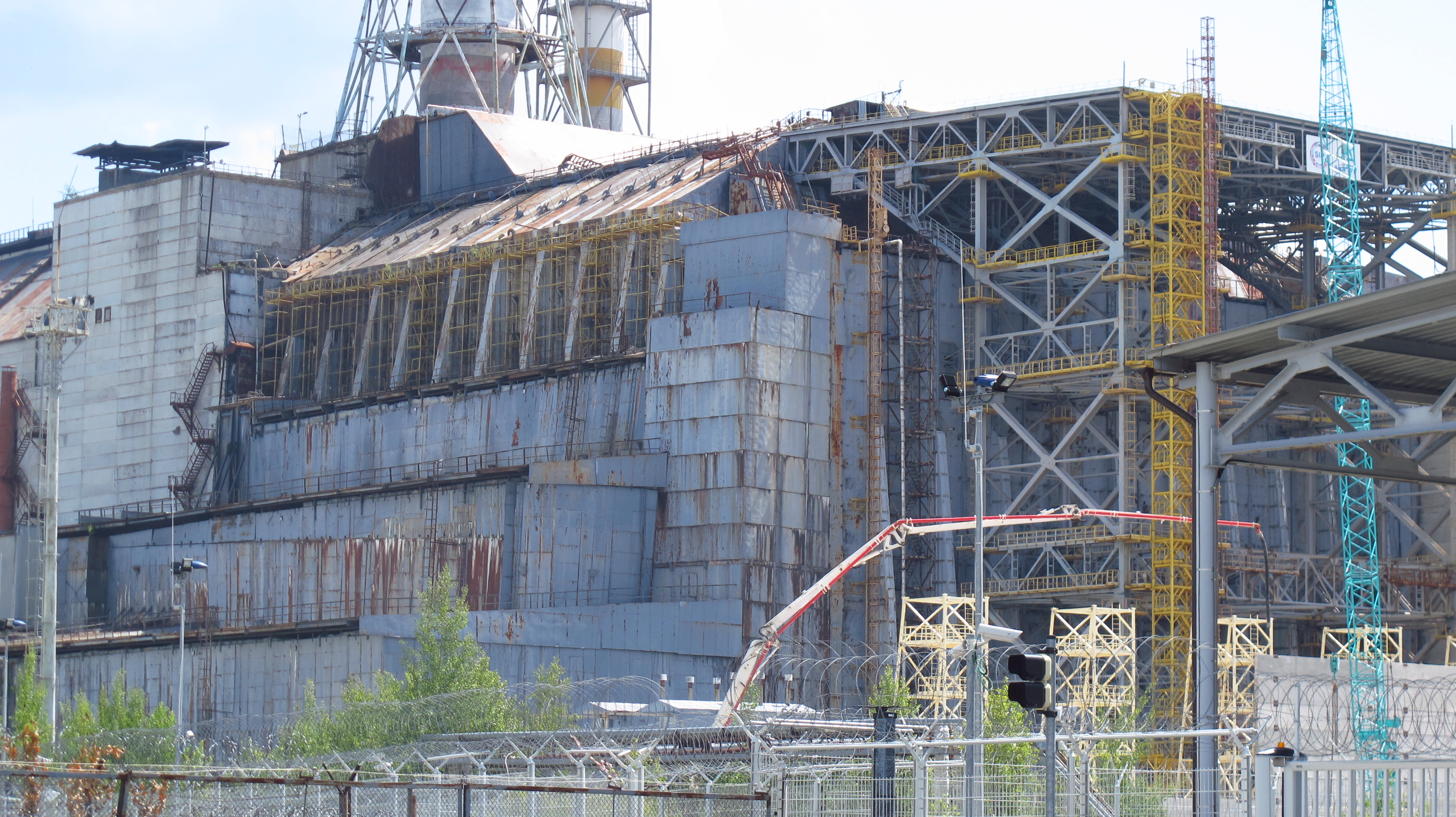
A 180 meters to the east of the construction site of the NSC, the old structure stood much taller than the photographs I had seen might lead to believe. We were only allowed there for a few minutes, but it was enough to appreciate how badly needed a new sarcophagus is.
As I write these lines, construction of the NSC has been completed. All that remains now is for it to be moved into position and permanently sealed, 30 years after the catastrophe.
After clocking 150,000km on her last trip to work on Friday, the V-Strom was safely tucked away in the garage and I started to get ready for the run-in trip over the weekend.
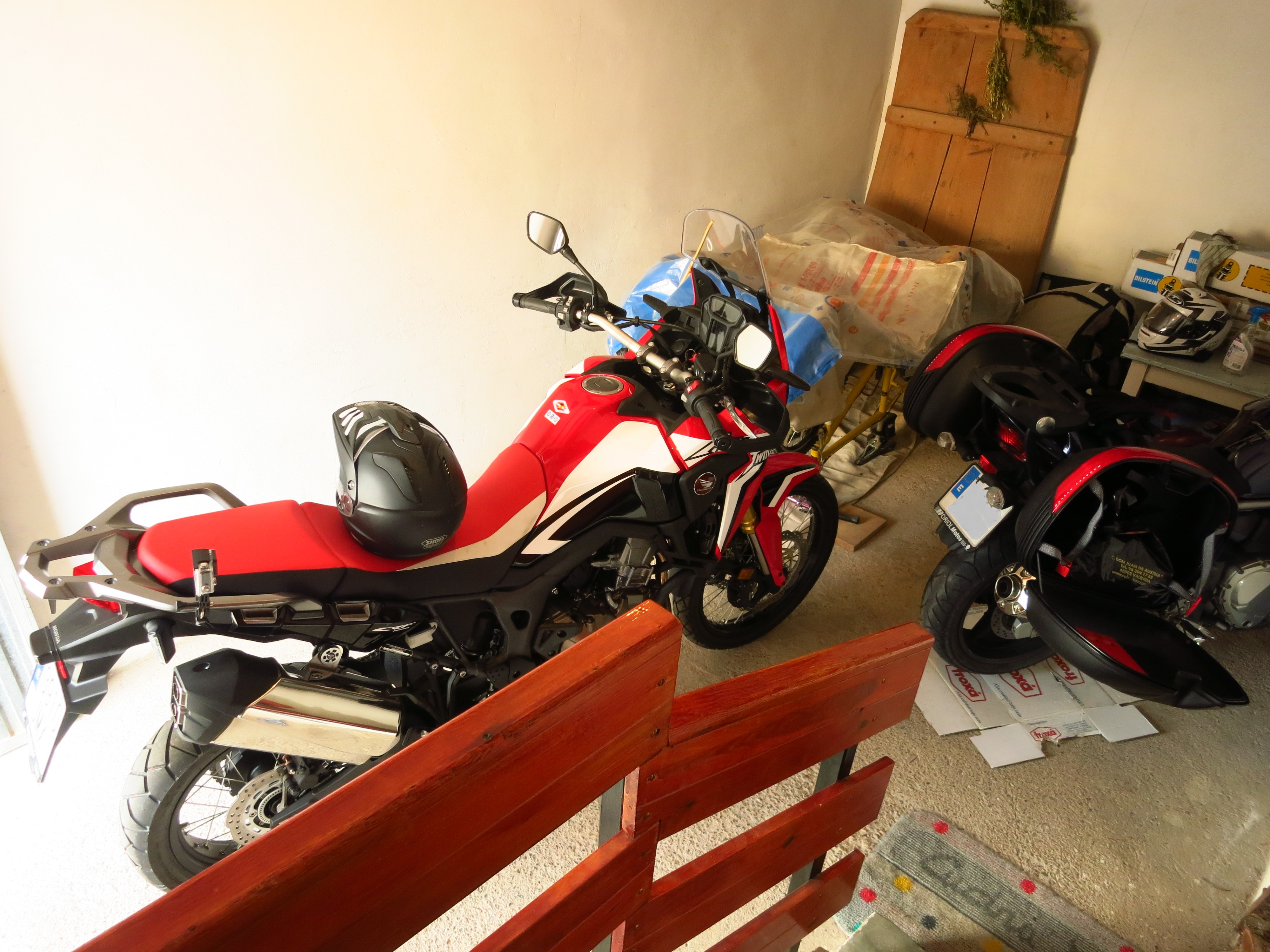
The AT is, you could say, stark naked. Apart from the centre stand, not a single accessory has been fitted to it yet, so packing for the weekend was the first challenge – not that I needed a lot of things for a couple of days over which most time would be spent on the bike, but when you start counting, it adds to quite a few items: rain suit, winter and summer gloves and scarf, cameras, batteries, food, water, etc. In the end it all fit neatly into a small Ortlieb bag strapped to the rack and a backpack.
At a quarter to seven I walked into the car park and fired the AT for her first big trip. The engine roared to life instantly, happy to know it was going to be taken for a proper ride – it is curious how motorbikes sound different when they know you are taking them out on the open road instead of on the daily commute.
I met a friend of mine who has recently joined the biker world and was adamant that we took it easy, so it was a perfect chance to run the AT in gently. Looking forward to a good weekend of riding practice, he led the way out of the city on his Bandit and we started the first leg of our journey on the motorway.
With a lot more time to assess the motorbike, this first stint revealed that the AT is a very good long distance touring bike – the engine is smooth and relaxed at a steady motorway cruise, and I found wind protection to be rather good, particularly around the legs, which I had not expected on a bike that is a bit on the narrow side. On the other hand, while the screen works definitely better than other screens fitted as standard, it is too short for me, so that is one thing that will need changing as soon as possible. My other complaint regarding wind protection were the hand guards – they do not extend low enough to cover the tips of your fingers, and on such a chilly morning, my hands got cold fast. They are attached to the brake and clutch lever mounts, so they cannot be rotated down without the levers also moving. Again, it is not a big issue since I was planning on replacing them with Barkbusters anyway as they are merely cosmetic, they do not offer any real protection for the levers in case of a fall.
After a stop in La Panadella to put on some extra warm clothes – it was 5ºC – I started to regret not having fitted the heated grips. I thought I could postpone that investment now that summer was coming, but I was already missing them sorely on this trip. The day did not get warmer until we turned off the motorway and took the C-12 heading south to our first fuel stop in the town of Maials. Fuel consumption had been surprisingly low for an engine that was still tight, and on the fast, undulating 30km of C-12 leading here the AT felt light and eager to gain speed even though I was keeping the revs below 4,000 and sticking to gentle throttle openings.
Time to turn to the back roads, then! From Maials we took a road that was little more than a paved dirt road – I cannot even give you the road number because Google Maps does not list it as a road – and it revealed that the AT suspension was a bit on the hard side.
I was amazed at how agile a bike with such suspension geometry and a 21” front wheel was and how well it behaved on the road. Now, I must confess I am close to a complete illiterate when it comes to suspension set up – my V-Strom has a simple system and other than fitting stiffer progressive springs my experience in fiddling with the suspension is limited to dialing in more preload when I carry luggage or a passenger. What I can tell is that the AT suspension felt harsher than I expected on bumpy roads and broken tarmac, unlike the Super Ténéré, which had a very plush ride. I imagine that the AT is set up on the hard side to favour good on road behaviour, so I will have to experiment a bit with compression and rebound settings. The problem is, I do not really know where to start, so if anybody want to offer advice, leave a comment below.
Once we reached the town of Mequinenza we took better roads to Alcañiz, where the AT really shined. The weather was getting warmer, the wind that had been bother us since early morning had calmed a bit and we were heading towards one of my favourite rides – the road that crosses the Maestrazgo hill region (route description coming soon).
The roads on this route are a perfect combination of a complete lack of traffic, good road surface, mountain passes, slow and fast corners, and an absolutely stunning landscape. It provided the perfecto opportunity to run the bike in properly – lots of regime changes and working up and down the gearbox.
The only negative comment I have to make is that sometimes the bike did not go into 6th gear smoothly. On those occasions the gear lever would not click all the way in and the indicator on the dashboard would be slow to change from 5 to 6. Then, when opening the throttle again, the gearbox would jump into a false neutral. This happened several times and the only way to prevent it was to kick 6th gear in firmly when changing up. Hopefully it was just a run-in issue and it would get smoother after the first oil change. I made a mental note to point it out to the mechanics in the first service. Other than that, the bike was performing faultlessly and exceeding my expectations. Halfway through this part of the route it reached 500km and I started bringing the revs up to 5,000.
We reached our destination by early evening and after settling in and starting a good fire in the hearth we set about checking the bikes. Oil consumption had been negligible, chain tension was correct and all nuts and bolts were still tightly attached – I double-checked the ones on the front mudguard, as there have been several reports of people losing them.
For the ride back I was planning to take a more direct route on A-roads for the first half of the journey and then the motorway for the last 200km. We set off later to avoid the cold and the day rewarded us with glorious sunshine and little wind for the first half of the ride. My friend, who was still on the learning phase, was completely transformed, leaning more confidently into corners, braking later and keeping a faster pace. So much so that when we stopped for breakfast he suggested skipping the motorway altogether and continuing on A and B-roads, so we turned east on the N-420 and then north on the C-12B until we reached Flix, where we took a much narrower and deserted road. This leg was quite windy again, but the AT proved to be a very stable touring bike even in those circumstances.
We rode past the Montsant and Prades mountains, the AT happy to be revved a bit higher and my friend making incredible progress with his riding. This detour added a good two hours to our return journey, but it was most definitely worth it. We rejoined the motorway in la Panadella, where we had made our first stop on the outbound journey, and from there it was a relatively short stint back into the city, which cemented my decision to order a taller screen.
It was about 1,200km and the total fuel consumption came at 4.9l/100km (58mpg)
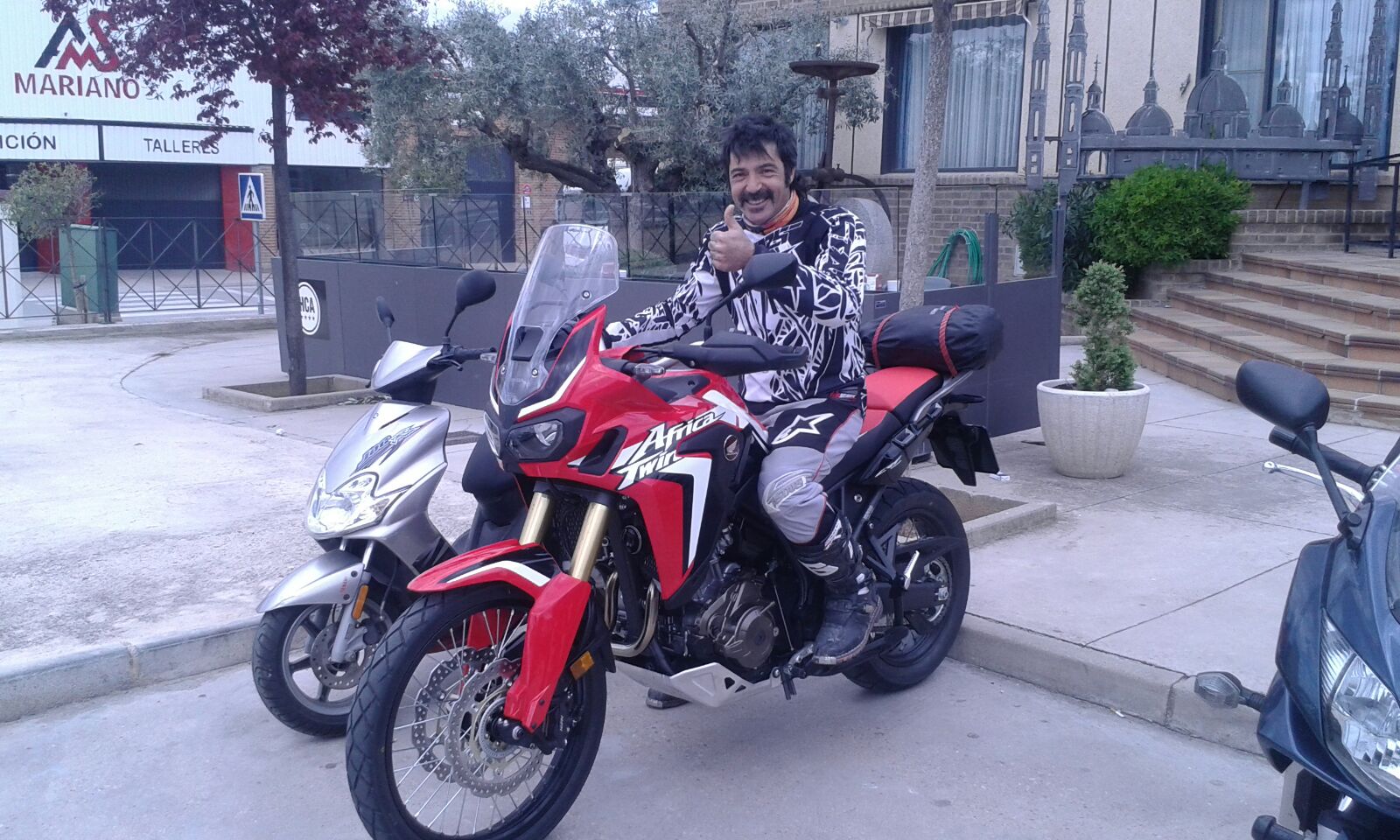
The only thing we did not do was go off road, partly because I wanted to be gentle on the AT for the run-in period, partly because my friend was on a road bike, but the AT proved to be a more than versatile bike in all other aspects of the trip. Well, it also proved to be an attention magnet… I had people walk up to me to chat about it every single time we stopped. There is no better way of meeting new friends!
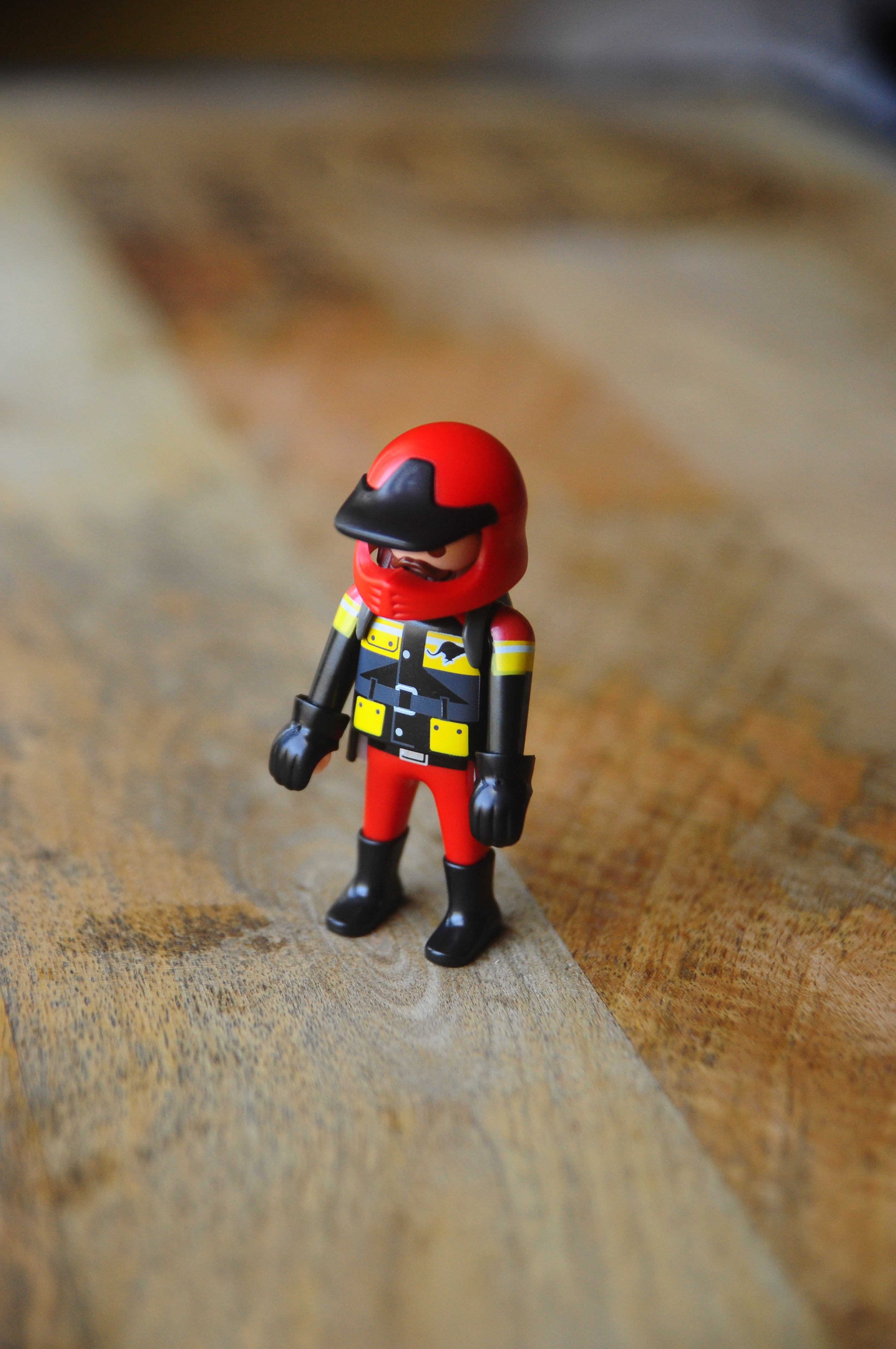
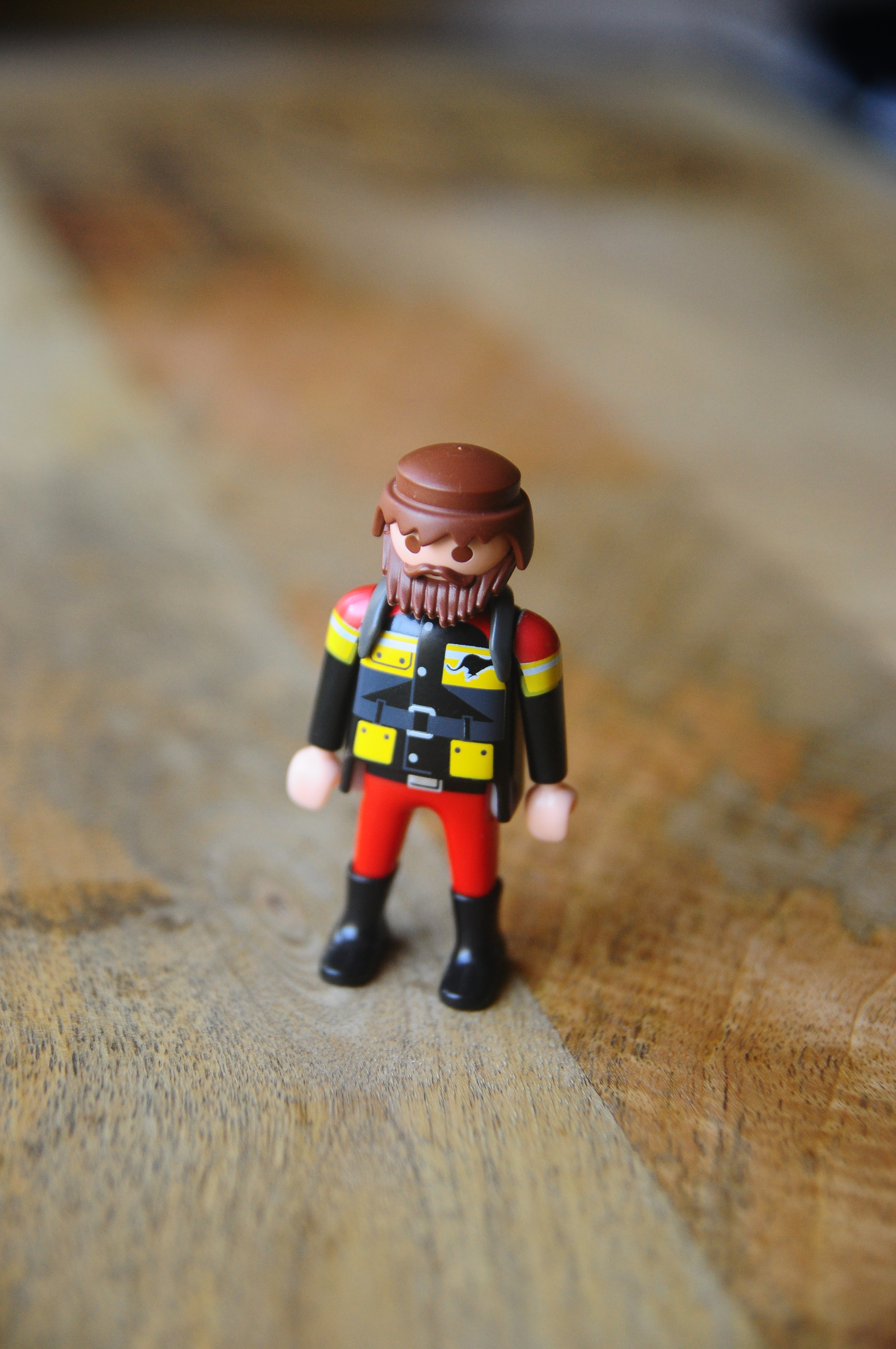
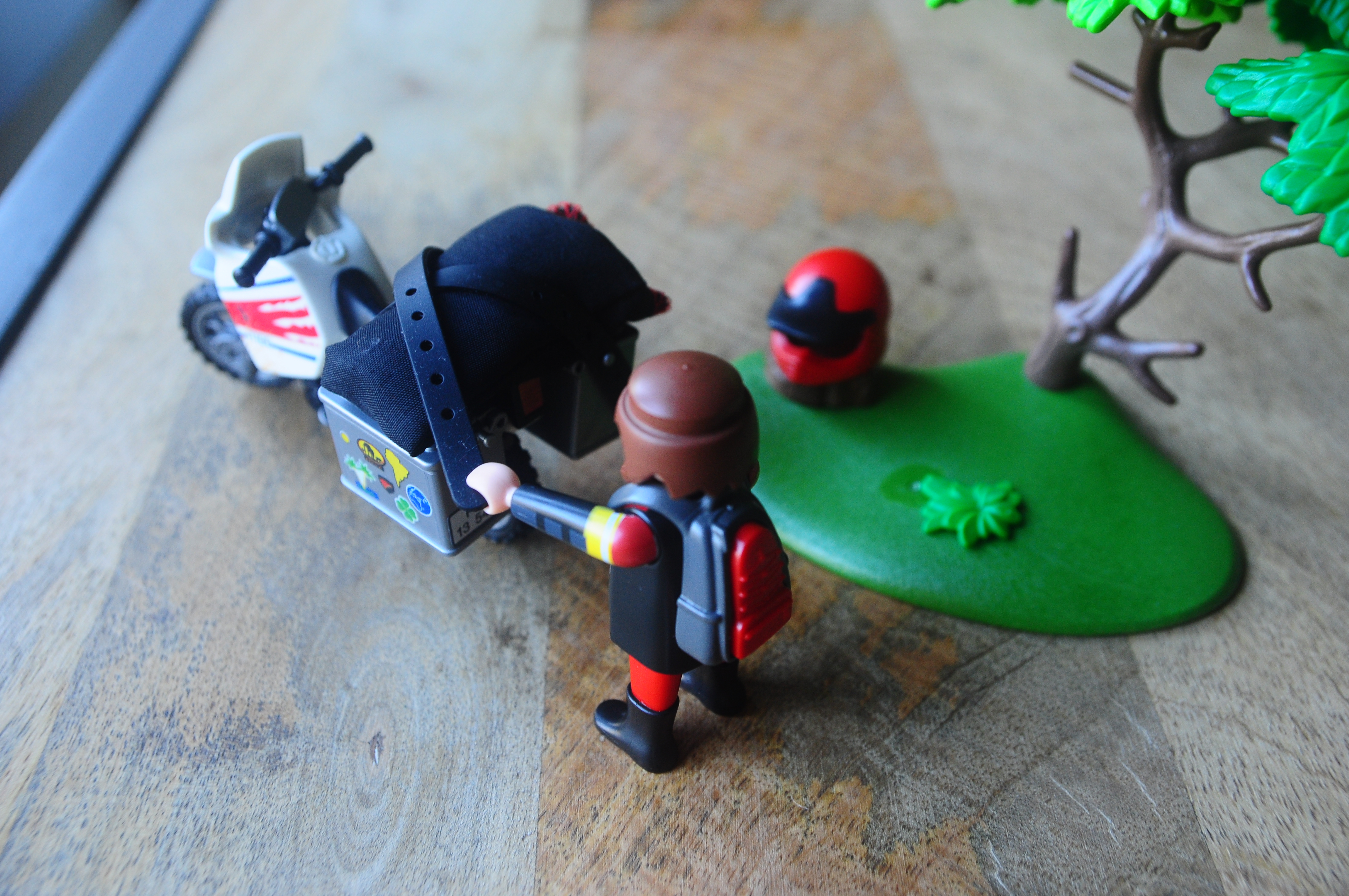
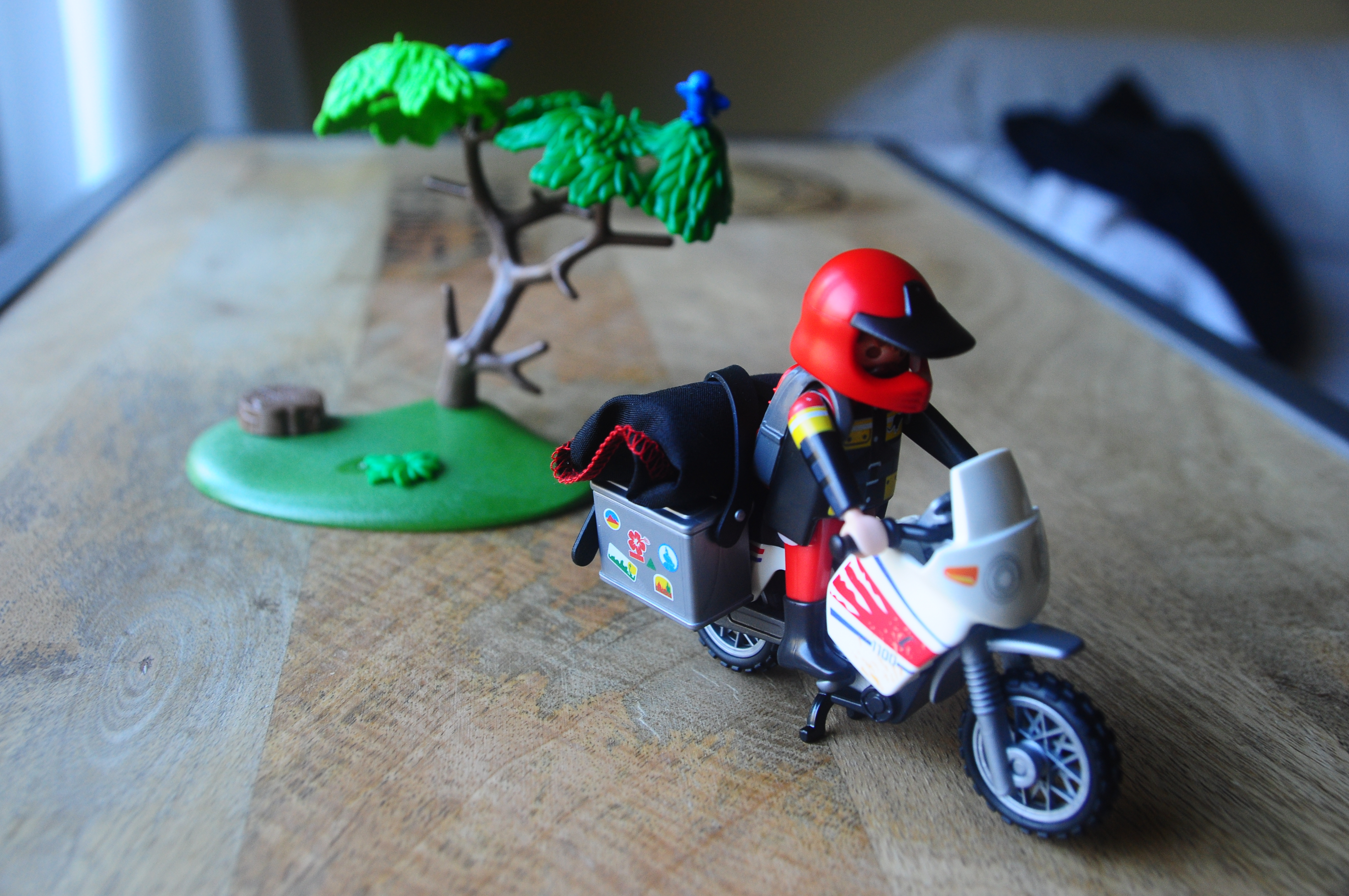
This Christmas I got a really coolest present ever: a Playmobile Adventure Rider! OK, the box says “Summer Fun”, but that sounds too generic, look at the guy and tell me he is not a true adventure rider…
He comes dressed in a riding jacket, with an off-road helmet, a backpack, and is the first klicky I have seen with gloves.
But when you remove his helmet, the best part is…
He has a beard like me!
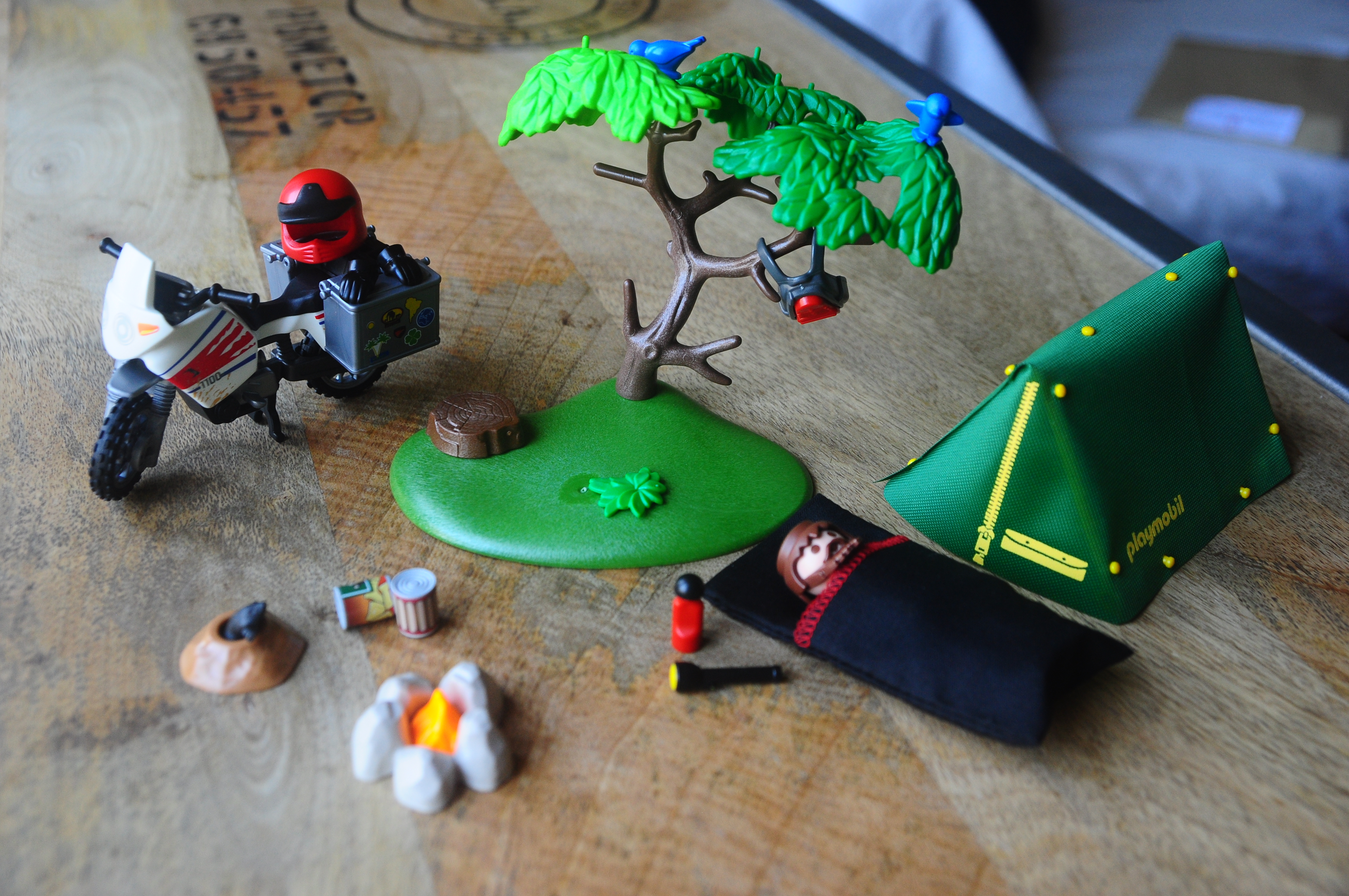
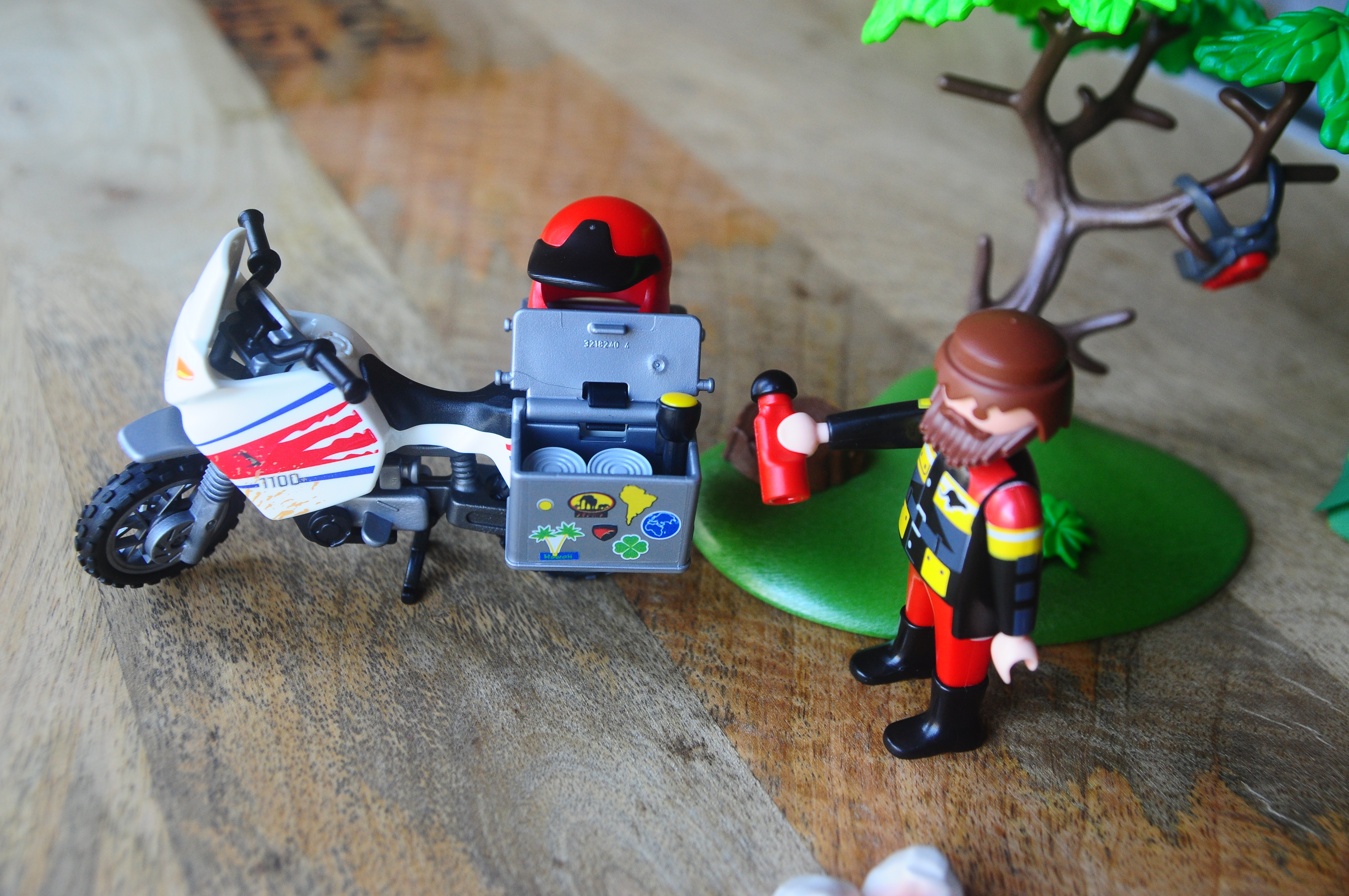
As any good adventure rider, he has a mud-splattered dual sport bike sporting knobbly tires and aluminum panniers.
He is well aware of the soft vs. hard luggage debate, but he says that he prefers aluminum boxes so that he has a place to display the stickers of all the places he has visited.
Here we can see him after a long day ride across the unknown – he has found himself a nice spot to camp and is getting ready to enjoy a proper rider’s meal: tinned sausages and ravioli.
It seems that it is going to be a warm night, so he has decided to sleep under the stars even though had already set up his tent.
But he is not alone, attracted by the smell of food from the empty tins, a mole has come out in search of some dinner.
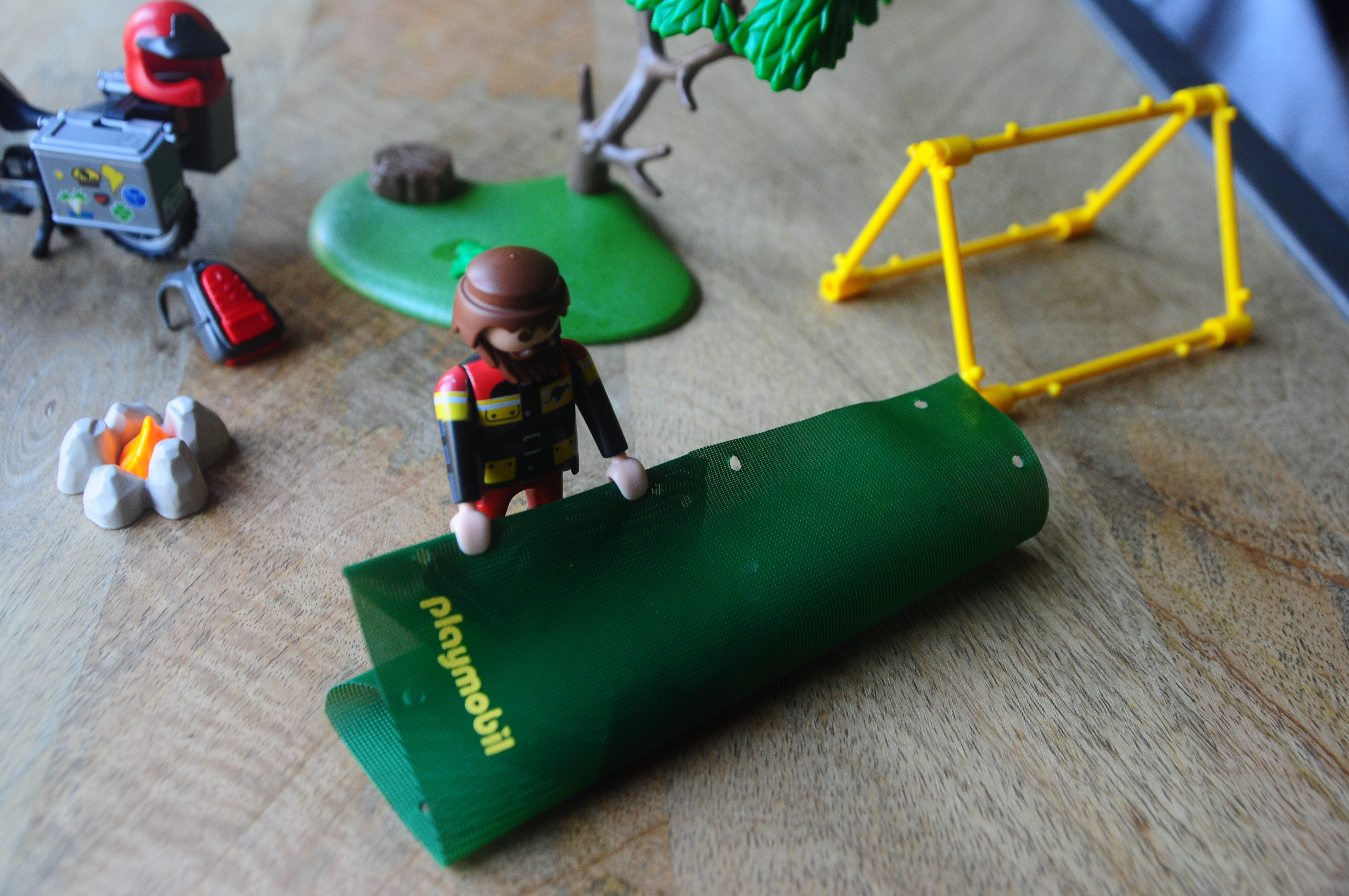
Morning comes, and with it, the reassuring routine that accompanies him throughout his adventures – put the panniers back on the bike and pack his bags…
It’s ten to eight on a frosty Saturday morning when I meet my riding buddy for the day at an industrial state run-down petrol station infamous for being the place that witnessed the end of a 492-day long kidnapping in 1994. There is not a single person in sight except for the lone silhouette of my friend and his Ténéré standing in the morning mist.
We are still 50km away from the starting point of the route, half an hour of intense cold and thick fog that makes the road ahead look like a scene straight out of Fargo.
The route we have planned for the day starts just off exit 183 on the C-25 road that connects Cervera and Girona. Despite having heated grips on both motorbikes, our fingertips are painfully cold by the time we turn off the motorway, the hand guards being very good at protecting the brake and clutch levers in case of a fall but not so good at aerodynamic protection for our hands.
On the C-153 road, we ride across Roda de Ter as the sun struggles to break through the mist, making it hard to get any decent pictures of the old Roman bridge that crosses the river Ter. A few kilometres later, the road starts climbing up the hills through grazing fields, a much more interesting ride after the relatively long motorway slog to get here, but we have to take it easy, as the tarmac is wet and slippery.
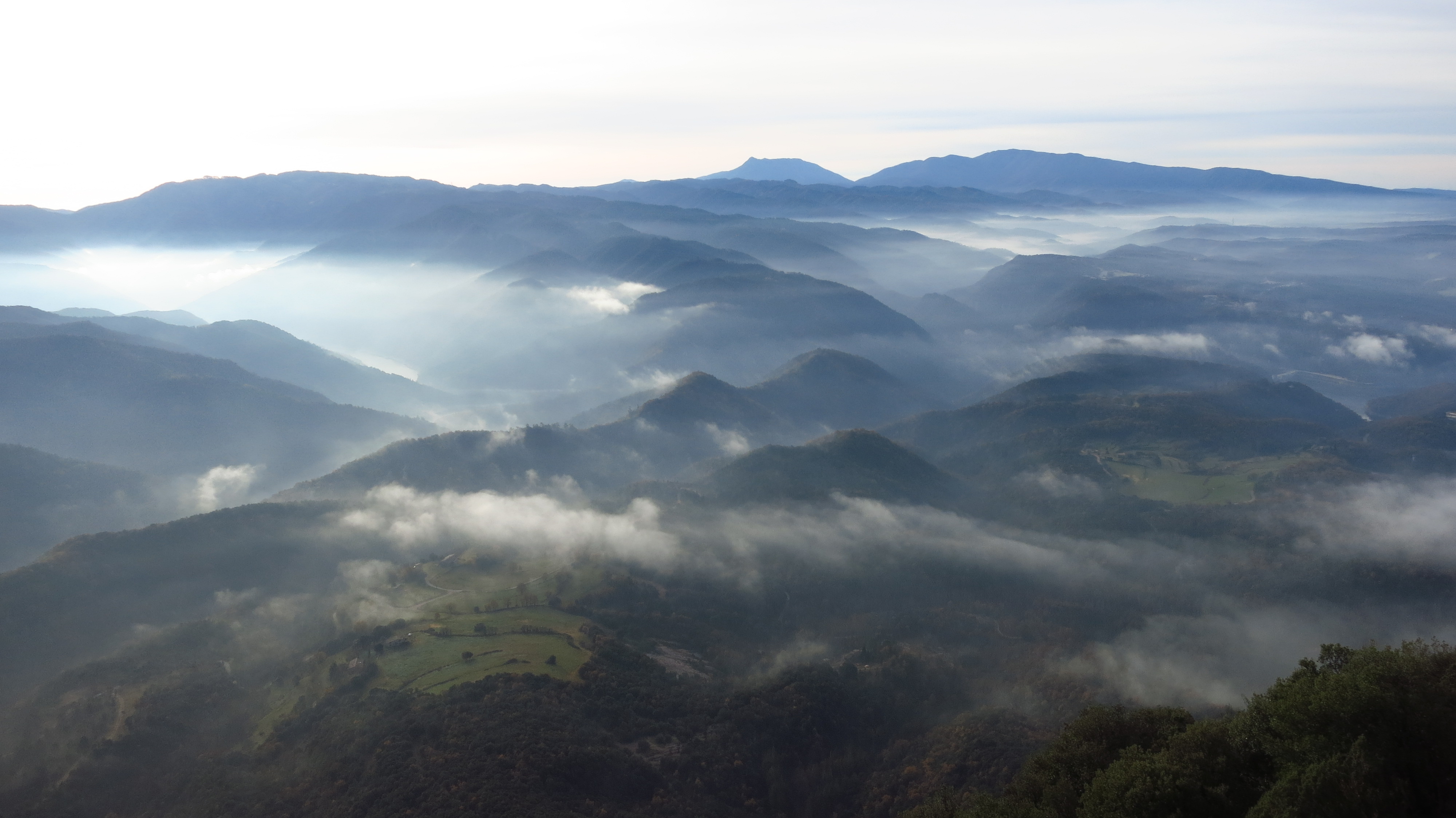
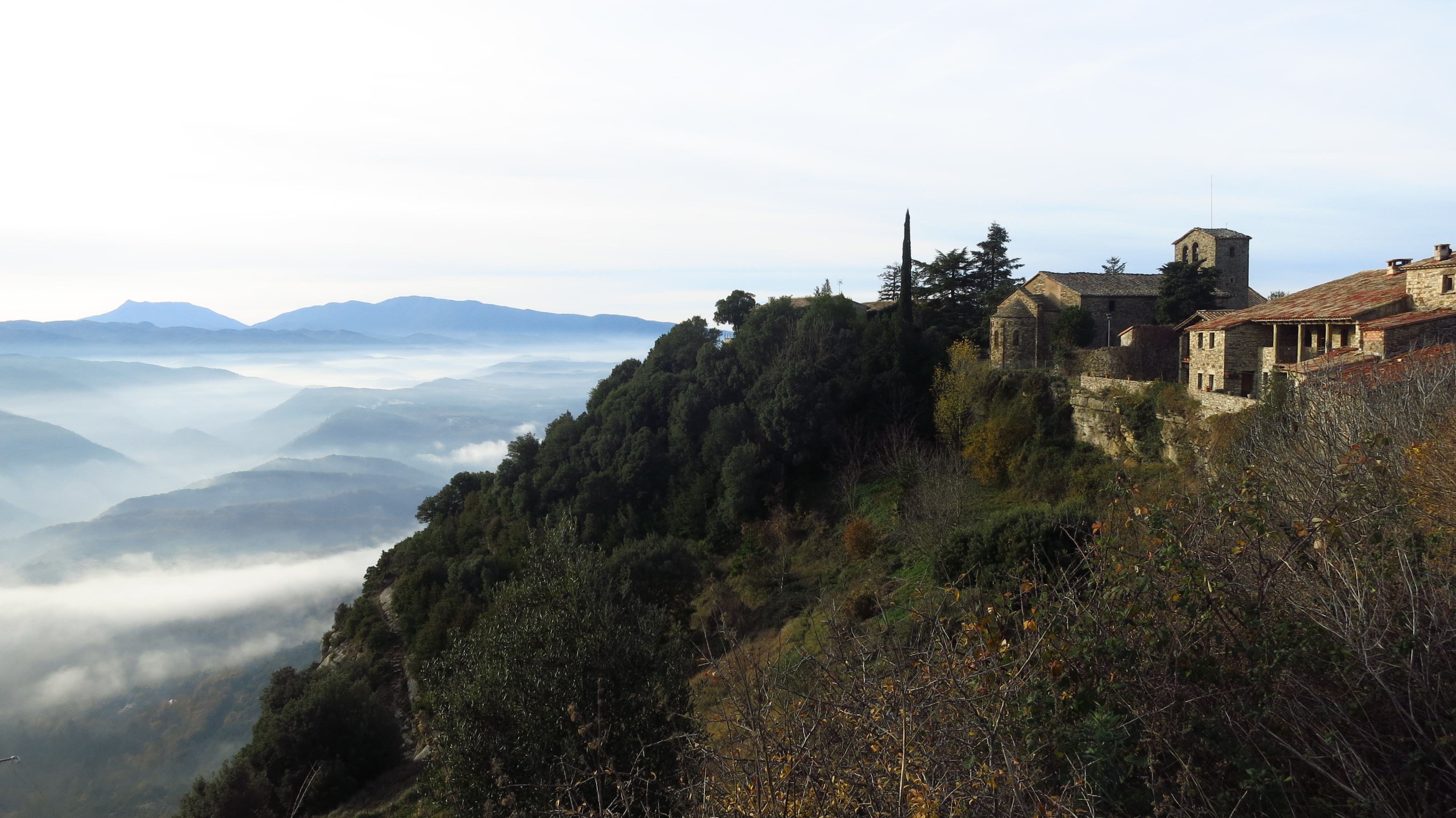
In the nearby village of l’Esquirol we turn right off the main road and take one of my all-time favourite roads – the BV-5207 leading to Tavertet. Even though the road ends there, in good weather there are quite a lot of tourists driving it to get to the quaint village perched atop the cliffs overlooking the Ter valley and the Guilleries mountains beyond, but this early on a winter morning the road is ours. It is half past nine now, we have gained enough height to leave the morning mist behind and the sun shines gloriously over the stunning landscape.
A few corners before Tavertet we stop at a viewpoint overlooking a valley where a wild boar hunt is taking place and meet an old man who is following it on his walkie-talkie.
He tells us that there each year there are more and more wild boars in the area and they have to organize these hunting parties to keep the population under control. His knees are too old for him to join them as he did when he was younger, but he still takes pleasure in checking the progress of the hunting. He points at an orange spot in the thick forest below us – a hunter in a high-visibility vest, and a few seconds later we hear some shots that resonate against the cliffs and sounds like a hundred shotguns being fired at once.
At the entrance of Tavertet we find a boom gate partially blocking the road. It is there only to prevent the numerous tourists who drive up here to enjoy a meal at one of the restaurants from parking inside the tiny village, you can drive around them and keep going to the east side, where a small sealed forest road keeps climbing along the edge of the cliffs to a plain from which the Pyrenees are visible in the distance. The views from up here are magnificent, in a few hundred meters of road one can enjoy an almost 360º panorama of the main mountains in Catalonia – Pedraforca, Guilleries, Montseny, Pyrenees…
From there the road descends through a beech forest with the ground covered in a carpet of reddish brown fallen leaves to end back in the C-153 road leading to our next waypoint – Rupit.
There is a dirt road from Rupit to the Sau reservoir along the foot of Tavertet cliffs. I have used that road twice before – on a mountain bike trip when I was twelve and driving a Fiat Punto when I was at university with my girlfriend at the time. I remembered a dirt road in good condition, and to my surprise we find that it has been paved all the way. It is a very nice ride through forest and across grazing fields, with views to the rocky cliffs on top of which we were less than an hour ago.
Once at the bottom, we take a short detour from our main route to ride to the shore of the reservoir and have a snack with a view of the church spire of the village of Sau, which is all that remains visible after the dam was built. With full bellies but hands still very cold, we ride the few kilometers left to the dam itself to explore the only part of the route I have never ridden before.
Looking at maps and satellite images, there seemed to be a road along the south shore of the Susqueda reservoir leading to its dam and then to the C-63 road, but I was not sure it was accessible. It could be a service road for the reservoir or it could be a forest road in bad condition, and I am not particularly keen to venture into difficult terrain as my bike is shod with (worn out) road tires. We cross the dam to where there seems to be a road, but it is blocked and it looks it has been so for a long time. Falling rocks and landslides. We cross back to the northern shore and ride down another road that seems to lead to the power station at the bottom of the dam. It does. It ends in front of a gate, but on the way up we find a dirt road that seems to go further down. It looks steep, at least the first meters, but I notice regular car tracks on the sand, so we think “how hard can it be?” and ride on.
The road seems to be in good condition and a bridge at the bottom of the gorge takes us to the southern bank of the river Ter. From there, we follow a narrow dirt road that puts my poor bike to the test. Rocks, sand, mud and leaves make it clear that road tires, short suspension travel, and hard springs are definitely not the best combination here. God, I miss the Super Ténéré…
An hour later the Susqueda dam comes into view out of the last corner. We are sweaty and my wrists and back hurt from the bad position standing on the footpegs, but I also have a big smile on my face. We have made it.
A good road leads to the C-63, which we take for a short while before reaching Anglès and turning into the GI-542 for the last part of our route. This road winds its way up the Guilleries mountains past the village of Osor and to Sant Hilari de Sacalm, famous for its many springs that produce much of the bottled water sold in the country. From there we are going to take a smaller road to the Montseny mountains. This one is a bit more difficult to find at first, as it is not indicated anywhere, but then we find out that it is as easy as to follow the signs pointing to “Fontvella”, the main bottling plant in the area, from where the road starts. It is well past midday now and the road is completely dry, so we can ride faster and enjoy a wonderful road – perfect tarmac, no traffic, great views.
Shortly after we cross the C-25 again, and take the GI-543 and BV-5303 along the northern edge of the Montseny natural park to end our route back on the C-17 main road to Barcelona.
Map
What to see
Roda de Ter – Old Bridge: dating back from Roman times, it was part of the Strata Franciscana, the road that led to France.
Tavertet – A quaint, tiny cluster of stone houses built on the edge of the cliffs of the same name. Well worth a visit and a hike in the surrounding area, with breathtaking views of the whole region at your feet.
Rupit – A XII Century village of narrow steep cobbled streets, with a hanging wooden bridge and the remains of a medieval castle.
Pantà de Sau – The spire of the bell tower is all that remains visible of the village of Sant Romà de Sau, which was submerged after the construction of the dam in 1962. When the water level is low enough during summer draughts the church emerges an can be accessed on foot from the shore.
Where to eat
Once you reach Seva, practically at the end of the route, a seven-kilometre detour up the BV-5301 takes you to two excellent restaurants that serve traditional home-made Catalan food in the hamlet of El Brull – Can Pasqual and Castell del Brull.
Day 8 – Tuesday 1st of September – Brussels to Barcelona (1,352km)
I had done this journey before, when I lived in Belgium, but by car. It took about twelve hours, and other then being tremendously boring, there was no difficulty to it. On the motorway things are very different on a motorbike, however – no music, you can’t move much, you need to take breaks more often, wind and buffeting are an issue at high speeds (the legal limit is 130km/h on French motorways), etc. On the way up to Normandy I had divided the trip in two days, stopped past Bordeaux to spend the night, and that was the plan on the way back home as well.
I did not even set off particularly early, we got up, had a good breakfast and I left when my friend went to work, at around 9am. I had to deal with heavy commuter traffic riding out of Brussels, and even come congestion caused by a motorbike accident – I forgot to mention it was raining hard.
Once out of Brussels things went smoothly – no more rain, practically no traffic, no wind… So I started covering good distance without problems. The wind deflector I had fitted a few weeks before was doing its job, and for the first time ever I was using earplugs. This is something I have heard from a lot of bikers, but I had never felt the need for it. However, travelling for extended periods of time at high speeds, they make a world of a difference. Wind noise is greatly reduced and so is fatigue.
On the big Stroming The World trip I met a Czech guy in Volgograd with a GSA, Martin, he told me he had been doing 800km a day to get there, trying to get Europe out of the way quickly and save days for the interesting bits. At that time I was doing about 500km a day on my V-Strom, and was shocked at the distances he was covering. Fast forward to 2015 and sitting on the Yamaha I could see that it was very relaxed cruising at 130km/h (real, not indicated), and I was not getting tired. By lunchtime I was approaching Clermont-Ferrand, and I was still feeling fresh. It was at this point that I started considering pushing on to Barcelona on the same day. If I stopped for the night later on, I would already be near the border, and in that case I did not really fancy spending the cost of a hotel night so near home. In addition, the route from there became quite interesting for a motorway. My experience of previous trips through France so far had been mostly on the eastern route – Montpellier, Lyon, Dijon, Nancy, Metz… or the western one – Toulouse, Bordeaux, Nantes… both of which I had found tremendously boring. This time I had taken the middle route, going from Brussels to Paris on the A2 and A1 and then the A6 and A77 to Clermont-Ferrand. There is a bit between Magny-Cours and Nevers that is not motorway, and after Clermont-Ferrand the A75 travels through mountainous terrain, passing near the Auvergne volcanos and crossing the Cévennes national park. It is a mountain motorway, with corners, steep gradients and great landscape, and best of all, the Millau viaduct, an amazing feat of engineering and a sight to behold. All in all, it was a much more entertaining journey than I anticipated, and cheap too, there are long sections that are toll-free. Oh, and one more sign that the French are super nice towards bikers, motorbikes pay a reduced fare on tolls, almost 50% less in some cases. No wonder this is the favourite route for holidaymakers heading from the capital to Spain.
I got to the border at 8pm, and crossed it in reserve – fuel is cheaper in Spain. The sun set as I was filling up, and by 9:30pm I was already in Barcelona. It had taken 12 hours and 31 minutes, stops included. This made me realise that what Martin had been doing was perfectly feasible on my new bike, and that when the day comes to go back to Russia, Kazakhstan, etc. I can cut through western Europe faster.
Well, it had been a very interesting week, and given the time and the money, I would have spend at least another week exploring the coast of Normandy, there is so much to see there. If anybody is thinking about taking a trip there, do not think twice, do it. Obviously, my advice is to do it by motorbike, as it is the best way to enjoy the roads, and you will save a lot of money on tolls and parking fees, but if you are not a rider, a very good alternative (I cannot believe I am going to say this) is a motorhome. There are lots of specially prepared places where you can park and spend the night for free, saving lots of money in accommodation, which is not cheap up there, you have your own means of transport to get around and visit things, and if you do not have one or do not want to drive one all the way to Normandy, there are lots of campsites that rent them at very reasonable rates. I would definitely not recommend a car, as it has zero advantages over the motorbike – you have to pay to park it everywhere, and while it is just as boring to drive as a motorhome, at least this last one gives you a cheap place to sleep in. Go visit Normandy.

 We waited for a while, but the sky did not give us any hope of the weather improving soon. It was covered in menacing looking clouds, and there were bursts of hard rain every few minutes. There was not much to do, so we decided to go to the supermarket to do the shopping and kill some time. On the way there we saw a tourist information stall and asked about the natural park to see whether we would have enough time to see it the following morning before heading to Omiš in the afternoon.
 It was still cloudy, but the rain had stopped when the bus dropped us at the park’s entrance. We studied the map and decided to take a boat across the central lake and hike to the main tourist attraction – the big waterfall. It started raining again when we got off the boat, but as luck would have it, there was a small souvenir shop where I could get a raincoat to prevent the rain from stopping us now that it had become clear that the park was defintely fighting the elements for.
 One of the oldest natural parks in Europe, Plitvice consists of 16 lakes and countless waterfalls that connect them. It may take up to 8 hours to visit it all on foot, more than that if you want to explore the whole network of footpaths and hiking routes in and around the park. While most people come to Croatia for its beaches, this area of outstanding natural beauty, one of UNESCO’s World Heritage sites is an absolute must.
 After seeing the big waterfall we hiked back to the entrance in the pouring rain and took shelter at a café, where we had some lunch. Not wanting to finish our visit just yet, we took the train to the other end of the park to see the upper lakes and hike back .
 It was definitely worth it, and we were rewarded with a break in the weather and fewer tourists than on the big waterfall. My very limited talent at writing would not do it justice, so here are a few pictures. You can find a lot more on Facebook.


 The landscape on most of the journey from Terni to Ancona was surprisingly hilly, and with few traffic the ride was enjoyable and relatively quiet, we only saw three or four Italian drivers overtaking slow cars on double solid lines. We did too, you know – ‘when in Rome do as Romans do’ seemed a particularly well suited saying.




























 Stroming The World
