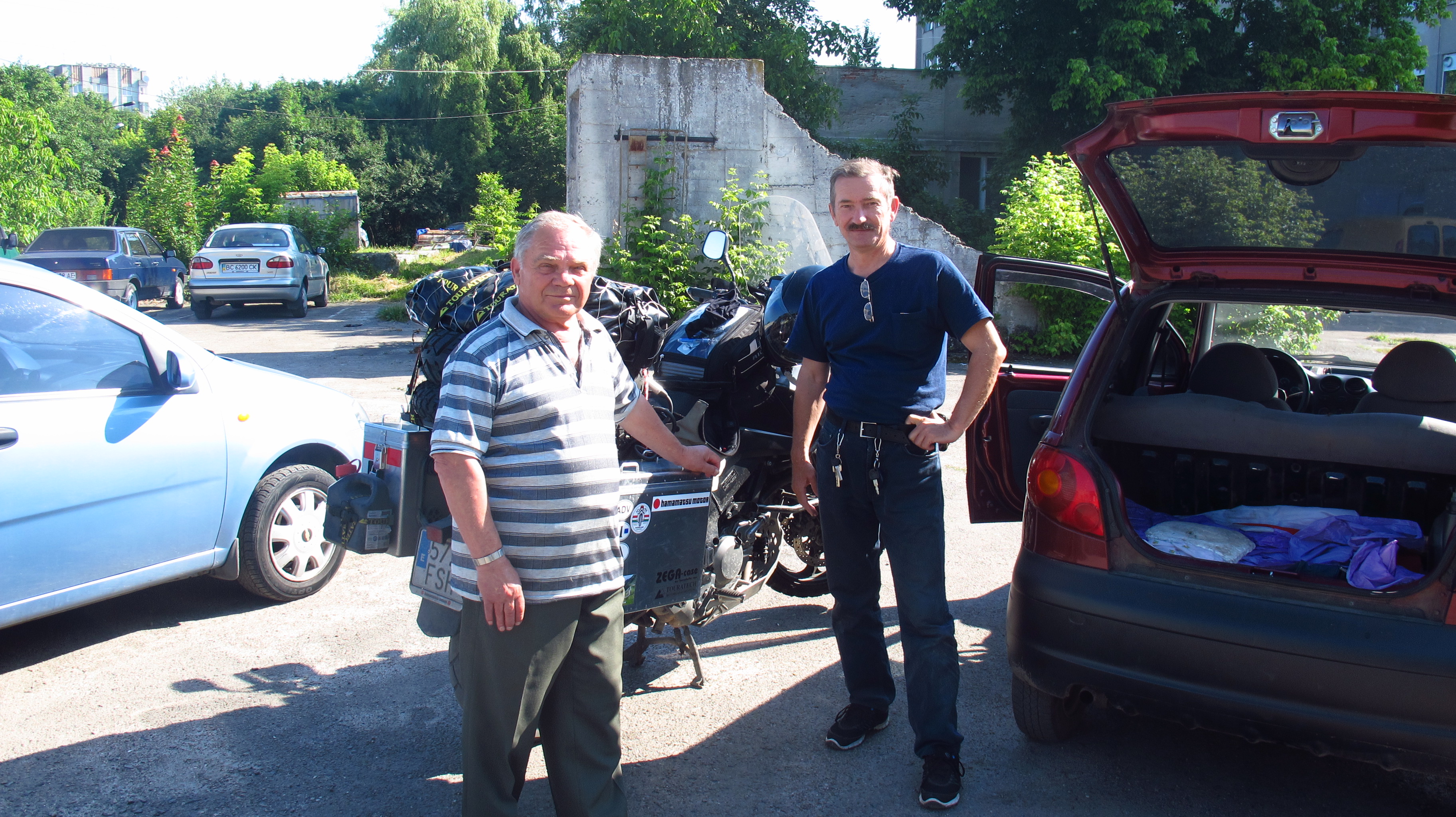
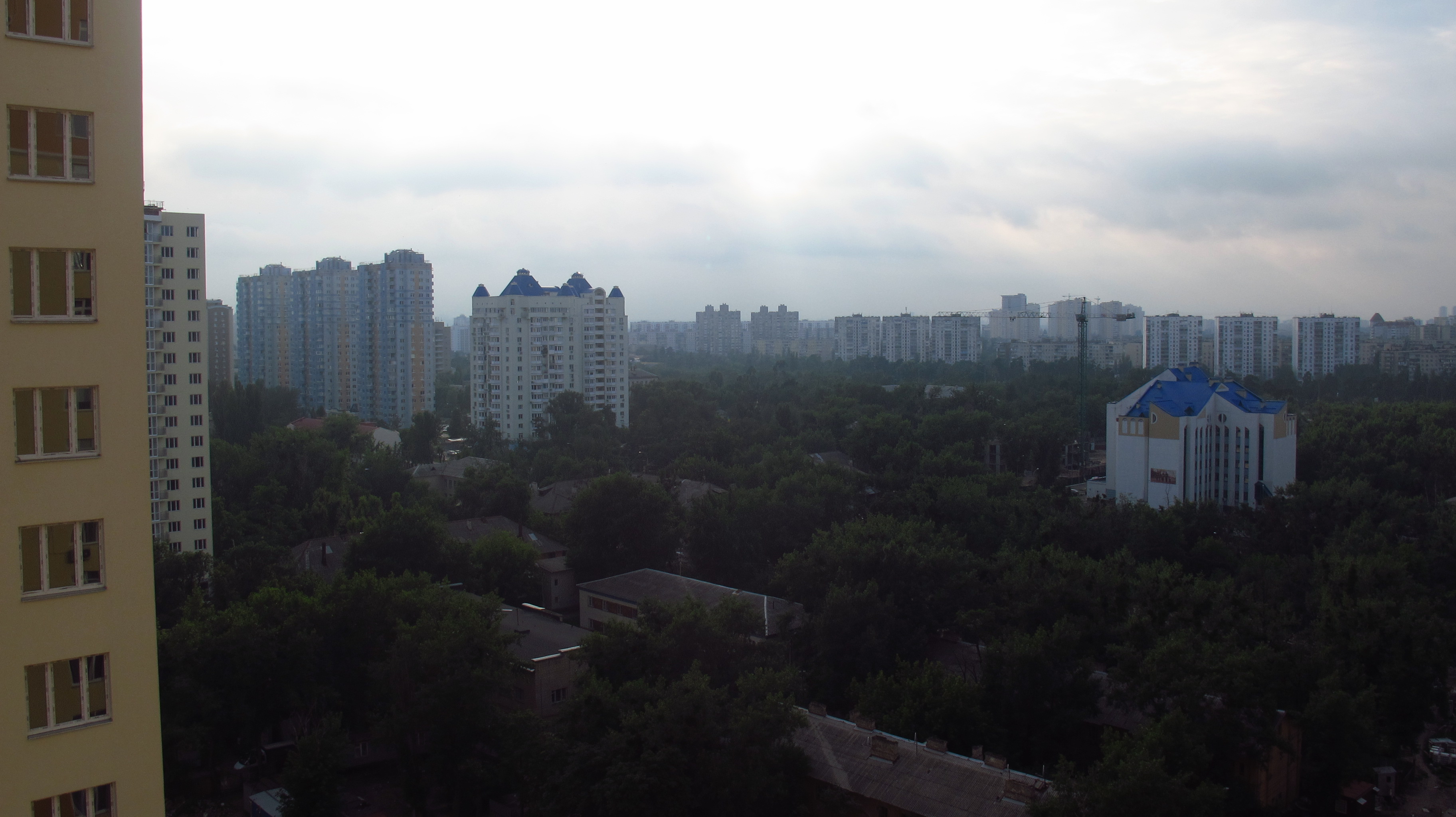
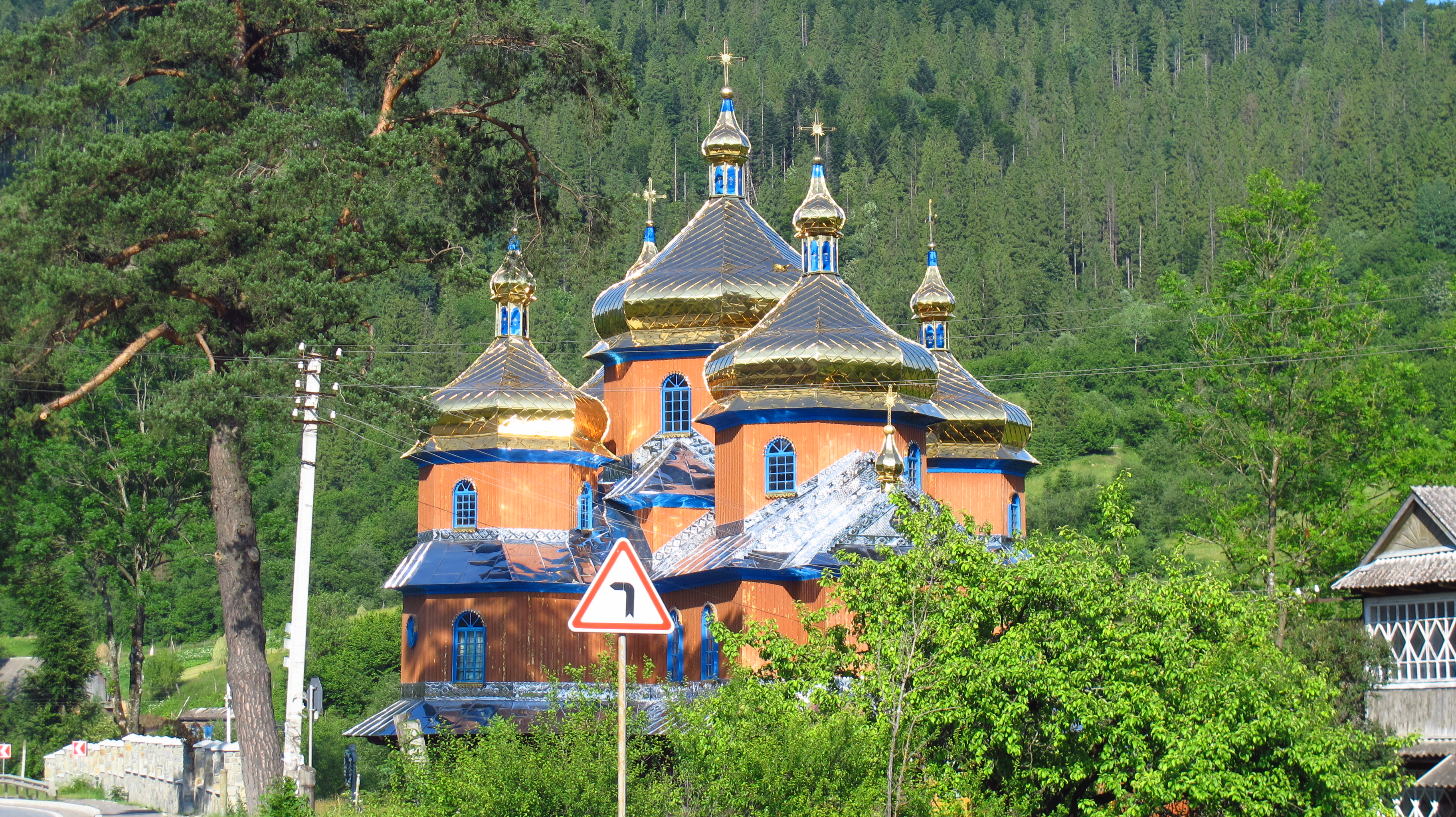
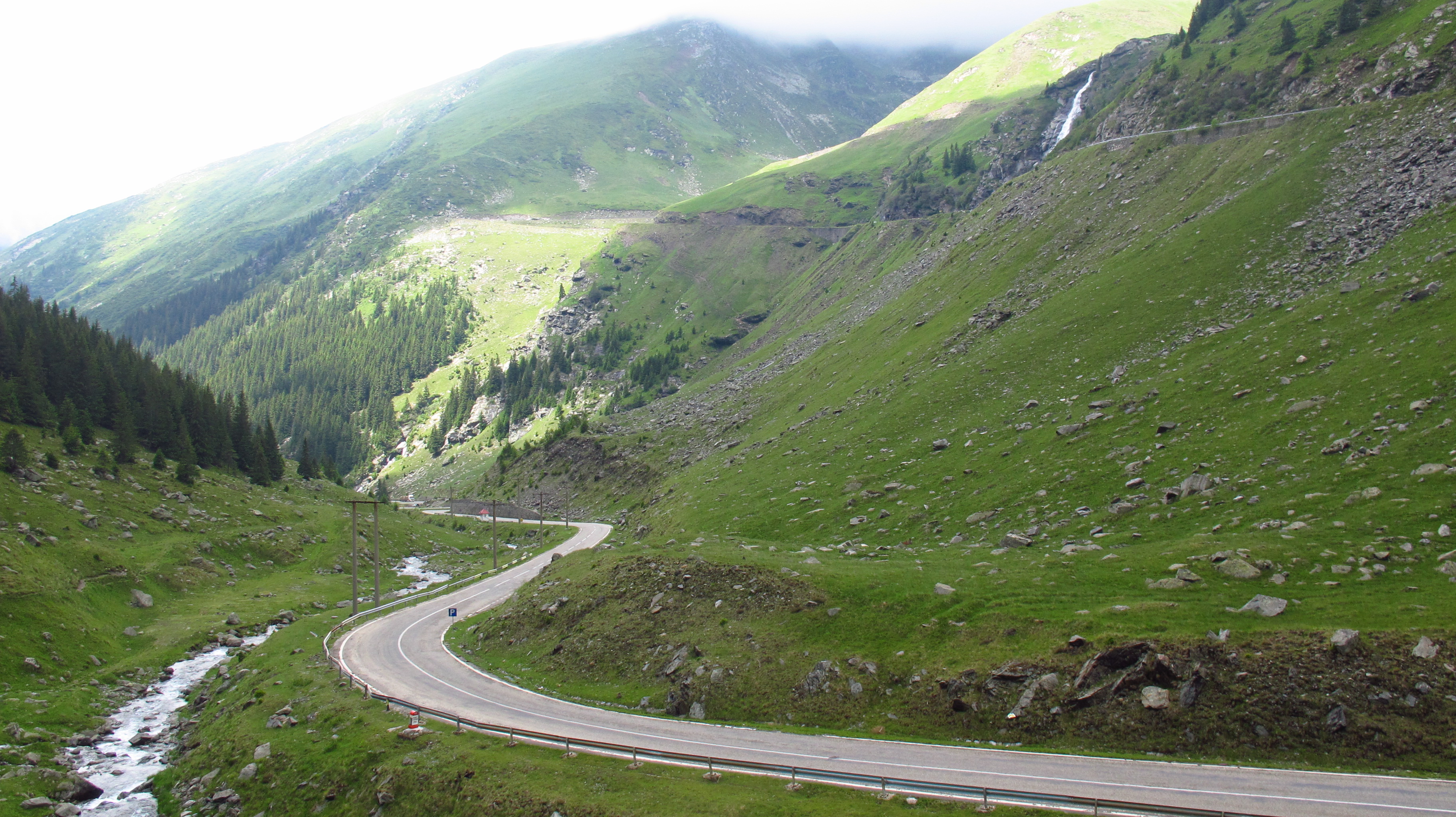
End of part one

Day 16 – Wednesday 10th of July – Volgograd to Astrakhan (425km)

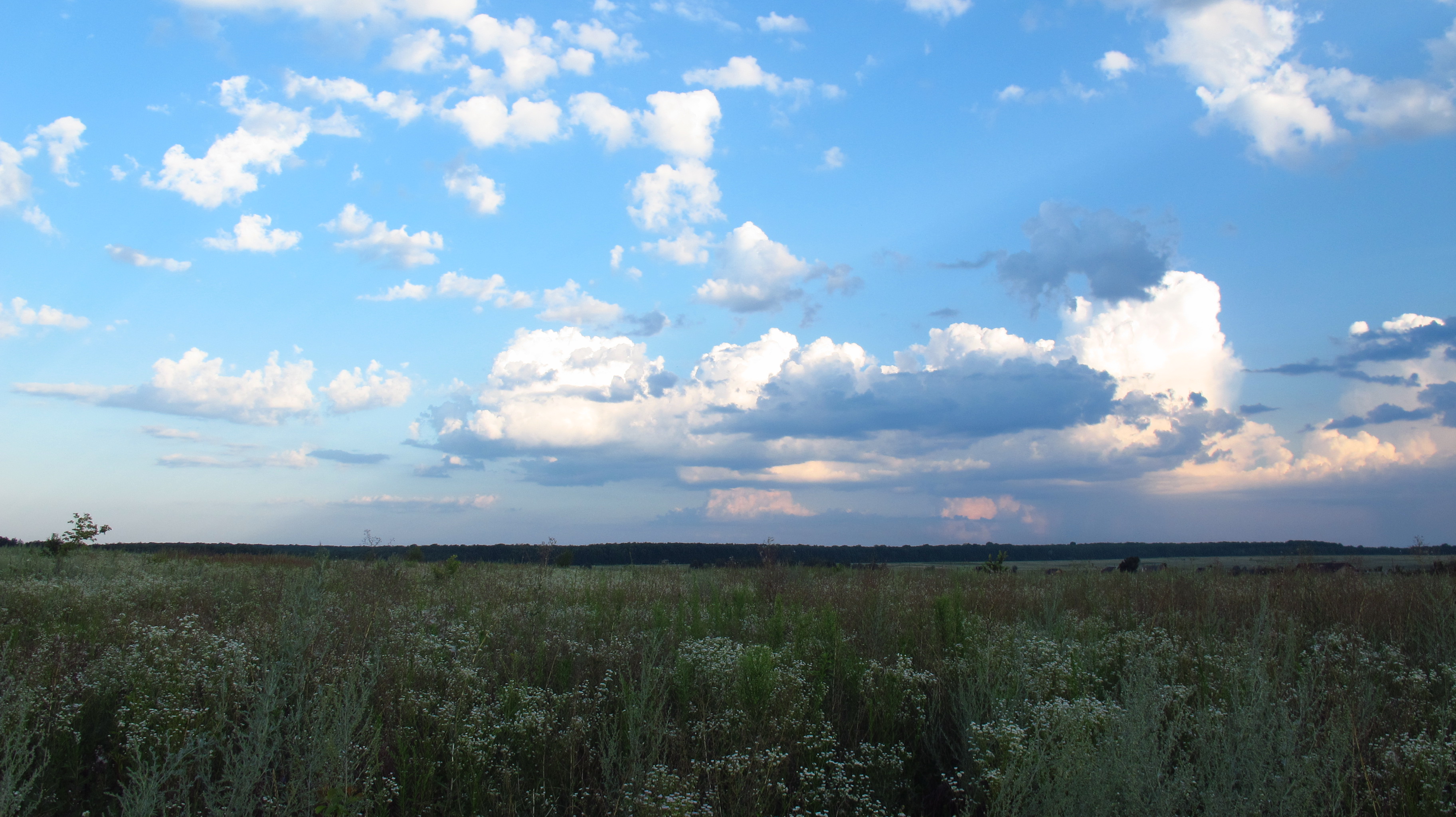
The book I took with me on the trip is ‘The Grapes of Wrath’, by Steinbeck, and riding thorough the barren, almost desert landscape between Volgograd and Astrakhan and seeing the small villages and their wooden houses covered in dust, with haystacks that almost looked as piles of dried mud melting into the landscape, I could not help but think of that story.

IMG_7130

Seeing such a dry and dusty place and baking in the almost 40ºC heat on the motorbike, it is hard to imagine that temperatures reach -20ºC in winter and snow covers everything. Life here must be very hard.

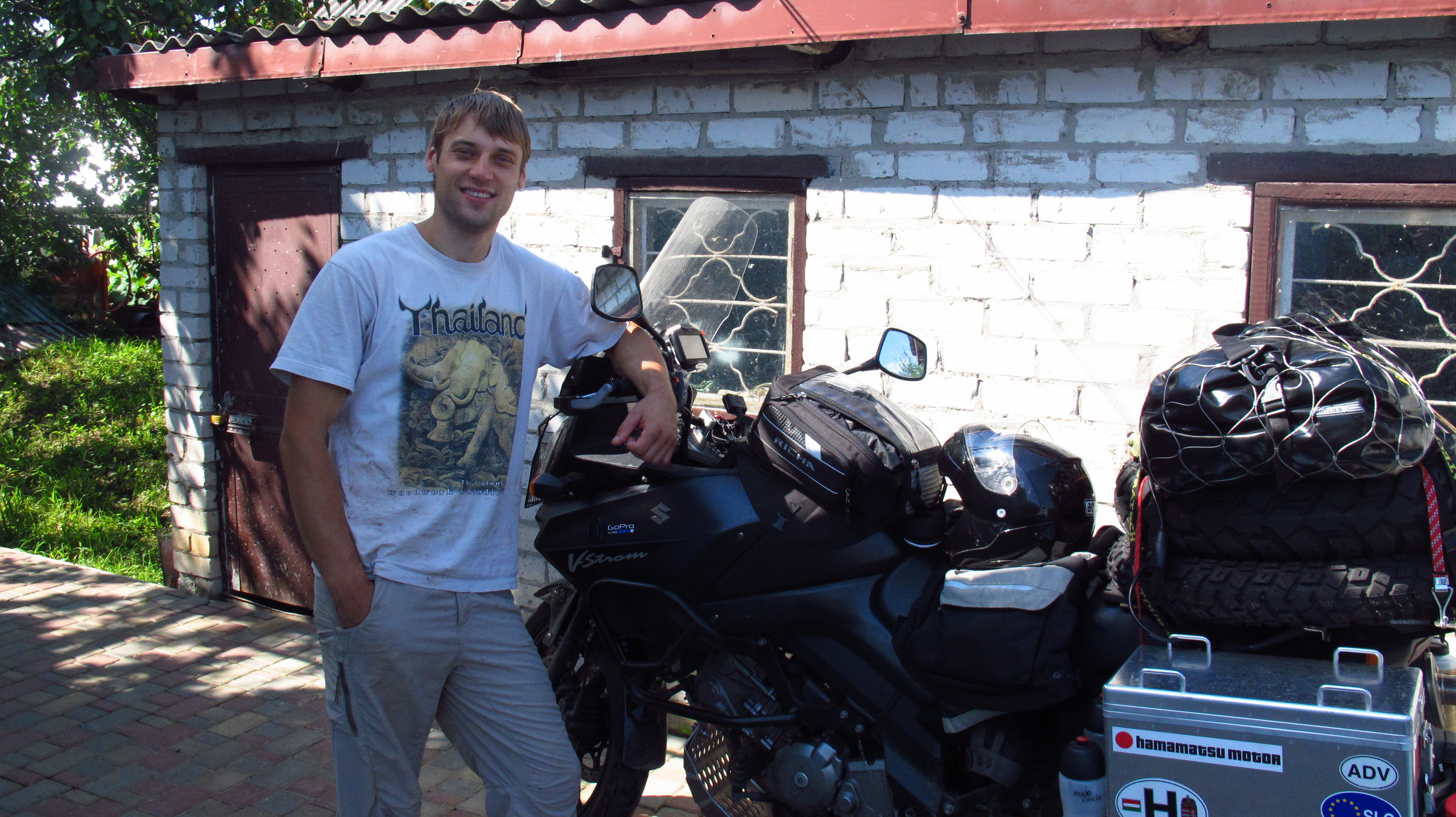
I rode with Martin all the way to Astrakhan, and it was a very nice day. I finally got some pictures and videos of myself and the bike for a change and I also recorded him.

IMG_7124


IMG_7127

The road was very good and we made it to Astrakhan by four o’clock in the afternoon. The night before I had sent a Couch request to a couple who live in the city, and it turned out that it is the same Couch Lex, the Dutch guy is staying at, so we have met again. Valentin, the guy who is hosting us, had to work today, but there is a very active community of Couch Surfers in the city and they were very excited to know that we were here, so he organized a meeting in the center. He gave us the mobile numbers of a couple of people and told us to go and meet them.

We took a 20-minute walk to the center and waited for them at the park. We were about eight people, and other people joined us as we walked across the center and to the river Volga to see the sunset.

IMG_7142

IMG_7145

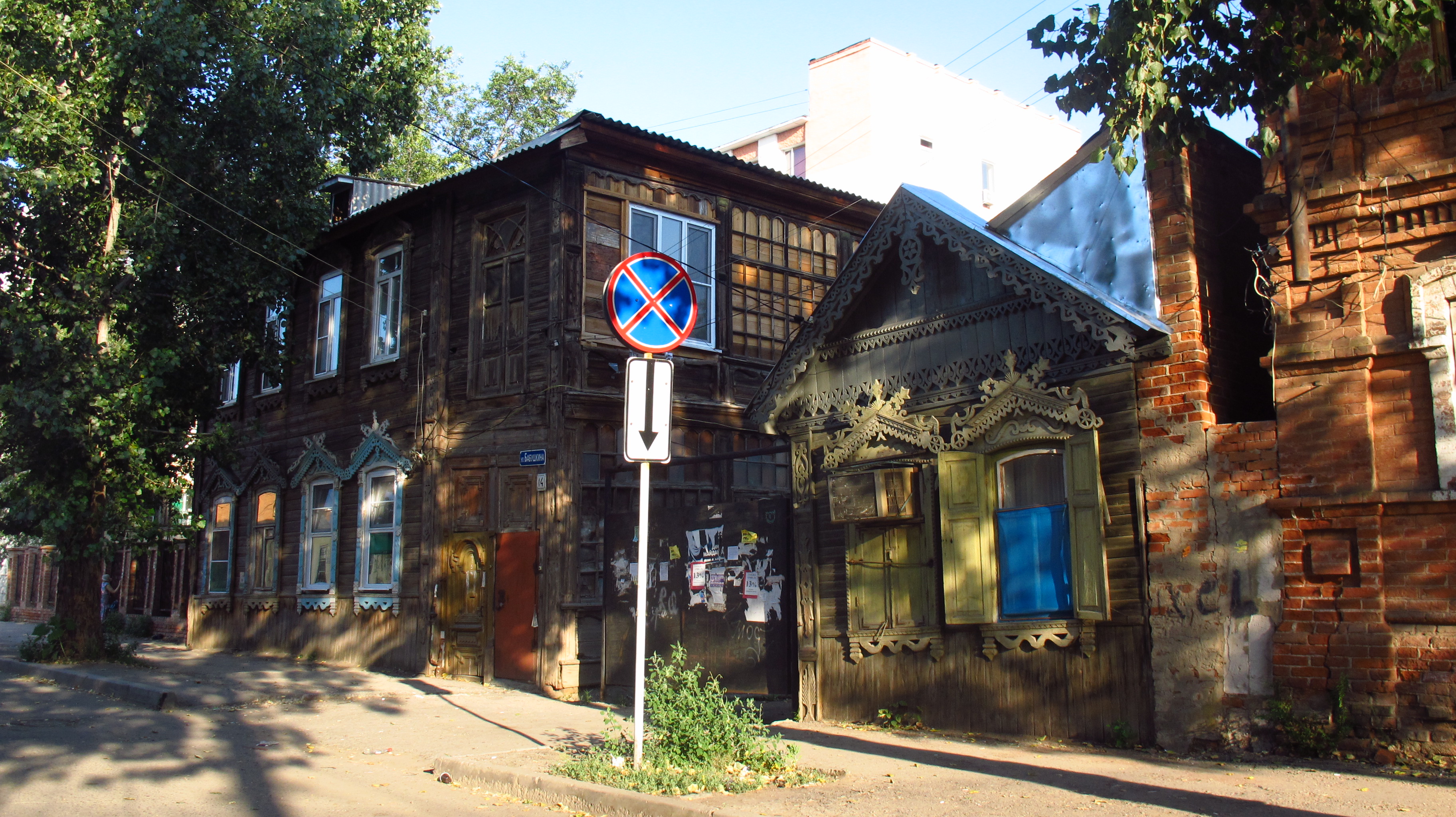
It seems that every time I think that a city is going to be boring or uninteresting and I am just going to sleep there and move on, it turns out to be a great place that I regret leaving so quick. Astrakhan is much smaller than Volgograd, and it is the most beautiful city I have seen so far in Russia and Ukraine. Unlike most other cities, it is well taken care of and looks beautiful, the center still has lots of old buildings and traditional wooden houses, and the Kremlin was amazing, even though we could only see the outer walls as it was closed for renovation.

IMG_7134

After a long walk we went back to the park where we had met and Martina, a German girl who works for charity and has been living in the city for 10 months, set up a slackline between two trees and we all had a go at it. Quite difficult!

Tomorrow Martin and I are heading into Kazahkstan, which means that the easy part of the trip is over. No more beds, no more showers, no more internet. We will ride for about 400km and then camp for the night. After that, we will go our separate ways, me to the North and then the Aral sea, and him into Uzbekistan. I will keep writing, but I do not know when I will have connection to publish posts, probably not before Almaty.

These first two weeks have been amazing, I have experiences so many things and met so many people it will still take some time for it all to sink in. Now the difficult part starts. See you soon.

Russian mechanics

Day 15 – Tuesday 9th of July –Volgograd (0km)

I got up today and sent a message to my contact in the city, Vitali, from the Ferrum MC, who I had found on the HUBB before leaving Barcelona. He told me the address of a bike shop where I could have my bike serviced and the oil leak checked, so I put the address in the GPS and went off, no riding suit on, as it was tremendously hot in the city and I did not fancy negotiating the traffic jams on full riding armour. Lex, the Dutch guy, had left an hour earlier, heading for Astrakhan, where he had already arranged a Couch Surf.

Maybe the traffic was better, or maybe I was just getting used to it, but I found the 30km ride to the workshop quite easy. When I got there, I rolled the bike into the forecourt and an enormous Russian guy came out. I told him about Vitali, but he did not seem to know what I was talking about, and he shouted for a girl to come out from inside the workshop. She was Kate, the secretary, and she spoke some English. I told her that I had been told to go there by Vitali, but she did not seem to know who he was either. I got him on the phone and they talked in Russian for a while, then they told me to roll the bike into the shop, and asked me what I needed. I told Kate that I wanted to have the tires I was carrying fitted, replace the spark plugs, the oil, to have the air filter cleaned and the oil leak checked. They told me that there was no problem, and they got started on the regular service while the “master” mechanic, as they called him, was coming. Used to Spanish waiting times at workshops, I thought it would take all day, so I was thinking about getting a bus back to the apartment and come back on the following day to get the bike when the big guy pointed at a comfy leather sofa in the air conditioned back office and said “sit”. I sat there and took out a book. After five minutes of reading I was already bored, so I walked into the office and started talking to Kate. In ten minutes we were sitting at the office’s computer, and she wanted to see all the pictures I had on Facebook from back home. She was really, really nice, and made me feel at home all the time I was there. We talked a lot, she got me some tea, and at lunchtime she even ordered some food we ate together in the office.

993603_520041401400425_868194621_n

Shortly before four o’clock, the bike was ready, oil leak repaired and all. It turned out it was a broken chain tensioner seal, and the “master” had just cut a new one and replaced it. All the mechanics and Kate took pictures with me and the bike and wished me good luck, they were all really nice and helpful people.

999346_520042294733669_1746711182_n (1)

Back at the apartment, me and Martin went for a swim in the river Volga in the late afternoon, and then had a beer sitting by the river and watching the sunset. It was an amazing moment and it made me think how little I could have imagined I would be here doing this a year ago.

Martin is a programmer, and he is working on his laptop while he is travelling. His intention was to stay in the city until Friday, but today he was able to advance some work and he will be joining me on the ride to Astrakhan tomorrow, it will be nice to have some company on the road for a change.

At night, Andrey, our host, took us for a traditional Russian version of the Shish Kebab, and I made a new friend.

DSCN0242

Three adventure bikers in Volgograd

Day 14 – Monday 8th of July – Luhansk to Volgograd (506km)

No problems at the border crossing today. The Russian bureaucracy at the border was easy, it just took time to fill in all the immigration papers for me and the bike and then I was welcomed into Russia, border guards much nicer than in Ukraine. I rode on decent roads for most of the morning and then stopped at a lay by to eat some fruit for lunch before riding into Volgograd. As I was there, a lorry driver passed by, stopped the truck and reversed back to where I was. In Russian he asked where I was coming from, and when I explained the best I could that I had come from Barcelona and I was going to Mongolia, he was very surprised and wished me luck. A few minutes later, an old man and his son stopped their old Lada, got off, and said something pointing at the bike. From lots of gestures I understood that he also had a bike in the nearby village he was from, and then he took my address notebook, which I had taken out to call my host in Volgograd, and wrote his name and address there, making gestures indicating that I could sleep at his place if I needed to. I had only been in Russia for a few hours, but the people here were the most helpful and welcoming I had seen!

A couple of hours later I rode into Volgograd and into a traffic jam, and when I looked down to my GPS I could not believe my eyes – I was already in the city and the thing said that I still had to ride more than 30km to get to my host’s home. After about an hour of more crazy Russian traffic, I got there and discovered that Volgograd is a massive city – it extends for about 80km along both sides of the river Volga, despite only having 1.5 million inhabitants.

I stopped the bike in front of my host’s door and waited for someone to come, and I was more than surprised when his girlfriend turned up accompanied by two other couch surfers that were also staying at the flat… and who were also bikers!

DSCN0175

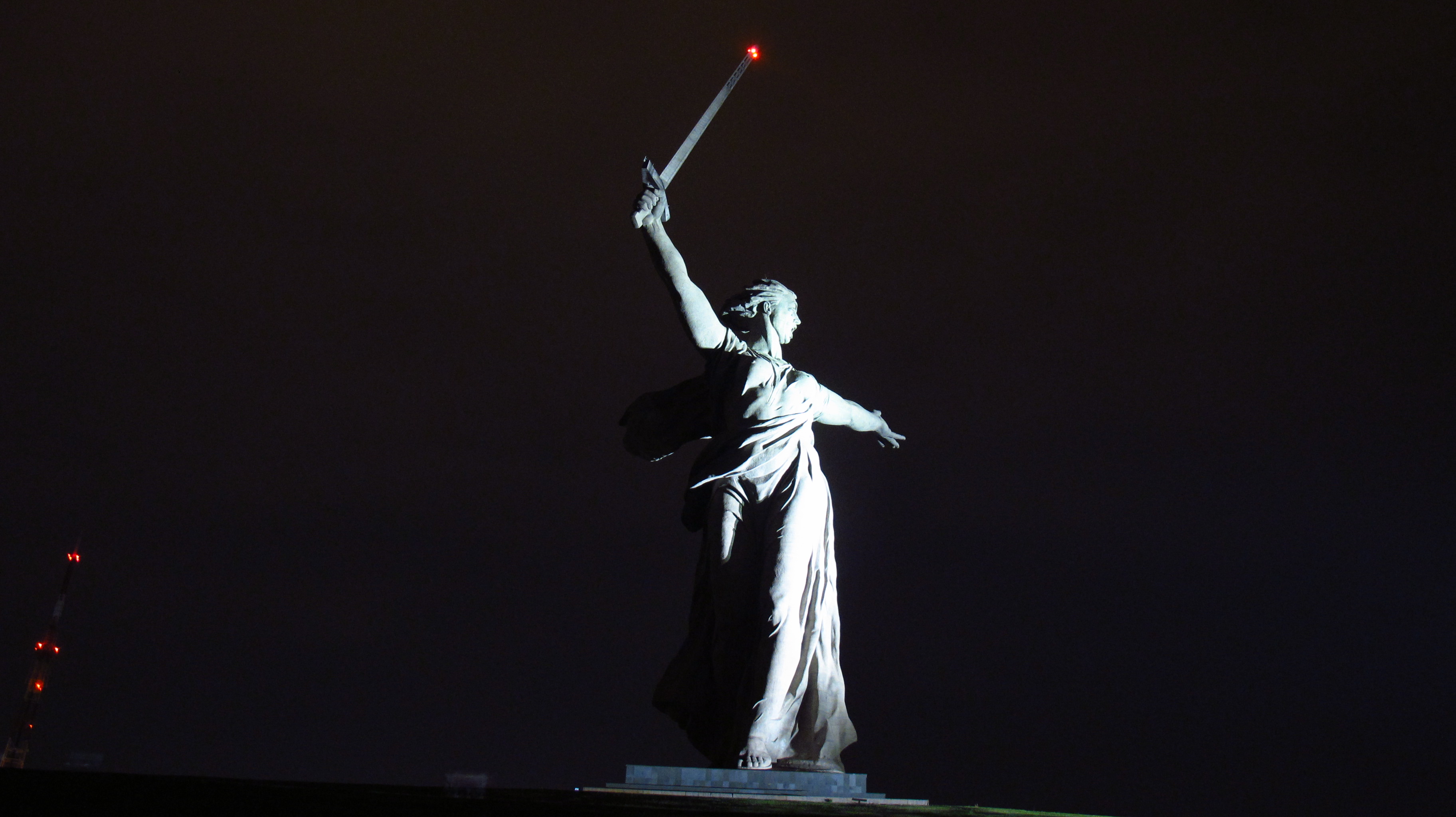
One of them, Lex, was from Holland and was riding an old Transalp down south into Georgia and then Turkey, and Martin was from the Czech Republic and was riding his GSA more or less along the same route I was doing, the only difference being that he was doing all the Stans, while I was only doing Kazakhstan. Our host’s girlfriend told me to drop my things and have a shower, and then took us for a walk. I did not take my phone or anything else, thinking that we would only be away for a while, but we went on a night tour of the city of Volgograd and were not back in the apartment until well past 2 am. I was shattered, but it had been more than worth it, we visited the city’s memorials of the battle of Stalingrad, and they were a magnificent sight at that time of the night, no heat and no other tourists around. Amazing experience.

IMG_7116

Soviet heavy metal

Day 13 – Sunday 7th of July – Luhansk (0km)

For an airplane geek like me, today was absolute heaven. The place we went to was apparently one of the three best military pilot schools in the old USSR, and the enourmous complex where it was located, on the outskirts of Luhansk, is today partly abandoned, partly inhabited by locals, partly used by the army, partly an air museum. The bus dropped at the main entrance, where an old soviet reactor stood proud to remind people of what the place had been in other times.

IMG_7026

We went through the gate and I noticed that what must have been the entrance checkpoint had been turned into small shops and kiosks. The blocks of flats that flanked the main avenue were today inhabited by local people who had bought them cheap because they had been built long ago. Further into the complex, the trees and vegetation had grown wilder and from time to time I caught a glimpse of old buildings and warehouses that were part of the pilot school.

IMG_7031

We were soon walking through overgrowth and half collapsed buildings, and it seemed rather strange that there was a museum somewhere in there, but you need to take into account that Ukraine has not developed a tourist infrastructure in most places. After a while we had got lost, and there was no one to ask. In the end we found some kind of old car park near another block of apartments and Anna asked a guy who was coming out the way to the museum. He sent us along a narrow footpath across a small forest that then turned into fields and we kept walking until I realized that we were on the schools runway. Far to our right we could see the tails of the planes in the museum. I asked Anna what use people made of the runway today, and she told me that a lot of people took their kids there with the family car to teach them how to drive, and there was also people who raced but that from time to time small private planes landed there. I was quite shocked that people were allowed to enter a runway that was sometimes active, and I asked her whether there was some kind of ATC or authority responsible for the place, but she didn’t know. I took a couple of pictures – it is not often that you can simply walk into an active runway – and went to the museum.

IMG_7041

We had apparently come to the back door, and there was an old guy that took a lot of convincing to let us in through that gate. After assuring him that we were going to go straight to the main entrance and pay, he let us in. Anna asked him about the runway, and he said that they were responsible for the museum, and the military for the radio station next to it, if somebody decided to land their plane on the old runway, it was their responsibility to make sure they didn’t land on anybody. What a crazy country!

Once into the museum, I had a wonderful time despite the tremendous heat. There were lots of planes I loved, like an Ilyushin Il-76, a Tupolev Tu-95, a Mig 29, a Sukhoi Su-27, a Beriev Be-12 and many others. The guy from the back gate came back, apparently having decided to make up for his earlier reception, and gave us a thorough explanation of the planes and helicopters there, although it was in Russian… Anna did her best to translate it for me.

IMG_7052

We came back to the flat to get some food and a badly needed shower, and I finally found a moment to write for the blog. In the evening we went back to the center to see the sunset from a park that overlooked the old part of the city. It was a wonderful last view of Luhansk.

Tomorrow I’ll cross into Russia, and I am already nervous again about having to face the fearsome old soviet bureaucracy.

Luhansk MC

Day 12 – Saturday 6th of July – Rus’ka Lozova to Luhansk (362km)

Well, another day that was supposed to be short and rather uneventful has turned out to be great. I left Rus’ka Lozova early to try and have some time to visit Luhansk, as Anna, my host, had told me that there were tours of the old industrial parks of the city and I really fancied seeing that.

I got to the city quite early and as I was riding in the outskirts, I overtook an MC convoy. They were the first proper motorbikes I had seen in the country, and I was quite surprised to see them. When I stopped at the first traffic lights before entering the city, one of them, who apparently had left the other behind to catch up with me, pulled alongside and asked me where I was coming from. I started to tell him about the trip, but the lights changed and we rode on. Shortly after the rest of them appeared and they made gestures for me to stop by the roadside. Vladimir, their president, spoke English, and they were very interested to see where I was coming from. They told me they had been to a biking event about 100km from the city and asked where I was staying. I showed them the small notebook where I had written the address and phone number of my host, and then the president took out his mobile phone, gave it to one of the club members and told him to call her. They spoke in Russian and then he introduced me to one of his guys, the “Veterinar” , and told me to follow him, because he would show me the way to the center and take me to a place where I could meet Anna.

So I rode into the city escorted by the local MC, and once in the center, most of them went their separate ways back home. My guide and another guy, with their respective old ladies, took me to the center, and in about 20 minutes Anna was there. The bikers wished me good luck with the rest of my trip and went home, and I told my host that I needed to drop all my stuff and park the bike securely before visiting the city. It turned out that she lived almost 8km from there, and if she took the bus, she would get to her place later than me on the bike, so this being Ukraine, I sat her on top of the bag and the spare tires and rode through the center like that, no helmet.

Once we had parked the bike and I had a chance to have a shower, she took me to visit an important train factory in the city. It is not normally possible to visit, but they were celebrating the city’s industrial day, and a lot of places like that were open to the public. Not an opportunity to miss. The visit was great, we were taken around an enormous soviet-style factory in the late afternoon, the red sun shinning through the warehouses tall windows and making for some very good pictures.

IMG_6971

IMG_6961

After that we went to eat something and then to a bar that served the local beer, which was excellent. It got late, and after such a long I was absolutely exhausted. The prospect of getting up at about 6 in the morning to ride to the border, deal with the crossing into Russia and then ride 400km more to Volgograd looked like the least appealing thing on Earth. On top of that, there was a museum that I really wanted to visit, an old military pilot school that had been turned into an air museum and had a collection of Soviet planes, so I decided to stay an extra day in the city.

Organic vegetable salads and beehives

Day 11 – Friday 5th of July – Kiev to Rus’ka Lozova (517km)

Today was a quiet and pleasant day. I had a lot less trouble than I expected to get out of Kiev, as the traffic was not bad and I did not have to cross the center again. The only slight problem to report is that I have lost one of the Touratech straps that attach the rack pack to the top of the spare tires, probably when I had already dropped my stuff at Sofia’s apartment and her friend lead me to his car park. Well, I have spare ones, so no big deal.

The road was quite passable and despite being a rather long distance, it felt very short, the only problem was the heat. I had removed the waterproof layers and opened all ventilation on the suit, but it was still hot. The water on my plastic bottles was undrinkable, and when I stopped for petrol I bought cold water and poured it into the bottles, but in an hour it was hot again, despite getting air.

IMG_6917

I made it to the small town near Kharkhov were I was staying by six in the afternoon and called my host, who was still at work. He got there in half an hour, while I took the chance to sit down at the church’s entrance and enjoy a bit of reading for the first time in the journey.

Denys arrived and lead me to his house, which was up a narrow dirt track in the village, a bit challenging after a long day’s ride and with the bike fully loaded, but I thought it was good off-road practice. He let me ride the bike into his garden and I had time to clean and grease the chain and check the oil leak – which had not got worse – while he prepared a salad from the vegetables he grew in his enormous back garden.

IMG_6929

IMG_6919

He also had three beehives where he was producing honey. He was a really nice guy, and after dinner he took me for walk in the forest around the village and told me about the plants and animals that live there.

IMG_6924

IMG_6926

Back in the house, he showed me some pictures of his holidays in the Altai mountains, in Russia. I will ride through that region before crossing the border into Mongolia, but unfortunately will not have time to visit it properly, and it is a real shame, as the pictures showed a place of the most outstanding natural beauty. We talked about it in Spanish, which felt a bit strange after almost two weeks of using only English everywhere, and I have to say that his language skills were excellent. He had only studied for six months in preparation of a one-month holiday in South America, and his Spanish was perfect.

IMG_6932

Bitten by radioactive mosquitos

Day 10 – Thursday 4th of July – Visit to Chernobyl (0km)

It is difficult to describe today’s experience. I was looking forward to it, as it was one of the highlights of the trip, and it has been a very interesting visit, but at the same time it has been a most harrowing experience.

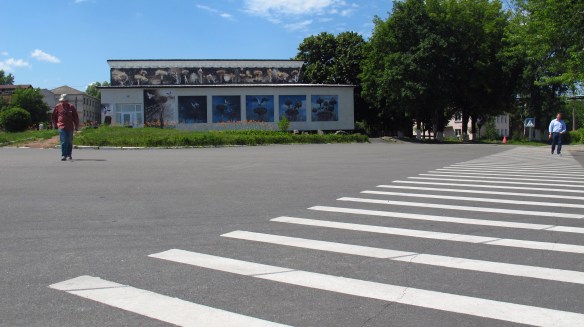
Luda took me to the city’s main square, where the tour bus was to pick me up, and once in front of the hotel that was supposed to be the meeting point, she told me she would be there again at 6 in the afternoon to show me the center a bit. I spotted a bus and a couple of people waiting and I asked the last person in the queue, who was the exact double of Hillary Swank. She was from Sweden, and since her boyfriend had decided not to take summer holidays, she was touring Ukraine on her own for a few weeks. We got on the bus and quickly started to talk about travelling, as we shared a taste for unusual destinations and Eastern Europe. The conversation was soon interrupted by the start of a documentary on the disaster, which turned out to be very interesting and much more complete than other things I had seen before. It finished shortly before we reached the first checkpoint. A big area around Chernobyl is still under military control and even though about 170 people, all of them over 70 and retired, have decided to move back to their land, nobody is allowed in or out without going through strict security checks. We got off the bus and after having our passports checked against a list, we walked past the checkpoint and waited for the bus to cross. It was then a short drive to the first and only inhabited town, which hosts about 5,000 people who work in jobs related to security and maintenance of the area. They live and work there for 15 days and then take 15 days off, and have to undergo frequent medical checkups.
IMG_6739

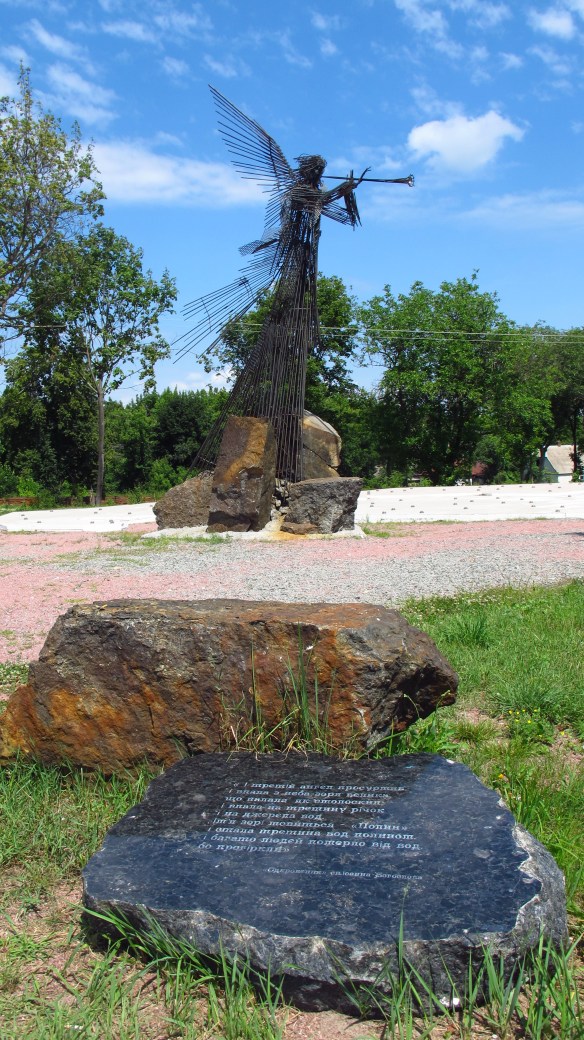
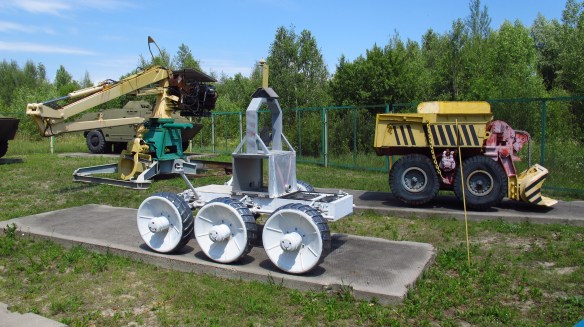
On the way there, we passed several villages, but the only thing that remained were the road signs, as the military had bulldozed and buried the houses after the disaster and nature had quickly claimed the land back. We had a short stop in the town, where we saw a memorial, a fire station (whose members where the 3rd team to arrive on the site right after the explosion) and some of the vehicles that were used for the cleanup.
IMG_6741

IMG_6746

There used to be a bigger collection of vehicles at a place called vehicle cemetery, but they were deemed too radioactive to be safe and that part of the visit had been cancelled years ago and the vehicles buried.
IMG_6750

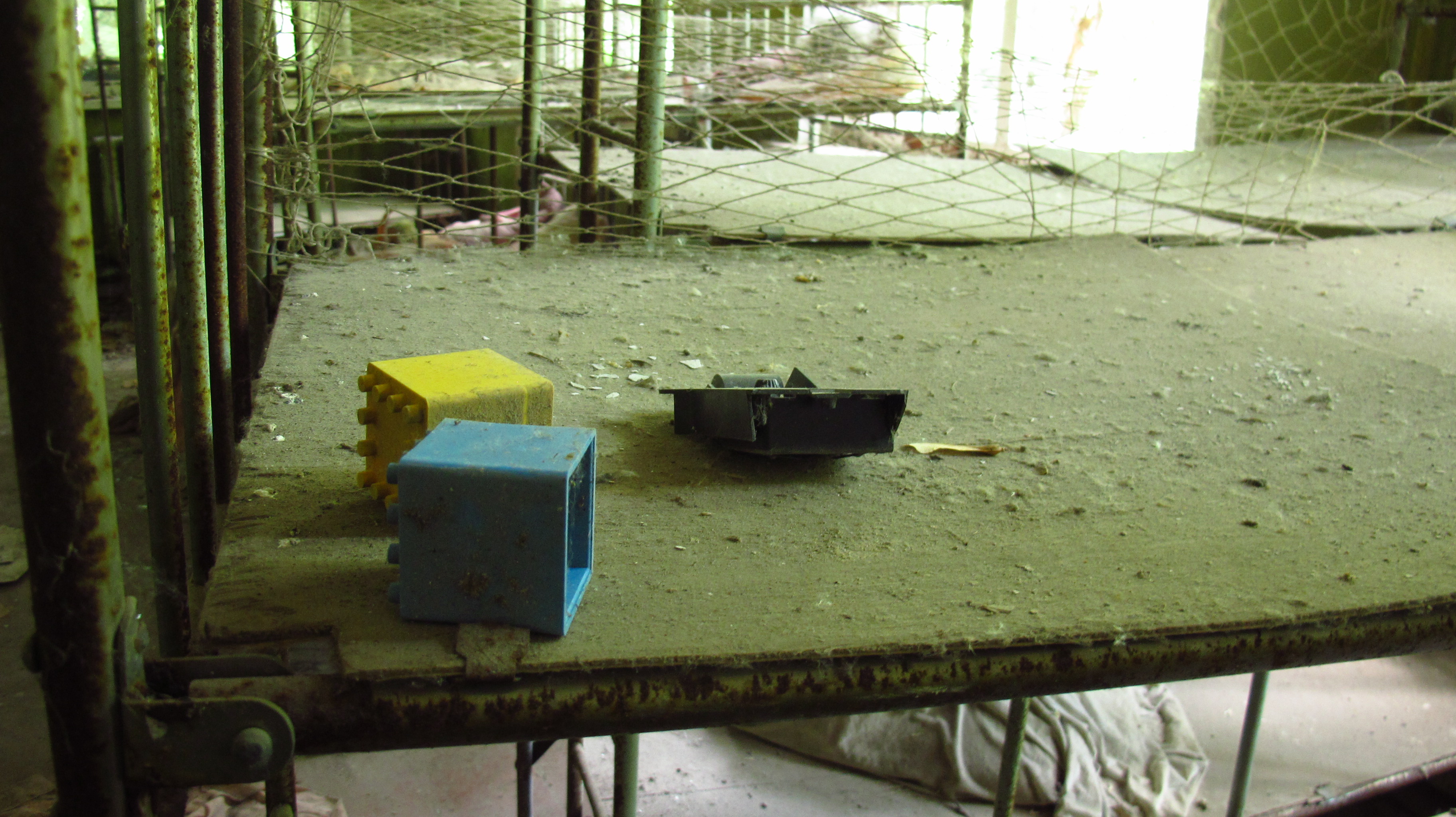
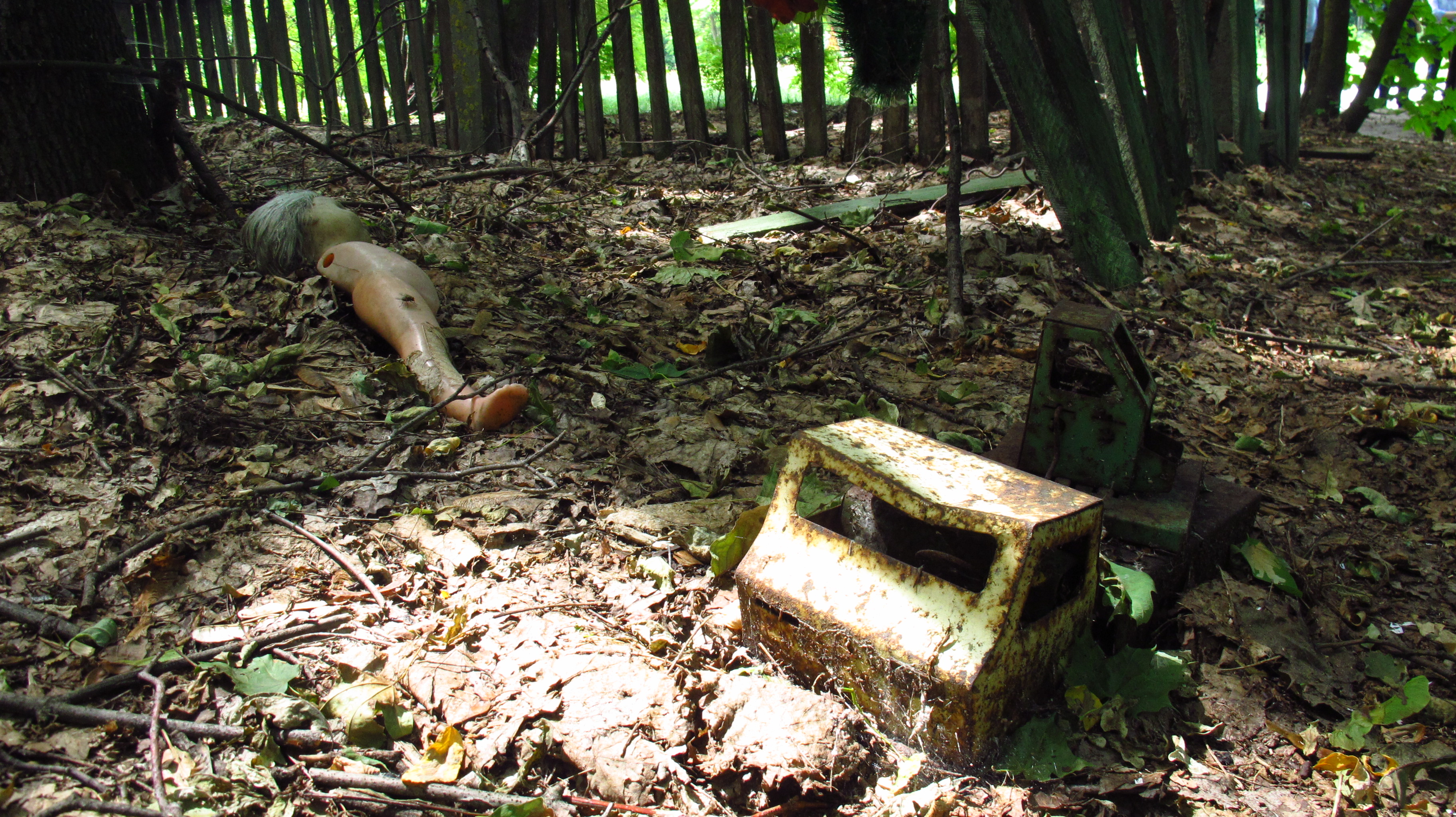
Then we drove through another checkpoint to get into the exclusion zone itself, where no people live, even though lots of them work there. Before reaching the nuclear plant we stopped to see an abandoned kindergarden which, together with a post office that was barely standing among the trees, were the only two buildings remaining of the last village before the plant.

IMG_6764

IMG_6774

Then, as we were driving out of a corner, it came into view into the distance. The high chimney that stood between reactors three and four. We stopped one last time before reaching it, to see the construction site of a couple of cooling towers and reactors five and six, still surrendered by high construction cranes.

IMG_6781

They were never finished. The bus stopped on the road and when we got off to take some pictures, the guide told us not to step off the road and onto the grass, as it was highly contaminated.

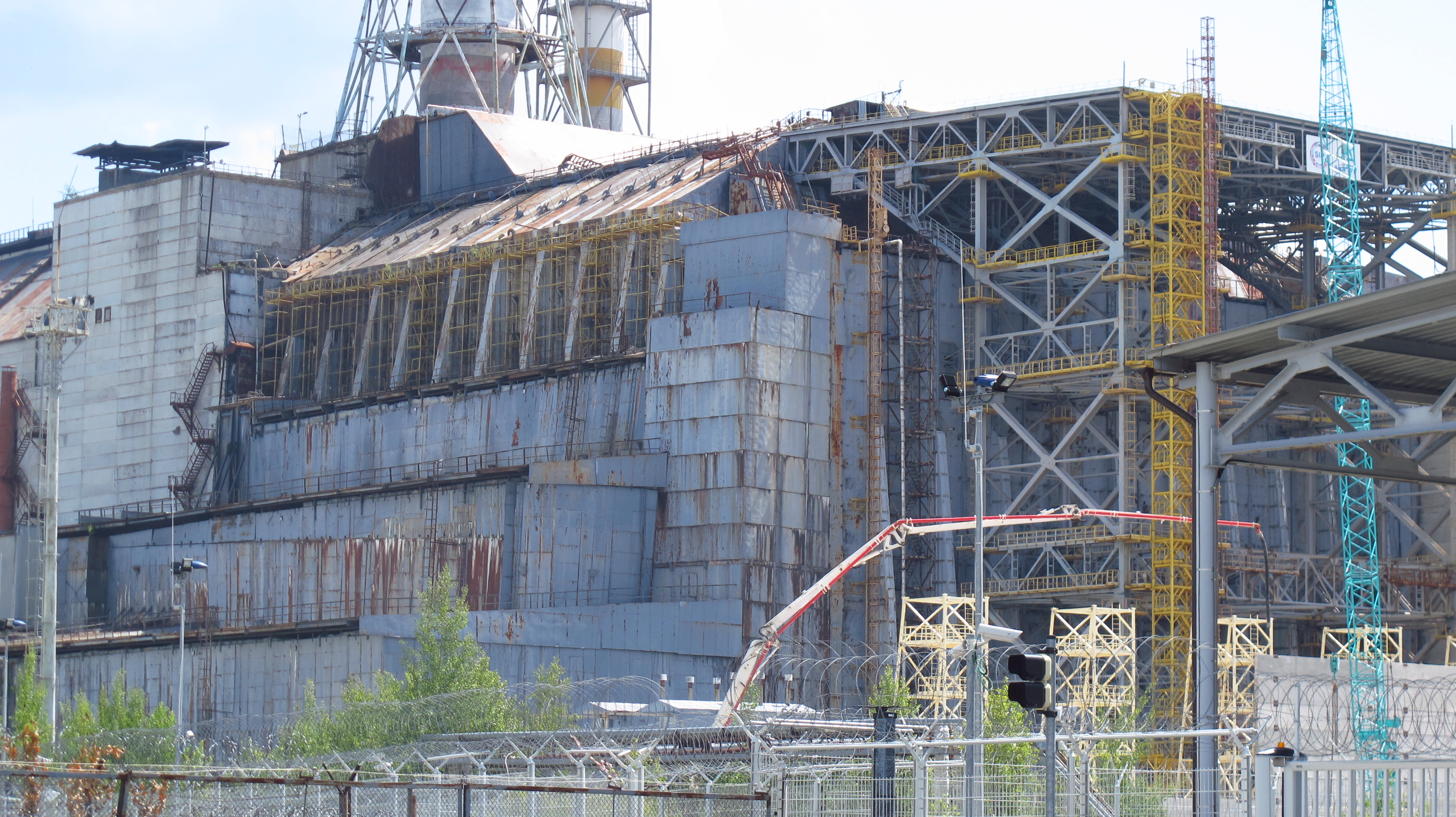
We got on the bus again for the final short drive that took us next to the sarcophagus that covers reactor number three. The structure looked quite old. It was the first and only of its kind, and its construction had taken several lives.

IMG_6791

The people designing it and working to build it had never done anything like it, and nobody had ever worked or trained to work in such conditions. Thousands of people worked to build that sarcophagus, for no more than one minute at a time to avoid the deadly doses of radiation, and even that way, they all suffered horrific consequences. All of those who were there to contain the disaster gave their lives to prevent a much more dramatic outcome, one that might have rendered most of Europe inhabitable. Some of them knew what they were in for, other were sent by their superiors unaware of the great risk they were running, but without them, the tragedy would have been much bigger. From the first firefighters on the site, to the miners who dug a tunnel under the reactor to pour concrete and stop the melting uranium bars from reaching the water below and exploding, from the people who got on the roof of the number three reactor to clean the highly radioactive pieces of graphite with their own hands to the helicopter pilots who flew directly above the radioactive blaze to drop tons and tons of sand and then lead to try and stop the fire. From the people who walked as close as possible to the core of the reactor to get readings to the workers who built the sarcophagus, they are all unsung heroes who saved hundreds of millions of lives and have now been forgotten, left to suffer the terrible consequences their bodies bear for the rest of their lives alone.

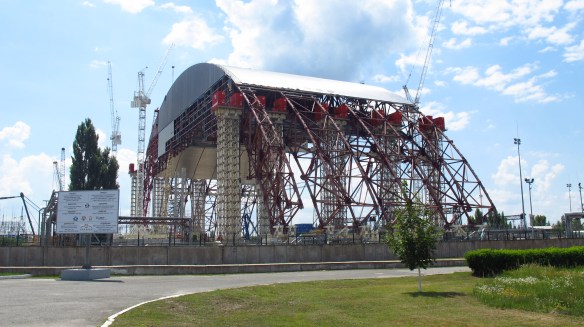
Near the original sarcophagus that covered reactor number three, a French company were busy at work , building a colossal structure – a new sarcophagus that will cover the old one and ensure safety for a hundred years. Its dimensions are hard to appreciate on the pictures, but the red boxes near the top are shipping containers, which gives an idea of the size.
IMG_6786

And it still has to grow to be twice as tall and twice as long. It should have been built about ten years ago, as the old one has long exceeded its useful life, but there were no funds for it. It will be finished in 2015. We were told there that we could only take pictures of the reactor and the new sarcophagus, as there were military buildings in the area and we were not allowed to photograph them.

In a way, I felt privileged to have had the opportunity to take this tour now, as these visits might have their days counted, at least as they are now. In three years the number three reactor would no longer be visible, buried under its new cover, and the city of Prypyat will have crumbled down and be claimed back by nature. The bus dropped us at what was the main entrance to the city where 50,000 people had lived here at its heyday, all of which were evacuated in two days without being able to take more than a couple of suitcases with them. They were never allowed back to their homes.

IMG_6799

Today, it was hard to recognize it as an avenue. Trees and bushes had grown wild on both sides, reducing it to little more than a dirt road across a forest. The buildings have been abandoned ever since the disaster, so most of them have leaking roofs and are in danger of collapsing at any moment.

IMG_6802

The bus dropped us off at the main square and we started walking into the city, careful not to touch the plants. We went around some of the main buildings at the square and found the  amusement park, one of the most unsettling and infamous sights in the city, the ferris wheel still standing, frozen in time.

IMG_6835

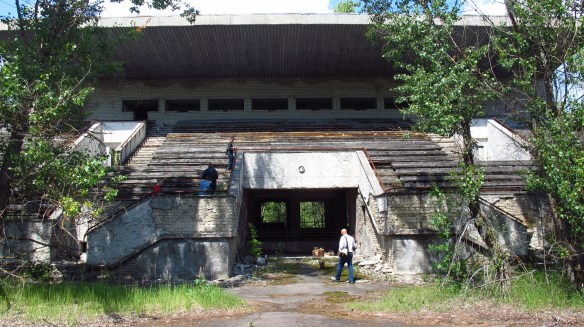
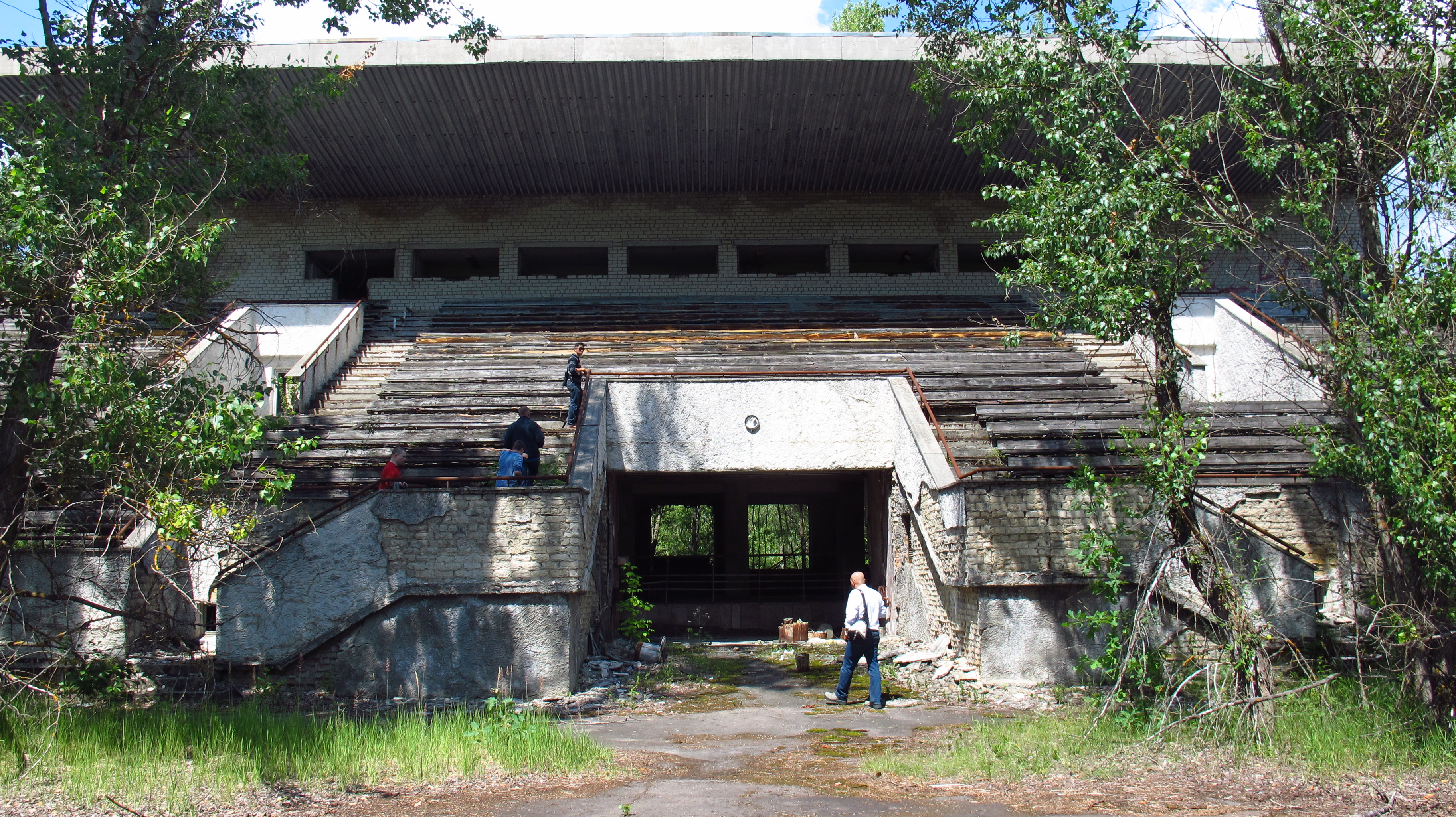
From there we went across what looked like a forest until the guide stopped in the middle of thick vegetation and announced that we were standing in the football field in the city’s stadium. Coming out of the trees we found the stands, and that was one of the two buildings we were allowed into.
IMG_6839

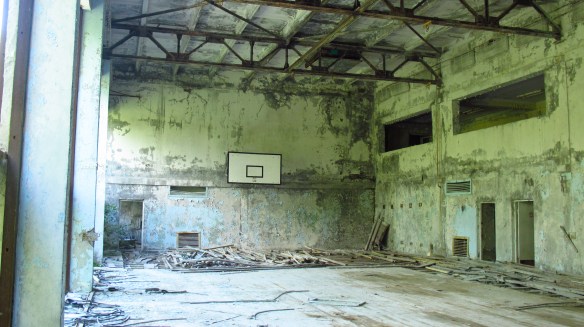
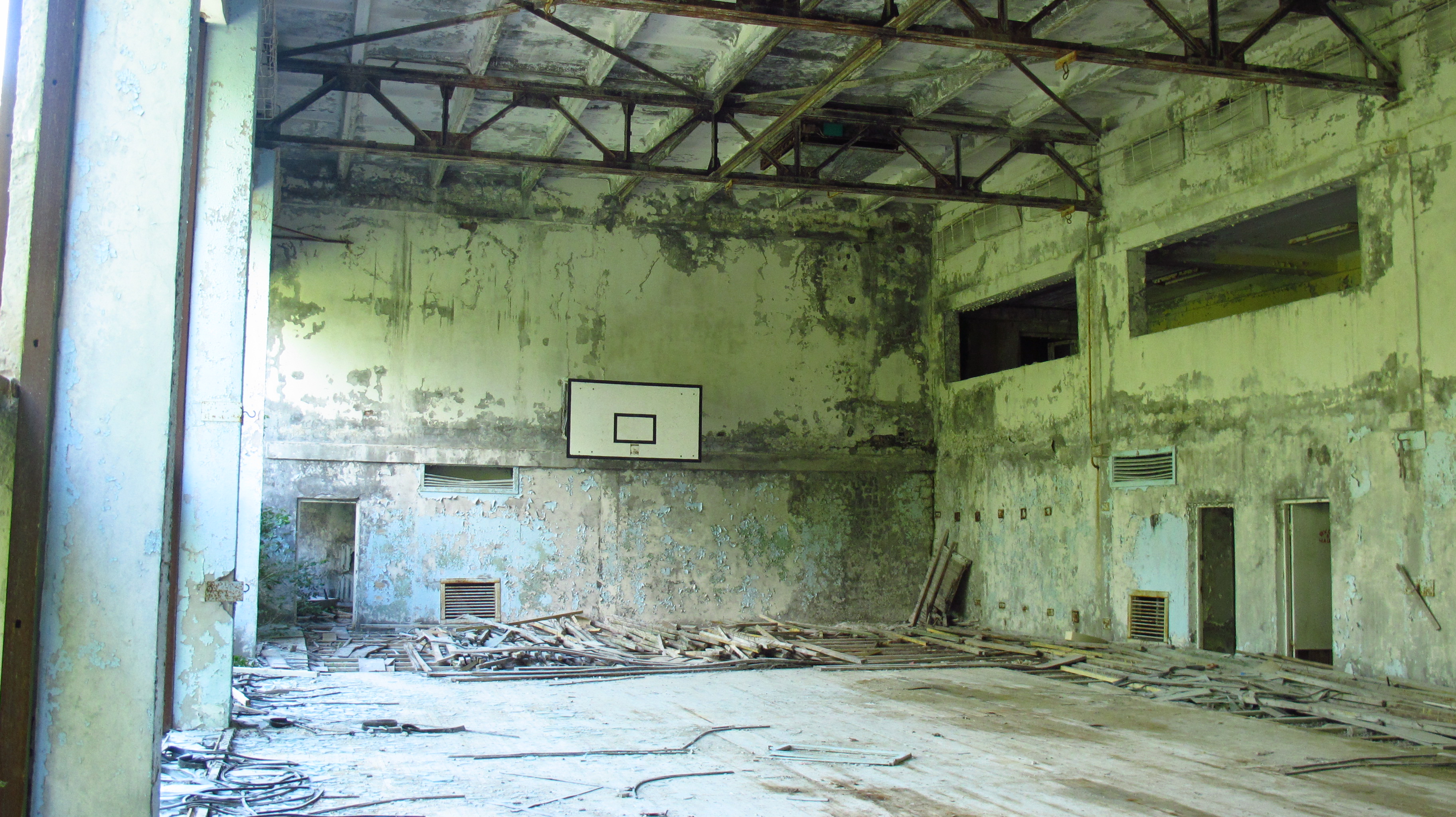
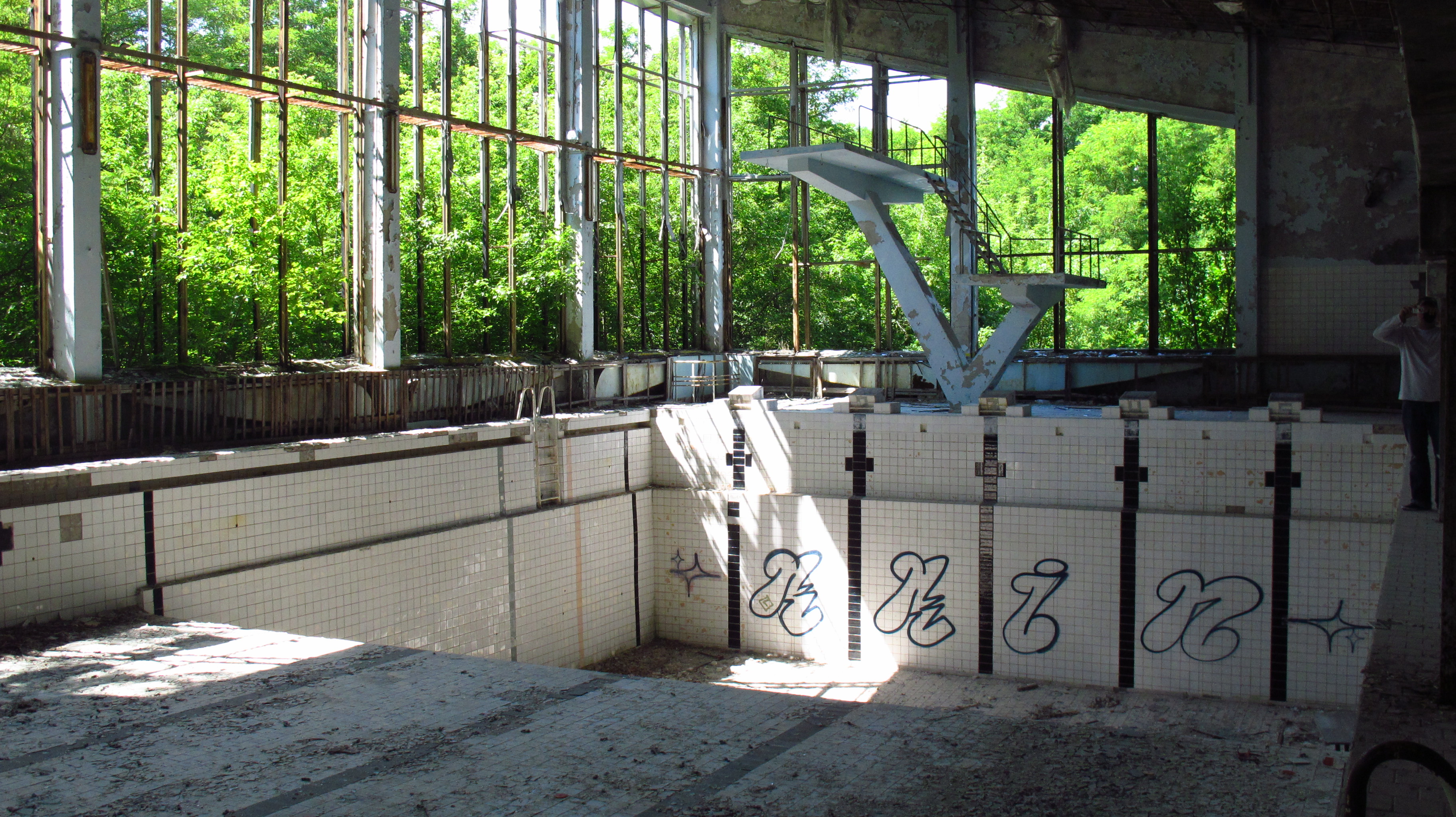
The other one was the sports center, with its basketball court and empty swimming pool. It all made for a fascinating visit.
IMG_6858

IMG_6860

The bus met us again on another avenue almost turned to a trail and took us out of the exclusion zone and to the canteen in the town where present day workers live. We went through a comprehensive anti-radiation cleansing process consisting on washing our hand with an old chunk of soap and then sat down to enjoy a soviet-style meal.

IMG_6867

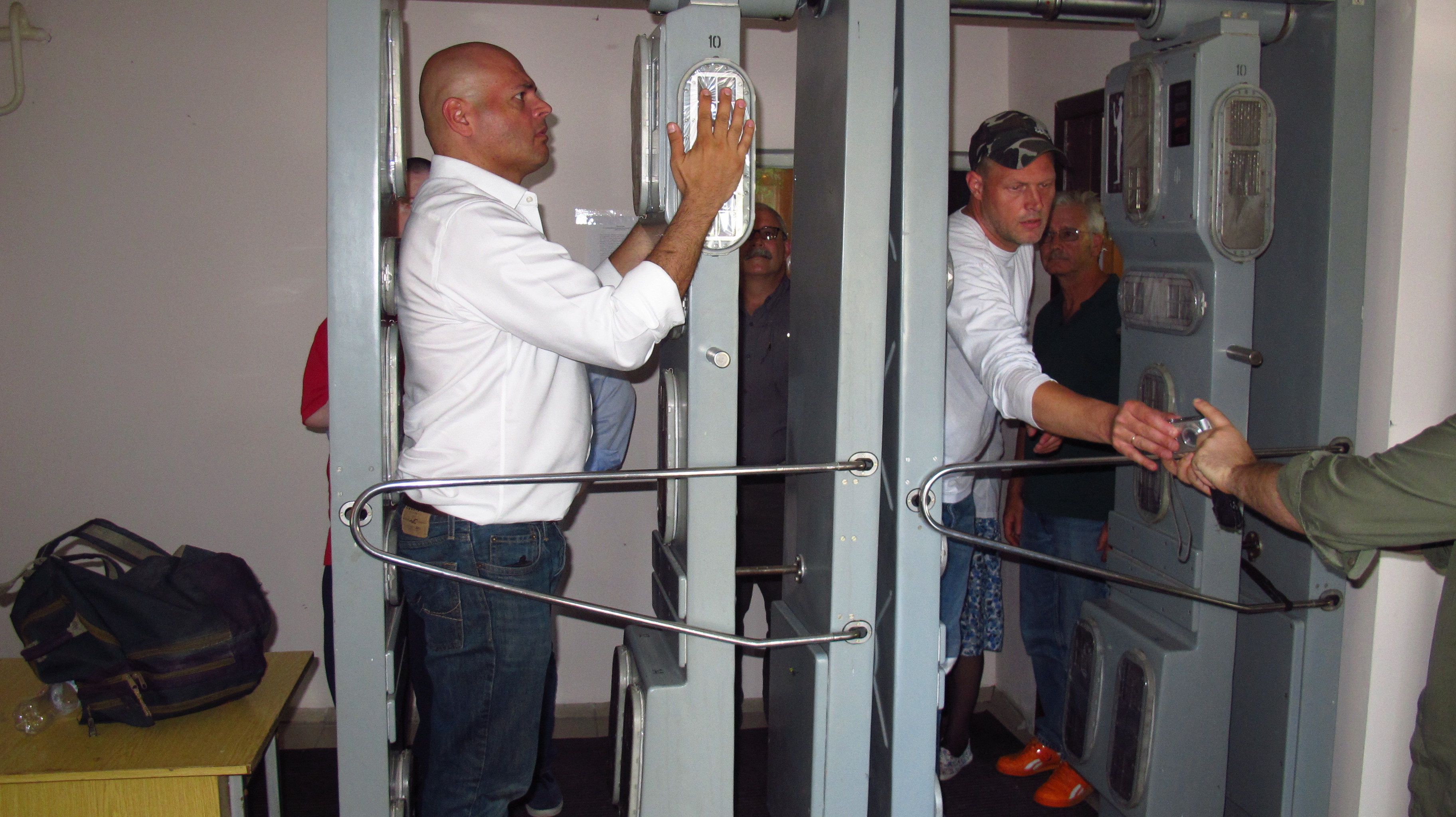
After eating, we stopped at the main checkpoint and were made to walk through a radiation check machine that looked like the kind of thing you would expect to see in a cold war movie, Then we were let go, clean as a whistle.

IMG_6865

On the way there in the morning, there had been an tense silence in the bus, with very little conversation, everybody full of expectation at what they were about to see. On the way back, tension broke, and there was light conversation and jokes. A Dutch teacher who was sitting behind me said that his wife was going to make him throw away all his clothes as soon as he got back to the hotel, and I met an American guy who worked for the CDC who had hundreds of anecdotes to tell about all the places he had been stationed at.

Back in Kiev, Luda was waiting for me to show me around the city a bit, as I still had a few hours left. She had brought along a friend who also spoke English, and we went for a bit of sightseeing before heading back home to pack my stuff for the next morning.

IMG_6903

Kiev is an enormous city, an urban sprawl of over 3 million people, far bigger than I had imagined, and it was very obvious that I was missing so many things. I made up my mind to come back and visit it in the future.

Follow that cab!

Day 9 – Wednesday 3rd of July – Lviv to Kiev (557km)

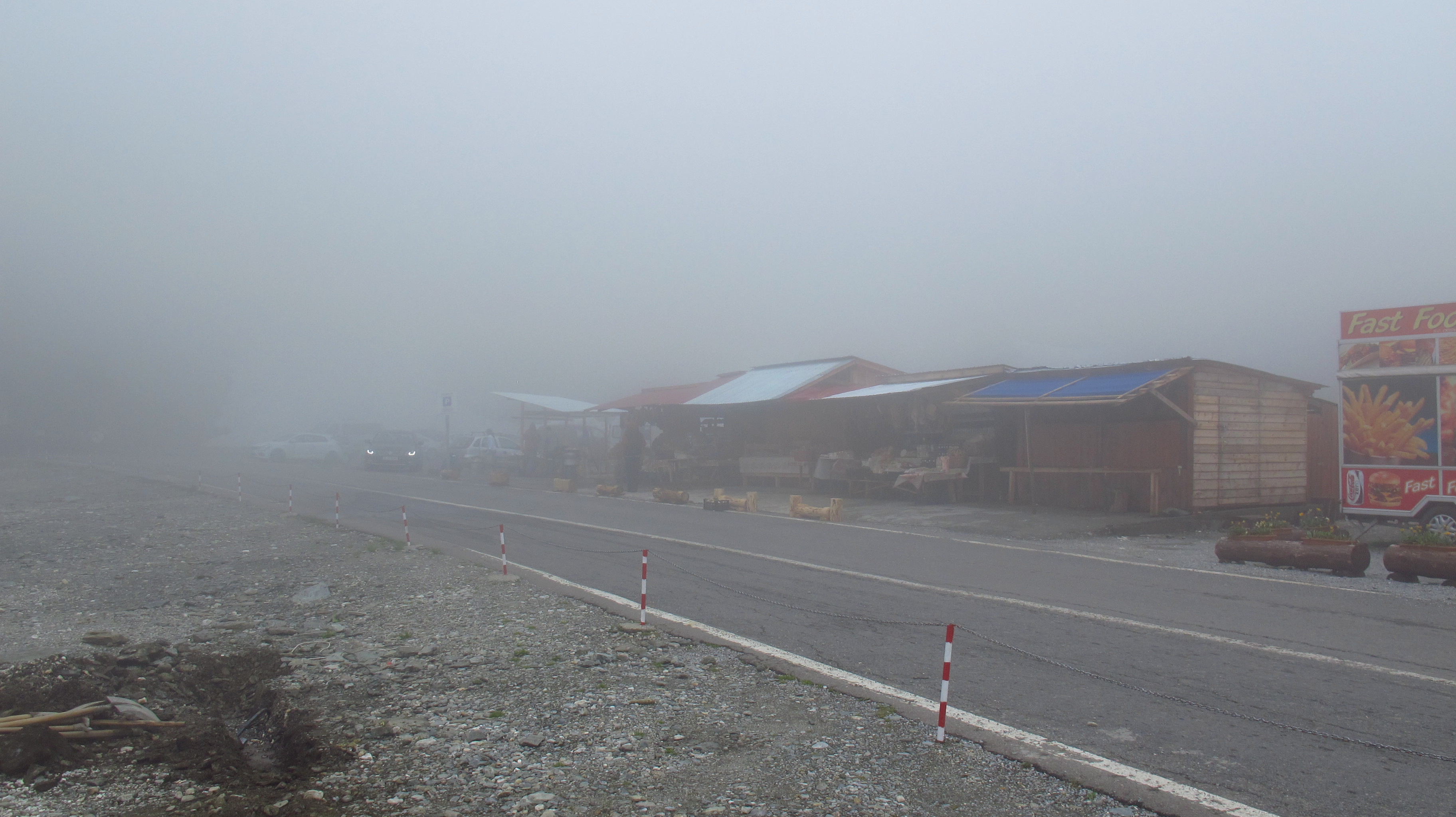
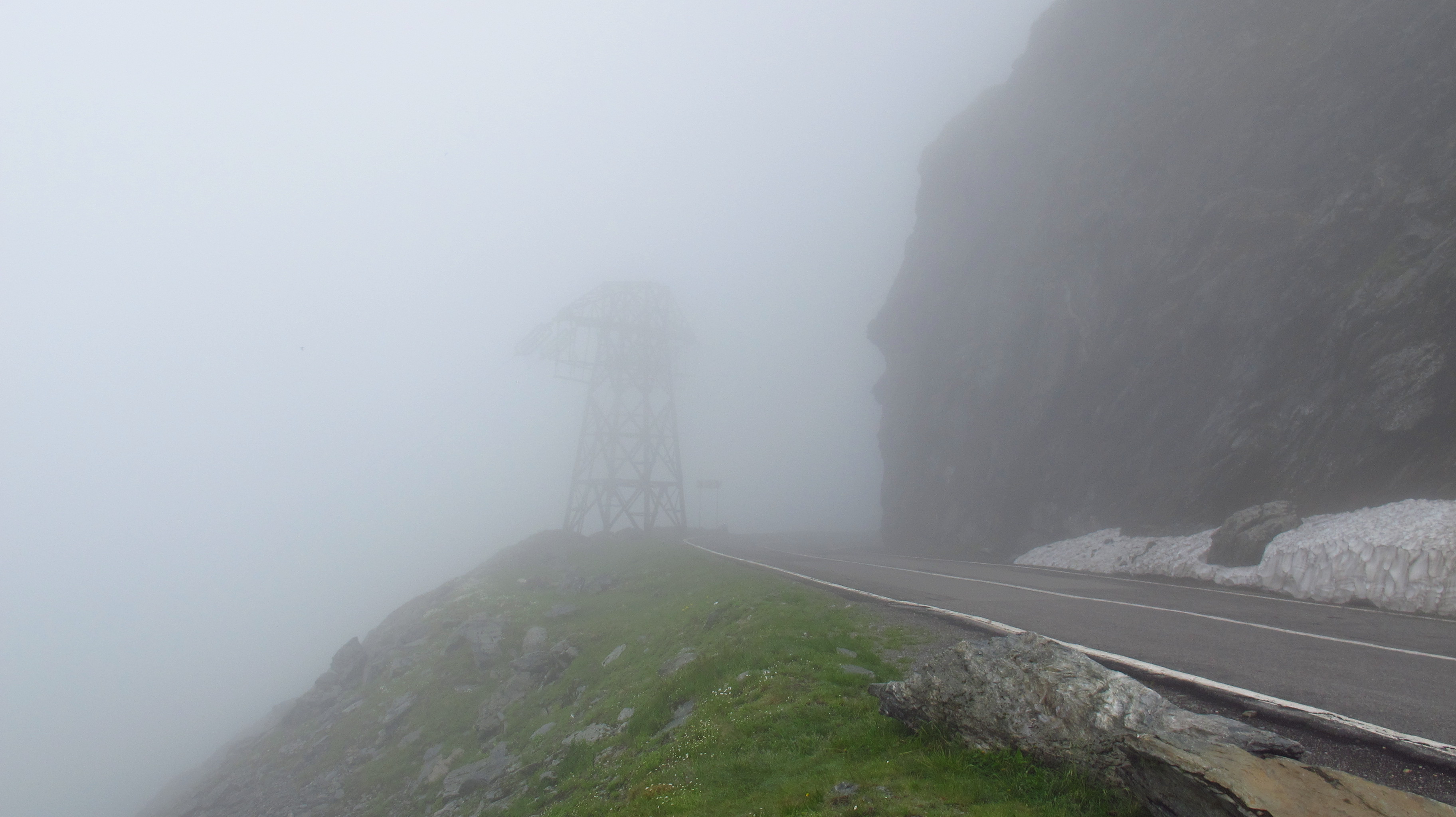
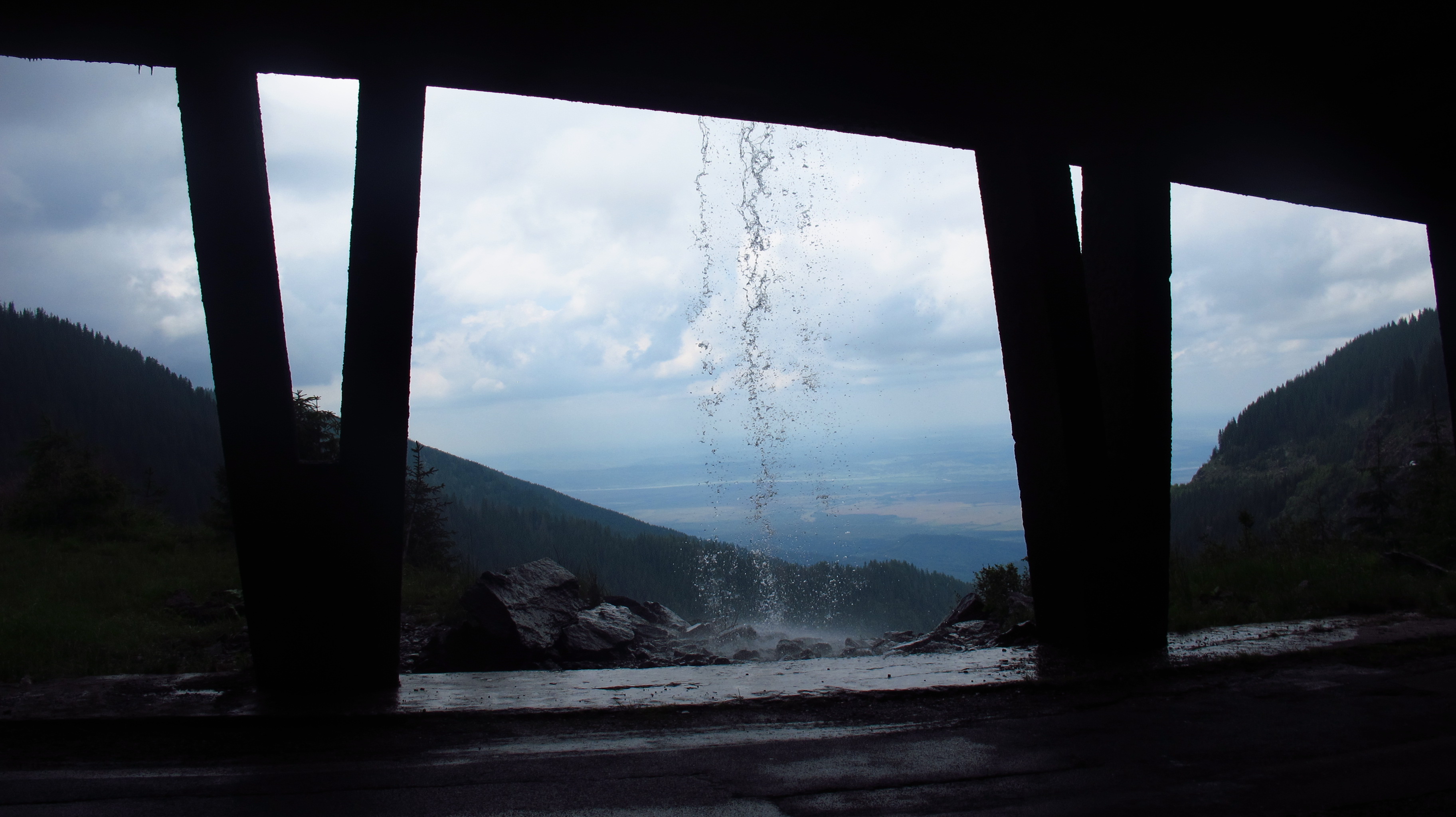
There is a tunnel at the top of the Transfagarasan pass that connects both sides of the mountain. It is not very long, maybe one and a half kilometers, but it is very narrow, with just enough space for two cars, the road surface is broken asphalt almost turned into gravel with the occasional big pothole and it is pitch black, there is not a single light in it. When I rode it two days ago, the fog that covered the top of the mountains had also got into it, so visibility was almost zero. With the screen covered in moist, I had to stand on the footpegs to see over it, and I could see no further than eight or ten meters, the headlights hopelessly trying to pierce the fog. Had you asked me this morning, I would have said that was the most frightening experience I had ever had on the bike, but what I did today was far, far worse.

In the morning, Igor took me to an ATM so I could get some local money and then to the bike. I loaded it and checked the oil, a bit worried about a developing leak that I had spotted in Romania. When I started the journey I noticed a bit of oil on the bash plate, but since I had had the valve clearance checked and it was a job that required opening the engine, I thought that it had got dirty then. Just to be sure, I checked again when I got to Budapest, and things seem to be the same. However, once in Romania I noticed that there was a bit more oil, and on closer inspection I discovered that there was oil in the V where the cylinders meet, and it seemed to be coming from somewhere in the back of the front cylinder.

IMG_6716

I cleaned it to see how long it would take to get dirty again, and today, after two days and about 1,200 km, enough oil has accumulated in the V to leak down the side of the engine. In normal riding conditions, it would take weeks for that much oil to leak, since I barely do more than 20 km a day, but things happen faster on the trip. I cleaned it again near Kiev to check how long it takes this time. The oil level has been descending at a normal rate for the number of kilometers I have been doing, so I do not know how worried I should be. I will be in Volgograd in three days (1,200 more kilometers) and since I need to have the bike serviced there, I will have the leak checked. I hope it does not get any worse before getting there.
I said goodbye to Igor, who refused to let me pay for the car park, thanked him for his hospitality, and went across Lviv center to get the road to Kiev.

IMG_6712

It is a shame I did not have more time to visit the city, as what little I saw from the bike was great. What was not so great was the time it took me to get out of there, through streets clogged with traffic, and cobblestones and tram rails to make things more challenging.

IMG_6714

Once out of the city the road was good an clear all the way to Kiev. The landscape was beautiful, green fields stretching far, but it was one of the most boring rides so far. After my last experience with the police I was not going to give them a reason to stop me, so I stuck to the speed limit (90), and did not overtake unless it was legal. Since I was the only one following traffic regulations, that meant that I was the slowest thing on the road, and on roads that were mostly straight and smooth, I had to fight hard to stay alert. On the plus side, I managed to get the best fuel economy form the bike ever – 4,1L/100km for the whole journey.

IMG_6720

As soon as I got to Kiev things changed quickly, little did I know that I was in for a hell of a ride. Luda, my host’s secretary, who speaks some English, had told me to meet her at an underground station on the main road on the city limits, because it would be easier if she showed me the way from there. I was glad she had taken the bother to do so, as navigating big city traffic is usually hard. She got on a cab and told me to follow it. I thought it would not be very far, since she had come to get me, but boy, was I wrong!
The cab driver sped off into the afternoon rush hour traffic in 8-lane avenues chocked full of cars, trucks and buses, and I was left to do my best not to lose him. I was determined not to, and that meant sticking to his tail, absolutely no safety distance to speak of, and even so, the moment I left a couple of meters between me and him, somebody would try to get in the gap. And all that at speed well above what you would expect in the city. I could not even check the mirrors, as taking the eyes off the car in front for even half a second might mean an accident. And on top of that, the roads were badly potholed, which meant that the ABS was constantly kicking in, providing some extra scariness tot the whole experience, and obviously, riding so close to the car in front I could not see the potholes in time, so I basically ate them all.

After the longest ride of my life, we got to the apartment, on the 14th floor of another soviet-style building, and I was shown into the shower and then sat down for another enormous dinner consisting of the finest traditional Ukranian dishes.

IMG_6721

Luda made her best to translate for me, and I managed quite a conversation with Sofia, my host. After dinner, a friend of hers told me he would lead me to his car park, where I could securely leave the bike for a couple of days. I followed him, fearing another crazy ride, but by that time the streets had emptied, and it was a lot easier. We left the bike there and he drove me back to the apartment. Sitting on the back of his plush car, I almost dozed off after the adrenalin rush of the afternoon.

Border crossings and police bribes

Day 8 – Tuesday 2nd of July – Ighiu to Lviv (607km)

Having been to Romania instead of heading for Ukraine straight from Hungary meant that I broke one of the rules I had set myself – to spend the night before a major border crossing near the border to get there relatively early in the morning in case there were problems with the paperwork and it took a bit longer than expected. Another consequence of that decision was that instead of going through an international crossing, I had to go through a small rural one, and some of those only allow locals to use it, not international traffic.

So, having also broken another rule – to keep journeys shorter the furthest east I went – I set off on a 10-hour ride through a border I was not sure would be open. I got there at about 2 pm, and lucky me, they let me into Ukraine! I was quite nervous about it, I was leaving the EU and I was afraid they would find some kind of problem with my documents or the bike’s, but there were none. The good thing about a small crossing is that there were no long queues, only four cars in front of me, but they still took their own sweet time and I baked under the sun for half an hour. Once into Ukraine, the bad thing about a small crossing became apparent quickly – the road.

Remember the Romanian pothole? Well, it is nothing more than a small bump on the road compared to this. Not only were they deep, there were thousands of them, all over the road, meaning that cars and trucks had to swerve around them, using the whole width of the road and often driving on the wrong lane. I had to stand on the footpegs and could only use first and second gear. It was hot, sweaty and dusty. This was the kind of thing that I was expecting in Kazakhstan, not on a road connecting two countries in Europe. It went on for about 50 km, after which the road turned into what I would have described as a bad road in Romania, which was a huge relief after that bit. I am ready to do this sort of stuff, but not as part of 600-kilometer days.

IMG_6705

Once I joined the main road coming from Poland things changed, the road became much, much better and I started making progress. I did not ride too fast, as I had heard lots of horror stories about Ukrainian police and how strict they are with foreign drivers, but I still did what I had been doing for the last four or five days and what every other driver on the road was doing – overtake whenever you had space and was safe, regardless of road signs.

Well, it is common practice and there is nothing wrong with it, as long as you do not overtake the chief of police from the next village going back home in civilian clothes on his private car. Needless to say, he made sure that his colleagues were waiting for me at the next checkpoint, and as soon as I got there they flagged me down. The policeman spoke no English at all, but he made it clear that I had overtaken on a double line using gestures, and when the chief of police arrived he used the same gestures before driving away again and leaving me in the caring hands of his subordinate. The guy asked for the bike’s papers and then asked if I could speak Portuguese, because apparently he knew someone at the Portuguese consulate and was going to get them on the phone so that they could explain me what I had to do. He handed me his mobile phone and I spoke to a girl who spoke English, who told me that the fine was a hundred euros. Now, I had been given some advice on how to try to deal with police in these countries, but in this case it was obvious that I had broken the law, so there was nothing else to do but to pay. That would put a huge dent on my budget… However, the girl on the phone said that I had two choices – I could get an official written fine and then go all the way to Kiev to pay it before I could get the bike’s papers back, or I could pay there and then, it would be half price and I could go my way. I gave the phone back to the police officer and he gestured me to follow him into a smaller room. We walked in, he sat down and took some official forms, which were the fine, and his mobile phone, put them both on the table and pointed at them. I pointed at the phone, and then he handed me a piece of paper and a pen. I wrote ‘50€’, he nodded and then stood up, lifted the cushion on which he was sitting and pointed under it. I put the money there, he put the cushion back and then he was all smiles, asking about my trip while he walked me back to the bike, telling me to be careful where I parked it in Lviv because it was dangerous and even writing the speed limits on his palm to remind me not to break them.

Well, after the money I had saved over the last two days, I was only a few euros out of my daily budget, I had come off lightly and I had had a first hand experience in bribing the Ukrainian police. What a day!

After that I still had more than 200 km to get to Lviv, and once I got there, tired and smelly, it was hard work finding the place where I was staying. In the end, Igor, my host, walked out to the street and found me, trying to get directions from three guys who did not seem to understand what I was asking them.

He took his car and lead me to a car park a couple of blocks down the street where I could leave the bike for the night. He the took me to his flat, a small apartment in one of those big, gray, crumbling soviet blocks of flats, for the complete Ukrainian experience. He was the most wonderful host, prepared a very nice dinner for me and then we tried to overcome the language barrier and talked about the trip and motorbikes. He told me that he had had one in the past, and that was something we could chat about with very few words, watching the twilight sky from his balcony.

IMG_6708

The best road… in the woooorld

Day 7 – Monday 1st of July – Transfagarasan Road

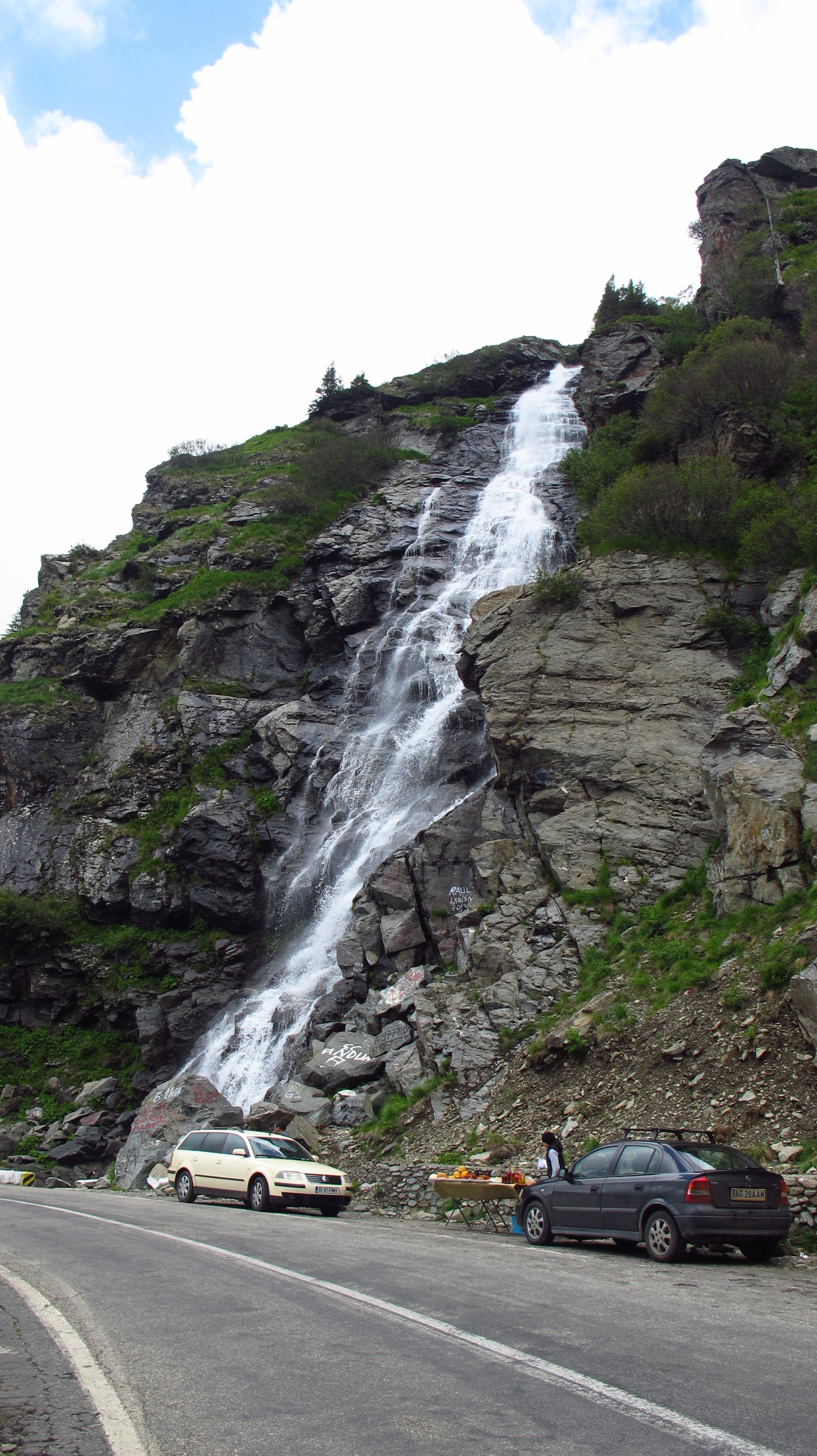
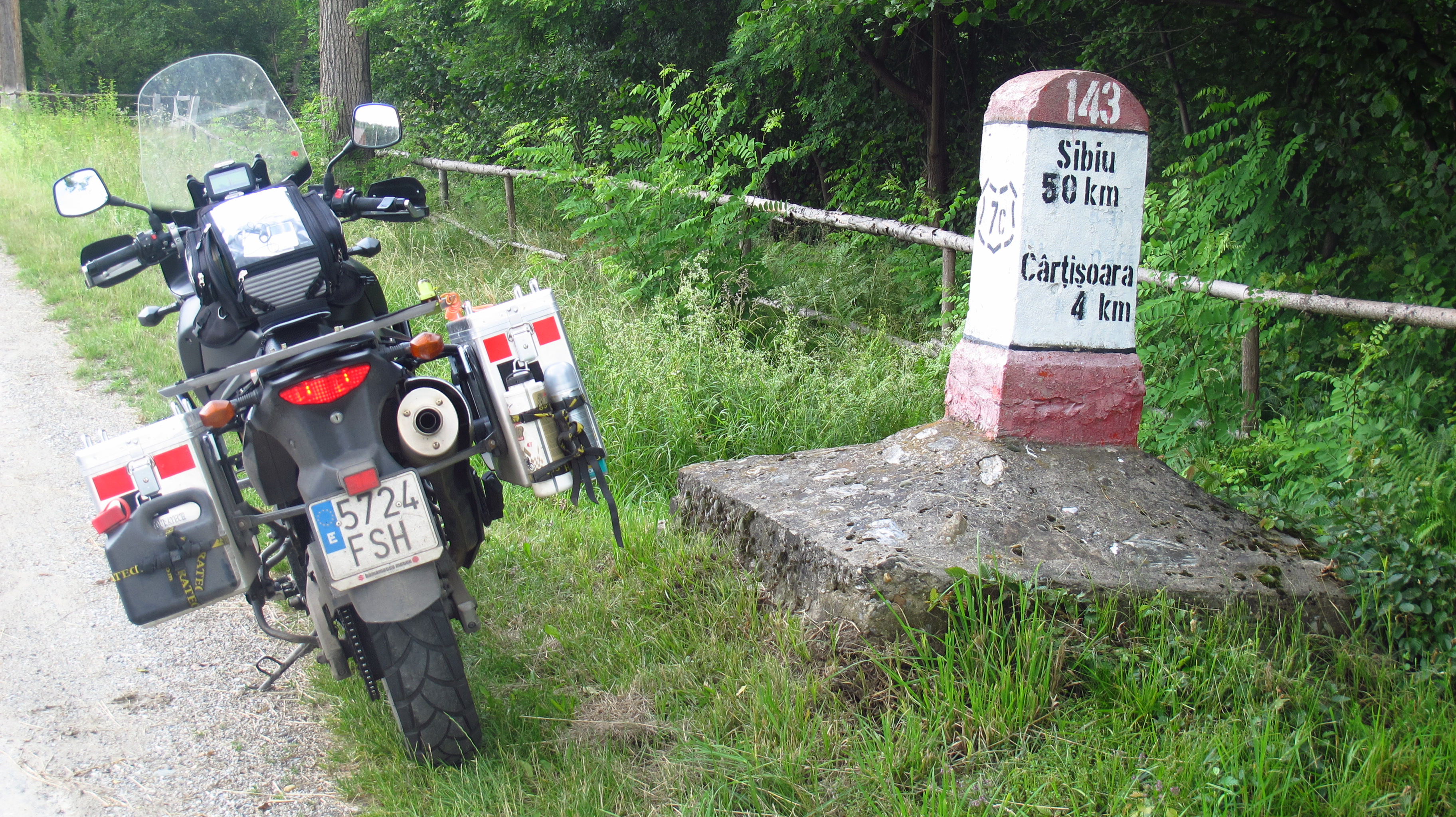
There were two reasons I had taken a 1000km-detour on my route – to visit Dalina and to ride this road, one of the most famous in the world. Build by Chauchescu to be able to move troops quickly across the region, it is simply breathtaking.

Dalina did not wake me up this morning, but my body is still an hour behind, so at 8:30 I was already up and having breakfast, chatting to her father, who remembered how drunk we got last time and told me, half in English, half in Romanian “tonight, we drink!”

I am not going to try and describe the road here, as words would not even come close to what it is. Those of you who watch Top Gear will be familiar with it. I will just post some pictures and, for those petrolheads with enough patience, a video of the whole ride from north to south once I have a connection that is fast enough to upload it.

IMG_6654

IMG_6657


IMG_6659


IMG_6662


IMG_6666


IMG_6669


IMG_6675


IMG_6681


IMG_6693


IMG_6688


IMG_6690


IMG_6692


IMG_6694


IMG_6699


IMG_6700