Kayaking in Matka canyon

Day 18 – Monday 15th August – From Skopje to Matka canyon and back (37km)

The effects of the floods in the city centre were barely visible other than on the river banks, where lots of debris and tree branches could be seen. Aside from visiting the city, the other thing that had brought us to Skopje was Matka canyon, which we wanted to explore by kayak.

I was afraid that it might be dangerous due to the floods, but it turned out that there is a dam which forms Matka lake and regulates water flow, together with the fact that the floods had affected the north part of the city and the canyon was to the southwest, so Goran assured us that there was no problem. He also told us something we did not know – the lake is home to Vrelo cave, a big cave with very interesting stalactite formations and two lakes inside. He also gave us directions to the entrance of the canyon, which was only 18km from the city.

A short while after leaving the hostel I remembered Goran’s directions – ‘straight ahead, you can’t miss it, you can’t miss it’ – while the GPS took us through a narrow road that crossed a neighbourhood on the outskirts of Skopje where we saw exactly zero signs pointing to the canyon. The only sign I saw was when we were already there, so once again I was very glad to have the GPS.

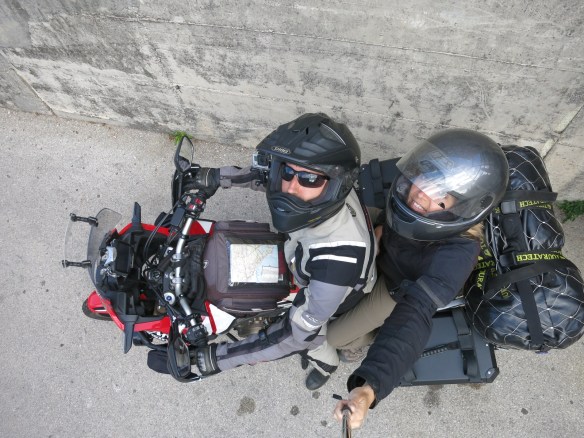
The road ended in a small car park where we saw no signs of a place that rented kayaks (or the lake), but there seemed to be a narrower road going on from the further left corner of it, so up we went on the bike. It became a lot narrower a few meters down, and we realised it was a pedestrian path, so I parked the motorbike on a space by the path and Nat went ahead to ask about the lake and the kayaks.

DCIM123GOPROIt turned out that the dam was right round the next corner, and the kayak place five minutes further up. As we were changing out of the motorbike clothes, a security guard, presumably from the dam, walked past, and I asked him whether it was OK to park the bike there. He gave me a thumbs up and pointed to a security camera I had not seen.

20160815045039After a short walk we reached a place where the walls of the canyon opened a bit wider and found a restaurant and a small wooden hut with a flight of wooden stairs leading down to a jetty where three boats and several plastic kayaks were moored. They told us that two hours were enough to reach the caves, visit them and come back by kayak, and that they also offered tours by boat. Seeing that the kayak was only marginally more expensive and would not only last longer, but give us more freedom, we rented one.

20160815063542This was the third time that Nat and I used a kayak, and I am happy to say that after being able to go on shopping trips to IKEA without getting into an argument, managing to row a kayak in a straight line without shouting insults at each other is a clear sign that our relationship is solid.

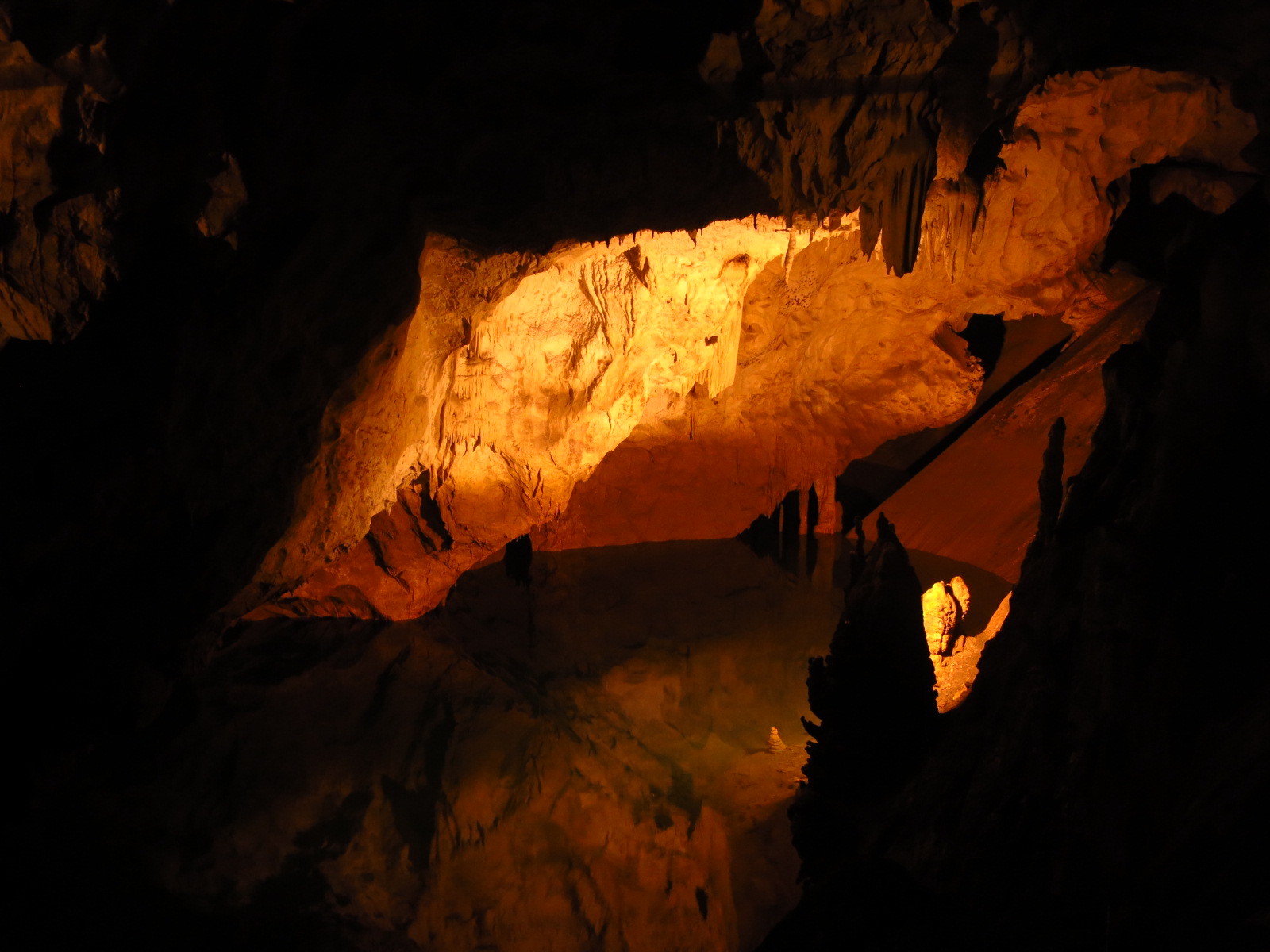
20160815063415The journey through the canyon to the cave provided great sights, and we reached our destination faster than we were expecting. After some amateurish manoeuvring, I tied the kayak to the stairs that led to the cave and we got off just as a boat with a small group was also arriving.

20160815054801That was quite good timing, as we had no flashlights and the guy in the kayak hut had told us that the caves were illuminated but the generator was only turned on by the guides on the boats. We joined the group and profited from light and a short explanation.
The caves were amazing, and it seems that there is a lot more underwater, at least three other caves from what we were told. Not everything has been explored, and they said that it might be the deepest underwater cave in the world. I can only imagine how claustrophobic it might be to dive in those conditions, swimming forward into the unknown through narrow gaps knowing that there is no air to float up to if something goes wrong.
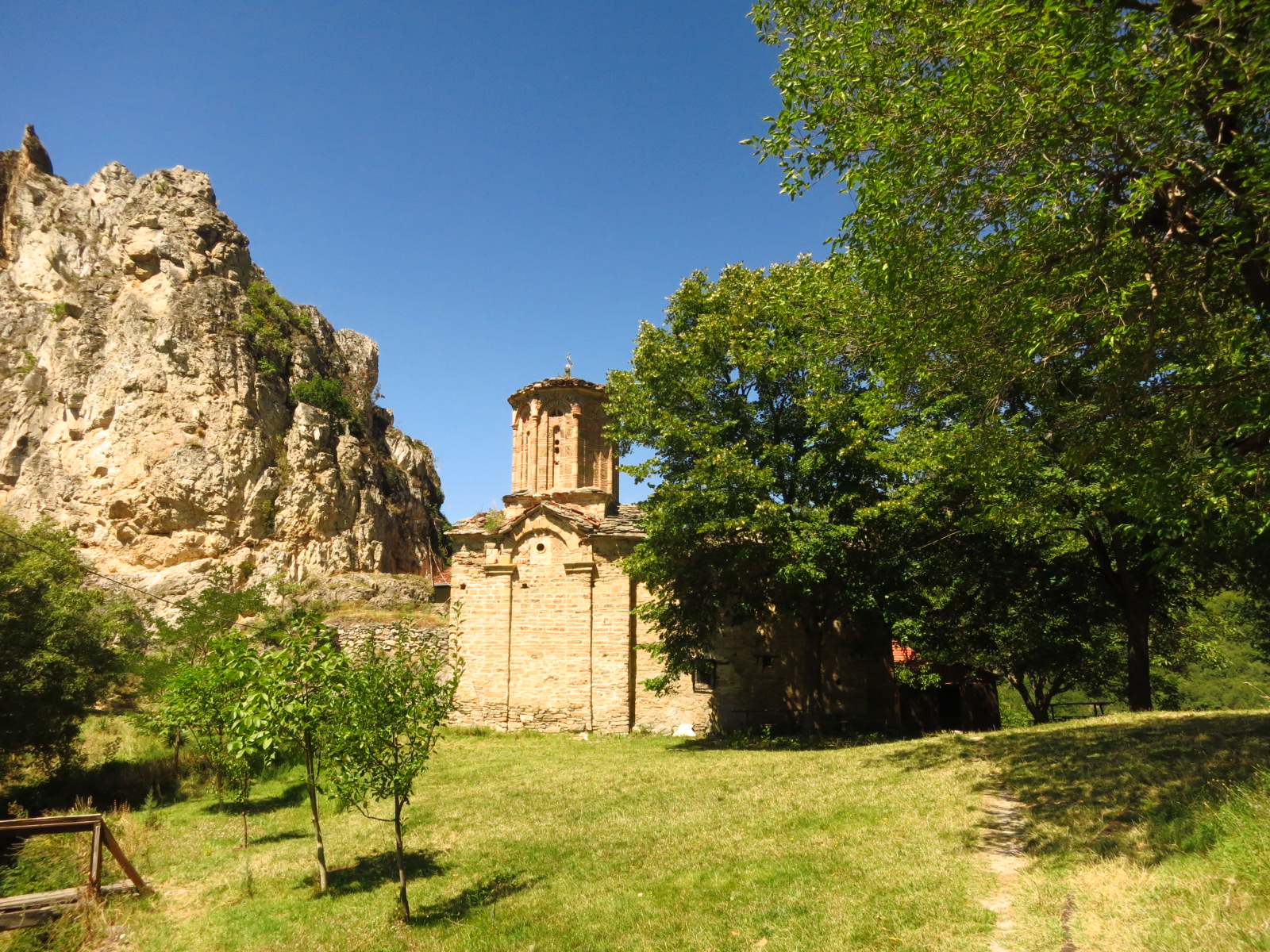
20160815060331We took the way back a lot easier, knowing that we had time to spare, and when we reached the hut they told us that the short journey across the canyon to the other shore, from which a path went up the mountain and to a church, was free for customers who had rented a kayak, so we took the chance to go visit the church. When we got off the boat after the short crossing, the guy warned us about the steep walk in the midday heat and pointed at a metal plate and a hammer hanging from a tree and told us to bang on it to call for the boat back.

20160815073915I am a keen hiker, but I almost had a heart attack on the walk up to the church on that heat… at least the visit was worth it, the church was on a small col where there was also a fountain and what seemed to be some picnic and camping facilities for the people who were hiking the trail that reached the canyon from Skopje, about 16km across the mountain.
20160815073517We made our way back down, I stopped to collect my underpants, which had got wet in the kayak and I had left drying in the sun on the way up, and when we reached the shore I used the high tech intercom to call the boat.

The GPS took us on a much more direct route back to the city in the afternoon, which I imagine was the one Goran was telling me about the day before, and we went back to the same restaurant for a very late lunch, since the service and the food had been excellent the previous day. There we had a long chat with Ace, our waiter, who told us he was volunteering to help the flood victims, and complained that aid was being distributed unequally depending on the political party the victims were members of. If you are in Skopje, do not miss this restaurant – Etno Bar Grill, by the river in the centre.
To Skopje or not to Skopje?

Day 17 – Sunday 14th August – from Prizren to Skopje (104km)

A week ago, while we were in Dubrovnik, we had heard news that a flash flood had affected Skopje, leaving at least a dozen dead, over 60 injured and damaging the roads in and around the capital, and that the government wanted to declare a state of emergency.
After that the news in international outlets went quiet about the matter and the time came for us to make a decision whether to go there and spend two days as planned or skip Macedonia and go on to Bulgaria. We had a booking for two nights in a hostel in Skopje, so we wrote to our host to ask about the situation, and he promptly sent us a reply assuring us that there was no problem in the city nor in the roads leading to it.

20160814050122Instead of leaving Prinzen on the main road to Pristina and then turn south towards Skopje, we took the R115, a small regional road that followed a canyon starting right behind the city fortress where we had seen the sunset and then climbed to well above 1000m through the Malet e Sharrit natural park.

On the other side of the park we joined the main road from Pristina to the border, where we found a lot of traffic and an endless queue at the border crossing.

20160814062021After that the ride to the capital was quite fast and uneventful, but the first impression I got from Macedonia was the worst so far these holidays – after everything we had seen, the landscape was featureless here, dusty and scorched by the sun, with scattered factories and warehouses here and there. At least the traffic was good, and funnily enough we entered the city and rode to the hotel practically without stopping. Not bad for the only capital city we have visited so far.

My bad first impressions went out the window the moment we entered the hostel and met Goran, our host. He let me park the motorbike inside the house garden, offered us a much better room than the one we had originally booked (which was the cheapest one, we are travelling on a budget) with no extra charge and gave us a very comprehensive explanation of the best things to see in and around the city, with recommendations for the best bars and restaurants included. Having absorbed all that information, and after a shower and some lunch, we went to visit the city.

Skopje turned out to be rather more interesting than I was expecting – it gave me the feeling of a city in a state of flow, quickly transforming itself, and it seemed to have a bit of several different cities thrown together in the same place.

20160814112842Walking from the hostel to the centre I saw Warsaw as I imagine it must have been some years ago, with big grey buildings left from the communist era and empty today, waiting to be torn down or renovated, half of the building that used to be the main train station already demolished, the other half hosting the city museum, and the old rail yard, shorn of its tracks, waiting for its future use.

20160814110335I saw Berlin in the frantic pace of construction in the centre, modern buildings creating new city centres. I saw a wink to Prague in the many statues that lined the two new pedestrian bridges and the river banks in a homage to the most prominent figures of the Macedonian arts, culture, education, politics and religion.

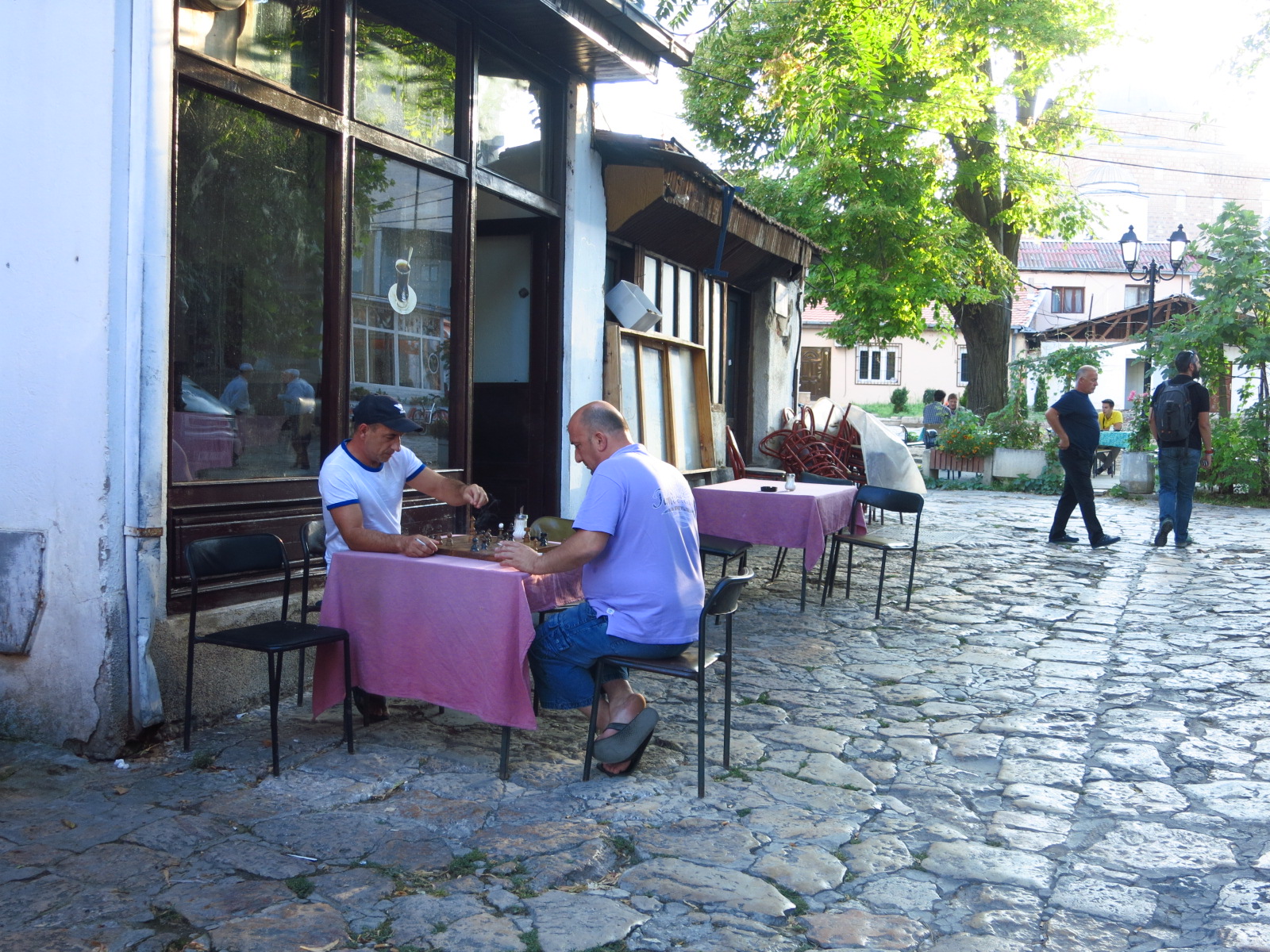
20160814120404I saw Sarajevo in the old town, walking along cobbled streets lined with tiny wooden storefronts, men sipping tea in street cafés and the sight of a mosque rising above the tiled ceilings.

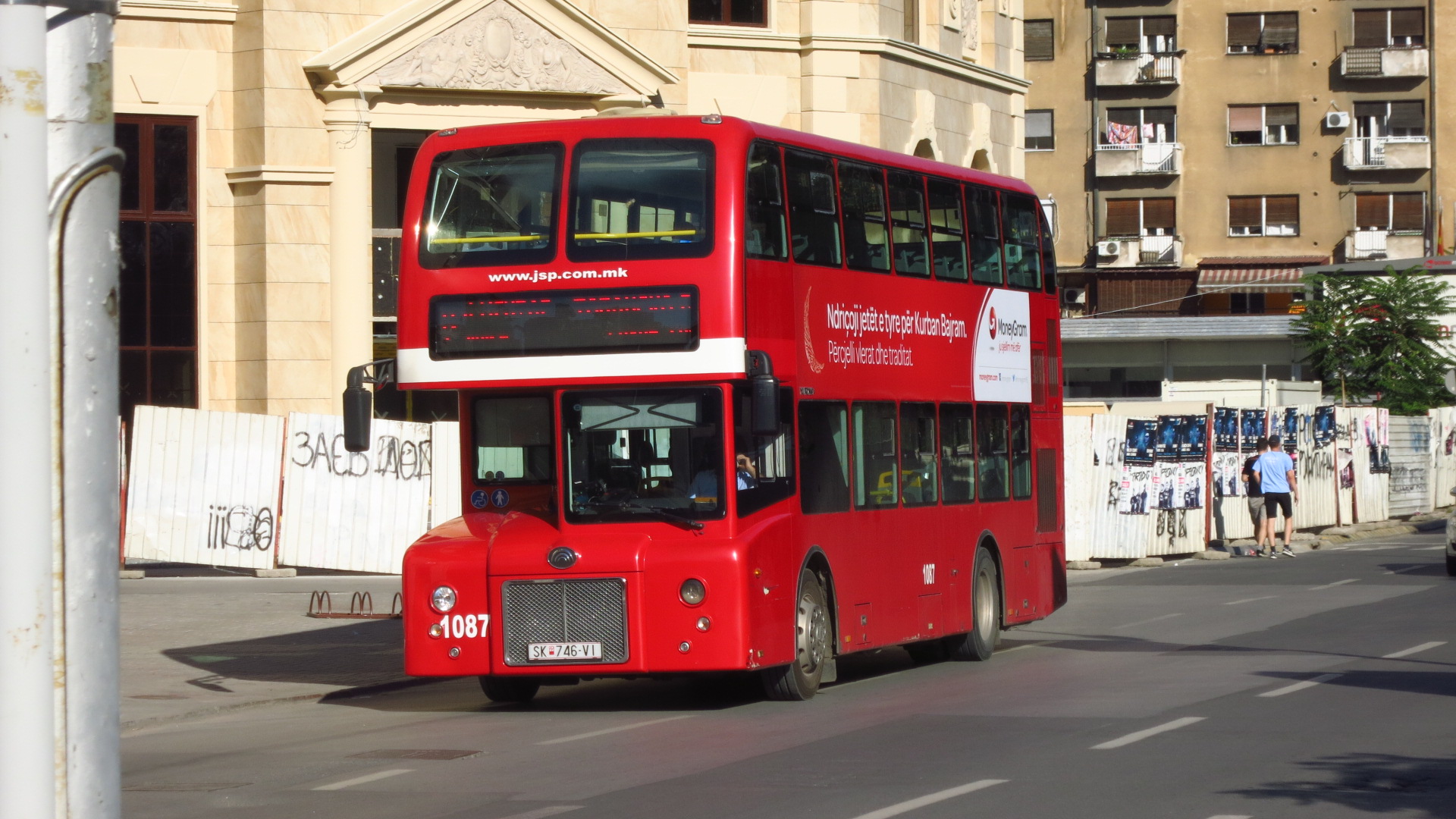
20160814123619I even saw a tiny bit of London in the red double decker buses that run around the city.

20160814110347We took all this in, we knew absolutely nothing about the city and we arrived here with no expectations or pre formed notions, so we were blank canvases for the city to paint itself on us in its purest form. We gazed at another sunset form another old fortress and then had an absolutely delicious traditional Macedonian meal at a restaurant Goran had recommended.

20160814131208I have always said that each and every capital city has its own very strong personality, and this was no exception. We strolled back to the hostel leisurely, glad that we had decided not to skip the visit.

20160814155203

An old ferry and a young country

Day 16 – Saturday 13th August – From Shkodër to Prizren (140km)

Lake Koman is not a natural lake, but a reservoir with at least two dams and power stations. After they were built and a vast valley area covered with water, a ferry service was established to serve the local villages. Now, it is important to put that statement in the right perspective – this is Albania we are talking about, so when I say ‘villages’ I mean one or two houses at most and the ferry itself was quite an adventure.

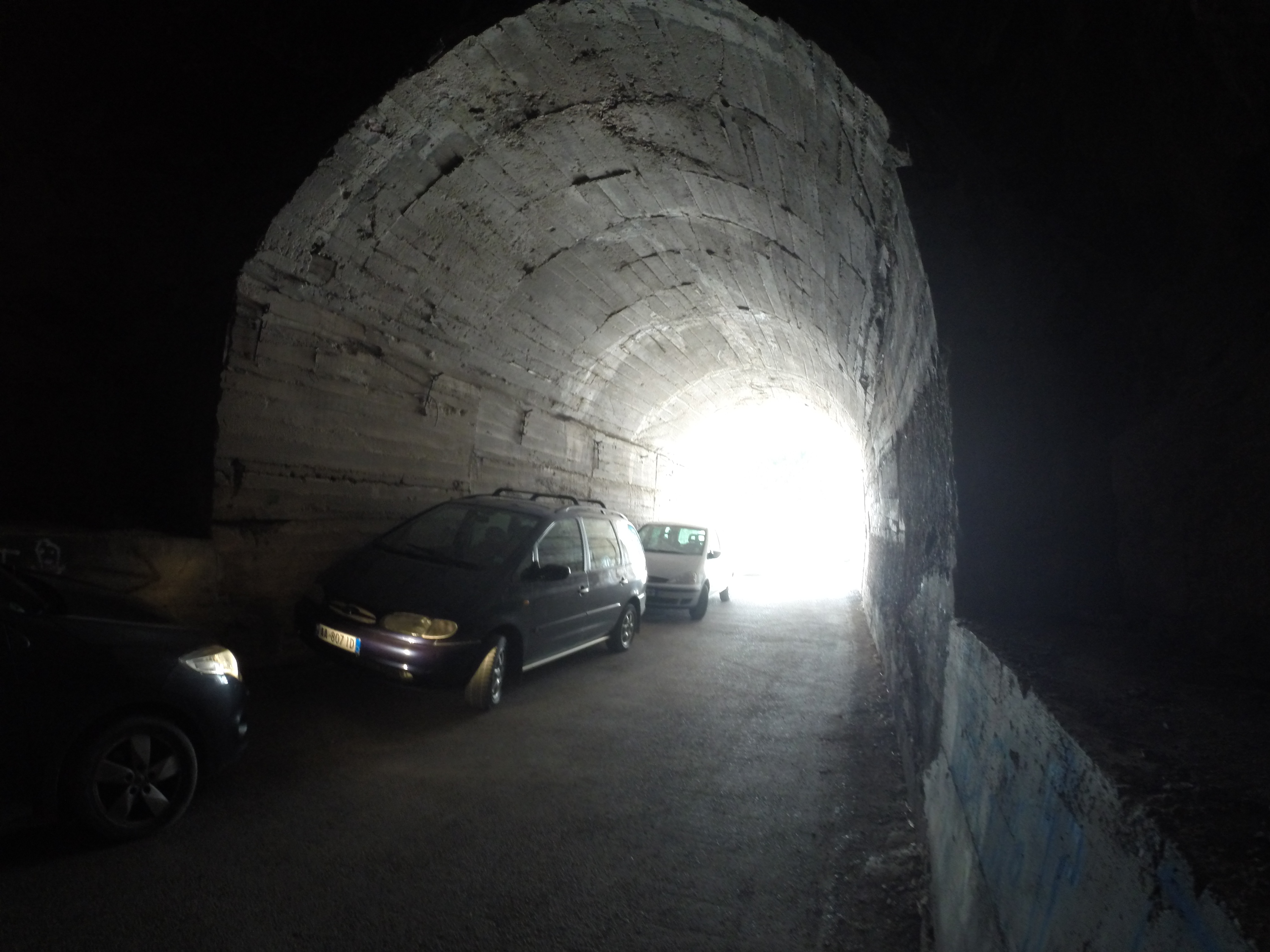
20160813035453We had seen that there was only one ferry per day to Fierzë, leaving at 9:00 and we made it to Koman with about 20 minutes to spare. The road there had been a similar affair to the one in the natural park the day before, only this time it did not turn into a dirt road even thought it was so damaged at some points that it was close to it. At the foot of the Koman lake dam it went into a tunnel cut in the rock which according to the map lead to the reservoir and the ferry docking point. Just before the end of the tunnel we saw cars stopped and a van that was blocking the way out onto the dock and seemed to be unloading passengers, so we stopped and waited for it to finish.

Before I had time to go and have a look outside the tunnel a guy who seemed to be working for the ferry walked up to us and asked whether we had booked tickets for the crossing. Erm… no, we did not know that we could or had to book in advance, but seeing that in about five minutes six or seven more cars had arrived and parked behind us in the tunnel, I started to worry about it.

DCIM123GOPRO‘No problem, no problem, I find you place, I call you’ said the guy and went out of the tunnel again. The van had finished unloading passengers but it was not moving, so I decided to go out onto the dock and see what the situation was like.

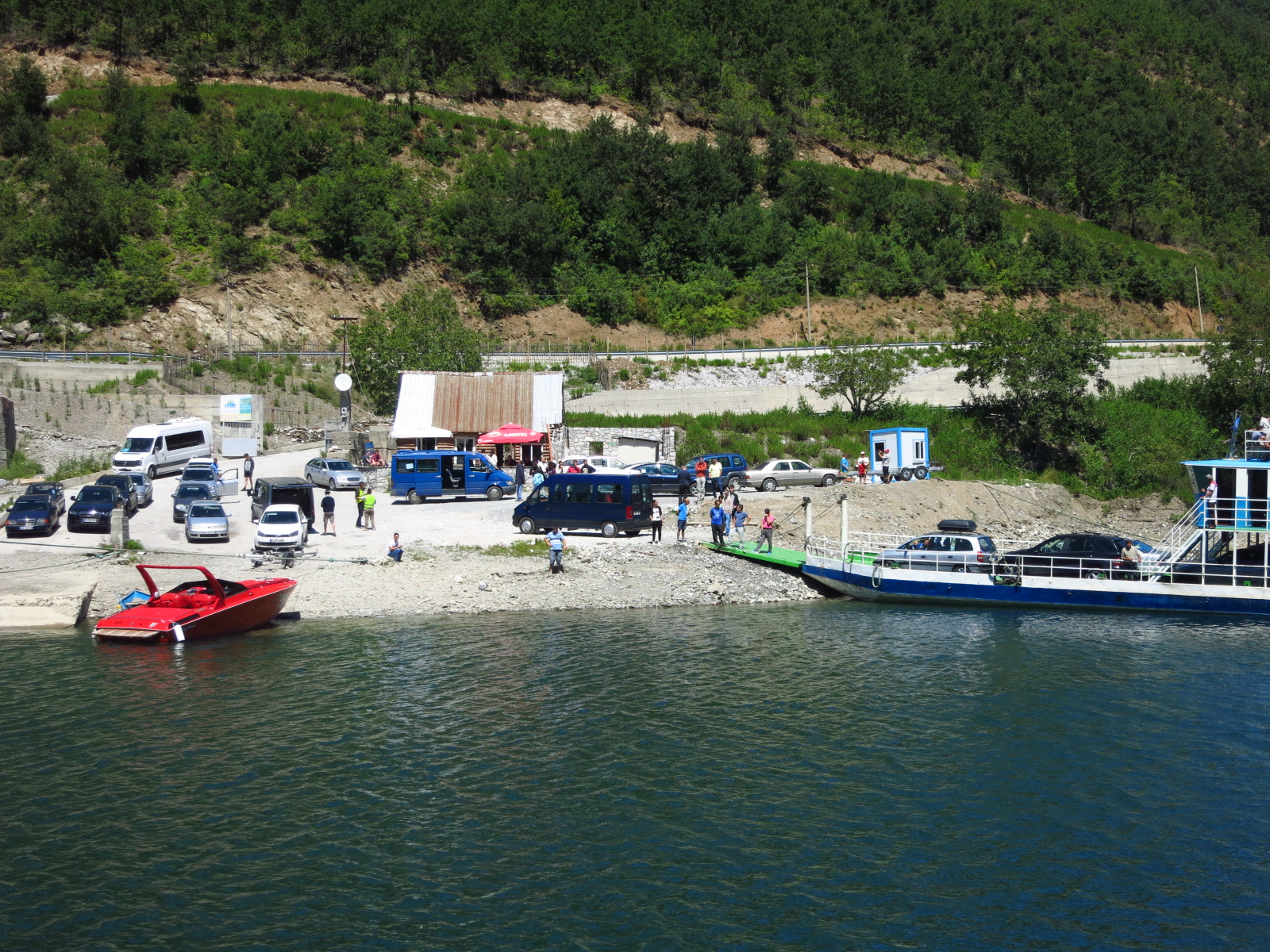
DCIM123GOPROI walked out of the tunnel and found myself in the middle of complete and utter chaos. The dock was tiny, and there were more than a dozen cars and vans with whole families and even animals in them, parked with no apparent order at all, pointing in all directions and covering every inch of space available, it was like a Tetris game gone very, very wrong. On the water there were two car ferries and a passenger one, half full of vehicles that wanted to get off but could not, and I was standing right in the middle of all this, watching the scene in motorbike clothes and eating a banana we had just bought from a street vendor. I could not have looked more out of place.

In what can only be described as the most amazing combination of life-size tile puzzle and logistics, the ferry guys, moving one car at a time into gaps they made out of nowhere managed to get the cars off the ferries and down the tunnel, some of them in reverse until the other end, no mean feat considering that the tunnel was long, steep and with corners inside, and started loading the waiting cars.

The dock itself was very basic, the ferry loading ramp was very narrow and there was a huge gap between the both that some guys had tried to cove with an old mooring rope. Cars went on board bumper to bumper, and the staff even lifted the back of a VW to push it closer to the railings and make room for one more car that went on sideways and with one wheel left on the ramp.

Most people were locals and seemed used to it, but this last car belonged to an old Swiss couple that nearly had heart attack trying to get it on board.

Once the operation was complete the guy from earlier came to find me and said that there was room for the bike. I looked and the only room was a tiny gap next to the loading ramp. The ferry’s old diesel engine was already coughing into life, and he urged me to go get the bike. There was no corridor left in the dock, the space that had been created to unload the cars had been filled again with more cars that kept coming, so I had to zigzag around bikes, down behind a small car, up in front of it, over a mooring rope, down the slippery ramp and sideways onto the wooden deck wedging the bike between the post that held the ramp cable and the VW. The deck was not flat there, so I could not leave the bike on the side stand because it would fall on the VW, and there was no room to pull it back onto the centre stand. The guy who was helping me keep it standing gestured to me to tie it to the ramp post, but gave me no rope. The ferry was already pulling back from the dock, so I was left on my own to undo one of the straps holding the rack bag and tie the bike to the post while pushing it with my body to prevent it from falling over and trapping me against the VW.

With the bike seemingly secure, albeit too close to the edge of the deck for my peace of mind, I went to the upper deck to enjoy the journey. Full to the limit of its capacity, the ferry started to slowly move over the surface of the lake against the strong morning wind, with the water line worryingly close to the deck. There were no life vests nor floats, and the boat literally seemed to have been built welding together pieces of scrap metal and using old truck parts. It was quite an experience.

The dock in Fierzë, which we reached after a three hour long journey comparable to a cruise in the Norweigian fjords, had a lot more space but to be honest, there was no dock. The ferry just came as close to the shore as possible and lowered the ramp on a slope of gravel and rocks.

20160813065815 The cars made it out the best they could, wheels spinning and the crew pushing, and then we pushed the bike backwards up the shore.

Glad to have made it in one piece, we left the dock ad stopped at the first restaurant we found, where a very nice waiter offered us half a kilo of fish just caught from the lake. A welcome feast after the ferry experience.

20160813085731From the dock to the border the road was excellent, and we made it to the next country in no time.

A few posts ago I said that you should always listen to advice from the locals when travelling. Unless, apparently, said local has left the country in search of a better life. A very good friend of mine works for the EU in Brussels and when we told him about our intention to visit Kosovo he very kindly asked about the country on our behalf with a colleague of his who is from there. She said that there was ‘poverty, misery and nothing to see’ there.

Well, I am happy to say that at least in the southern part of the country the landscape was beautiful, I had a great ride from the border in the mountains to Prizren, were we were spending the night, and the city itself was a very pleasant surprise, the old town bustling with life in small bars and street cafés and restaurants, surprisingly similar to Sarajevo.

20160813121155We walked up to the town fortress from where we enjoyed a stunning sunset with the sound of live music from a band that was giving a concert there, and had dinner in one of the restaurants in the old town before heading to the hostel, where they had provided space in a car park with CCTV for free.

20160813133150

Off the road again

Day 15 – Friday 12th August – From Theth to Shkodër (73km)

The only plan for the day was to ride up the dirt track, out of the valley and back to Shkodër to spend the night there before heading to lake Koman the following day, so for the first time in quite a while there was no need to get up early. That doesn’t mean, however, that we got to sleep until late – we were in the same time zone as back home but a lot more to the east, so the sun was up and shining before 6:00, and our room did not have any blinds or shutters. It did not even have windows that shut properly, so I had spent the night under a blanket and a duvet.

With no alternative but an early start of the day, we took our time to enjoy the breakfast that was included in the stay, as copious as lunch the day before, and to wait for the sun to dry the track a bit. We had a chat with the Italians, who told us that they had had a hard time indeed to ride their bike down and that they were also leaving today.

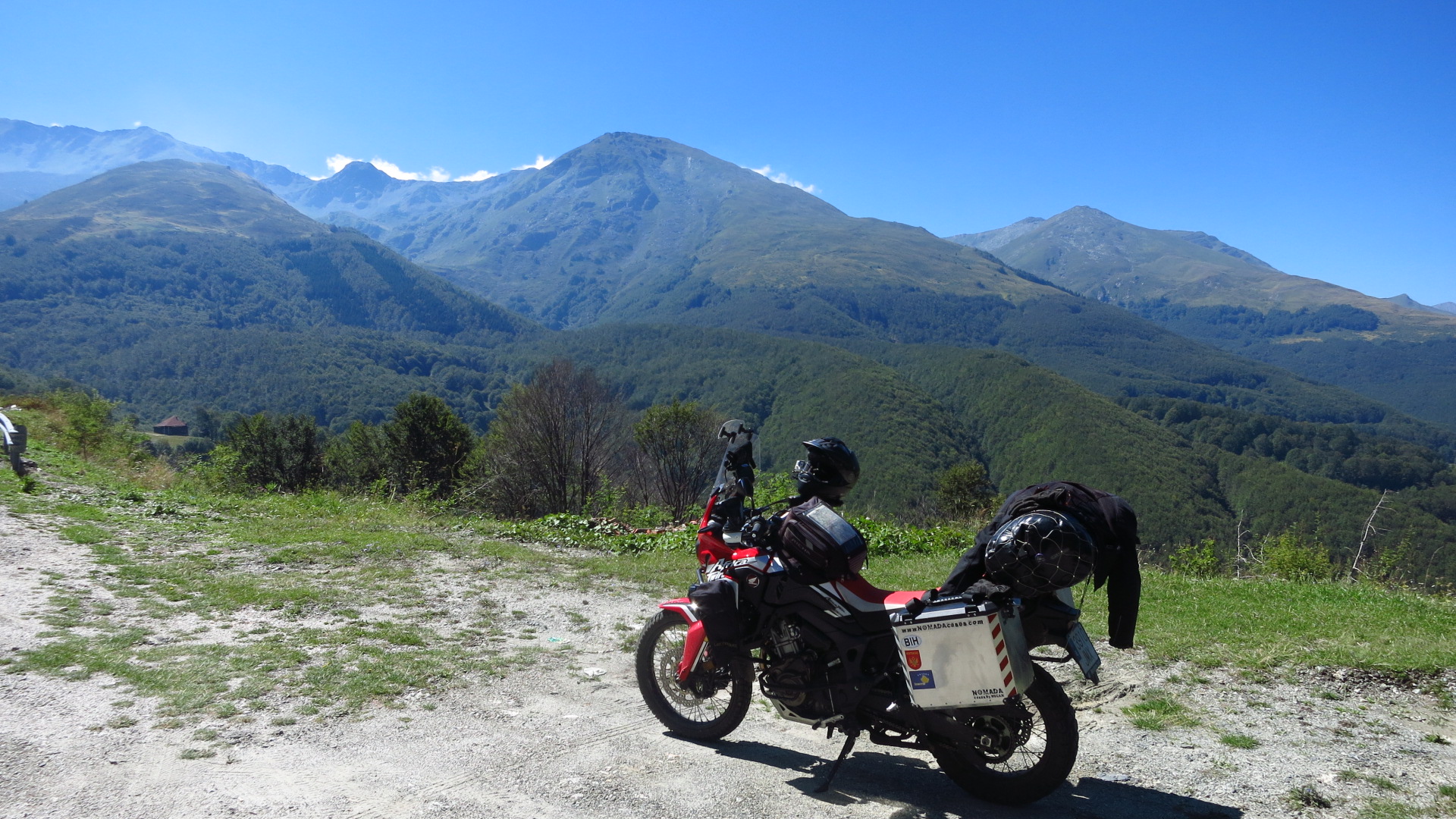
2016081202531320160812032308Having loaded the bike and said goodbye to our host family we set off, ready to tackle the track. I am very happy to say that if you are expecting some thrilling tale of us pushing the bike through mud, picking it up from the ground repeatedly and generally having a miserable time, you’ll be disappointed. Despite the mud at some points, some poodles and several 4x4s coming out of tight corners too fast, we had quite an enjoyable way back. In fact I had quite some fun, and the bike performed flawlessly, swallowing rocks, gravel, potholes, mud and poodles without flinching. We even had time to stop and enjoy the wonderful views down the valley.

201608120520172016081205474420160812060631Back in Shkodër we checked in the same hotel we had been in two days before, went for a beer in the centre and early to bed – we were getting up at 6:00 the following morning to make it in time to catch the ferry that crosses lake Koman.

20160812122916

The Albanian Alps

Day 14 – Thursday 11th August – From Shkodër to Theth (72,3km)

The plan for today was to ride north to the … natural park, see the area, maybe go for a bit of trekking and spend the night there. It was only 70 km away and according to the map the road should be good – it was marked as a main one and it led to the most important natural park in the north of the country, after all.

We left Shkodër at 8:00 on the road leading to Podgorica and a few kilometres out of the city turned north following a sign that pointed us to the park. The main road turned immediately into the same kind of thing we had found in the lake in Montenegro – very narrow and bumpy, but at least there were no potholes and there were petrol station in most towns we rode through.

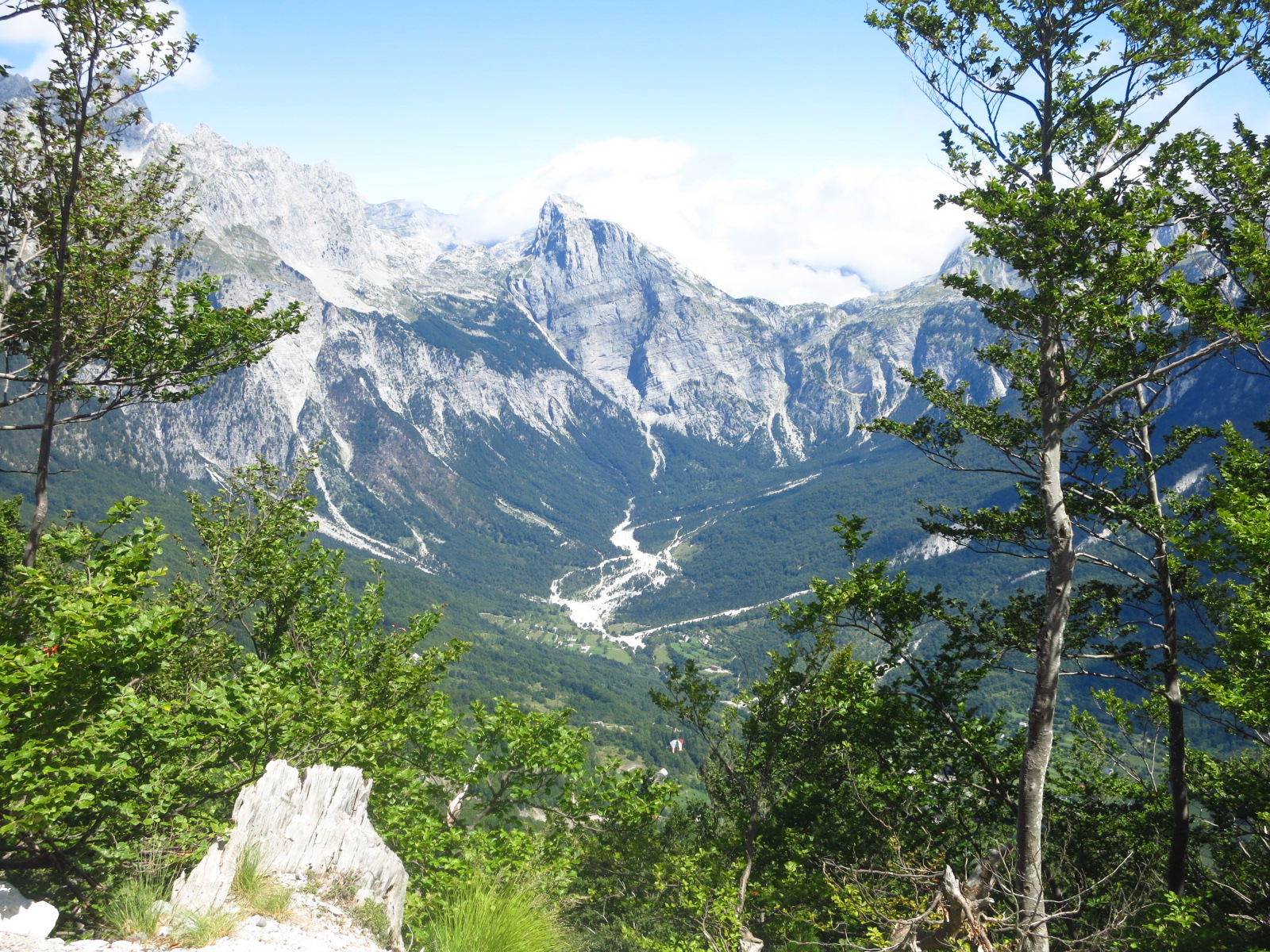
20160811034626In front of us great mountains stood high against the morning sky, making it clear that this park was wilder than Plitvice or Lovćen – these were the kinds of mountains I was used to finding in central Pyrenees. The road started climbing higher and higher and to my surprised it became much better – still narrow, but newly resurfaced, so it was a pleasure to ride. We kept gaining altitude along a valley, passing some very slow old vans full of people – the local buses – until we reached the end of the valley, where the road climbed along the steep mountain side in a series of hairpins and culminated in a pass… where it ended.

20160811103332I had read that this is a common occurrence in Albania – if the map says that there is a road, there will be one, but it is impossible to know how wide it will to be, or in what condition, or whether it will be paved or not, and quite often the road just ends and there is a dirt track like the one we had just found with 11km to reach the town of Theth, our destination. It should also be noted that we had seen just one more sign after leaving the main road, announcing that we had entered the natural park, but there was no access control booth, tourist information centre, or signs indicating trekking routes. Zero infrastructure, just the mountains, which by now resembled more the Alps than the Pyrenees.

A bit further down the dirt track we found a wooden hut that seemed to be a bar and stopped to ask about the road ahead. Parked in front of it there were a Swiss and an Italian on KTM 990 Adventures who asked us if we had some extra petrol. They had come up the same way as we did, had been having too much fun and had not filled up in the last town.

Some locals told us that the road was OK, and there seemed to be quite a lot of traffic, although it was all 4x4s and vans. We decided to go ahead, and even though I even saw two or three regular cars, at some points the road was the kind of place people from Western Europe would not even dream of driving their SUVs through. The guys on the KTMs stood up and attacked the road with pleasure, but I had a much harder time taking a fully loaded bike with a passenger down the road into the valley where Theth was.

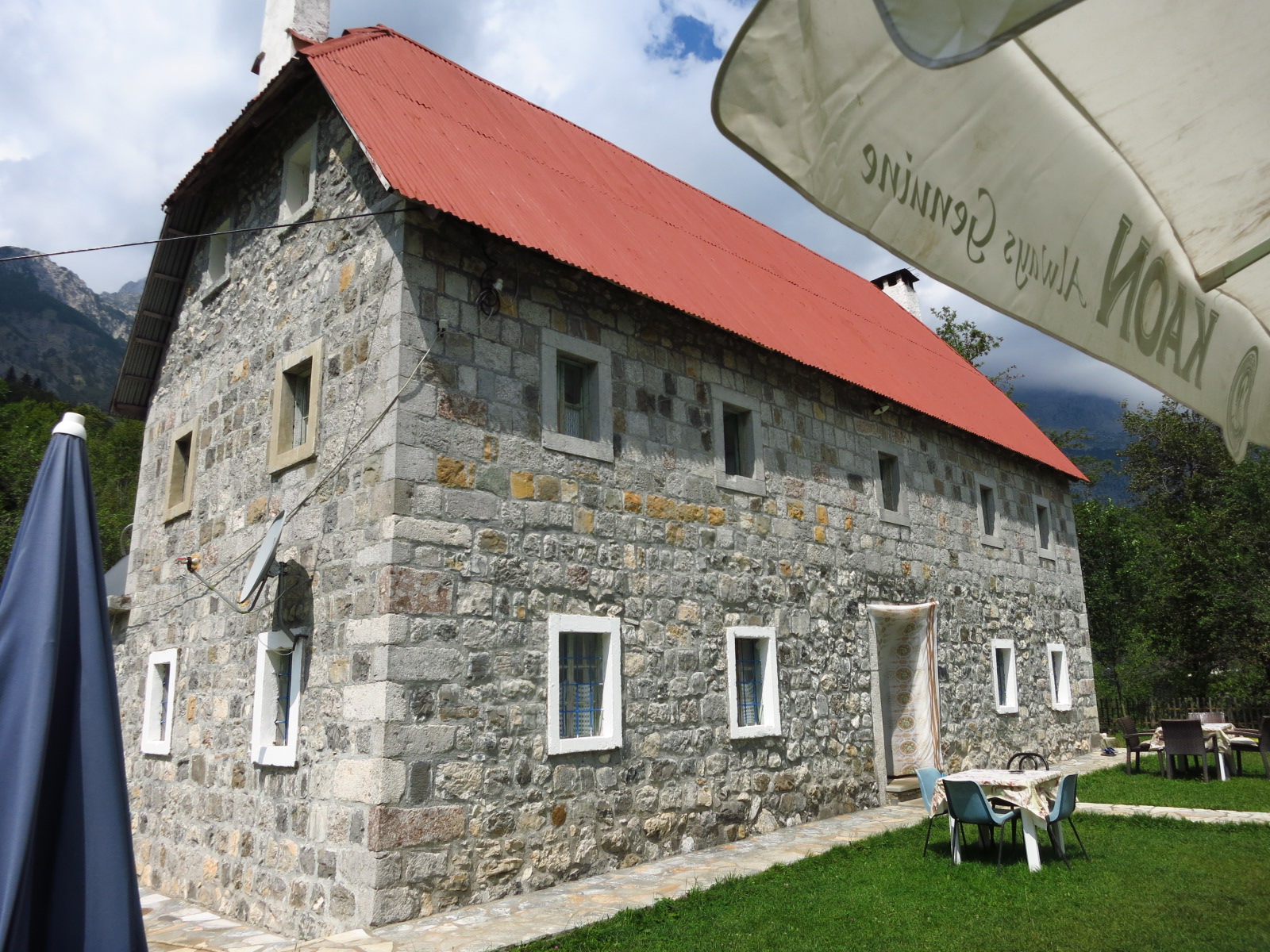
20160811065534Even though maps mark it as a town, Theth is more a few scattered houses with no streets, no shops, no service and a crappy dirt road connecting it to the rest of the world. One of the most important towns in the natural park was the very definition of unspoilt territory, what I imagine the Alps looked like centuries ago, before tourists, ski resorts and guided treks.

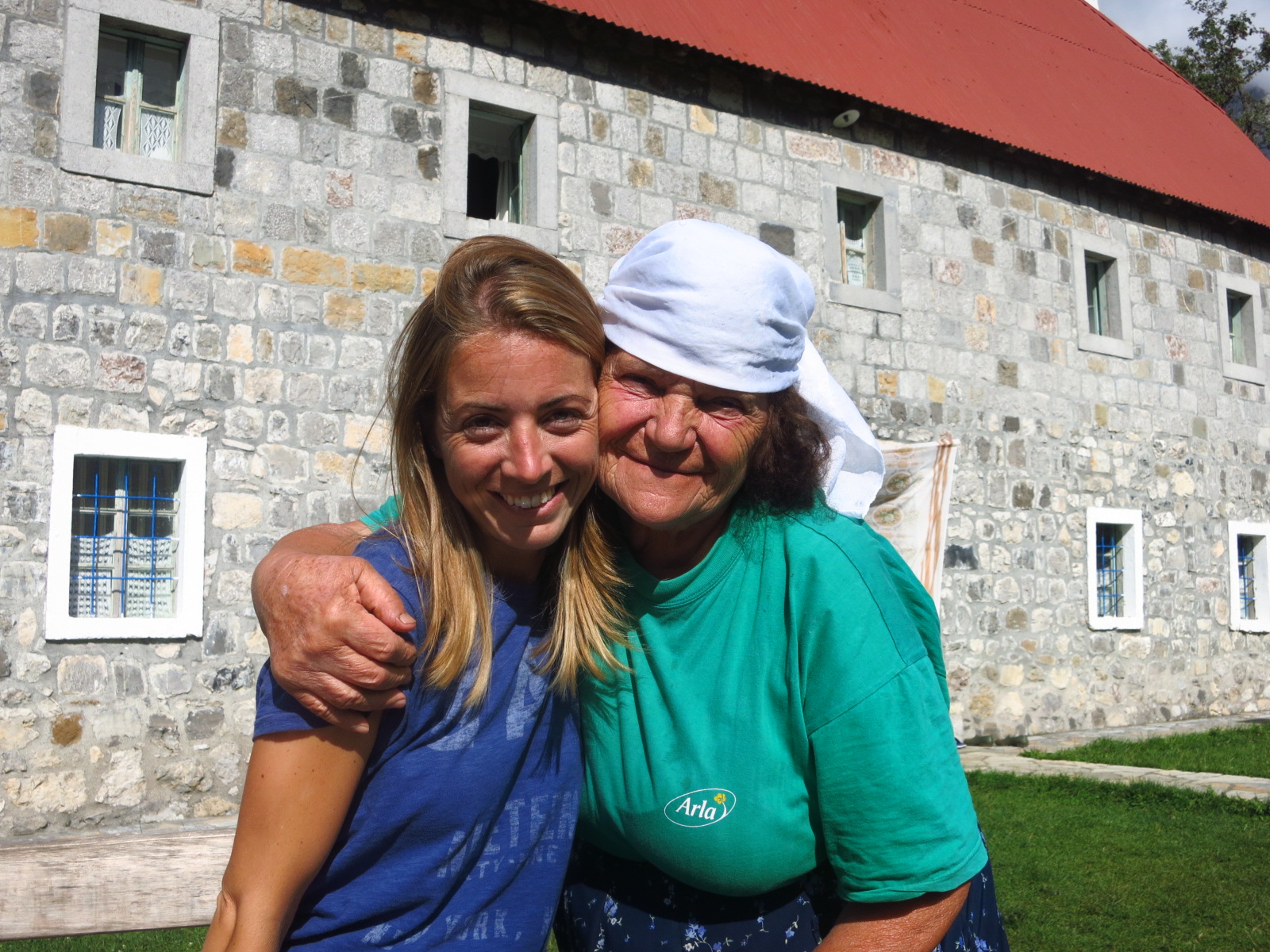
20160811054908In spite of all this, we had found the house we were going to stay in through Booking.com, and there were plenty of other houses in Theth on the web. The house was a three-storey stone farmhouse where a local family rented three rooms, and immediately after our arrival the youngest son, who spoke some English, introduced us to the whole family, including a grandmother that greeted us with a bear hug. It was midday, and after asking us whether we were vegetarians, they served us one of the best meals I had ever had, all locally sourced, I’m sure. Popping to the supermarket is just not an option here.

20160811073554In the afternoon we went for a walk down to the town ‘centre’ – a walk through the forest until we found more houses and the river at the bottom of the valley – and saw that there was a school which seemed to be in use. Well, at least one classroom in the ground floor, as the upper floor looked abandoned and the roof was damaged.

2016081110440120160811100641

2016081110462620160811104804We kept walking down the valley trying to find the way to a waterfall that seemed to be a main attraction here, but there were no indications. We asked around and were surprised to find a fair number of tourists, and then we discovered that this is the starting point for many trekking routes, including what is known as the Peaks of the Balkans Trail, a 10-day trek that crosses into Kosovo and Montenegro – something to take into account for a future holiday.

Still looking for the way to the waterfall we saw a sign to the local museum.

20160811111447 And decided to go visit it. As you can see, the access had been adapted for the disabled.

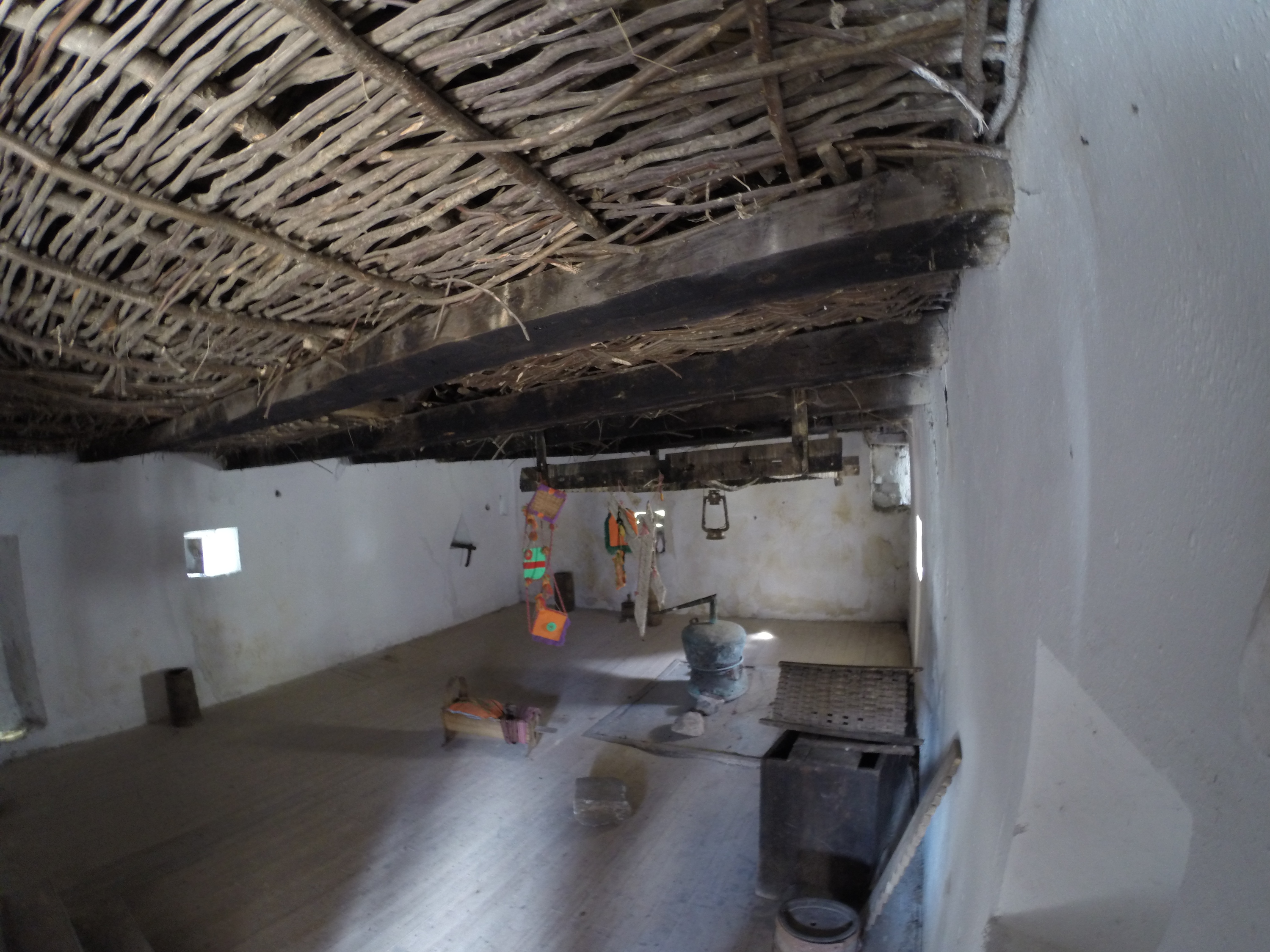
20160811112652The building that hosted the museum had two floors – on the ground floor there was a stable which was in use, and on the upper floor the ethnographic museum itself, with the exhibits divided in two rooms.

2016081111190220160811112408

DCIM123GOPRO

DCIM123GOPROOn our way out we saw what we assume were the curators, as they were the only living creatures around.

20160811112544Back on the main ‘street’ we found another guesthouse were we finally got directions to the waterfall. We walked until it was on sight, but it was getting late and we had no torches for the way back, and the sky was getting cloudier and cloudier and we heard some thunder behind the nearest peaks, so we decided to head back, as it was quite a long way up the valley to our house.

The rain caught us just as we were walking past the school and we ran to take refuge under the porch, where we waited for an hour watching the deluge and thinking that the dirt track would be in atrocious conditions for the ride back up the following day.

20160811135359When we got home I was surprised to see a Honda CBF1000 with road tires parked next to my bike. If I had had a hard time getting here, that guy must have experienced hell. I asked in the house and they said that it belonged to two Italians that did not know that the road was like that. Well, no wonder. There is no warning anywhere that the road is like that, and looking up Theth online one imagines a quaint mountain village at the doors of natural park, so I imagine they were not the only ones who booked a room in one of the many available guest houses thinking that this was a popular tourist destination easy to get to.

We’ll see what happens tomorrow when we have to ride that track back.

Another ‘best road in the wooooorrrrrld’?

Day 13 – Wednesday 10th August – From Kotor to Shkodër (209.1km)

Today was the big day – Albania! I was very excited about this, I had heard lots of things about it, mostly contradictory – that it was a beautiful country, but the roads were the worst in Europe, that its people were very kind but it was the place where many stolen vehicles from Europe end up in… But all that would have to wait. First we had a whole day to cross Montenegro and experience some deep contradictions.

On the agenda for the day were a ride into Lovćen National Park to see Njegoš mausoleum, atop one of the highest mountains in the Kotor Bay area, a visit to the coastal city of Budva, where we wanted to see something called ‘Mini Montenegro’, a town built on a small island connected to the coast by a narrow bridge, and a long ride along the southern shore of lake Skadarsko before crossing the border into Albania and stopping for the night in Shkodër, the first big city on the Albanian side. A complete day, then.

20160810041018_1Njegoš mausoleum is built on Lovćen peak, overlooking the Kotor bay. Njegoš was a Lord, bishop and poet of great importance in Montenegro who wished to be buried in the mountain that he had seen all his life from the town of Cetinje, where he was born. The story has it that he built a chapel there, but when he died in 1851 bad weather and an ongoing conflict with Turks prevented his people form burying him there. More than a century later, between 1970 and 1974, the Yugoslav government built a mausoleum on top of the mountain to honour his wish.

20160810032325The most direct way to access the peak from Kotor is the P1 road, which takes you from sea level to almost 1,600m through more than 30 heart stopping hairpin corners that make the Stelvio pass pale in comparison, with an breath-taking view of the bay to complete the experience. Not that you want to get too distracted while driving it, mind you – there are few protections separating you from the edge of the cliff, and from time to time a local zooms past the opposite way not caring much about the fact that there is very little space for two cars to drive past each other. On the other side of the mountain, the M23 road down to Budva, on the coast, is faster, wider and with great mountain views. I don’t know how these ‘best roads in the world’ articles are written or how the roads are selected, but I am sure that it is impossible for them to take into account all the roads in the world. Well, here is one that should be high on any of those lists, do not miss it if you come to Montenegro.

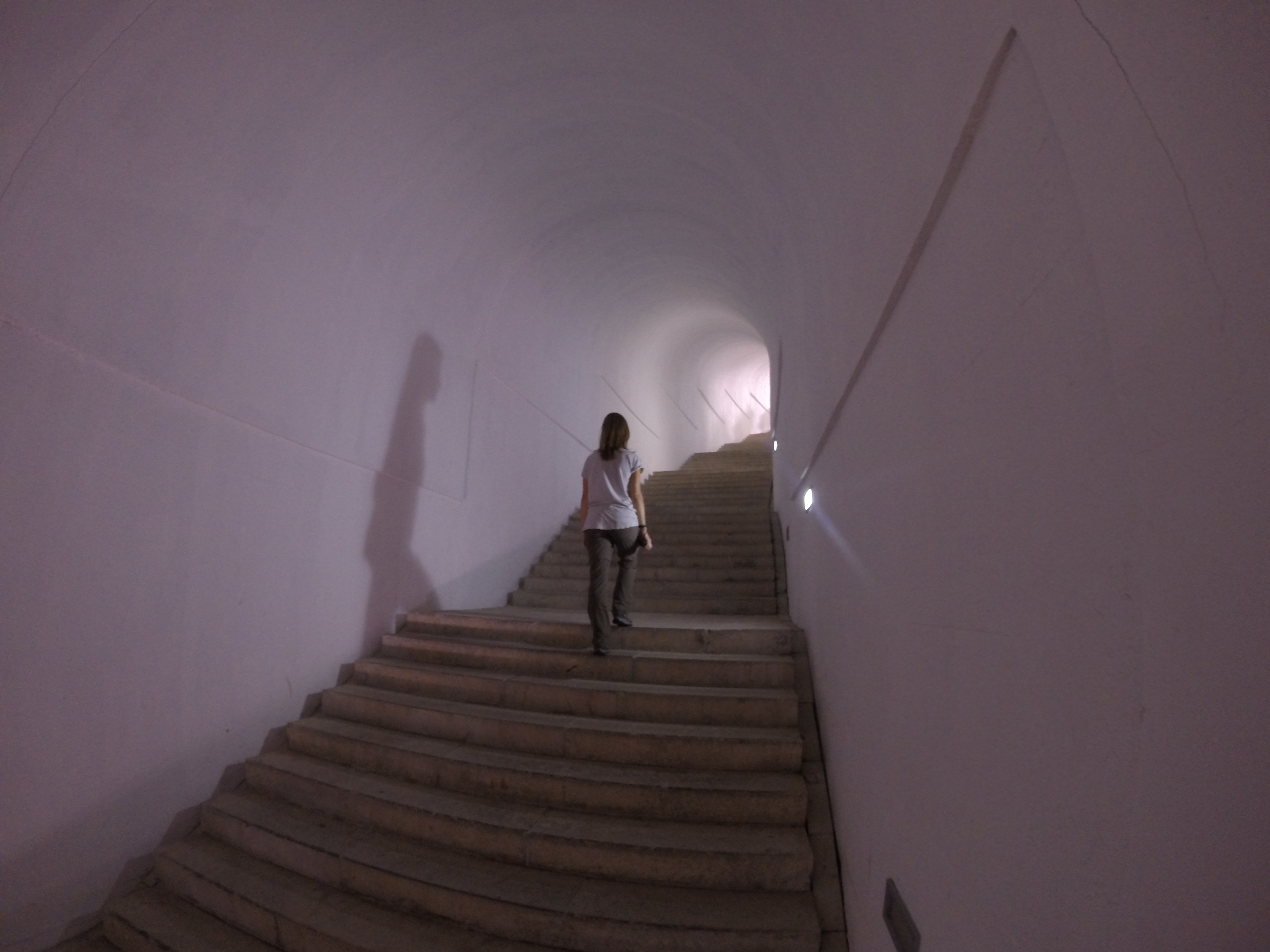
DCIM123GOPROThe mausoleum is also worth a visit, you access it via more than 400 steps through a tunnel that ends at the very peak, and it contains a huge statue of the poet carved from a single block of granite and a ceiling covered in real gold.

DCIM123GOPRO

DCIM123GOPROAfter a great ride down we reached the town of Budva, a popular coastal destination around here. We did not go into it, as the ‘Mini Montenegro’ we wanted to visit was a bit more to the south, but to my eyes it did not look like the kind of place I would like to go to – big hotels and gaudy blocks of apartments, and the usual dreadful traffic.

A few kilometres down the road we followed the signs to Sveti Stefan, which is the real name of what we had seen advertised in tourist agencies in Kotor as ‘Mini Montenegro’ and found a supposedly two-way street packed full of parked cars where it was almost impossible to make any progress at all. At the end of it, nowhere to park, not even a motorbike, except for a private car park full of luxury cars where they informed us that it was 2€ an hour. Tired of manoeuvring the bike in the stifling heat, I decided that we were not going to spend more than that visiting the town, particularly in riding boots and trousers, so we paid and parked.

We had just set foot on the pedestrian bridge that connects the beach to the town when we heard a voice behind us shouting ‘Sir, Sir, you can’t go there, it is private!’ I turned around find a textbook example of a security guard – tall, burly, shaven head, sunglasses, earpiece, the lot, who explained us in a condescending tone that the town was a hotel and that access was restricted to guests only. I looked down the walkway at the town, then at the guard again. ‘The whole town?’ I asked. ‘The whole town’, he replied in a tone that said ‘get your filthy boots of my bridge, you lowlife’.

20160810062304We looked around and saw that access to the beach on both sides of the town was also barred by security guards, and that everyone around us was getting off high-end cars or luxury airport shuttle vans and wearing watches that must cost more than my bike. Well, ‘fuck the rich’, we thought, and got the bike out of the car park and the hell out of there.

It was well past midday, and the heat was becoming unbearable, so we headed fast to the interior in search of the road that followed the south bank of lake Skadarsko and a cooler place to stop and eat. With the traffic, the heat, and the disappointment of Sveti Stefan, I was thinking that if I heard the words ‘beach’ and ‘holiday’ in the same sentence anytime before 2030, I was getting a divorce.

20160810080722Fortunately, the road along the lake was very nice and we found a nice spot under the trees of a small war memorial monument where we had lunch, so my mood improved soon.

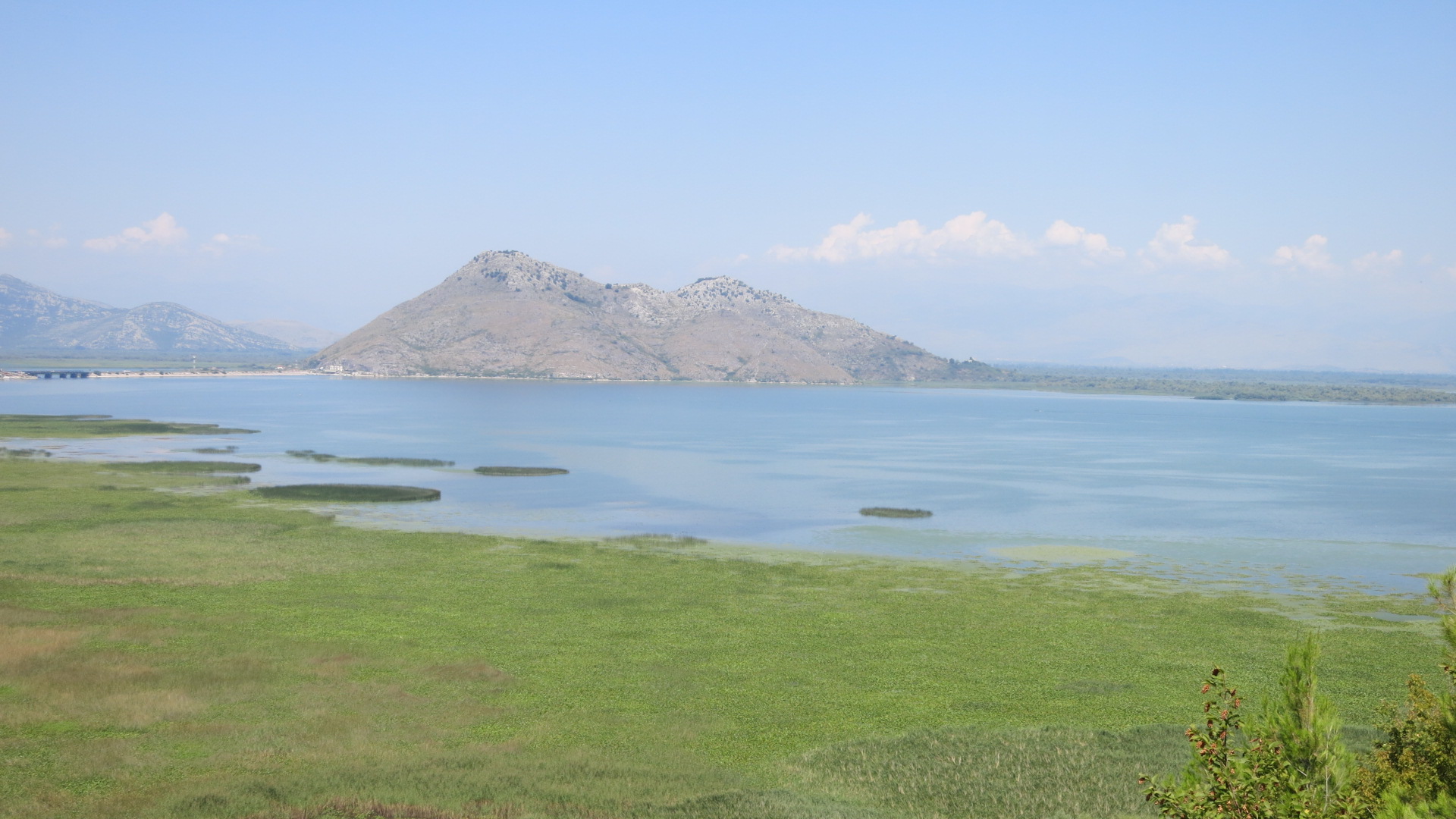
20160810083247According to the map, this was the second main road south of the lake and to the border after the coast road, but it definitely did not look like that. It was little more than a paved dirt track, barely wide enough for a car, that connected all the tiny villages on the lake, and the place could not have looked more different from Budva – we were in deep Montenegro now, and I was having a great time.

20160810080742Turning the last corner on the road, we left the lake behind and at our feet was Albania, just a short ride down the mountain. There was no small backroad border crossing this time, and as we joined the main road coming from the coast I was anticipating long queues to leave Montenegro and long queues to enter Albania. There were quite a lot of cars, buses and campervans, but two things made things a lot easier than we expected – this was, according to a sign proudly displayed on the wall, the first joint border crossing in the Balkan region, built with EU funds, which saved us the double exit-entry process, and were directed to the pedestrian crossing point, where another motorbike was already being processed, so we jumped the whole queue.

DCIM123GOPROOnce on the other side we stopped to buy insurance, as I had read that Albania was not covered in EU policies, but when the guy in one of the booths by the road offering insurance checked our green card, he said that we were already covered. Great!

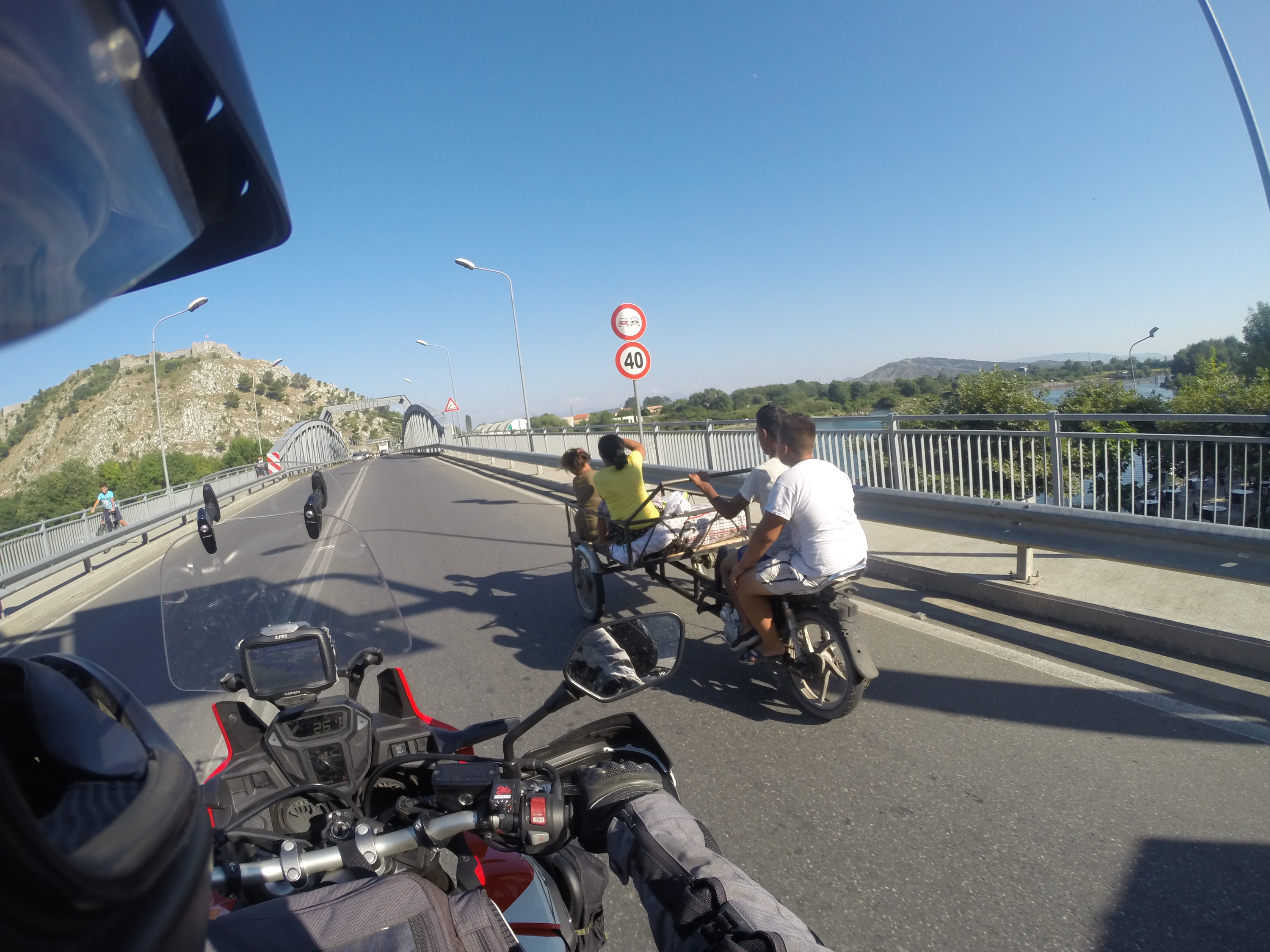
20160810105005Traffic and the road to Shkodër were no worse than what I had seen in other places in Eastern Europe, with horse carts and other curious vehicles sharing the road with cars, buses and trucks.

DCIM123GOPROWe found our hotel, more by chance than thanks to the GPS, and were surprised to see that it had an underground car park with CCTV and rooms that, apart from huge, were far more luxurious than we were expecting at those prices. After a shower we went to the centre to change some money, find a country sticker and have a beer to celebrate our arrival in a new country.

20160810131520

Kotor Bay

Day 12 – Tuesday 9th August – Kotor Bay (0km)

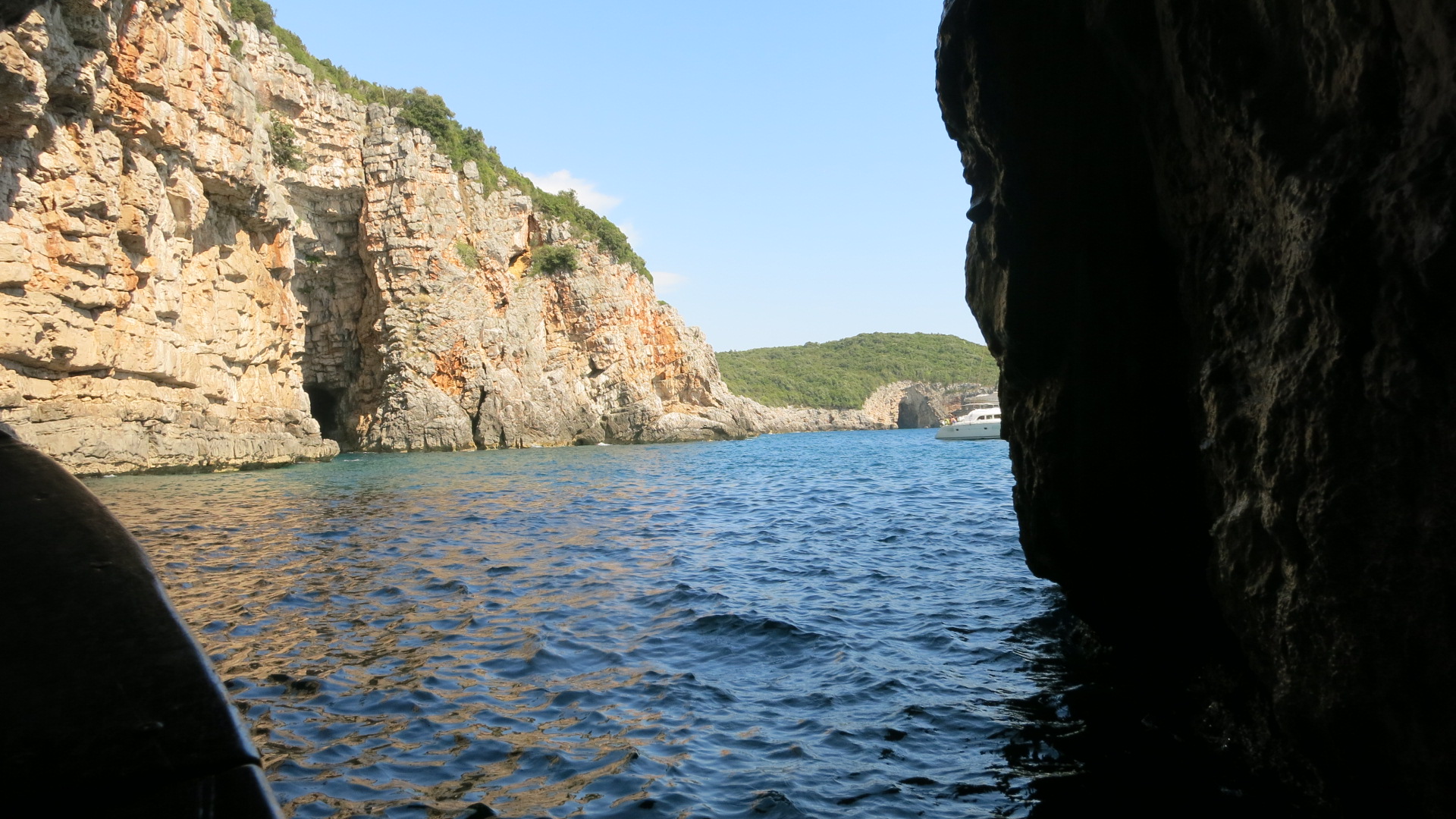
Having already visited the old town and the fortress yesterday, today we decide to get a boat ride from which we could see the whole bay from the water (much more enjoyable than the views from the motorbike while stuck in traffic) and which also took us out to the open sea, stopped at midday in a beautiful beach were we went for a swim and had lunch by the sea and then into a sea cave called the Blue Cave.

20160809033539201608090713232016080909225520160809094522All in all it was quite a good trip, even though the sea was too choppy for the boat to stop long enough to allow us to swim in the cave and on the way back we were too late to visit Our Lady of the Rocks, a church built onto a small island in front of the town of Perast. At least the visit to Perast was nice, and the boat guy offered us a free ride to the church the following day to compensate, but we had already booked accommodation in Albania, so we an excuse to come back here in the future.

2016080911384520160809125150

Do not trust first impressions

Day 11 – Monday 8thAugust – From Dubrovnik to Kotor (107,1km)

Today I woke up with the excitement of crossing a border into a country I had never been to before – Montenegro.

We loaded the bike, which as I said on the previous post was parked in the car park of a shopping centre and rode down the ramp that led to the road to find that unlike the weekend, the boom gate was down and there was a guard in the booth. I had seen a sign detailing the prices per hour and more importantly, the price in the event of losing the ticket, and I definitely did not want to pay that so when we saw that the guard was busy with a driver who was paying his stay we seized the chance to slip out through the gap between the boom and wall and zoom down the street without looking back. We’ll be at the border before they realise, kid.

20160808025014And we were soon indeed at the border after a quick ride up the fort to snap
a panorama of the city. Anticipating long queues again we had set off early and taken a road south of the main one which followed the coast in order to avoid traffic. We were not sure whether there was a border crossing on that road or not, or if it would be open to traffic, for that matter. There were no other cars on the road, which was really beautiful, winding its way down to the green slopes overlooking the Adriatic. After enjoying the road for a while we came to the Croatian border, with only two cars waiting in front of us, and were let through very quickly.

Two corners down the road we found the Montenegrin border, where there three cars waiting, but the police there took things a lot more slowly, taking each car’s passports into the building and coming back out again a good while later. We waited patiently in the sun, with the temperature rising as the day advanced, until we were finally cleared through and arrived in the first big city on the other side, Herzeg Novi, ten minutes later, joining the traffic that was coming from Croatia on the main road. At the first petrol station we saw we found a sticker for the bike (the old Suzy doesn’t have this one!).

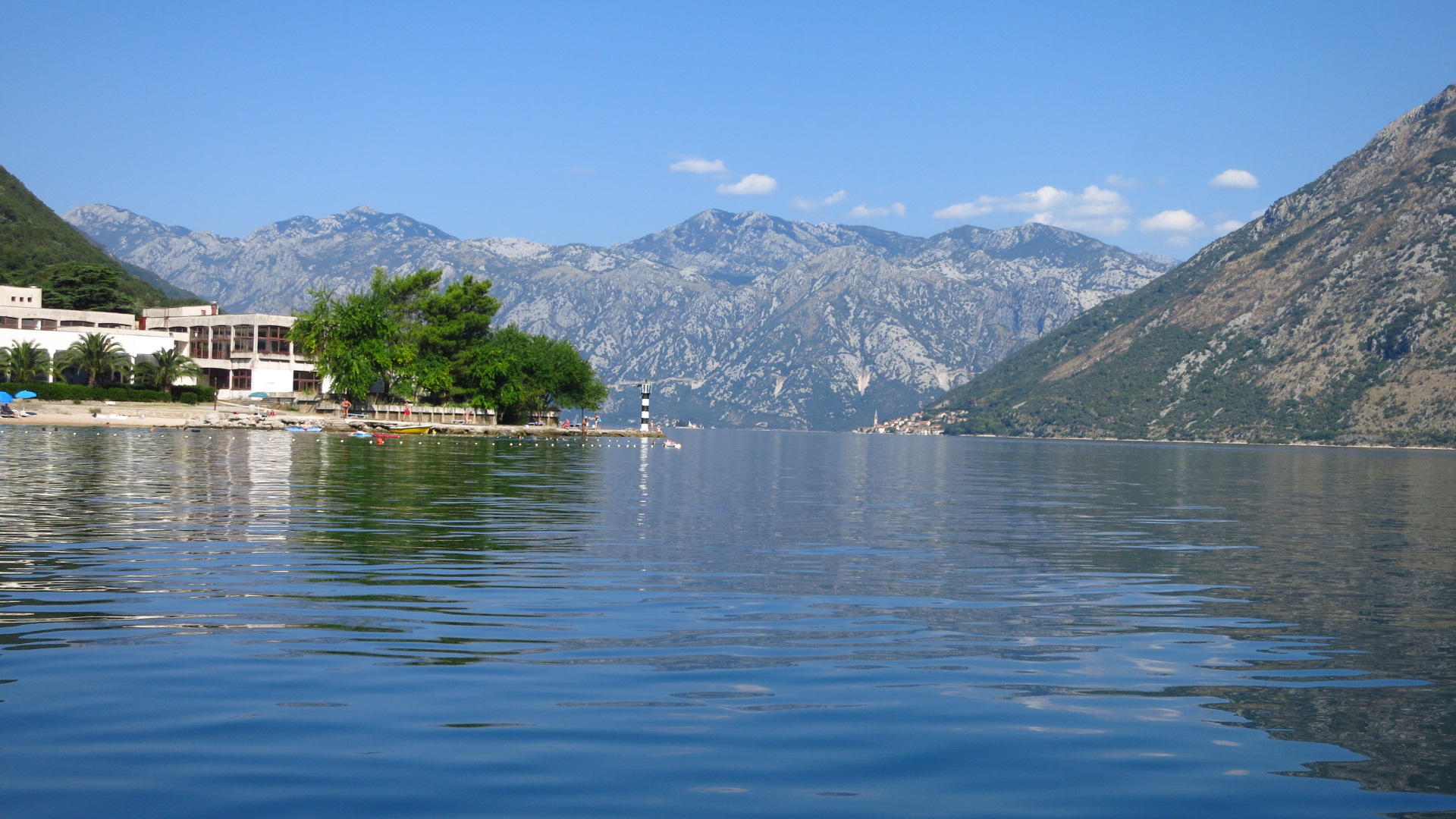
20160808041713We were at the entrance of one of the most beautiful and remarkable places in the Adriatic – the Bay of Kotor, an intricate bay surrounded by mountains that reach over 1000m above sea level, and which forms what might be the only fjord in the Mediterranean area. All along its winding coast, over 100km of a road I was quite looking forward to.

Unfortunately, unlike other roads that have built up great expectations in me, this one turned out to be a bit of a disappointment… the road itself is great, but it is the main thoroughfare in the area, and this time of year it sees heavy traffic. We spent most of the journey stuck behind slow traffic or not moving at all each time the road crossed a town, there was constant traffic coming the other way and it was too narrow to try and ride down the middle as I did in the Bosnian border. By the time we got to Kotor, where traffic was at its absolute worse, and turned off the road to find the apartment, I was glad we did not have to ride all 100km of it. There is a ferry that crosses the bay at its narrowest point, saving about half the trip, but I did not take it because I had read that the road was worth it. If you come here in the midst of the summer tourist season, I would take it.

Our apartment was perched on the mountain side with a stunning view of the bay, Kotor’s old town and the fortress and its walls. To get there I had to ride some of the steepest streets I have ever seen (and those who know where I used to live know how steep the streets were there). This was Nat’s first contact with far Easter European architecture – haphazard, grey, functional, partly unfinished… and she was not impressed with the place at all.

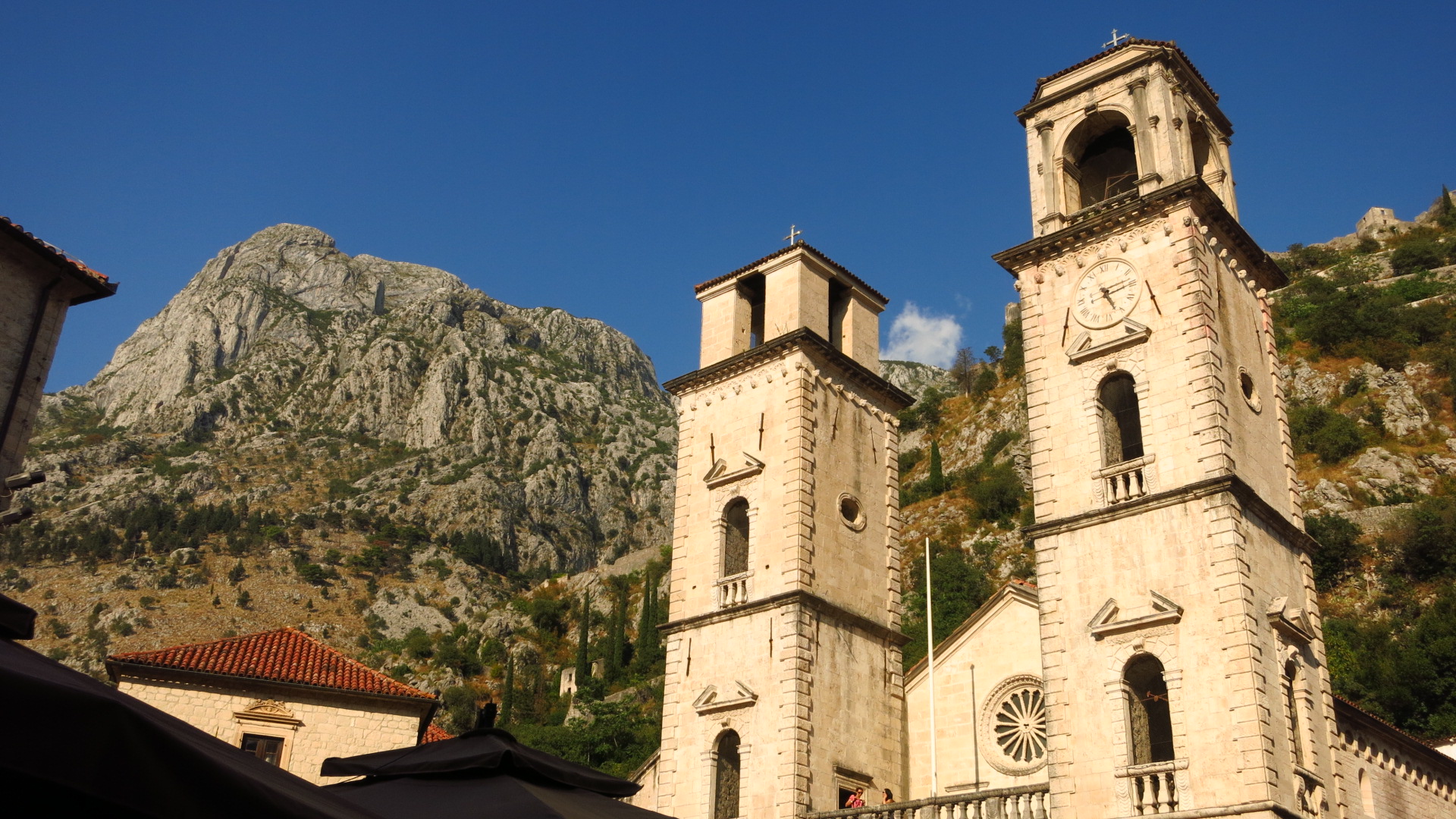
2016080810222520160808102503Only after seeing the apartment, which was the best we had found so far, and taking a walk in the afternoon in the beautifully preserved medieval old town did she start to like Montenegro. The heat and traffic jams on the way here had not helped either, so to compensate that we went for a swim in the town beach, which had amazingly clear water for a beach that was right next to a harbour where big cruise ships moor.

2016080811255620160808115859With the sun and the temperature going down we felt brave enough to dare a visit to the fortress and the city walls, an impressive feat of medieval engineering that protected the city from attacks from the mountains. The wall clings to the mountain face almost vertically behind the city, culminating in a fortress with a commanding view of the city below, the bay beyond and the mountains behind.

20160808132406Even this late in the day, with the sun behind the mountains, the temperature was quite high, and we reached the top exhausted and drenched in sweat, but the views were definitely worth it.

20160808134816

King’s Landing

Day 10 – Sunday 7th of August – Dubrovnik (0km)

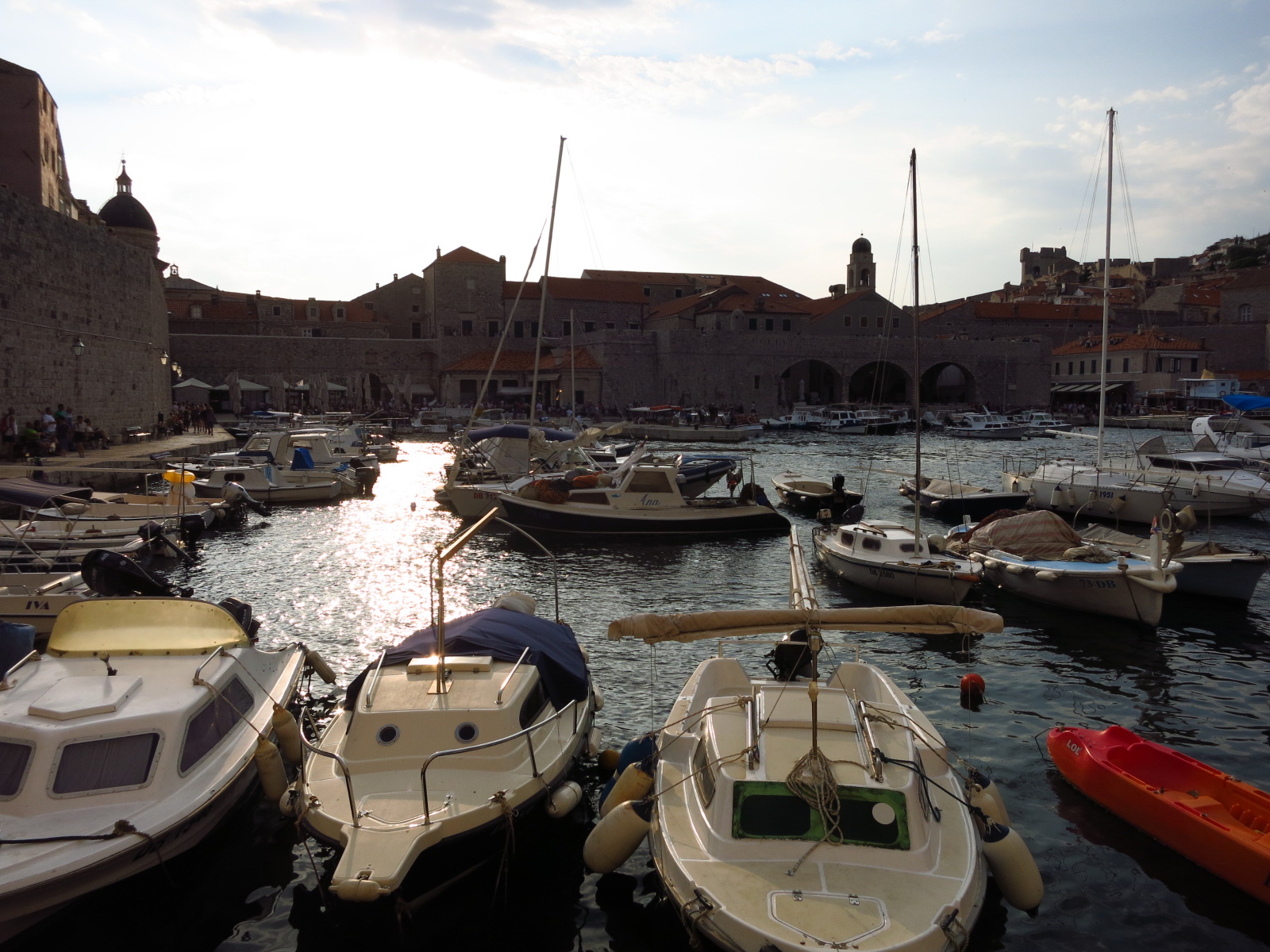
King’s Landing and also thousands of tourists’ landing, as Dubrovnik is one of the most popular destinations on the Mediterranean area, both for cruise ships and people coming by car, bus, plane and even hitchhiking.

That steady stream of people constitutes the main revenue of the city, which reflects on the prices for accommodation. The cheapest we could find was a room in a house about 20 minutes on foot from the old town, with a shared bathroom and kitchen, which was not bad, but compared to what we had found so far it doubtlessly was the worst value for money. It was only accessible from a pedestrian alley, so the closest I could get the bike was the car park of a shopping centre opposite the house where it spent the night chained to a metal staircase.

DCIM123GOPROWe had considered visiting the island of Mljet, which Josep had highly recommended, but the weather forecast for the day looked grim – strong winds, thunderstorms and showers again, so we decided to stay and visit the city, which was the plan for the previous day if the journey had not taken so long.

20160807033855Despite being packed full of people on the summer season, the old town is definitely worth the visit. Surrounded by high and thick stone walls, its streets are a labyrinth of narrow and steep backstreets and alleys where one can easily get lost and find rare corners away from the hustle and bustle of the main streets and wander around without seeing other tourists. It takes time to explore the whole city, even more if you want to take a tour of the walls or visit its many museums.

20160807122241Shortly after crossing the main gate it started to rain, so we followed a French cruise party into what seemed to be a memorial to the citizens that had given their lives defending the city during the war. The girl at the entrance assumed we were part of the group, so we saved a few Kuna that would later be reinvested in a cold beer, and we benefited from the guide’s explanation about how the city had suffered the war.

The old town has been a UNESCO World Heritage site since 1979, and even though as early as 1970 the whole city was demilitarised so that it would not be target in the event of an armed conflict, in 1991 it was attacked and besieged by the Yugoslavian People’s Army following the declaration of independence of Slovenia and Croatia. At that time the country did not have a regular army, so it was down to the citizens to defend the city for the seven months that the siege lasted, until it was liberated by the newly-founded Croatian Army, created from the police force. The shelling of the city had a devastating effect, and even though most of it has been restored today, it is easy to see the extent of the destruction if you visit the fort that overlooks the city, from where many new roofs can be spotted in the old city.

20160808031654There is plenty to see and do if you have the time and the money – boat trips to the islands, great restaurants, a couple of bars perched on the rocks outside the walls facing the sea, beautiful beaches, night promenades… You can even take a Game Of Thrones tour. No wonder the city attracts so many people these days.

As usual, a lot more pictures on the Facebook page.

Riding 30km on the wrong side of the road

Day 9 – Saturday 6th August – From Omiš to Dubrovnik (209km)

It was supposed to be an easy ride today, just 209km of nice coast road to be in Dubrovnik by mid morning with plenty of time to make the most of the day and visit the city, but things don’t always turn out as we would like.

The weather forecast announced cloudy skies with a chance of thunderstorms by noon, which I was actually quite happy with, as I did not want to ride in the heat of the last three days, particularly when there was a border to cross where we might be made to wait in the sun. After a stormy night with heavy rain the day started cloudy but dry, and we had the bike ready to go by 9:00 when the owner of the apartment building came to see us off. The previous evening, when we had gone down to his apartment to pay our stay, he had invited us to a glass of a red wine he made himself and he had told us a bit about his life. He had been working in Germany for 30 years, and had built the apartment block with the money he had earned there as an investment for his retirement. He did not speak any English, but he got his story across with what little German I remembered from university. The wine was rather good, and seeing that we liked it, he gave us a bottle as a goodbye present and told us to be ‘very careful with the wind for the first 20km or so’ on the coast road. ‘Langsam, langsam!’

20160806042020The moment we left Omiš it was clear that his warning was not to be taken lightly. Not since the fist day of my frustrated trip to Mongolia had I experienced such bad winds on the bike. The jagged coast and the winding road meant that the strong winds blowing from the sea buffeted in all directions, making it difficult to predict where the next gust was going to come from, and we had a few heart-stopping moments when a gust caught us from the wrong side while leaning through a tight corner. After only a few kilometres the sky ahead was completely black and we could see bolts of lighting striking the water and the cliffs relentlessly. It really did look like doomsday up ahead. As I was having these thoughts while fighting to keep the bike from being blown onto oncoming traffic or over the armco and into the sea, I felt a not-so-gentle tapping on my helmet – Nat had put her foot down and refused to continue riding in those conditions.

I stopped the bike and by happy coincidence there was a restaurant right across the road where we took shelter from the wind after parking the bike securely to make sure it would not be blown onto its side by the wind. With a cup of coffee and Wi-Fi to check the forecast, we studied our options, which turned out to be rather limited. Nat squarely refused to get on the bike again, so we could not brave it and go on to try to ride through the windy bit and the storm ahead and neither could we go back to Omiš to spend the day there in the hope that the following day conditions would be better. So we sipped our coffee and waited for almost two hours.

When the wind finally died down we rode on until we found the first road inland – we were heading for the motorway and away from the coast road in an attempt to escape the wind.

It worked, there was almost no wind there, but the moment we had collected the ticket from the toll booth and were pulling onto the motorway, the skies opened and the wraith of God fell upon us in the form of a deluge. We stopped at the first service station we found, but our supposedly water proof gear was already soaked halfway through. We spent another two hours there, watching the rain fall and other miserable bikers come and go while we chatted to a Dutch guy who had friends in MotoGP.

20160806064306Seeing that thing were not going to change anytime soon, we hit the road again and to our delight conditions improved a bit by the time the motorway ended in Ploče and we started heading down the coast again towards Dubrovnik.

We were more than halfway there, the rain had stopped and the wind too, but it was too soon to claim victory – there was one more obstacle to overcome. The region of Dalmatia, which comprises more than half the total lenght of the Croatian coast and at the southern tip of which Dubrovnik is located, is actually cut in two by a small Bosnian corridor that gives that country access to the Adriatic sea. This means that to get there you have to cross a border into a non-EU country, ride for about 10km and then cross another border back into Croatia. If you think this is a hassle, you are right. Now add to that thought the fact that we kkare talking about a narrow two-way coast road that cuts through all towns and villages and which is the only way to get to southern Dalmatia. In the midst of the high summer season.

Our friend Josep had told us that he had spent three hours to get through the border, but we were not expecting to find traffic completely stopped 20km from the border. O n top of that, it started raining again, so I did not think twice and did the only thing I could do – change onto the opposite lane and ride towards incoming traffic. For 20km I rode on the wrong side of the road, pulling in between stopped cars when something big was coming the other way, like a coach or a lorry (or a police van), and then for 10km more in Bosnia, where the traffic jam continued because there was another border to cross down the road. Had I not done that we might still be waiting there stuck in traffic and soaking through and through.

Just before crossing the border back into Croatia we stopped at a Bosnian petrol station to honour the tradition of getting a country sticker for the bike, which has to start earning them. It was the second this trip, the first one having been obtained in Croatia that morning.

For the last 30km before Dubrovnik both the weather and the traffic finally cleared, even though the strong winds made an unwelcome return. We finally made it to our guesthouse at almost 19:00, got the cases off the bike and went for a night visit of the old town.